Why Did Ra Send Sekhmet to Destroy Humanity?
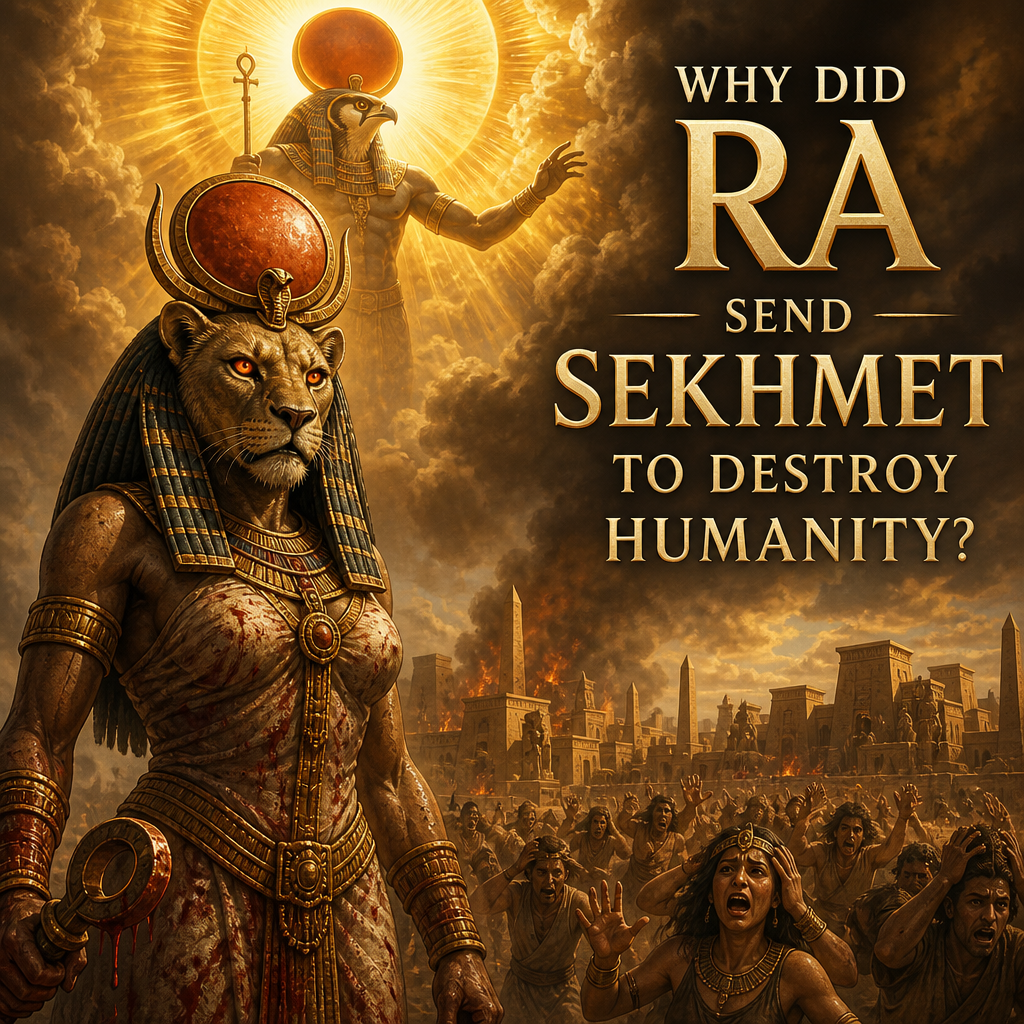
The ancient Egyptian myth of Sekhmet is one of the most dramatic stories about divine anger, human rebellion, and the fragile balance between justice and mercy. At the center of the tale is Ra, the sun god and ruler of the gods, who sends the lioness goddess Sekhmet to punish humanity. But why did Ra send Sekhmet to destroy humanity in the first place?
The answer lies in an old Egyptian belief: the world depended on order, truth, and balance. When humans threatened that order, the gods responded with overwhelming force.
The Role of Ra in Ancient Egyptian Mythology
Ra was one of the most important gods in ancient Egypt. As the sun god, he represented light, creation, kingship, and life itself. Every day, Ra was believed to travel across the sky in his solar boat, bringing warmth and energy to the world.
But Ra was not only a creator. He was also a ruler. Like a king, he was responsible for maintaining ma’at, the sacred principle of truth, justice, harmony, and cosmic order.
If ma’at was disturbed, chaos could spread. In Egyptian thought, chaos was not just disorder—it was a threat to existence. This idea helps explain why Ra’s reaction to humanity’s rebellion was so severe.
Humanity’s Rebellion Against Ra
According to the myth, Ra grew old while ruling over gods and humans. As he aged, people began to lose respect for him. Some humans mocked him, doubted his power, and plotted against his authority.
This rebellion was more than simple disrespect. In the Egyptian worldview, opposing Ra meant opposing the divine order of the universe. Humans were challenging the authority of the god who sustained life and protected creation from chaos.
When Ra learned of humanity’s betrayal, he gathered the gods to ask for advice. The gods agreed that the rebellion had to be punished. Ra then chose a powerful and terrifying force to carry out his judgment: Sekhmet.
Who Was Sekhmet?
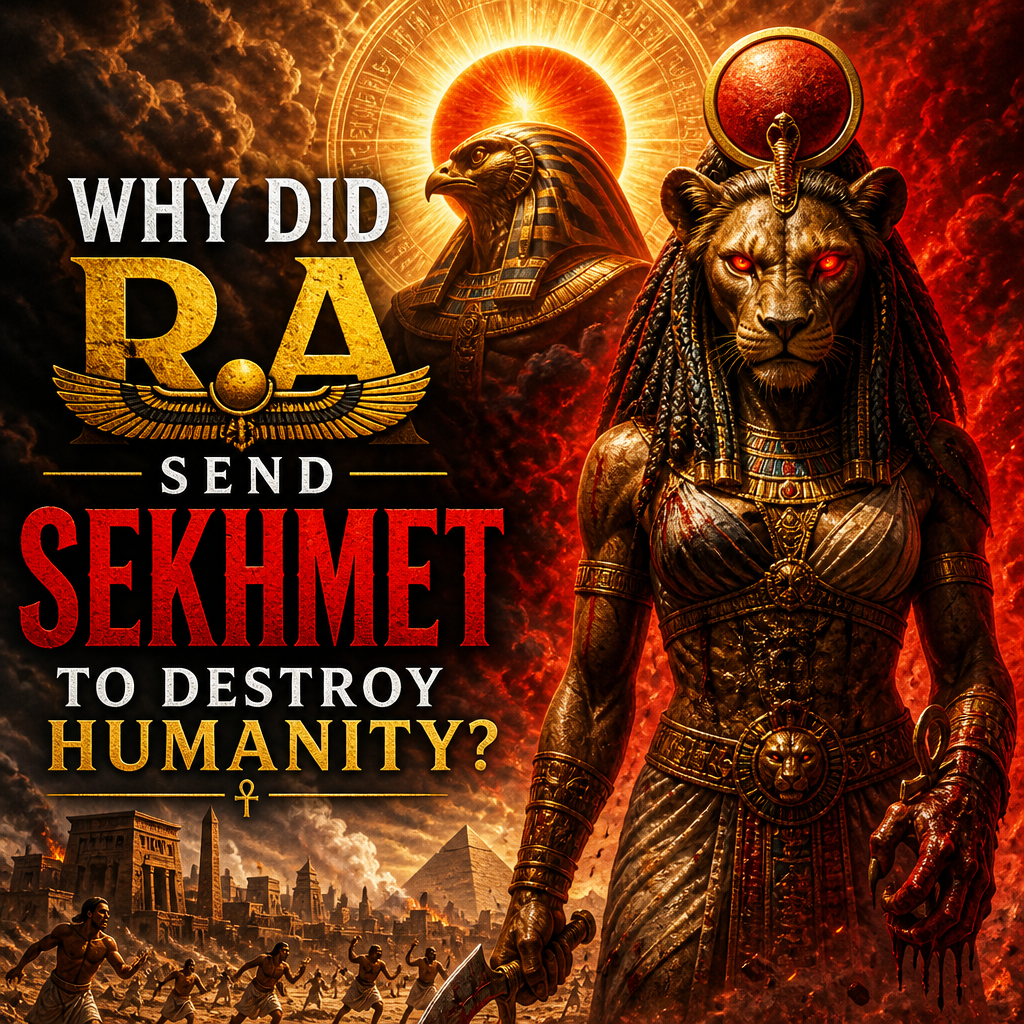
Sekhmet was a fierce goddess often depicted as a woman with the head of a lioness. Her name is commonly understood to mean “the Powerful One.” She was associated with war, plague, destruction, healing, and protection.
This combination may seem unusual, but Egyptian deities often had dual natures. Sekhmet could bring disease, but she could also cure it. She could destroy enemies, but she could also defend the innocent. Her power was dangerous, yet necessary.
As the “Eye of Ra,” Sekhmet acted as an extension of Ra’s will. The Eye of Ra was not simply an organ of sight; it was a divine force that could protect, punish, and restore order. When Ra sent Sekhmet, he sent his fiery wrath into the world.
Why Did Ra Send Sekhmet to Destroy Humanity?
Ra sent Sekhmet because humans had rebelled against him and threatened ma’at. Their actions represented a breakdown of divine order, and Sekhmet was chosen to punish them.
In the myth, Sekhmet descended upon humanity with terrifying violence. She attacked the rebels and drank their blood. Her rage was so intense that she seemed unstoppable. What began as punishment soon became a near-total destruction of the human race.
This is the key tension in the story: Ra wanted to punish humanity, but Sekhmet’s fury went beyond what he intended. The goddess became consumed by bloodlust, and Ra realized that if she continued, no humans would remain.
The Trick That Saved Humanity
To stop Sekhmet, Ra used wisdom rather than force. He ordered that a large amount of beer be dyed red to look like blood. The red beer was poured across the land where Sekhmet would see it.
Thinking it was blood, Sekhmet drank the beer. She drank so much that she became intoxicated and fell asleep. When she awoke, her rage had passed, and humanity was saved.
In some versions of the myth, Sekhmet transformed into the gentler goddess Hathor after being pacified. Hathor was associated with love, joy, music, motherhood, and celebration. This transformation highlights the Egyptian belief that destructive divine power could be softened and redirected.
What the Myth Symbolizes
The story of Ra and Sekhmet is not just about punishment. It also explores several important themes in ancient Egyptian religion.
Divine Justice and Human Responsibility
Humans were expected to respect the gods and live according to ma’at. Rebellion against divine authority was seen as dangerous because it invited chaos into the world.
The Danger of Uncontrolled Wrath
Sekhmet’s violence shows that even righteous anger can become destructive if it is not controlled. Ra’s punishment begins as justice, but it nearly becomes annihilation.
Mercy After Judgment
Ra’s decision to stop Sekhmet shows that the gods were not only vengeful. They could also show restraint. Humanity deserved punishment in the myth, but not extinction.
The Balance of Creation and Destruction
Sekhmet represents the fierce side of divine power. Her story reminds us that destruction and protection can come from the same source. The same goddess who brought terror could also bring healing.
Why the Story Mattered in Ancient Egypt
This myth helped explain the relationship between humans, gods, and cosmic order. It reinforced the importance of honoring divine authority and maintaining ma’at in daily life.
The story may also have connections to real-world festivals. Some scholars link it to celebrations involving beer, music, and ritual drinking, possibly meant to pacify Sekhmet and prevent plague or disaster. By reenacting her calming, Egyptians may have hoped to keep destructive forces under control.
Conclusion
So, why did Ra send Sekhmet to destroy humanity? He sent her because humans rebelled against him and threatened the sacred order of ma’at. As the Eye of Ra, Sekhmet embodied divine punishment and unleashed the sun god’s wrath upon the world.
Yet the myth does not end with destruction. Ra stops Sekhmet before humanity is wiped out, using a clever trick that turns her rage into calm. The story remains powerful because it speaks to a timeless idea: justice must be balanced with mercy, and even divine anger must have limits.

Orin Vale has spent the better part of two decades tracing the threads that connect the world’s oldest stories — from the halls of Asgard to the banks of the Nile, from Olympus to the jungles of the Maya. What began as a childhood fascination with flood myths and trickster gods grew into years of independent study across comparative mythology and ancient religion, always chasing the same question: what did these stories mean to the people who first told them? Orin writes for readers who want more than trivia — the ones looking for the beliefs, fears, and truths that myths were built to carry.