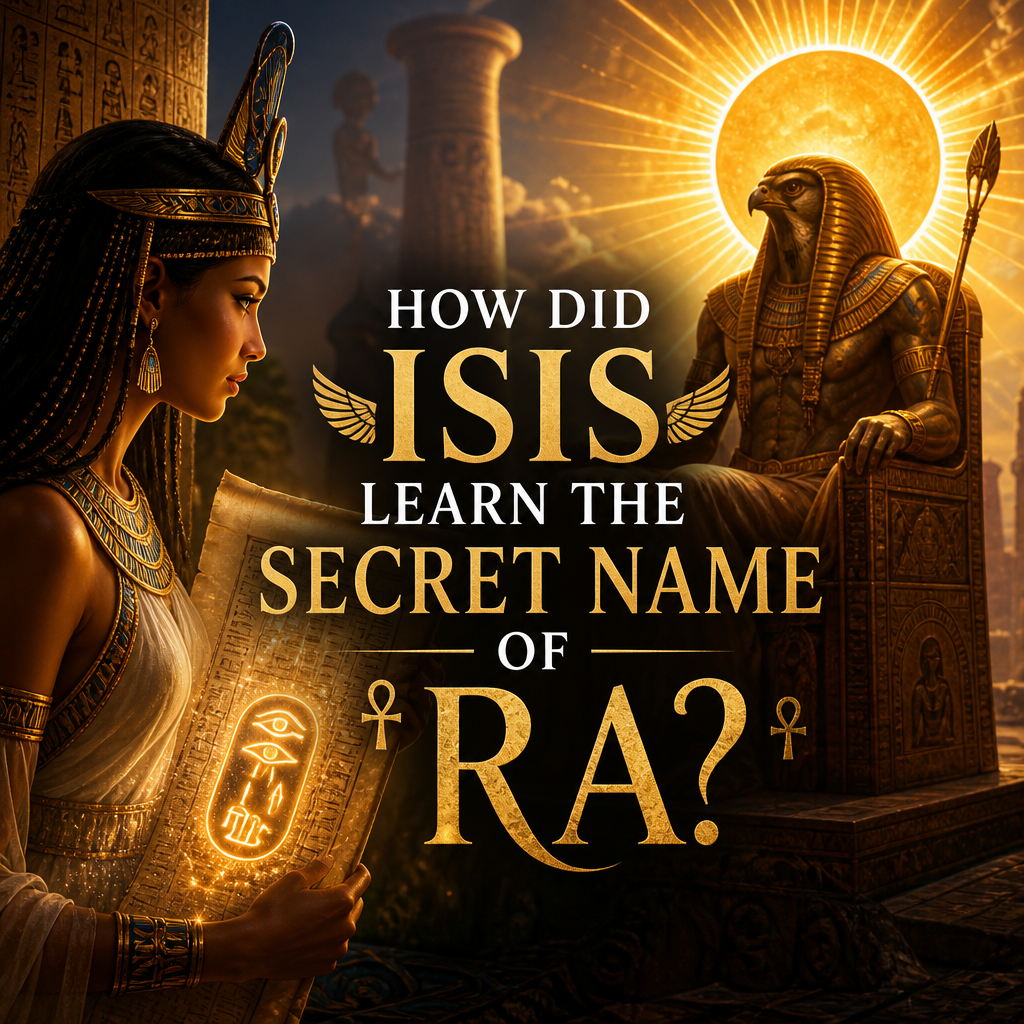
How Did Isis Learn the Secret Name of Ra?
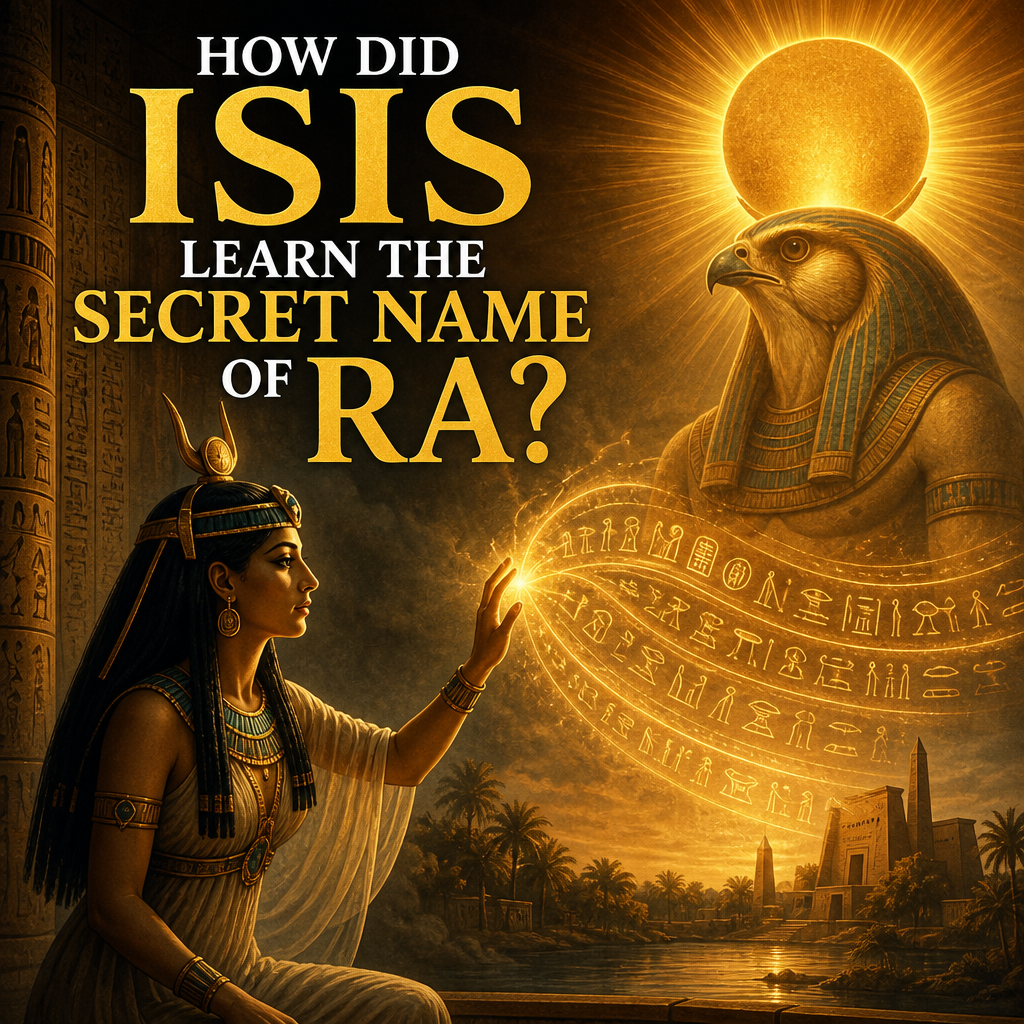
In ancient Egyptian mythology, names were far more than labels. A true name held power, identity, and divine essence. To know a god’s secret name was to gain influence over that god. This belief stands at the center of one of the most famous Egyptian myths: how did Isis learn the secret name of Ra?
The story reveals much about Egyptian ideas of magic, authority, wisdom, and transformation. It also shows Isis not simply as a mother goddess, but as one of the most cunning and powerful figures in the Egyptian pantheon.
The Power of a Secret Name in Egyptian Myth
To understand the myth, it helps to know why Ra’s secret name mattered so much.
Ra was the sun god and one of the most important deities in ancient Egypt. He traveled across the sky by day and through the underworld by night, bringing light, order, and life to the world. As creator and ruler among the gods, Ra possessed immense divine power.
But in Egyptian belief, power could be accessed through names. A true name expressed the hidden nature of a being. If someone knew that name, they could call upon, control, or transform the power connected to it.
Ra had many public names and titles, but his deepest name was hidden. It contained the full force of his divine authority. Isis desired that knowledge.
Who Was Isis?
Isis was one of the most beloved goddesses of ancient Egypt. She was associated with motherhood, healing, magic, protection, and kingship. She was the wife of Osiris and mother of Horus, and she played a key role in restoring Osiris after his death.
Isis was also known as a master of magic. Her wisdom and determination often allowed her to achieve what brute strength could not. In the myth of Ra’s secret name, she uses intelligence, patience, and magical skill to obtain power no one else could reach.
Why Isis Wanted Ra’s Secret Name
The myth does not always explain her motive in a simple way, but the meaning is clear: Isis sought greater divine power.
By learning Ra’s secret name, Isis could elevate her magical authority and secure power for herself and her son, Horus. In some interpretations, the story reflects the rising importance of Isis in Egyptian religion. By gaining Ra’s hidden name, she becomes more than a goddess of magic; she becomes a figure whose power rivals the creator god himself.
Her goal was not casual curiosity. She wanted access to the deepest source of Ra’s power.
The Plan: A Serpent Made from Ra’s Own Essence
So, how did Isis learn the secret name of Ra? She used Ra’s vulnerability against him.
According to the myth, Ra had grown old. Though still powerful, he was no longer beyond weakness. As he traveled across the earth, saliva fell from his mouth onto the ground. Isis collected this divine spittle and mixed it with earth to form a magical serpent.
This detail is important. The serpent was made partly from Ra’s own substance. Because of that, it carried a connection to him and could harm him in a way ordinary creatures could not.
Isis placed the serpent in Ra’s path.
Ra Is Bitten by the Magical Snake
When Ra passed by, the serpent struck. Its venom entered his body, causing terrible pain. The sun god cried out, and the other gods rushed to help him. But none of them could cure the wound.
Ra described the agony as something unknown and unbearable. He did not understand what had attacked him, because the serpent had not been created by normal means. Its poison burned within him, and his divine power could not drive it out.
This moment is central to the myth. Ra, the great sun god, ruler of gods and humans, was helpless before a magical force crafted by Isis.
Isis Offers a Cure
Isis then came to Ra and offered to heal him. As the goddess of magic and healing, she had the ability to remove the venom. But she set one condition: Ra had to tell her his secret name.
At first, Ra tried to avoid giving the true answer. He listed many of his known names and titles, describing his power as creator, sun, and ruler. But Isis was not fooled. These were not the hidden name she sought.
She insisted that only the true name would give her the power needed to cure him completely.
Ra Reveals His Hidden Name
The poison continued to torment Ra, and he realized he had no choice. To survive, he allowed his secret name to pass from his body into Isis.
Some versions say the name was transferred privately, not spoken aloud for others to hear. This preserves the mystery of the name itself. The myth never tells the audience what Ra’s secret name actually was.
Once Isis received it, she used her magic to remove the poison. Ra was healed, but the balance of divine power had changed forever. Isis now possessed knowledge that even the gods had not known.
What the Myth Means
The story of how Isis learned the secret name of Ra is more than a tale of trickery. It carries several important themes:
- Knowledge is power: Isis gains authority not through violence, but through hidden knowledge.
- Magic can rival kingship: Even Ra’s solar power cannot defeat Isis’s carefully crafted magic.
- The old gives way to the new: Ra is aged and vulnerable, while Isis represents rising divine influence.
- Names reveal essence: The true name is treated as the key to a being’s deepest identity.
The myth also highlights the Egyptian respect for words, spells, and sacred speech. Language was not merely symbolic; it was active and powerful.
Isis as a Goddess of Wisdom and Magic
This myth helped establish Isis as one of the greatest magical figures in Egyptian religion. She was not portrayed as reckless or cruel, but as strategic and determined. Her cleverness allowed her to accomplish what no other god could.
By learning Ra’s secret name, Isis gained unmatched magical knowledge. This power later supported her role as protector of Horus and as a goddess who could aid humans in healing, childbirth, and danger.
Why the Story Still Fascinates
The question “how did Isis learn the secret name of Ra?” remains fascinating because it combines mystery, magic, and divine politics. It is a story about hidden knowledge and the cost of power. It also shows that even the mightiest beings have vulnerabilities.
Ra ruled the sun and creation, but Isis understood something deeper: true power often lies in what is concealed. Through patience and intelligence, she uncovered the secret at the heart of the sun god’s identity.
In the end, Isis learned the secret name of Ra by creating a magical serpent from his own essence, using its venom to force him into a choice, and offering healing in exchange for the one name he had never revealed. That name remained hidden from the world, but its power transformed Isis forever.

Orin Vale has spent the better part of two decades tracing the threads that connect the world’s oldest stories — from the halls of Asgard to the banks of the Nile, from Olympus to the jungles of the Maya. What began as a childhood fascination with flood myths and trickster gods grew into years of independent study across comparative mythology and ancient religion, always chasing the same question: what did these stories mean to the people who first told them? Orin writes for readers who want more than trivia — the ones looking for the beliefs, fears, and truths that myths were built to carry.