What Is the Set Animal in Egyptian Mythology?
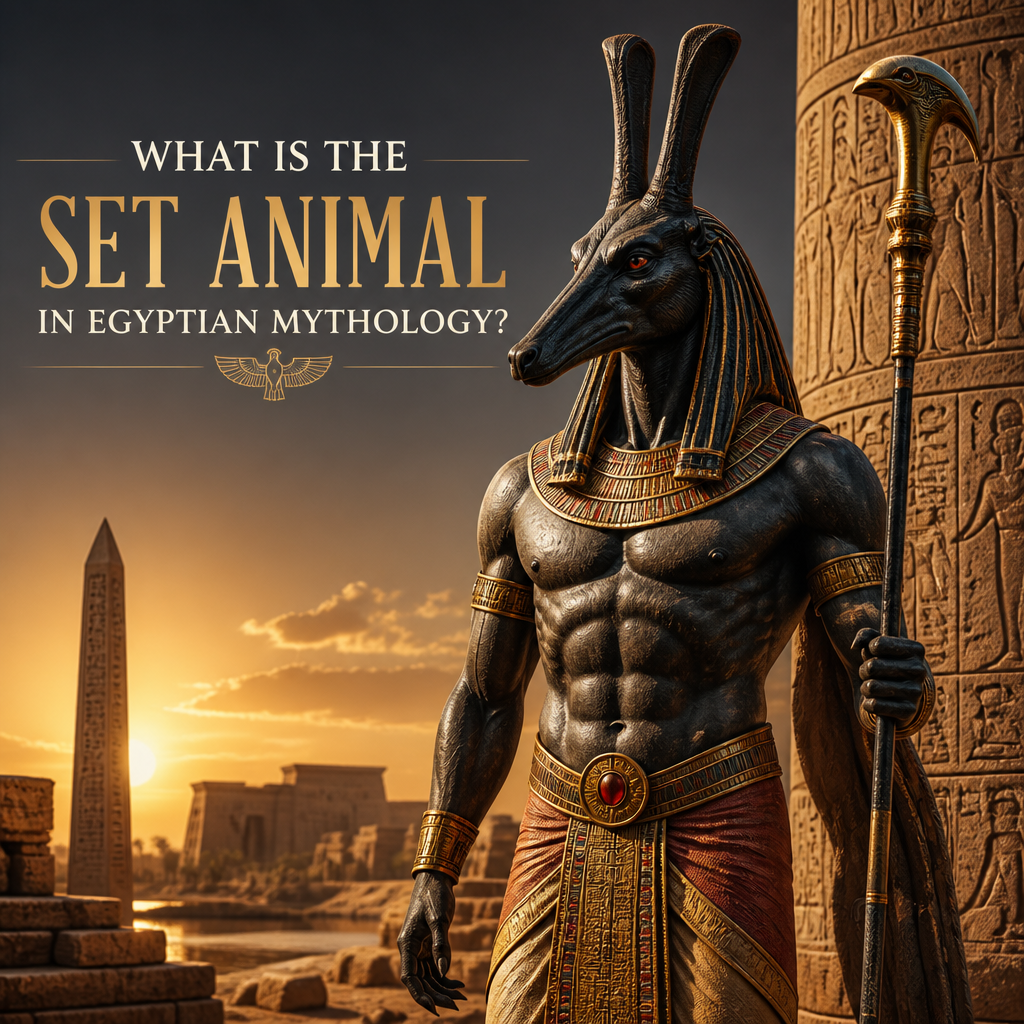
The Set animal is one of the most mysterious creatures in ancient Egyptian mythology. It is the sacred animal associated with Set, the god of chaos, deserts, storms, violence, foreigners, and disorder. Unlike gods connected to familiar animals such as falcons, jackals, cats, or crocodiles, Set is linked to a strange beast that does not clearly match any known animal.
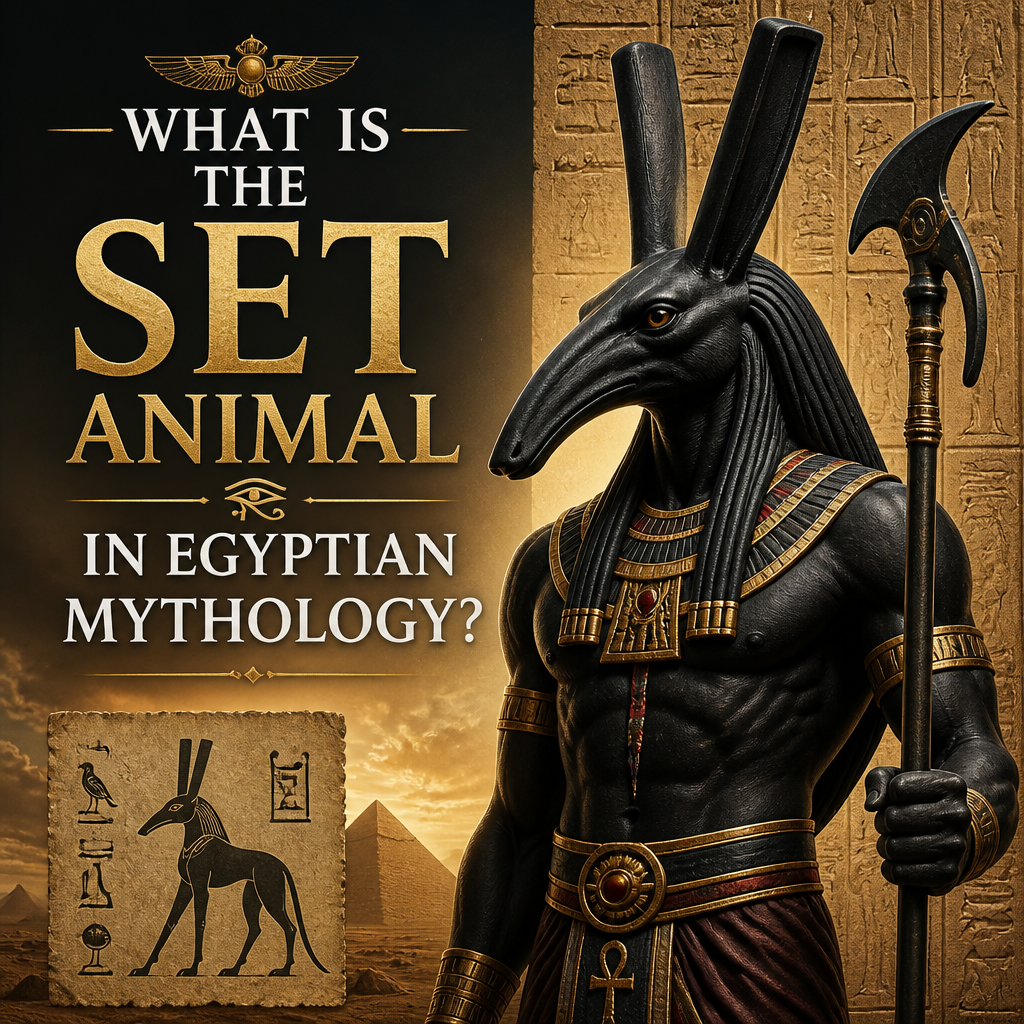
In Egyptian art, Set was often shown as a man with the head of this unusual creature. The Set animal has a long, curved snout, tall squared ears, a thin body, and a forked or stiff tail. Because of its odd appearance, scholars have debated its identity for many years.
Who Was Set in Egyptian Mythology?
Set, also spelled Seth or Sutekh, was a powerful and complicated god in ancient Egypt. He was not simply “evil,” although later myths often portrayed him negatively. Set represented dangerous but necessary forces in the world.
He was associated with:
- The desert
- Storms and thunder
- Chaos and conflict
- Foreign lands
- Strength and aggression
- Protection against certain enemies
Set was the brother of Osiris, Isis, and Nephthys. In one of the most famous Egyptian myths, Set murdered Osiris and fought against Osiris’s son, Horus, for the throne of Egypt. This conflict became a central story about order versus chaos.
Despite his violent reputation, Set also had protective roles. In some traditions, he defended the sun god Ra from the serpent Apophis during the nightly journey through the underworld.
What Does the Set Animal Look Like?
The Set animal is usually depicted with features that seem partly realistic and partly imaginary. In ancient Egyptian artwork, it often has:
- A long, downward-curving snout
- Tall, rectangular or squared ears
- A slim, dog-like body
- A stiff or forked tail
- A narrow face
- Sometimes reddish or dark coloring
When Set appears in human form, he often has the body of a man and the head of the Set animal. This made him easy to recognize in temple carvings, tomb paintings, and religious objects.
The creature’s appearance is so distinctive that Egyptologists often refer to it simply as the “Set animal” or “Seth beast,” rather than naming it as a real species.
Is the Set Animal a Real Animal?
One of the biggest questions about the Set animal in Egyptian mythology is whether it represents a real creature. No one knows for certain. Several animals have been suggested as possible inspirations.
Possible Identifications
Scholars have proposed that the Set animal may be based on:
- An aardvark
- A donkey
- A jackal
- A fox
- An antelope
- A giraffe-like creature
- An extinct animal
- A purely mythical beast
Each theory has problems. For example, the long snout may resemble an aardvark, while the ears could remind people of a donkey or fox. The body has something in common with canine animals, but the tail and head do not match perfectly.
Because no known animal fits all the features, many experts believe the Set animal may be a symbolic or mythical creature rather than a direct portrait of a real species.
Why Is the Set Animal So Strange?
The unusual form of the Set animal may have been intentional. Set was a god of the desert and chaotic forces outside normal Egyptian life. A strange, hard-to-identify animal was a perfect symbol for a god connected with the unknown, the dangerous, and the foreign.
Ancient Egyptians often used animals to express divine qualities. A falcon represented the sky and kingship. A lioness represented power and protection. A crocodile represented danger and strength. In the same way, the Set animal represented the unpredictable and unsettling nature of Set.
Its unfamiliar appearance may have helped show that Set belonged to the margins of the ordered world.
The Set Animal and the Desert
Set was strongly connected with the desert, especially the red lands beyond the fertile Nile Valley. To the ancient Egyptians, the Nile Valley represented life, farming, stability, and order. The desert represented danger, dryness, isolation, and chaos.
The Set animal may have symbolized creatures of the desert or wilderness. Its lean body and strange face could suggest an animal adapted to harsh environments. Even if it was imaginary, it carried the feeling of something wild and untamed.
This connection made the Set animal an ideal emblem for a god who ruled over places beyond the safe boundaries of civilization.
Set Animal Symbolism
The Set animal was more than just a divine mascot. It carried deep symbolic meaning in Egyptian religion and art.
It Represented Chaos
Set was the god of disorder, and his animal reflected that identity. Its strange appearance broke the pattern of ordinary animals, just as chaos disrupted the order of the world.
It Represented Strength
Set was feared, but he was also respected for his power. The Set animal could symbolize force, aggression, and the ability to overcome enemies.
It Represented Foreignness
Set was often associated with lands outside Egypt. The odd and unfamiliar look of the Set animal may have suggested foreign places and strange powers beyond Egyptian control.
It Represented Divine Mystery
Many Egyptian gods had complex forms combining humans and animals. The Set animal’s mystery may have made Set seem even more powerful and supernatural.
How Did the Image of Set Change Over Time?
Set’s reputation changed throughout Egyptian history. In earlier periods, he could be viewed as a strong and necessary god. Some kings even honored him, especially during times when his protective and warrior-like qualities were valued.
Over time, however, Set became more strongly associated with evil because of his role in killing Osiris and battling Horus. As Osiris became more important in Egyptian religion, Set’s image became darker.
The Set animal also became a symbol of disorder and opposition to rightful kingship. In some later periods, images of Set were damaged or avoided because of his negative reputation.
Why Does the Set Animal Matter?
The Set animal matters because it shows how ancient Egyptians thought about gods, nature, and symbolism. Not every divine animal had to be a simple copy of a creature from real life. Some could represent ideas, fears, and cosmic forces.
The mystery of the Set animal also reminds us that ancient Egyptian religion was complex. Set was not just a villain, and his animal was not just a monster. Together, they represented the dangerous forces that existed alongside order and creation.
Conclusion
So, what is the Set animal in Egyptian mythology? It is the strange, unidentified creature associated with the god Set. With its curved snout, tall ears, slender body, and unusual tail, it does not clearly match any known animal. It may have been inspired by real desert animals, or it may have been a completely mythical beast.
The Set animal symbolized chaos, strength, danger, the desert, and the unknown. Its mysterious nature made it the perfect emblem for Set, one of ancient Egypt’s most powerful and complicated gods.

Orin Vale has spent the better part of two decades tracing the threads that connect the world’s oldest stories — from the halls of Asgard to the banks of the Nile, from Olympus to the jungles of the Maya. What began as a childhood fascination with flood myths and trickster gods grew into years of independent study across comparative mythology and ancient religion, always chasing the same question: what did these stories mean to the people who first told them? Orin writes for readers who want more than trivia — the ones looking for the beliefs, fears, and truths that myths were built to carry.