Banshee
Introduction
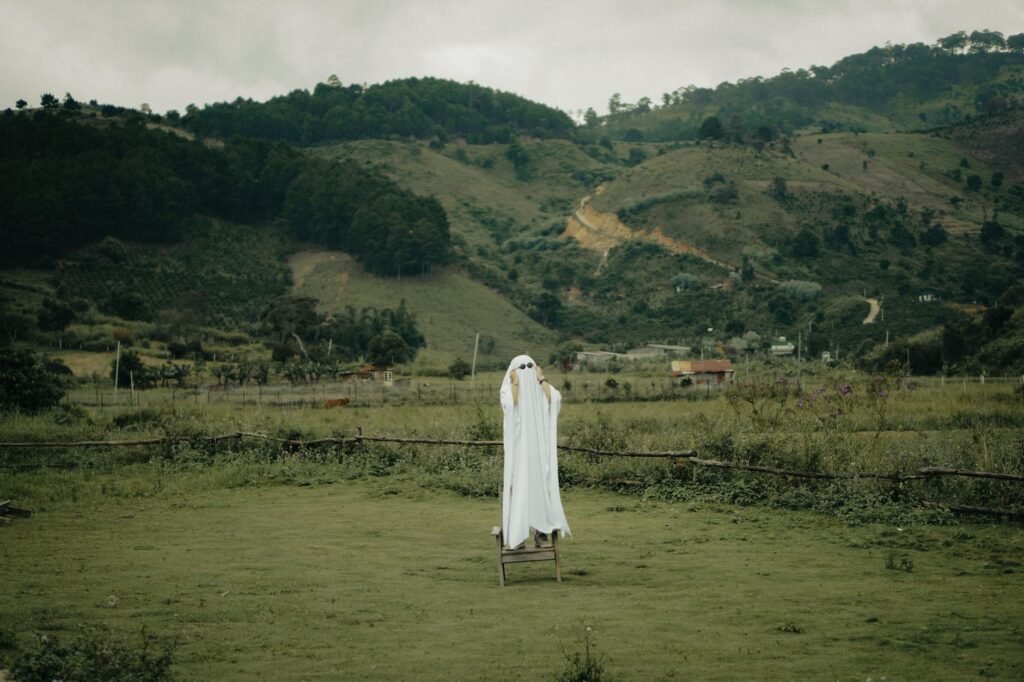
The banshee is one of the best-known figures in Irish folklore and, more broadly, in Celtic-derived supernatural tradition. She is usually described as a female spirit whose wailing or keening announces death in a family. In many traditions, the banshee is not a cause of death but a messenger associated with it, appearing as an omen before a person dies.
Over time, the banshee became a powerful symbol in literature, oral storytelling, and popular culture. She reflects older Irish beliefs about the dead, lamentation, family lineage, and the thin boundary between the living and the spirit world. Although modern portrayals often reduce her to a ghostly scream, the traditional figure is more complex and varies across regions and sources.
Origin and Meaning
The word banshee comes from the Irish Gaelic bean sí or bean sídhe, usually translated as “woman of the fairy mound” or “woman of the sídhe.” The term bean means “woman,” while sídhe refers to the mounds or fairy hills associated with the supernatural otherworld in Irish tradition.
The spelling and pronunciation vary:
| Form | Language | Meaning / Note |
|---|---|---|
| bean sí | Irish | “woman of the fairy mound” |
| bean sídhe | Irish | fuller form, same general meaning |
| banshee | Anglicized English | common modern form |
The name links the banshee to the sídhe, beings connected with the ancient otherworld. In Irish tradition, the word may refer both to fairy mounds and to supernatural beings associated with them. This etymology suggests that the banshee belongs to a broader mythological landscape rather than functioning as a simple ghost in the modern sense.
Historical Context
The banshee belongs to the rich body of Irish folk belief that developed alongside Christianized Ireland. Her legend is rooted in older ideas about the supernatural, the soul, and the role of lamentation in mourning the dead.
Cultural background
In traditional Irish society:
- Death rituals and mourning practices were highly communal.
- Professional lamenters, especially women, could perform keening at funerals.
- Family lineage and clan identity were deeply important.
- Supernatural signs and omens were often interpreted as meaningful messages.
The banshee fits into this world as a figure connected to death warnings and ancestral families. Many traditions identify her with old Irish noble families, suggesting she is attached to lineage rather than to individual strangers. In some accounts, she appears only to families of Gaelic descent or those with ancient Irish surnames.
Relation to keening
One of the most important cultural contexts for the banshee is caoineadh (keening), the ritual lamentation for the dead. The banshee’s cry is often compared to, or described as, a supernatural form of keening. This does not mean that every lament was believed to be supernatural; rather, folk tradition may have transformed the social role of the keening woman into a supernatural figure.
Main Characteristics
The banshee is not described uniformly. Different regions and storytellers give her different appearances and behaviors.
Common features
Typical traits associated with the banshee include:
- A female spirit or fairy-like being
- A mournful cry, wail, or keening sound
- An appearance linked to an approaching death
- A connection with older Irish families or ancestral houses
- A haunting presence rather than physical aggression
Appearance in tradition
Descriptions vary widely. She may appear as:
- A beautiful young woman
- A solemn older woman
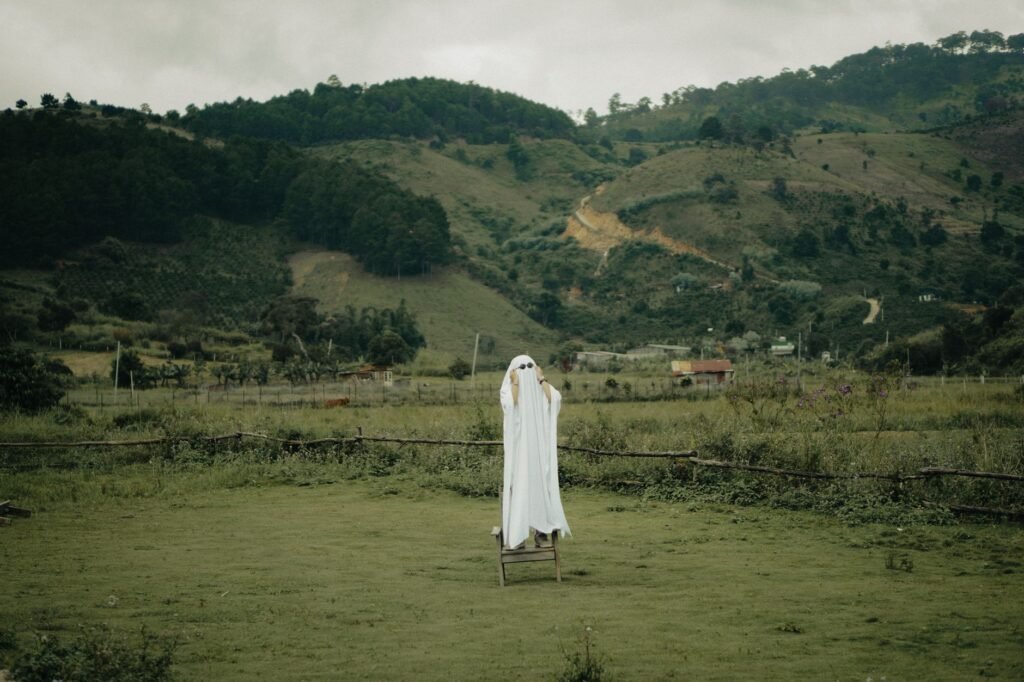
- A pale or ghostly figure
- A washerwoman at a river, washing funeral garments
- A veiled or shrouded woman in gray, white, or black
Some stories present her as terrifying, while others emphasize her sorrow rather than menace. In a number of traditions, the sound is more important than the visual appearance.
Behavior
The banshee may:
- Cry outside a house
- Be heard before someone dies
- Appear near a family home
- Lament for a doomed or dying person
- Vanish after being seen or heard
Importantly, she is usually not described as attacking people. Her function is omen-bearing, not predatory.
Family and Genealogy
Unlike gods or heroes in mythological genealogies, the banshee does not have a single agreed-upon family tree. Her lineage differs by tradition.
Common traditions
Some accounts describe her as:
- A fairy woman
- A spirit of the dead
- An ancestral guardian associated with a household
- A being attached to a specific family line
In certain stories, the banshee is said to be tied to one of the old Irish families and to appear only for descendants of that line. In other traditions, she is a broader category of supernatural woman rather than an individual being with a fixed genealogy.
Related supernatural figures
The banshee is sometimes compared with or conflated with other female supernatural beings, such as:
- The Bean Nighe in Scottish Gaelic tradition
- Certain fairy women connected with death or prophecy
- Ghostly lamenting women in European folklore
These parallels do not mean they are identical, but they indicate a shared Celtic and folkloric concern with death, mourning, and omens.
Symbols
The banshee is associated with symbolic objects, colors, and images that reinforce her connection to death and lamentation.
Common symbols
| Symbol | Meaning |
|---|---|
| Wailing or keening | Mourning, warning, impending death |
| Veil or hood | Mystery, hidden identity, otherworldliness |
| Gray, white, or black clothing | Death, mourning, liminality |
| Comb | In some later stories, a supernatural object tied to vanity or enchantment |
| River or water | Transition, boundary, cleansing, otherworld realm |
Interpretive significance
The banshee’s symbolism centers on transition. She appears at the boundary between life and death, between the human world and the supernatural world. Her cry is a sign that someone is crossing that threshold.
Sacred Animals
Traditional banshee lore does not assign her a fixed sacred animal in the way some deity cults do. However, certain animals appear in stories and symbolic associations.
Frequently associated animals
- Hares or rabbits: common in Irish fairy lore, though not specific to the banshee alone
- Crows or ravens: often linked in European tradition with death and omens
- Dogs: sometimes appear in death-omen folklore, though not uniquely connected to the banshee
- Cats: in some later folklore, eerie or liminal beings associated with the supernatural
These associations are not universal or canonical. They reflect the broader symbolic world of death and the otherworld rather than a formal cult of the banshee.
Sacred Plants
There is no universally recognized sacred plant belonging specifically to the banshee. Still, later folklore and symbolic interpretation sometimes connect her with plants associated with mourning, death, or fairy influence.
Plants sometimes linked in folklore
- Yew: long associated with cemeteries and death in many European traditions
- Rowan: often protective against harmful supernatural beings in Celtic folklore
- Hawthorn: widely associated with fairy places and otherworldly boundaries
- Willow: linked with sorrow, water, and mourning imagery
These plants are better understood as part of the wider Irish and Celtic supernatural environment than as exclusive emblems of the banshee.
Sacred Places
The banshee is not tied to formal temples or shrines. Her realm is the landscape of folklore: houses, graveyards, rivers, and fairy mounds.
Important settings in tradition
| Place | Significance |
|---|---|
| Family homes | The banshee may cry outside a house before a death |
| Fairy mounds / sídhe | Her etymological and mythic association |
| Rivers and streams | Common setting for supernatural women and washing imagery |
| Cemeteries | Symbolic association with death and mourning |
| Remote hills and fields | Typical landscape of Irish otherworld beings |
Fairy mounds and the otherworld
Because sídhe refers to fairy mounds, the banshee is often imagined as belonging to the hidden landscape beneath or beyond ordinary sight. In this sense, her “sacred place” is not a shrine but a threshold space.
Powers and Attributes
The banshee’s defining power is her association with death warnings. She is not usually a destroyer but a messenger.
Core attributes
- Prophecy or omen: she signals impending death
- Lamentation: her cry resembles funeral mourning
- Otherworldly presence: she belongs to the supernatural realm
- Family attachment: in many traditions, she is connected to specific lineages
- Mediating role: she stands between the living and the dead
Nature of her power
The banshee’s power is often passive rather than active. She does not typically cause the death she forewarns. Instead, she reveals or announces it. This distinction matters in folklore: a banshee is feared, but she is not always considered evil.
Main Myths
The banshee does not appear in a single canonical myth comparable to a classical epic cycle. Instead, she is known through folklore, oral tales, local legend, and later literary retellings.
Common story patterns
1. The warning cry
A family hears a mournful cry at night. Soon afterward, a relative dies. The cry is interpreted as the banshee’s lament.
2. The family guardian
A banshee is attached to a particular old Irish family. Her appearance is understood as a sign that the family line is nearing the death of a member.
3. The washer at the ford
In some variants, the banshee appears near water, washing bloodstained clothing or funeral garments. This motif overlaps with other Celtic death-female figures and with the Scottish Bean Nighe.
4. The visible apparition
Someone sees a white or gray woman near the house or in the yard. The sighting is followed by death in the household.
Variation across traditions
Not all tales agree:
- Some stress hearing the banshee, not seeing her.
- Some depict her as a beautiful woman.
- Others describe a frightening, aged figure.
- Some tie her to noble families, while others present her more generally.
These differences are normal in folklore and should not be treated as contradictions to be “resolved” into one fixed version.
Relationship with Other Mythological Figures
The banshee exists within a network of related supernatural beings.
Connection to the sídhe
The most direct link is to the sídhe, the fairy people or otherworld beings in Irish tradition. This connection explains why the banshee is often called a fairy woman rather than a ghost in the modern sense.
Comparison with the Bean Nighe
The Bean Nighe of Scottish Gaelic tradition is a close parallel. She is often described as a washer woman by a stream, foretelling death. While the two figures are distinct within their own traditions, scholars and folklorists often compare them because of their shared themes:
- female supernatural being
- death omen
- lament or washing imagery
- liminal location near water
Relation to the Morrígan and other death figures
The banshee is sometimes compared loosely with the Morrígan, an Irish goddess associated with war, fate, and death. However, they are not the same figure. The Morrígan is a mythological deity, while the banshee is a folklore spirit. Similarities lie in their association with death and prophecy, but their origins and narrative roles differ.
Human mourners
The banshee also relates to human cultural practice. Her keening resembles the work of real lamenting women, which may have shaped or influenced the legend itself.
Worship and Cult
There is no evidence of a formal cult of the banshee in the sense of temple worship, organized priesthood, or standardized ritual devotion.
Folkloric rather than religious worship
The banshee is best understood as a figure of folk belief rather than a deity with established worship. People did not typically offer sacrifices to her or pray to her in a formal cultic system. Instead, they:
- told stories about her
- interpreted cries and omens
- feared her appearance
- preserved her image in family lore
Social function
Her legend served several functions:
- explained sudden or expected death
- gave supernatural meaning to mourning sounds
- reinforced family continuity and ancestral identity
- expressed communal anxiety about mortality
In this sense, the banshee belongs to the everyday religious imagination of traditional Ireland, even without a formal cult.
Ancient Sources
Unlike Greek or Roman gods, the banshee is not documented in classical antiquity. Her tradition is preserved mainly through Irish and later folklore sources.
Types of sources
- Oral tradition collected in modern and early modern times
- Irish folklore compilations
- Local legends and family traditions
- Scholarly studies of Gaelic belief
- Literary retellings from the 18th century onward
Important source traditions
While there is no ancient epic text devoted to the banshee, the broader cultural environment is reflected in Irish literature and folklore collections. Scholars often examine:
- records of keening
- tales of fairy women
- regional oral narratives
- accounts gathered from Irish-speaking communities
Because the banshee is a folklore figure, not a canonical deity, source variation is especially important. Some stories are very old in motif but were recorded much later.
Roman Equivalent
There is no exact Roman equivalent to the banshee. Roman religion did include spirits and omens associated with death, but none matches the banshee precisely.
Partial comparisons
The banshee is sometimes loosely compared with:
- a Roman ghost or omen spirit
- a funerary woman in mourning contexts
- personifications connected with death and fate
However, these are only rough analogies. The banshee belongs specifically to Irish and Celtic folklore and should not be treated as a Roman figure in disguise.
Influence on Modern Culture
The banshee has become a lasting symbol in modern literature and entertainment, often simplified into a scream-producing ghost.
Literature
Writers have used the banshee as:
- a symbol of family doom
- a figure of Celtic heritage
- an atmospheric supernatural presence
- a shorthand for eerie female lament
She appears in folklore anthologies, Gothic fiction, fantasy literature, and poetry.
Film and television
Modern screen portrayals often emphasize:
- a piercing supernatural scream
- a ghostly woman in white
- horror and suspense
- death warnings or curses
These depictions draw on folklore but often change the banshee into a more aggressive monster than she is in traditional stories.
Games and popular media
In video games and fantasy worlds, the banshee is often reimagined as:
- a spectral enemy
- a death spirit
- a magical creature with sonic powers
- a Celtic-inspired undead being
Cultural meaning today
The banshee remains important because she is immediately recognizable and emotionally resonant. She represents:
- grief
- ancestral memory
- female supernatural power
- the fear of death
- the persistence of oral tradition in modern imagination
Curiosities
- The banshee is often heard rather than seen in traditional accounts.
- Her cry is frequently compared to keening, the traditional Irish mourning lament.
- Some families historically believed a banshee belonged to their ancestral line.
- The banshee is not always terrifying in the oldest traditions; she is sometimes a sorrowful messenger rather than a villain.
- Her modern image has been strongly shaped by Victorian-era storytelling and later popular culture.
- The banshee is part of a broader family of Celtic death-omens, but each regional figure has its own distinct lore.
- In some versions, her appearance was considered a warning not only of death, but of the approach of mourning itself.
- The banshee’s story shows how folklore can preserve social customs, especially the role of women in funerary lament.
Frequently Asked Questions
What is a banshee?
A banshee is a female supernatural figure from Irish folklore whose cry or wail is said to foretell death in a family.
Is a banshee a ghost or a fairy?
Traditional sources vary. She is often understood as a fairy woman or otherworld spirit connected to the sídhe, though modern audiences often call her a ghost.
Does a banshee cause death?
Usually, no. In most traditions, she announces or warns of death rather than causing it.
Why does the banshee cry?
Her cry is commonly interpreted as a supernatural lament for a person who is about to die or as a sign of mourning linked to a family.
Is the banshee connected to specific families?
Yes, in many traditions she is associated with certain old Irish families, especially those of Gaelic descent, though this is not universal across all stories.
What does the word “banshee” mean?
It comes from Irish Gaelic bean sí or bean sídhe, meaning “woman of the fairy mound” or “woman of the sídhe.”
Is the banshee the same as the Scottish Bean Nighe?
No, but they are related in folklore. Both are female supernatural beings associated with death, lament, and omens.
Why is the banshee important in folklore?
She reflects Irish ideas about death, mourning, ancestry, and the supernatural, and she remains one of the most enduring figures in Celtic tradition.
Conclusion
The banshee is a complex and enduring figure in Irish folklore. Far from being only a ghostly scream, she is a multifaceted spirit tied to mourning, family lineage, the otherworld, and the cultural significance of lament. Her name, rooted in the Irish language, reveals her origin in the landscape of the sídhe, while her stories preserve older beliefs about death and the supernatural.
Because the banshee exists primarily in oral tradition, she appears in many forms, with no single fixed account. This variability is part of her importance. She embodies how folklore evolves across regions, generations, and literary retellings. In modern culture, she continues to fascinate as a symbol of death’s approach, the sorrow of loss, and the haunting power of ancestral memory.

Orin Vale has spent the better part of two decades tracing the threads that connect the world’s oldest stories — from the halls of Asgard to the banks of the Nile, from Olympus to the jungles of the Maya. What began as a childhood fascination with flood myths and trickster gods grew into years of independent study across comparative mythology and ancient religion, always chasing the same question: what did these stories mean to the people who first told them? Orin writes for readers who want more than trivia — the ones looking for the beliefs, fears, and truths that myths were built to carry.