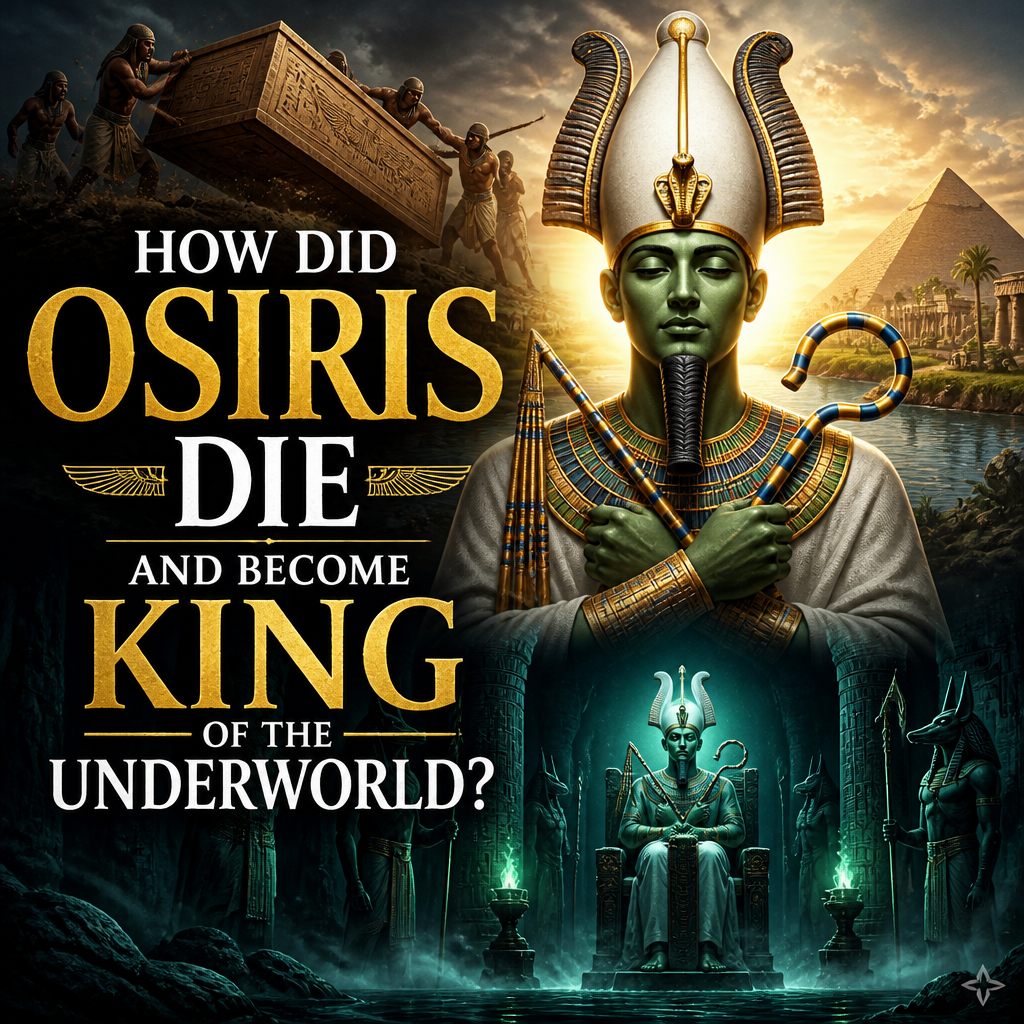
How Did Osiris Die and Become King of the Underworld?
The story of Osiris is one of the most famous myths from ancient Egypt. It explains death, resurrection, justice, and the hope of life after death. For the Egyptians, Osiris was not simply a god who died; he became the powerful ruler of the underworld and a symbol of eternal life.
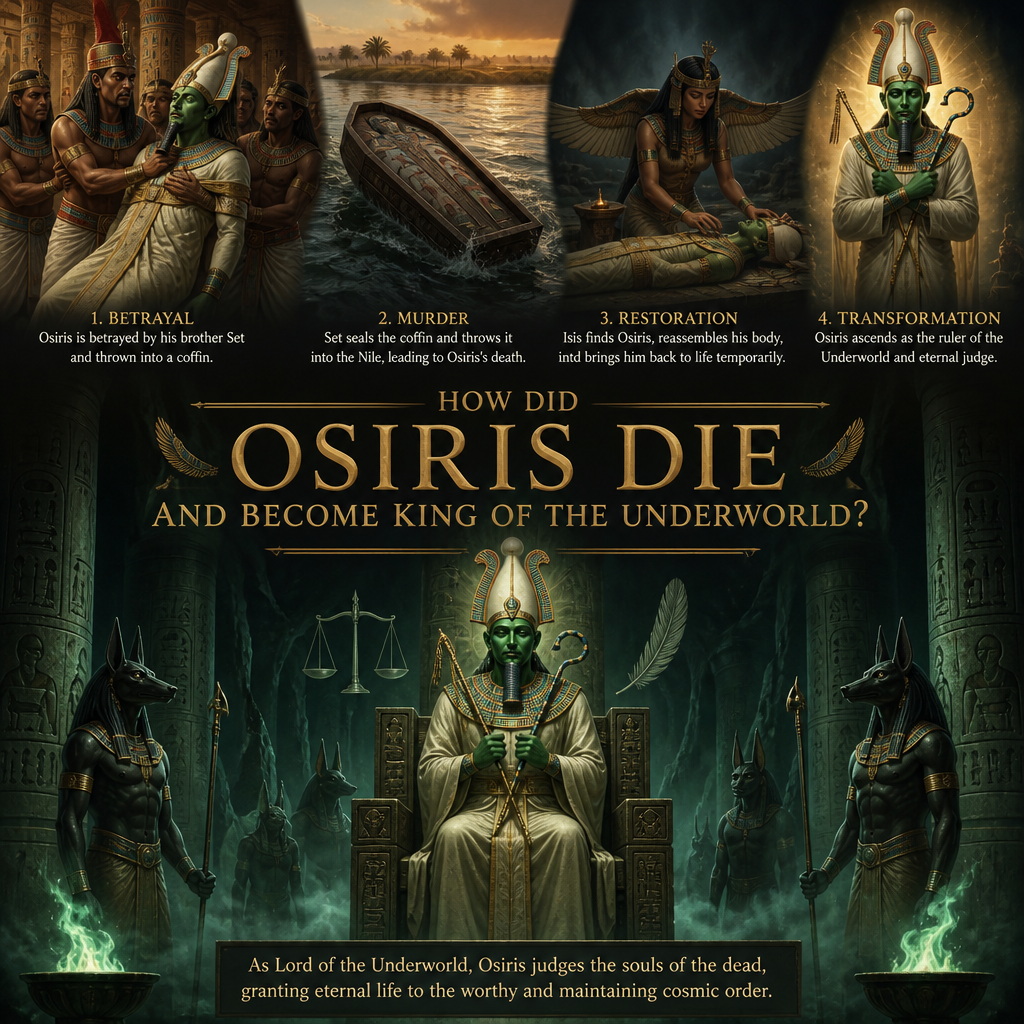
So, how did Osiris die and become king of the underworld? According to Egyptian mythology, he was murdered by his jealous brother Set, restored by his devoted wife Isis, and transformed into the lord of the dead.
Who Was Osiris?
Osiris was one of the most important gods in ancient Egyptian religion. He was often associated with fertility, agriculture, kingship, and the afterlife. In many myths, he ruled Egypt as a wise and generous king before his death.
Osiris was the son of the earth god Geb and the sky goddess Nut. His siblings included Isis, Set, and Nephthys. Osiris married his sister Isis, who became one of the most powerful goddesses in Egyptian mythology.
As king, Osiris taught people how to farm, make laws, worship the gods, and live in an orderly society. Under his rule, Egypt was peaceful and prosperous. But his success created resentment in his brother Set.
Set’s Jealousy and the Plot Against Osiris
Set, the god often associated with chaos, storms, deserts, and violence, became jealous of Osiris’s power and popularity. He wanted the throne for himself.
In one popular version of the myth, Set created a beautiful chest or coffin made to fit Osiris’s body exactly. During a feast, Set presented the chest and announced that he would give it as a gift to whoever fit inside it perfectly.
Many guests tried to lie in the chest, but none fit. When Osiris entered it, the trap was sprung. Set and his followers slammed the lid shut, sealed it, and threw the chest into the Nile River.
This was the first death of Osiris. He was betrayed by his own brother and sent away in the waters of the Nile.
The Search for Osiris
Isis was devastated when she learned what had happened. As Osiris’s wife and sister, she set out to find his body. Her search took her far from Egypt.
The chest eventually drifted to the city of Byblos, where it became lodged in a tree. The tree grew around it and was later cut down and used as a pillar in a royal palace. Isis discovered this and retrieved the body of Osiris.
She brought him back to Egypt and hid him in the marshes. But Set found the body again. In a rage, he cut Osiris into pieces and scattered them across the land.
This second act of violence made Osiris’s return to ordinary life impossible. Yet Isis did not give up.
Isis Restores Osiris
With the help of Nephthys and sometimes the god Anubis, Isis gathered the scattered pieces of Osiris’s body. She used magic, mourning rituals, and divine power to restore him.
In some versions, Isis transformed into a kite, a bird often linked with mourning, and breathed life into Osiris long enough to conceive their son, Horus.
This moment was deeply important in Egyptian belief. Osiris was not brought back as a living king on earth. Instead, he was revived in a sacred, transformed state. His body had been restored, and his spirit had been made powerful in the realm beyond death.
Why Osiris Became King of the Underworld
Osiris could no longer rule Egypt as a living king. That role would eventually pass to his son, Horus. Instead, Osiris became ruler of the Duat, the Egyptian underworld.
The Duat was not simply a place of darkness or punishment. It was a complex spiritual realm where the dead traveled after life. There, they faced judgment and hoped to be granted eternal existence.
Because Osiris had died, been restored, and entered the afterlife, he became the perfect ruler of the dead. He understood death because he had experienced it. He represented resurrection because he had been revived. He represented justice because he had been wrongfully murdered.
The Judgment of the Dead
As king of the underworld, Osiris played a central role in the judgment of souls. Ancient Egyptians believed that after death, a person’s heart was weighed against the feather of Ma’at, the goddess of truth, justice, and cosmic order.
If the heart was light and pure, the person could enter the blessed afterlife. If it was heavy with wrongdoing, the soul faced destruction.
Osiris presided over this judgment. He was often shown seated on a throne, wearing the white crown of Upper Egypt and holding the crook and flail, symbols of kingship. Before him stood the deceased, hoping to be declared worthy.
This belief gave Osiris enormous importance. He was not only a dead god; he was the judge and guardian of eternal life.
Horus and the Revenge Against Set
The story of Osiris does not end with his transformation. His son Horus grew up to challenge Set for the throne of Egypt. Their conflict became another major myth in Egyptian religion.
Horus represented rightful kingship, order, and continuity. Set represented disorder and violent ambition. After many struggles, Horus was recognized as the legitimate ruler.
This completed the cycle:
- Osiris ruled as king on earth.
- Set murdered Osiris and seized power.
- Isis restored Osiris and gave birth to Horus.
- Horus defeated Set and became king.
- Osiris ruled the underworld.
This pattern connected earthly kingship with divine order. Living pharaohs were associated with Horus, while dead pharaohs were associated with Osiris.
The Meaning of Osiris’s Death and Resurrection
The myth of Osiris reflected the natural world around the Egyptians. The Nile flooded each year, bringing fertile soil and new crops. Plants died and grew again. The sun disappeared each night and returned each morning.
Osiris became a symbol of this cycle of death and renewal. His green skin in Egyptian art often represented vegetation, fertility, and rebirth. His wrapped body resembled a mummy, connecting him to funerary rituals and the hope of resurrection.
For ordinary Egyptians, Osiris offered comfort. Death was not necessarily the end. With proper burial, moral living, and divine favor, a person could join Osiris in the afterlife.
Why the Osiris Myth Still Matters
The story of how Osiris died and became king of the underworld remains powerful because it deals with universal themes: betrayal, grief, love, justice, and hope after death.
Osiris was murdered by Set, restored by Isis, and transformed into the ruler of the dead. His journey from earthly king to underworld judge made him one of the most beloved and enduring gods of ancient Egypt.
To the Egyptians, Osiris proved that life could rise from death and that justice could triumph over chaos. His myth gave meaning to mortality and offered the promise of eternal life beyond the grave.

Orin Vale has spent the better part of two decades tracing the threads that connect the world’s oldest stories — from the halls of Asgard to the banks of the Nile, from Olympus to the jungles of the Maya. What began as a childhood fascination with flood myths and trickster gods grew into years of independent study across comparative mythology and ancient religion, always chasing the same question: what did these stories mean to the people who first told them? Orin writes for readers who want more than trivia — the ones looking for the beliefs, fears, and truths that myths were built to carry.