What Is Nidhogg in Norse Mythology?
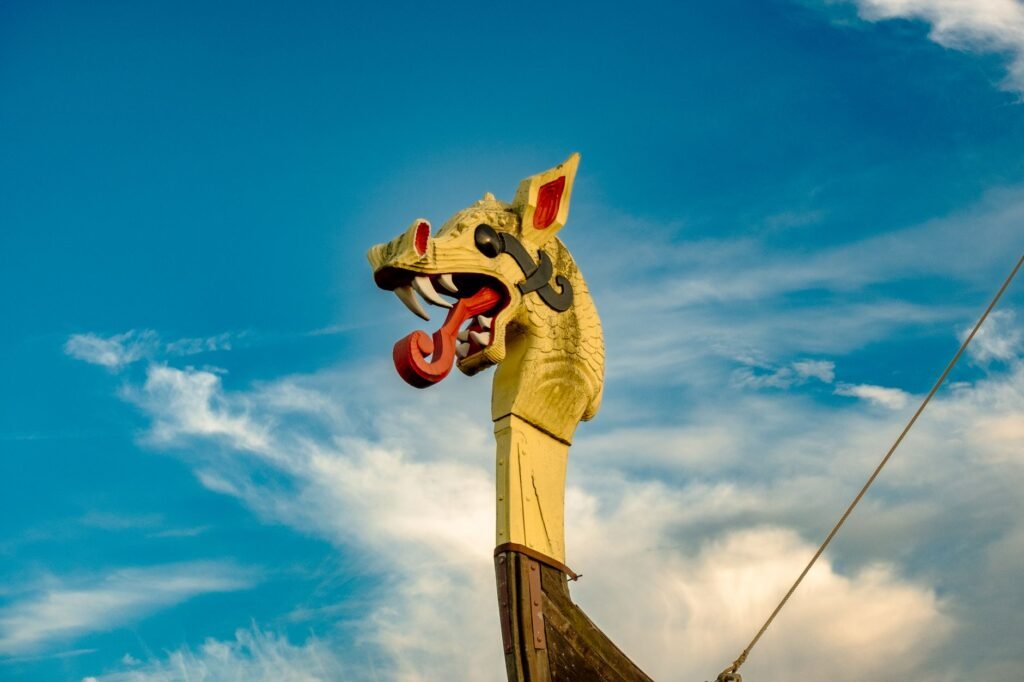
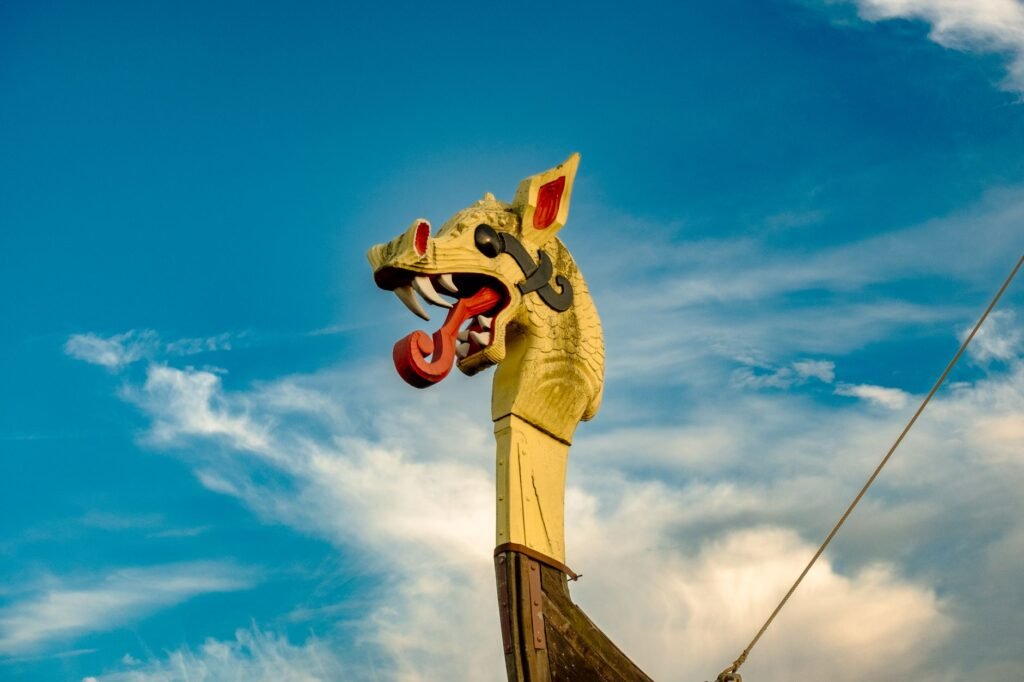
Nidhogg is one of the darkest and most unsettling creatures in Norse mythology. Often described as a dragon or monstrous serpent, Nidhogg lives beneath the roots of Yggdrasil, the great world tree that connects the nine realms. His name is commonly translated as “malice striker,” “he who strikes with hatred,” or “dread biter,” which gives a clear sense of his role in myth: destructive, hostile, and deeply connected to decay.
To understand what Nidhogg is in Norse mythology, it helps to look at where he lives, what he does, and what he represents in the wider Norse worldview.
Nidhogg and the Roots of Yggdrasil
Yggdrasil is the immense cosmic tree at the center of Norse mythology. Its branches reach across the heavens, while its roots stretch into mysterious and dangerous realms. One of these roots extends down to Niflheim, a cold and misty world associated with darkness, death, and primordial ice.
At this root, Nidhogg gnaws constantly.
This image is one of the most famous connected to him: a dragon or serpent chewing at the foundations of the world tree. Since Yggdrasil holds the cosmos together, Nidhogg’s actions suggest a threat not just to the tree, but to the order of existence itself.
He is not merely a monster hiding underground. He is a force of corrosion, slowly wearing away at the structure that supports the universe.
A Dragon of Death and Decay
Nidhogg is closely associated with death. In some sources, he is linked to Náströnd, the “Corpse Shore,” a grim place in the afterlife where certain wrongdoers are punished. This hall or shore is described as a place filled with venom, where murderers, oath-breakers, and adulterers suffer.
Nidhogg is said to feed on the bodies of the dead there.
This connection makes him more than a simple beast. He becomes a symbol of moral corruption and punishment. In Norse mythology, honor, loyalty, and keeping one’s word were deeply important. Those who violated sacred social bonds could end up in a place where Nidhogg devoured them.
In this sense, Nidhogg represents both physical decay and spiritual consequence.
The Squirrel Ratatoskr and the Eagle
One of the more unusual details about Nidhogg involves his relationship with an eagle perched at the top of Yggdrasil. According to the Prose Edda, an unnamed eagle sits high in the branches of the world tree, while Nidhogg dwells far below among the roots.
Between them runs Ratatoskr, a squirrel who carries insults and hostile messages up and down the tree.
This strange image gives Yggdrasil a sense of life and conflict. At the top is the eagle, associated with height and vision. At the bottom is Nidhogg, linked with darkness and decay. Ratatoskr’s constant movement between them spreads hostility through the cosmic tree.
The scene may be humorous on the surface, but it also reflects a deeper idea: conflict exists at every level of the cosmos.
Is Nidhogg a Dragon or a Serpent?
Modern readers often call Nidhogg a dragon, and that is a fair description. In Old Norse sources, the line between dragons and serpents is not always sharp. Many dragon-like beings in Norse mythology are described as great worms or serpents.
Nidhogg is usually imagined as:
- A monstrous serpent
- A dragon-like creature
- A corpse-eating beast
- A force of destruction beneath the world
Unlike the gold-hoarding dragon Fafnir, Nidhogg is not mainly defined by greed. His role is more cosmic and symbolic. He is tied to death, decay, punishment, and the eventual collapse of the world order.
Nidhogg and Ragnarok
Ragnarok is the great doom of the gods, when many major figures in Norse mythology meet their end and the world is consumed by fire, flood, and chaos. Nidhogg appears in connection with this final catastrophe, especially in the poem Völuspá from the Poetic Edda.
Near the end of the poem, after the destruction and renewal of the world, Nidhogg is described flying through the air carrying corpses in his wings or beneath him. This haunting image is one of the last appearances in the poem, leaving readers with a dark and ambiguous ending.
Some scholars interpret this as a sign that evil and decay still exist even after the world is renewed. Others see Nidhogg as part of the old destructive order passing away. Either way, his presence at the edge of the mythic cycle reinforces his association with death and cosmic ruin.
What Does Nidhogg Symbolize?
Nidhogg is not just a mythological monster. Like many creatures in Norse mythology, he carries symbolic meaning. He can be understood as a figure of:
Destruction
By gnawing at Yggdrasil, Nidhogg attacks the foundation of the cosmos. He embodies forces that weaken and destroy order over time.
Death
His connection to corpses and the underworld makes him one of the clearest death-related beings in Norse myth.
Moral Corruption
Because he feeds on the bodies of oath-breakers and criminals, Nidhogg is associated with dishonor and the consequences of betrayal.
Cosmic Tension
His feud with the eagle and his place beneath Yggdrasil show that Norse cosmology is not peaceful or static. It is full of pressure, conflict, and eventual transformation.
Why Nidhogg Still Fascinates People
Nidhogg remains popular in modern fantasy, games, books, and art because he is such a powerful image: a dragon hidden beneath the world, silently gnawing at its roots. He feels ancient, terrifying, and symbolic all at once.
Unlike monsters who simply attack heroes, Nidhogg threatens existence itself. He does not need to burn cities or fight gods directly to be frightening. His power lies in persistence. He is the decay that never stops, the darkness beneath the surface, and the reminder that even the world tree is not invulnerable.
Conclusion
So, what is Nidhogg in Norse mythology? He is a dragon or serpent who dwells beneath Yggdrasil, gnawing at its roots and feeding on the dead. He is linked with Niflheim, punishment, dishonor, and the destructive forces that threaten the cosmos.
Nidhogg is one of the most vivid symbols of decay in Norse myth. His presence beneath the world tree shows that even the strongest foundations are under constant threat. In a mythology shaped by fate, conflict, and eventual destruction, Nidhogg stands as a grim reminder that darkness is always waiting below.

Orin Vale has spent the better part of two decades tracing the threads that connect the world’s oldest stories — from the halls of Asgard to the banks of the Nile, from Olympus to the jungles of the Maya. What began as a childhood fascination with flood myths and trickster gods grew into years of independent study across comparative mythology and ancient religion, always chasing the same question: what did these stories mean to the people who first told them? Orin writes for readers who want more than trivia — the ones looking for the beliefs, fears, and truths that myths were built to carry.