Anyone asking is Greek mythology against Christianity is often actually asking one of two quite different questions, and separating them clearly is essential before attempting any thoughtful answer. One question concerns theology: does Greek mythology directly contradict core Christian doctrine? The other concerns personal practice: is it appropriate for a Christian to study, read, or enjoy Greek mythology? Understanding is Greek mythology against Christianity requires addressing both questions honestly, presenting the range of perspectives that exist within Christian thought itself rather than offering a single definitive verdict that would misrepresent the genuine diversity of views held by Christians on this topic.
Two Different Questions Hiding in One
The first question embedded within is Greek mythology against Christianity concerns theological compatibility, asking whether the polytheistic belief system underlying Greek mythology directly contradicts foundational Christian doctrine regarding the nature of God. This represents a genuinely theological inquiry with specific, examinable doctrinal dimensions.
The second question concerns personal and pastoral practice, asking whether Christians should engage with Greek mythology at all, whether through personal reading, academic study, or exposing children to these narratives within an educational context. This practical question involves considerations quite distinct from pure theological compatibility, touching instead on matters of personal conviction, parental discretion, and educational philosophy.
These two questions deserve separate treatment because they can yield different answers even for the same individual, as someone might conclude that Greek mythology poses no direct theological contradiction to Christian belief while still holding personal reservations about how, when, or whether to engage with specific mythological content, particularly regarding children or younger audiences.
Recognizing this distinction from the outset provides essential structure for meaningfully addressing is Greek mythology against Christianity, ensuring that theological analysis and practical guidance are not conflated into a single oversimplified answer that fails to capture the genuine complexity present within this question.
The Theological Question — Polytheism vs. Monotheism
Greek mythology describes a polytheistic religious system involving numerous distinct gods, each governing specific domains such as war, love, or the sea, structurally differing significantly from Christianity’s monotheistic belief in a single God. This structural difference forms the core of any theological examination of is Greek mythology against Christianity.
From the perspective of traditional Christian doctrine, the gods of Greek mythology are generally not understood as genuine competing deities actively challenging Christian belief today, but rather as figures belonging to a historical religious tradition that ceased functioning as an actively practiced belief system many centuries ago. This distinction matters significantly for how many Christian traditions have historically approached engagement with classical mythology.
This description of theological difference should not be read as declaring which belief system holds ultimate truth, since that question extends well beyond the scope of comparative religious or historical analysis into matters of personal faith and conviction that this discussion does not attempt to resolve one way or the other.
Understanding this structural theological distinction provides necessary context for is Greek mythology against Christianity, clarifying that any perceived tension operates primarily at the level of historical belief systems rather than representing an active, ongoing theological conflict between two currently competing religious claims in most mainstream Christian thought.
A Long History of Christian Engagement With Classical Mythology
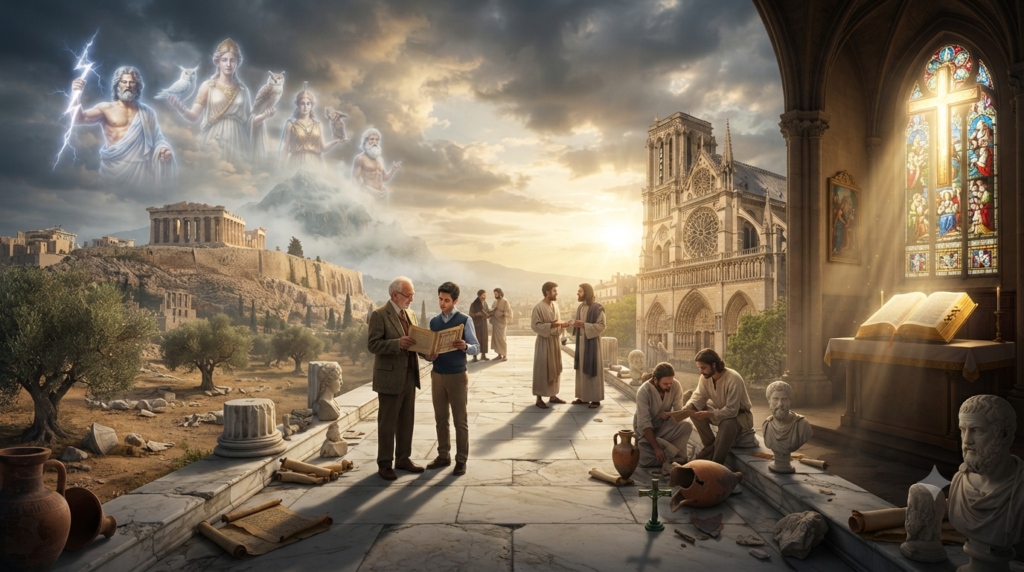
Christian educational tradition has a long history of incorporating classical Greek and Roman mythology into formal education, particularly evident within medieval and Renaissance curricula built around the classical trivium and quadrivium, which regularly included study of classical literature and mythology alongside explicitly Christian theological education.
Numerous significant Christian authors throughout history have incorporated Greek mythological elements directly into their own literary and theological work, with Dante’s incorporation of classical figures within the Divine Comedy and C.S. Lewis’s extensive engagement with classical mythology throughout his broader literary and apologetic writing representing well-known examples relevant to is Greek mythology against Christianity historically.
This historical pattern reflects a long-standing tradition within Christian intellectual life of engaging with classical mythology as literature, philosophy, and allegory, often reading mythological narratives symbolically or morally rather than treating them as genuine competing religious claims requiring theological refutation or concern.
This extensive historical precedent provides important context for is Greek mythology against Christianity, demonstrating that substantial engagement with Greek mythology has coexisted comfortably alongside serious Christian intellectual and educational tradition across many centuries, even while theological distinctions between the two systems remained clearly acknowledged.
Different Christian Perspectives Today
Many contemporary Christians approach Greek mythology as valuable literature, cultural history, and educational material, viewing engagement with these ancient narratives as posing no meaningful risk to their Christian faith, consistent with the long historical tradition of Christian classical education discussed previously.
Other Christians, particularly regarding younger audiences, express more caution regarding exposure to polytheistic religious narratives or specific mythological content involving violence or mature themes, reflecting genuine pastoral and parental concern about age-appropriate content rather than a blanket theological rejection of Greek mythology as inherently dangerous or forbidden.
Both of these perspectives represent legitimate positions held by thoughtful Christians today, reflecting genuine diversity within Christian thought regarding practical questions of media consumption, educational content, and personal discretion, rather than representing a single settled consensus applicable to every individual or community addressing is Greek mythology against Christianity.
Recognizing this legitimate diversity of perspective matters significantly for accurately answering is Greek mythology against Christianity, avoiding the mistake of presenting either the more permissive or more cautious position as the single correct Christian view, when genuine, thoughtful disagreement exists among sincere believers on this practical question.
Studying Mythology vs. Believing in It
An important distinction relevant to is Greek mythology against Christianity involves separating academic or cultural engagement with mythology from genuine religious belief or worship, since studying a mythological tradition for its literary, historical, or cultural significance does not require or imply personal religious commitment to that tradition’s underlying belief system.
This distinction explains why many Christians throughout history have felt comfortable studying, teaching, and even creatively engaging with Greek mythology without perceiving any contradiction with their own religious commitments, treating mythology as a subject of legitimate historical and literary interest rather than as competing religious practice requiring personal belief or worship.
This same distinction applies broadly across comparative religious and mythological study generally, allowing individuals from various religious backgrounds to engage meaningfully with mythological traditions different from their own personal beliefs without this academic or cultural engagement constituting religious endorsement or practice of that specific tradition.
Understanding this distinction between study and belief provides essential clarity for is Greek mythology against Christianity, reinforcing that engaging with Greek mythology academically or culturally represents a fundamentally different activity than religious practice, addressing much of the underlying concern some individuals might have when first encountering this question.
Why This Question Deserves a Thoughtful Answer
Ultimately, addressing is Greek mythology against Christianity in a genuinely helpful way requires acknowledging that the final decision regarding personal engagement with Greek mythology rests with each individual reader’s own conscience, convictions, and religious community guidance rather than any single external, universally applicable answer.
This approach respects the genuine diversity of thoughtful perspectives that exist within Christian tradition regarding this question, providing readers with accurate historical, theological, and practical context while avoiding the mistake of prescribing a single correct answer that would not genuinely reflect the range of legitimate Christian thought on this topic.
Providing this balanced context serves readers far better than a simplistic yes or no answer, equipping individuals with the historical and theological background needed to thoughtfully form their own conclusions regarding is Greek mythology against Christianity based on their own specific convictions, community, and personal discernment.
This measured approach reflects the genuine complexity underlying is Greek mythology against Christianity, recognizing that thoughtful, sincere Christians have reached different conclusions on this practical question throughout history, and that this diversity of thought deserves respect rather than artificial resolution into a single mandated position.
FAQ — Quick Answers About Greek Mythology and Christianity
Is Greek mythology against Christianity?
Not in a direct theological sense for most Christian traditions, though Christians hold varying personal views on the appropriateness of engaging with Greek mythology.
Did Christians historically study Greek mythology?
Yes, classical mythology was a significant part of Christian educational tradition for centuries, particularly during the medieval and Renaissance periods.
Can studying Greek mythology weaken Christian faith?
This varies by individual perspective; many Christians engage with mythology as literature and history without perceiving any conflict with their faith.
Did any Christian authors use Greek mythology in their work?
Yes, authors such as Dante and C.S. Lewis incorporated classical mythological elements into significant Christian literary and theological works.
Is it wrong for Christian parents to let children read Greek mythology?
This depends on personal conviction; some Christian parents view it as valuable education, while others exercise caution regarding specific content or age-appropriateness.
Conclusion
Anyone who sets out to answer is Greek mythology against Christianity finds that the honest response depends significantly on which specific question is actually being asked and, ultimately, on each individual’s own convictions and community guidance. Theologically, most Christian traditions view Greek mythology as belonging to a historical religious system rather than an active competing claim, while practically, sincere Christians hold genuinely different views on personal engagement with this material.
The long history of Christian engagement with classical mythology, from medieval education to the works of writers like Dante and C.S. Lewis, demonstrates that serious Christian intellectual life has coexisted comfortably alongside deep familiarity with Greek mythology for centuries, even as theological distinctions remained clear throughout.
Ultimately, is Greek mythology against Christianity resists a single universal answer, and that is appropriate: this question touches personal conviction as much as historical fact, and the most honest response respects each reader’s own faith, discernment, and community in reaching their own thoughtful conclusion.

Orin Vale has spent the better part of two decades tracing the threads that connect the world’s oldest stories — from the halls of Asgard to the banks of the Nile, from Olympus to the jungles of the Maya. What began as a childhood fascination with flood myths and trickster gods grew into years of independent study across comparative mythology and ancient religion, always chasing the same question: what did these stories mean to the people who first told them? Orin writes for readers who want more than trivia — the ones looking for the beliefs, fears, and truths that myths were built to carry.