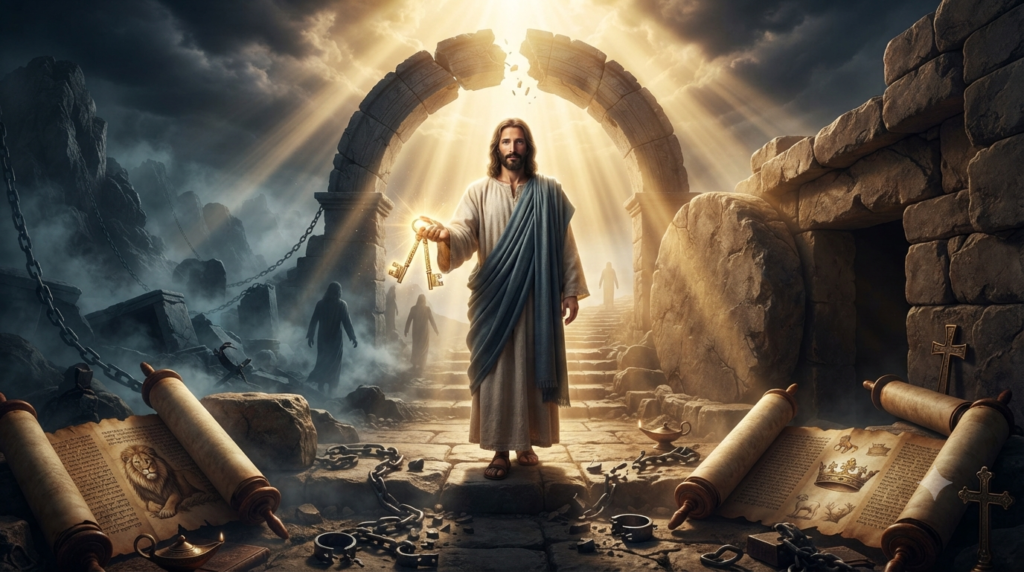
Anyone asking how did Jesus get the keys to death and Hades is referencing a specific, well-known passage found within the Book of Revelation, in which the risen Christ, appearing within John’s vision, declares possession of these keys as part of a broader self-identification. Understanding how did Jesus get the keys to death and Hades requires examining this specific passage directly, along with how Christian tradition has historically interpreted this symbolic declaration regarding authority over death and the realm described elsewhere as Hades within New Testament scripture.
The Passage — Revelation 1:17-18
The specific passage addressing how did Jesus get the keys to death and Hades appears within Revelation 1:17-18, occurring during John’s dramatic vision in which a glorified figure identified as Christ appears before him, prompting John to fall down as though dead in response to this overwhelming encounter.
Within this vision, the figure declares, “I am the First and the Last, and the Living One; I was dead, and behold, I am alive forevermore, and I have the keys of death and of Hades,” directly connecting the possession of these keys to the specific claim of having died and subsequently returned to life.
This declaration positions the keys to death and Hades as directly connected to resurrection specifically, providing essential textual context for how did Jesus get the keys to death and Hades, since the passage itself links this possession directly to the preceding statement regarding death and renewed life.
Understanding this specific textual context proves essential for how did Jesus get the keys to death and Hades, establishing that this declaration occurs within a broader self-identification passage rather than as an isolated statement disconnected from its surrounding scriptural context within Revelation.
What “Keys” Symbolize in Biblical Language
Keys frequently function as a symbol of authority and control throughout biblical language more broadly, appearing in other significant passages to represent granted power over specific domains, providing important interpretive context relevant to how did Jesus get the keys to death and Hades within this particular passage.
Applied specifically to death and Hades, this symbolic use of keys suggests authority and control over these particular domains, reinforcing that how did Jesus get the keys to death and Hades concerns a claim of governing authority rather than referencing literal physical keys or objects within the text itself.
This symbolic interpretation aligns with broader patterns of biblical imagery, in which physical objects like keys represent abstract spiritual or theological concepts, an important interpretive principle relevant to how did Jesus get the keys to death and Hades within its broader scriptural and literary context.
Recognizing this symbolic function provides essential interpretive grounding for how did Jesus get the keys to death and Hades, confirming that this passage communicates a claim of authority over death and the realm of the dead rather than describing any literal, physical object being obtained or transferred.
How Christian Tradition Interprets This Authority
Christian tradition commonly interprets this passage as connecting the acquisition of authority over death and Hades directly to the resurrection, understanding Christ’s return from death as the specific event through which this particular authority was obtained, directly relevant to how did Jesus get the keys to death and Hades theologically.
Different Christian traditions place varying emphasis on the precise theological significance of this authority, with some focusing on victory over death generally, while others emphasize more specific implications regarding judgment or the ultimate fate of those who have died, reflecting genuine diversity relevant to how did Jesus get the keys to death and Hades interpretively.
This range of interpretation reflects broader, legitimate theological diversity within Christian thought regarding Revelation’s often symbolically dense imagery, meaning how did Jesus get the keys to death and Hades can receive somewhat different theological emphasis depending on which specific Christian tradition or interpretive approach is being consulted.
Recognizing this interpretive diversity provides essential balance for how did Jesus get the keys to death and Hades, ensuring the discussion respects genuine theological variation rather than presenting a single interpretation as the definitively correct understanding across all Christian traditions and denominations.
Connecting This to the Broader Biblical Use of “Hades”
The term “Hades” appearing within this specific passage connects directly to its broader New Testament usage, functioning as the Greek term adopted to translate the Hebrew concept of Sheol, consistent with its appearance in other significant biblical passages relevant to how did Jesus get the keys to death and Hades.
This consistency reinforces that Revelation’s specific use of Hades within this passage fits within the broader, established pattern of New Testament vocabulary, rather than representing an isolated or uniquely different usage specific only to this particular verse addressing how did Jesus get the keys to death and Hades.
Understanding this connection to broader biblical usage helps situate how did Jesus get the keys to death and Hades within its proper linguistic and scriptural context, confirming that this specific passage draws on established New Testament terminology rather than introducing an entirely separate or unrelated concept.
This linguistic consistency provides important final context for how did Jesus get the keys to death and Hades, reinforcing that this passage’s specific vocabulary aligns meaningfully with the broader, consistent pattern of New Testament usage found throughout other significant biblical texts and passages.
FAQ — Quick Answers About This Passage
How did Jesus get the keys to death and Hades?
According to Revelation 1:18, Christ declares possession of these keys directly following a statement about having died and returned to life, connecting this authority to the resurrection.
Where is this passage found in the Bible?
This passage is found in Revelation 1:17-18, during John’s vision of the risen Christ.
What do “keys” symbolize in this context?
Keys generally symbolize authority and control in biblical language, applied here specifically to death and Hades.
Is “Hades” in this passage the same as the Greek god?
No, it refers to the biblical term for the realm of the dead, consistent with its broader New Testament usage.
Do all Christians interpret this passage the same way?
No, different Christian traditions emphasize different aspects of this authority, reflecting genuine theological diversity in interpretation.
Conclusion
Anyone who sets out to answer how did Jesus get the keys to death and Hades finds this authority directly connected, within Revelation 1:17-18, to the specific claim of resurrection, with Christ declaring possession of these symbolic keys immediately following a statement about death and renewed life.
Understanding keys as a broader biblical symbol of authority, alongside this passage’s consistent use of “Hades” in line with its established New Testament meaning, provides essential context for interpreting this significant, often-discussed verse within Revelation.
Ultimately, how did Jesus get the keys to death and Hades connects to genuine, ongoing theological interpretation across different Christian traditions, offering readers accurate scriptural context while respecting the diversity of understanding this passage continues to generate.

Orin Vale has spent the better part of two decades tracing the threads that connect the world’s oldest stories — from the halls of Asgard to the banks of the Nile, from Olympus to the jungles of the Maya. What began as a childhood fascination with flood myths and trickster gods grew into years of independent study across comparative mythology and ancient religion, always chasing the same question: what did these stories mean to the people who first told them? Orin writes for readers who want more than trivia — the ones looking for the beliefs, fears, and truths that myths were built to carry.