Stone of Fal (Lia Fáil)
Introduction
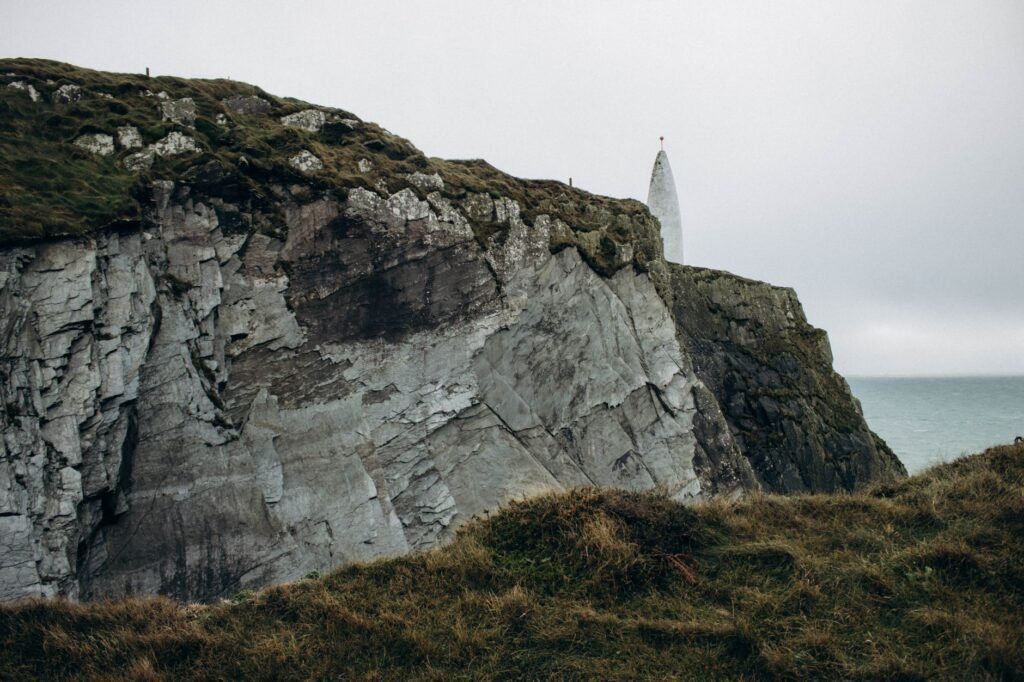
The Stone of Fal, more commonly known by its Irish name Lia Fáil, is one of the best-known legendary objects in Irish mythology. Associated with sovereignty, kingship, and the sacred landscape of Ireland, it is traditionally described as the coronation stone of the Kings of Tara. In mythic tradition, the stone was said to cry out when the rightful king of Ireland stood upon it, making it a powerful symbol of legitimacy and divine approval.
Although it is deeply embedded in medieval Irish literary tradition, the stone also occupies a place in the material history of Ireland. A standing stone on the Hill of Tara in County Meath is today commonly identified as the Lia Fáil, though the relationship between the physical monument and the legendary stone is complex and has been the subject of scholarly debate. The Stone of Fal therefore stands at the intersection of archaeology, mythology, kingship ideology, and national symbolism.
Origin and Meaning
The name Lia Fáil is generally translated as “Stone of Fal” or “Stone of Destiny.” The word lia means “stone” in Irish. The second element, Fál, has been interpreted in different ways.
Etymological notes
Different explanations appear in scholarship and tradition:
- Fál as an ancient name for Ireland: In later Irish literary usage, Fál can refer to Ireland itself, especially in poetic or symbolic contexts.
- Fál as a personal or divine name: Some traditions treat Fál as a figure or title connected with sovereignty.
- Association with destiny or kingship: The English phrase “Stone of Destiny” reflects the stone’s mythic function, even though that is an interpretive translation rather than a literal one.
The exact origin of the name is not fully certain. Medieval Irish texts frequently link the stone with the supernatural Tuatha Dé Danann and with the inauguration of kings at Tara, but the earliest formation of the name is difficult to reconstruct with confidence.
Historical Context
The Stone of Fal belongs to the broader cultural world of early medieval Ireland, where kingship was understood not only as political power but also as a sacred office. In Irish tradition, kings were expected to embody a relationship with the land, the people, and the divine order. A ruler’s legitimacy was often expressed through ritual acts, omens, and sacred sites.
Kingship and sovereignty in early Ireland
The Lia Fáil is best understood in the context of Irish concepts of sovereignty:
- Kingship was tied to land and fertility.
- A rightful ruler was believed to maintain prosperity and cosmic balance.
- Sacred places such as Tara served as political and ritual centers.
- Mythic objects could function as signs of divine sanction.
The Hill of Tara, in County Meath, was one of the most important ceremonial centers in Gaelic Ireland. Medieval sources present it as the seat of the high kings, although modern historians note that its role changed over time and should not be imagined as a continuous centralized capital in the modern sense.
Mythic and political meaning
The Lia Fáil is part of a large body of medieval lore that gives the Irish landscape a sacred past. It is said to have been brought to Ireland by the Tuatha Dé Danann, the supernatural people of Irish myth. In this framework, the stone is not merely a monument but a relic of an earlier sacred order, linking human kingship with a mythic age.
Main Characteristics
The Stone of Fal is usually described as a standing stone associated with prophecy, kingship, and sound.
Key traits in tradition
- Function as a coronation stone: It was believed to recognize the rightful king.
- Audible response: In legend, it cried out or roared when touched by the legitimate ruler.
- Connection to Tara: It is tied to the inauguration landscape of the Hill of Tara.
- Mythic antiquity: It is associated with the Tuatha Dé Danann and the earliest sacred history of Ireland.
Physical appearance
The surviving monument at Tara is a rough upright stone. It does not bear a long inscription or elaborate carving. Its simplicity is important: many sacred stones in Celtic tradition derive their significance not from decoration but from location, age, and ritual association.
Important caution
It is difficult to distinguish firmly between:
- The legendary Lia Fáil described in medieval narratives, and
- The surviving standing stone at Tara identified with it today.
The identification is traditional and culturally powerful, but it cannot be treated as fully proven in a strict archaeological sense.
Family and Genealogy
As a sacred stone, the Lia Fáil does not have a family in the biological sense. However, Irish myth gives it a place in a larger genealogy of supernatural objects and peoples.
Mythic associations
The stone is linked to:
- The Tuatha Dé Danann, the mythic people said to have brought it to Ireland.
- The four treasures of the Tuatha Dé Danann, among which the Lia Fáil is often counted in tradition.
- The kings of Tara, who were believed to be tested or affirmed by it.
The four treasures tradition
In some versions of Irish myth, the Tuatha Dé Danann brought four great treasures to Ireland:
| Treasure | Common association |
|---|---|
| Lia Fáil | Stone of sovereignty |
| Spear of Lugh | Weapon of victory |
| Sword of Nuada | Weapon of kingship and justice |
| Cauldron of the Dagda | Abundance and nourishment |
Not all sources present the same list in the same way, and the traditions vary. Still, the Lia Fáil is consistently treated as one of the major sacred objects connected with the supernatural history of Ireland.
Symbols
The Stone of Fal is associated with a range of symbolic meanings, especially those related to authority and sacred space.
Major symbols
- Stone: permanence, endurance, law, and legitimacy
- Sound or voice: recognition, judgment, and supernatural approval
- Hill or elevation: sacred visibility and political centrality
- Kingship: rightful rule, continuity, and responsibility
- Ireland itself: in later symbolic interpretation, the stone can stand for the island and its sovereignty
Cultural symbolism
The most important symbolic meaning of the Lia Fáil is that it represents the idea that sovereignty is not merely seized but must be recognized. The rightful king is not simply the strongest ruler; he is the one accepted by the land and its sacred power.
Sacred Animals
No specific animal is universally and consistently attached to the Stone of Fal in the way that some gods or heroes are linked to particular creatures. However, in broader Irish sovereignty tradition, several animals often appear symbolically.
Animals associated with sovereignty themes
- Horse: often connected with kingship, mobility, and ritual power
- Bull: linked to prosperity, fertility, and royal abundance
- Birds: sometimes associated with prophecy and liminality
- Hounds: associated with nobility, guardianship, and kingship in wider Irish myth
Because the Lia Fáil is an object rather than a deity, any animal associations are indirect and context-dependent. They arise from the wider symbolic environment of Irish kingship rather than from a fixed cult around the stone itself.
Sacred Plants
There are no universally recognized sacred plants uniquely tied to the Stone of Fal. However, plants in the Tara tradition and Irish sovereignty lore more broadly may be relevant.
Possible plant associations in Irish sacred landscape tradition
- Oak: often linked with strength, sacred kingship, and old Irish ritual landscapes
- Yew: associated with endurance, burial, and continuity
- Holly: in some Celtic traditions, connected with protection
- Hazel: widely symbolic of wisdom in Irish myth
These associations are general to Celtic and Irish mythic culture rather than specific to the Lia Fáil. Care should be taken not to overstate them as direct historical facts.
Sacred Places
The most important sacred place connected with the Stone of Fal is Tara, but the stone also belongs to the wider mythic geography of Ireland.
Hill of Tara
The Hill of Tara in County Meath is the stone’s principal location in tradition. Tara appears in medieval sources as a royal and ceremonial center, linked with the inauguration of kings and assemblies of power.
Why Tara matters
- It is one of the best-known ritual landscapes in Ireland.
- It became associated with high kingship.
- It appears in many medieval narratives and genealogical traditions.
- It remains a symbol of Irish cultural memory.
Other related locations
While Tara is central, the Lia Fáil also belongs to a broader mythic geography involving:
- Ireland as a whole, especially in texts linking sovereignty and sacred kingship
- Other inauguration sites in Gaelic Ireland, which were used by regional kings
- Mythic otherworld locations, where the Tuatha Dé Danann and sacred objects originate
Powers and Attributes
The Stone of Fal is traditionally credited with a supernatural power: it cries out under the rightful king.
Main powers
| Attribute | Meaning |
|---|---|
| Recognition | Identifies the legitimate ruler |
| Prophecy | Confirms future kingship |
| Sovereignty | Embodies the sacred right to rule |
| Judgment | Separates the rightful from the unworthy |
| Connection to the land | Links kingship to Ireland itself |
Interpretive significance
The stone’s power should be understood symbolically as well as literally. In myth, the sound of the stone is a divine sign. Historically, such a legend would have reinforced royal authority by presenting kingship as sanctioned by supernatural forces.
Main Myths
The most famous stories about the Lia Fáil come from medieval Irish tradition, especially from literature concerning the Tuatha Dé Danann and the kings of Tara.
Arrival in Ireland
According to tradition, the Tuatha Dé Danann brought the stone to Ireland. In some accounts, it came from a northern island or from the mythical homeland of these beings. The exact route and context vary across sources.
The stone’s cry
The best-known myth says that the stone would shout or roar when the true king of Ireland stood upon it. This is the feature that made it a legendary instrument of kingship rather than a mere monument.
The claim of the Milesians
In some traditions, the stone was associated with the settlement of Ireland by the Milesians, the ancestors of the historical Gaels in mythic genealogy. The stone remained at Tara as part of the sacred order of the land, even as rulership passed into human dynasties.
Patrick and the stone in later tradition
Some later Christian and nationalist traditions reinterpreted Tara and its sacred objects in relation to Ireland’s Christian past. These later readings should be distinguished from the older mythic accounts. Medieval Christian writers often adapted pre-Christian material rather than preserving it unchanged.
Relationship with Other Mythological Figures
The Stone of Fal is not a person, but it is closely linked with several major figures of Irish myth.
Tuatha Dé Danann
The stone is most often associated with the Tuatha Dé Danann, the supernatural beings who represent a mythic prehuman or pre-Gaelic past. They are central to the stone’s origin story.
Dagda
In some versions, sacred treasures of the Tuatha Dé Danann are linked to the Dagda, a major figure of abundance and authority. The Lia Fáil belongs to this same mythic world of power objects.
Nuada
Nuada, king of the Tuatha Dé Danann, is part of the wider cycle of sovereignty and sacred rule in which the stone functions. He is especially important in stories involving kingship and loss.
Lugh
Lugh is often associated with mastery, skill, and royal legitimacy. Although not directly the owner of the stone in all sources, he belongs to the same mythic environment as the treasures of the Tuatha Dé Danann.
Kings of Tara
The stone’s most direct relationship is with the kings of Tara. It stands as a symbolic judge or witness of their legitimacy.
Worship and Cult
The question of whether the Lia Fáil was “worshipped” in the strict sense must be handled carefully. There is no evidence for a formal cult of the stone in the same way that one would speak of temple worship of a deity. However, it was certainly embedded in ritual and kingship practices.
Possible ritual functions
- Inauguration rites for kings
- Public assemblies at Tara
- Symbolic confirmation of ruler legitimacy
- Sacralization of landscape through ceremonial use
Offerings and ceremonies
Sources do not preserve detailed evidence of regular offerings to the stone itself. What is more secure is that Tara functioned as a ritual and political center, where kingship could be displayed and validated. The stone belonged to that ceremonial world.
Christian reinterpretation
After Christianization, older sacred traditions were often reinterpreted through Christian frameworks. Some elements survived as folklore, while others were absorbed into historical memory or patriotic narrative.
Ancient Sources
The Lia Fáil appears in medieval Irish literature rather than in Greek or Roman classical texts. Since the topic is Irish, the most relevant sources are native medieval texts and later antiquarian works.
Important sources and traditions
| Source type | Relevance |
|---|---|
| Medieval Irish sagas | Preserve myths of the Tuatha Dé Danann and kingship |
| Annals and genealogies | Reflect royal and historical memory, though often indirectly |
| Lebor Gabála Érenn | Important for the mythic history of Ireland and the arrival of the Tuatha Dé Danann |
| Later antiquarian accounts | Help document local tradition and interpretation |
Classical authors
Classical authors such as Homer, Hesiod, Apollodorus, Pausanias, or Ovid do not provide primary evidence for the Lia Fáil, since it is an Irish tradition. Their absence is itself important: the stone belongs to a distinct Celtic literary and historical sphere.
Source criticism
The medieval Irish sources combine myth, genealogy, political ideology, and Christian scholarship. They are invaluable, but they do not read like modern historical records. As a result, the Lia Fáil must be studied as both a legendary object and a cultural artifact of medieval literary tradition.
Roman Equivalent
There is no direct Roman equivalent to the Stone of Fal.
If one seeks a rough functional comparison, Roman religion and politics also included sacred signs confirming legitimacy, such as augury and omens. However, no Roman object corresponds closely to the myth of a speaking coronation stone.
Best comparison in broader terms
- Roman auspices: signs that validated public action
- Royal or imperial ritual objects: symbols of authority
- Sacred boundary stones and altars: markers of religious space
These are only partial analogies. The Lia Fáil is uniquely Irish in its mythic role and should not be over-aligned with Mediterranean traditions.
Influence on Modern Culture
The Stone of Fal remains a potent symbol in Irish cultural memory and modern creative work.
In literature and scholarship
It appears frequently in:
- studies of Irish mythology
- histories of Tara and kingship
- retellings of the Tuatha Dé Danann
- works on Celtic symbolism and sovereignty
In nationalism and heritage
The Lia Fáil has been used as a symbol of:
- Irish identity
- continuity with the pre-Christian past
- legitimacy and sovereignty
- cultural heritage tied to Tara
It has also been discussed in debates about preservation, archaeology, and the interpretation of sacred landscapes.
In popular culture
The stone and Tara’s mythic heritage occasionally appear in:
- fantasy literature
- role-playing and tabletop games
- documentaries on Celtic mythology
- museum interpretation and heritage tourism
Its modern appeal lies in its combination of mystery, antiquity, and national significance.
Curiosities
- The Lia Fáil is often called the Stone of Destiny, but that English title is interpretive rather than a strict translation.
- The surviving stone at Tara is plain and uninscribed, which contrasts with its enormous legendary reputation.
- Medieval Irish tradition treats the stone as capable of making a sound, a rare motif among sacred stones in world mythology.
- Tara’s importance is both historical and symbolic; it is one of Ireland’s most recognized ceremonial landscapes.
- The Lia Fáil is frequently discussed alongside the four treasures of the Tuatha Dé Danann, though the exact details differ by source.
- Its legend helped preserve Tara’s prestige long after the political world of early Gaelic kingship had changed.
Frequently Asked Questions
What is the Stone of Fal?
The Stone of Fal, or Lia Fáil, is a legendary Irish coronation stone associated with the Hill of Tara. Tradition says it cried out when the rightful king stood upon it.
Where is the Lia Fáil located?
The stone is traditionally identified with a standing stone on the Hill of Tara in County Meath, Ireland.
Why is it called the Stone of Destiny?
It is called the Stone of Destiny because of its role in recognizing the legitimate king. The name reflects its mythic function in sovereignty traditions.
Is the current stone at Tara definitely the original Lia Fáil?
This is not certain. The identification is traditional and widely accepted in cultural memory, but the exact historical relationship between the surviving stone and the legendary object cannot be proven conclusively.
Who brought the stone to Ireland?
According to myth, the Tuatha Dé Danann brought it to Ireland. Different traditions vary in detail.
Did the stone really speak?
In myth, yes. It was said to cry out or roar for the rightful king. This should be understood as a legendary claim rather than a historical fact.
Is the Stone of Fal connected to Christianity?
Not originally. It belongs to pre-Christian Irish myth, though later writers sometimes reinterpreted Tara and its symbols within Christian or national frameworks.
Why is the Lia Fáil important today?
It remains important as a symbol of Irish heritage, kingship mythology, and the sacred landscape of Tara.
Conclusion
The Stone of Fal (Lia Fáil) is one of the most enduring symbols of Irish mythology and cultural memory. As the legendary stone of kingship at Tara, it expresses core themes in early Irish tradition: the sacredness of sovereignty, the bond between ruler and land, and the idea that legitimate power must be recognized by forces greater than human ambition.
Its significance lies not only in the myths that surround it but also in its continuing presence in Irish historical imagination. Whether viewed as a legendary object of the Tuatha Dé Danann, a ritual symbol of early kingship, or a monument embedded in the sacred landscape of Tara, the Lia Fáil remains a powerful emblem of Ireland’s mythic past and enduring cultural identity.

Orin Vale has spent the better part of two decades tracing the threads that connect the world’s oldest stories — from the halls of Asgard to the banks of the Nile, from Olympus to the jungles of the Maya. What began as a childhood fascination with flood myths and trickster gods grew into years of independent study across comparative mythology and ancient religion, always chasing the same question: what did these stories mean to the people who first told them? Orin writes for readers who want more than trivia — the ones looking for the beliefs, fears, and truths that myths were built to carry.