Introduction
The Ogham alphabet is an early medieval writing system associated primarily with Ireland and, more broadly, with the Celtic-speaking world of the British Isles. It is best known for its inscriptions on stone monuments, where short names and formulaic texts were carved along or across a central edge line. Although later antiquarian writers linked Ogham to deep antiquity and to legendary origins, modern scholarship places most surviving inscriptions in the early medieval period, roughly from the 4th to the 9th centuries CE.
Ogham is important for several reasons. It is the earliest substantial writing system known from Gaelic-speaking Ireland. It provides evidence for early Irish personal names, territorial organization, and language history. It also holds a special place in cultural memory, where it is often associated with druidic learning, sacred trees, and later medieval manuscript traditions. At the same time, many popular claims about Ogham go beyond the evidence, so a careful, source-based approach is essential.
Origin and Meaning
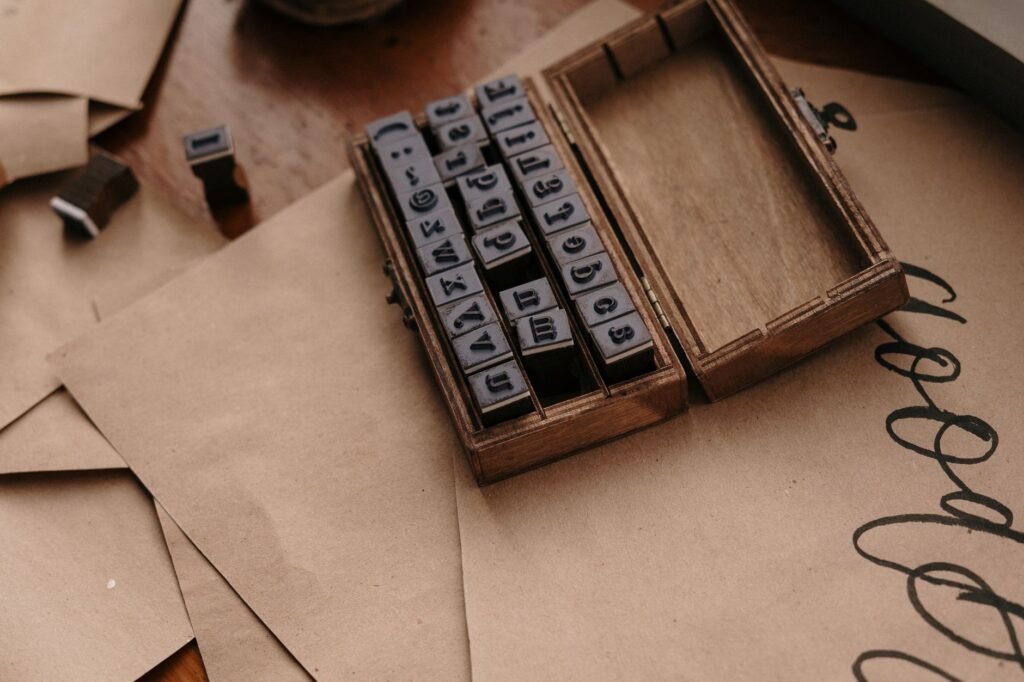
The word Ogham is usually rendered in Old Irish as ogam or ogum. Its precise etymology remains uncertain and has been debated by scholars. Ancient and medieval writers sometimes connected it with a mythical creator figure named Ogma or Ogmae, a deity or heroic figure associated in Irish tradition with eloquence and learning. However, this connection is not universally accepted as a historical explanation for the script’s name.
The historical origin of the alphabet is also debated. Most scholars agree that Ogham was created in Ireland, probably in the late Roman or early post-Roman period, as a means of writing the early Irish language. Its design may have been influenced by contact with the Roman alphabet, though Ogham is structurally distinct and does not derive directly from Latin letter forms.
Key points on origin
- Likely place of origin: Ireland
- Probable date of emergence: early centuries CE, with most surviving inscriptions later
- Function: primarily commemorative and territorial inscription
- Script type: alphabetic system built from groups of strokes relative to a central line
Historical Context
Ogham emerged in a world of shifting political and cultural boundaries. Ireland in late antiquity and the early medieval period had no Roman urban network like that of Britain or Gaul, but it was not isolated. Trade, migration, warfare, and religious change connected the island to neighboring regions. Ogham inscriptions appear mostly on standing stones, suggesting a public, durable form of marking identity, land, and memory.
Most surviving inscriptions are found in southern Ireland, especially in counties Kerry, Cork, and Waterford, though examples also exist in Wales, Devon, Cornwall, the Isle of Man, and other areas with Irish or Irish-linked communities. These distribution patterns indicate that Ogham was not confined to Ireland alone. It was used in regions where Gaelic cultural influence extended across the Irish Sea.
The script is deeply associated with the transition from pagan to Christian society. Some inscriptions may predate the full Christianization of Ireland, while others belong to a period when Christian culture was already established. Later medieval manuscripts describe Ogham as part of learned tradition, integrating it into vernacular scholarship, legal learning, and mythic history.
Main Characteristics
Ogham is visually distinctive and highly systematic. It consists of straight or angled strokes arranged in relation to a stemline. In stone inscriptions, the stemline is usually the vertical edge of the stone; in manuscript copies, it is often drawn as a central line.
The basic alphabet is traditionally organized into groups of five letters, with each group represented by one to five strokes in a particular direction relative to the stemline. Later medieval tradition also added a series of “forfeda” or supplementary letters.
Basic structural features
| Feature | Description |
|---|---|
| Writing direction | Usually bottom to top on stones, though variations exist |
| Letter form | Strokes to one side or crossing a stemline |
| Medium | Mainly stone; also manuscript diagrams and later scholarly use |
| Core alphabet | Typically 20 primary letters |
| Supplementary signs | Later additions known as forfeda |
| Language | Primarily Old Irish and related early Gaelic forms |
The traditional letter groups
The earliest and best-known Ogham system is often arranged in four main groups of five letters each, traditionally associated in medieval sources with names of trees or other natural objects. These are:
- Aicme Beithe
- Aicme hÚatha
- Aicme Muine
- Aicme Ailme
This structure is one reason Ogham has attracted later symbolic and mystical interpretations. However, the tree-name associations appear to be the product of medieval scholarly tradition, not necessarily the original historical purpose of the script.
Family and Genealogy
Because the Ogham alphabet is a writing system rather than a divine figure or mythological being, it does not have parents, spouses, or descendants in the literal genealogical sense. However, it does have intellectual and historical relationships to other scripts and traditions.
Related traditions and “ancestry”
- Alphabetic ancestry: Ogham is commonly understood as an independent alphabetic invention, though influenced by familiarity with Latin writing.
- Manuscript tradition: Medieval Irish scholars preserved Ogham in grammatical and legal learning.
- Later revival traditions: In modern times, Ogham has been adapted in neopagan, artistic, and decorative contexts.
In a broader cultural sense, Ogham can be seen as “related” to:
- Latin alphabet, through cultural contact and possible inspiration
- Runes, in the popular imagination and in comparative writing studies, though the two systems are not directly related
- Insular Celtic scholarly culture, including bardic and legal learning
Symbols
The Ogham alphabet itself is built from symbolic forms rather than a single emblem. Its signs are composed of straight marks that are easy to carve on stone or wood. In medieval tradition, each letter was linked to a tree or other meaningful term, which gave the system a symbolic layer beyond simple writing.
Common symbolic associations in later tradition
| Letter group | Medieval association | Notes |
|---|---|---|
| Beith | Birch | Often presented as the first letter |
| Luis | Rowan | A tree-name association in tradition |
| Fearn | Alder | Tree symbolism is medieval |
| Saille | Willow | Associated with a tree in later texts |
| Nion | Ash | Another tree-name link |
It is important to note that the exact tree-letter correspondences are not uniformly ancient in origin. They are preserved mainly in medieval learned texts and may reflect a later interpretive framework rather than the original creation of the script.
Other symbolic aspects
- Straight lines and incisions: suggest durability, clarity, and practical carving
- Stone monuments: imply commemoration and territorial marking
- Edge inscription: may symbolize a boundary between spaces, names, or identities
Sacred Animals
No animals are intrinsically sacred to the Ogham alphabet in the way that specific animals belong to a deity or mythic figure. However, later interpretive traditions sometimes attached animal symbolism to individual Ogham letters or to poetic explanations of the script.
Because these attributions vary widely, they should be treated cautiously. In scholarly terms, there is no single authoritative ancient set of “Ogham animals.” Still, some modern and medieval associations found in cultural tradition include:
- Deer, boar, salmon, and birds as common symbols in Irish literary culture
- Cattle as a broader emblem of wealth and status in early Irish society
- Hounds in heroic and legal literature
These associations belong more to the surrounding culture of early Ireland than to the script itself.
Sacred Plants
Plants play a stronger role in later Ogham interpretation than animals do. The medieval learned tradition often associates letters with trees and shrubs, creating a botanical symbolism that has remained influential in modern imagination.
Examples from later tree associations
| Ogham letter | Traditional plant association | Cultural significance |
|---|---|---|
| Beith | Birch | Renewal and beginnings in later symbolism |
| Luis | Rowan | Protection in later folklore |
| Fearn | Alder | Associated with resilience and wet ground |
| Saille | Willow | Linked to water and flexibility |
| Duir | Oak | Often viewed as a symbol of strength |
Again, these symbolic links are part of medieval and later interpretation. They should not be assumed to represent the original purpose of the script. Nonetheless, they have strongly shaped how the Ogham alphabet is understood today, especially in spiritual and neo-traditional contexts.
Sacred Places
Ogham is not associated with temples or shrines in the same way as a deity or cult figure, but it is closely linked to specific kinds of places:
Important Ogham locations
- Standing stones in Ireland: the primary archaeological context for inscriptions
- Southwestern Ireland: especially rich in surviving examples
- Welsh and western British sites: evidence of Irish cultural contact
- Museums and collections: where inscribed stones and casts are studied today
Some stones were likely placed as memorials or boundary markers. Others may have had family, tribal, or legal significance. The exact purpose of each inscription is often uncertain because many texts are brief and fragmentary.
Notable geographic context
- County Kerry: one of the most important regions for surviving inscriptions
- County Cork
- County Waterford
- Pembrokeshire and southwest Wales
- The Isle of Man
- Cornwall and Devon
The presence of Ogham in these areas indicates its role in cross-cultural communication around the Irish Sea world.
Powers and Attributes
As a script, Ogham does not possess supernatural powers in a historical sense. Its “attributes” are practical, linguistic, and cultural. It served as a tool for recording names and perhaps asserting identity, ownership, or memory.
Main functions of Ogham
- Commemoration: recording personal names on stone
- Territorial marking: possibly identifying land claims or family presence
- Linguistic evidence: preserving early forms of Irish and related languages
- Scholarly learning: later used in medieval grammatical tradition
- Symbolic identity: in modern times, a marker of Celtic heritage
The script’s design makes it especially suited to carving on stone or wood. Its straight strokes are functional for incised writing and may have been chosen for that reason. This simplicity, however, should not be mistaken for primitiveness; Ogham is a highly organized system with its own internal logic.
Main Myths
Ogham does not appear as the subject of major myths in the way a hero or god would. However, medieval Irish literature and scholarly tradition surrounded it with origin stories and learned legends.
Notable traditional themes
Association with Ogma
Some medieval accounts connect the script with Ogma, a figure in Irish myth known for strength and eloquence. In certain traditions, Ogma is credited with inventing Ogham so that learned men could communicate in secret or record speech. This account is part of mythic explanation rather than verifiable history.
The “tree alphabet” tradition
Medieval scholars linked Ogham letters to trees, and later folklore treated these correspondences as deeply ancient. The result was a powerful symbolic system in which each letter could be read as part of a natural and cosmological order.
Ogham as hidden knowledge
Later stories sometimes portray Ogham as a secret script used by druids or poets. While the script was certainly specialized and may have had restricted use, claims of exclusive druidic ownership are not securely supported by the surviving evidence.
Relationship with Other Mythological Figures
Ogham’s connections to mythological figures are mostly literary rather than historical.
Ogma
The strongest association is with Ogma, a figure in Irish myth linked to eloquence, learning, and physical strength. He is often treated as the script’s legendary inventor or patron. In some medieval narratives, Ogma’s role gives the alphabet a noble and semi-divine origin.
Druids and poets
Ogham is often associated with druids, filid (learned poets), and scholars. Whether druids actually used the script extensively remains uncertain, but later tradition imagined a close relationship between sacred learning and the alphabet.
Christian scholars
In later periods, Christian learned men preserved Ogham as part of scholarly tradition. This shows that the script was not frozen in a purely “pagan” context; instead, it was adapted into a broader intellectual culture.
Worship and Cult
There is no evidence of a formal cult or worship dedicated to the Ogham alphabet itself. It is a writing system, not a god or cult object. Nevertheless, it has been treated with reverence in some cultural and spiritual contexts.
Historical use
In the historical record, Ogham appears mainly in:
- Memorial inscriptions
- Boundary and name markers
- Scholarly manuscripts
- Educational texts
Later ritual and devotional uses
In modern times, some neo-pagan and revivalist movements have invested Ogham with spiritual significance, often emphasizing its tree associations and its perceived link to ancient Celtic religion. These uses are contemporary reinterpretations rather than direct continuations of a documented ancient cult.
Offerings and festivals
No ancient festival is securely linked to Ogham as such. Any modern ceremonial use should be understood as a later cultural development, not an attested historical practice.
Ancient Sources
Our knowledge of Ogham comes from both archaeological evidence and medieval written sources. Because the inscriptions themselves are brief, later manuscript texts are especially important, though they must be used carefully.
Primary and early sources
- Ogham stone inscriptions: the most direct evidence
- Medieval Irish manuscripts: preserve alphabets, letter lists, and interpretations
- The Book of Ballymote: contains Ogham material and scholarly traditions
- The Auraicept na n-Éces: a key medieval grammatical treatise with Ogham explanations
- The Book of Leinster and related manuscript traditions: preserve learned material about letters and language
Classical Greco-Roman writers such as Homer, Hesiod, Apollodorus, Pausanias, and Ovid do not discuss Ogham, since it belongs to a later and different cultural sphere. The most relevant sources are instead Irish medieval texts and the inscriptions themselves.
Scholarly caution
Medieval explanations often mix language, myth, and learned speculation. They are valuable, but they do not always reflect the script’s original historical context. Archaeological inscriptions therefore remain the most important evidence.
Roman Equivalent
There is no true Roman “equivalent” to Ogham, because it is not an adaptation of a Roman deity or cult figure. If the question concerns a Roman counterpart, the closest comparison is the Latin alphabet as a writing system.
Comparison with Latin writing
| Aspect | Ogham | Latin alphabet |
|---|---|---|
| Origin | Likely Ireland | Ancient Italy, later standardized by Rome |
| Primary use | Memorial and territorial inscriptions | Broad administrative, literary, and everyday use |
| Letter form | Strokes relative to a line | Distinct individual letter shapes |
| Material use | Stone and wood carving | Writing on many surfaces |
| Expansion | Limited regional use | Extensive imperial and post-imperial spread |
Ogham may have developed in an environment where the Latin script was known, admired, or adapted as a model of literacy. Yet Ogham remains structurally unique and cannot simply be described as a regional version of Latin.
Influence on Modern Culture
The Ogham alphabet has enjoyed a long modern afterlife. It appears in scholarship, graphic design, identity movements, fantasy literature, and spiritual practice.
Modern cultural influence includes:
- Irish cultural heritage: used as a symbol of early Irish literacy
- Tattoo and jewelry design: often chosen for personal names or mottoes
- Neopagan traditions: sometimes associated with tree lore and seasonal symbolism
- Fantasy fiction and games: used as an “ancient” script aesthetic
- Museums and education: displayed as part of Celtic history
- National and regional identity: especially in Irish cultural revival contexts
Ogham is often romanticized in popular culture as a mysterious druidic code. While this image has creative appeal, serious historical study emphasizes its real role as a practical inscriptional script.
Curiosities
Interesting and lesser-known facts
- Ogham is often written along the edge of a stone, using the edge as a stemline.
- Many inscriptions are very short, often just a personal name and ancestry formula.
- Some Ogham stones are bilingual or situated in areas of cultural contact.
- Medieval scholars developed elaborate explanations for the letters, including tree-name associations.
- The script has inspired modern systems of decorative calligraphy and symbolic art.
- There are regional variations in inscription style and in the later learned tradition.
- Some inscriptions remain difficult to read, and a portion are still debated by specialists.
Frequently Asked Questions
1. What is the Ogham alphabet?
The Ogham alphabet is an early Irish writing system made up of groups of strokes arranged around a central line. It is best known from inscriptions carved on stone.
2. Is Ogham older than the Latin alphabet?
No. The Latin alphabet is much older in origin. Ogham was likely created in late antiquity or the early post-Roman period, probably in Ireland, and may have been influenced by knowledge of Latin writing.
3. What language was written in Ogham?
Ogham was used mainly to write early Irish and related Gaelic forms. Some inscriptions also reflect names and language varieties in areas outside Ireland.
4. Did druids use Ogham?
Later tradition often associates Ogham with druids, but there is no definitive evidence that druids were its exclusive users. It was used in a wider learned and commemorative context.
5. Why are Ogham letters linked to trees?
Medieval Irish scholarly texts connected the letters with tree names. This tree alphabet tradition is influential, but its origin and age are uncertain.
6. How many letters are in the Ogham alphabet?
The basic Ogham system traditionally has 20 primary letters, with additional supplementary signs added later in manuscript tradition.
7. Where can Ogham inscriptions be found?
They are found mainly in Ireland, especially in the south and southwest, as well as in Wales, western Britain, the Isle of Man, and parts of southwest England.
8. Is Ogham still used today?
Yes, but mostly in cultural, decorative, scholarly, or symbolic contexts rather than as an everyday writing system.
Conclusion
The Ogham alphabet is one of the most distinctive writing systems of early medieval Europe. Rooted in the Gaelic world of Ireland and the Irish Sea region, it represents both a practical means of inscription and a lasting cultural symbol. Its carved strokes preserve early names, social identities, and traces of historical communities otherwise known only fragmentarily.
At the same time, Ogham has accrued a rich later life in manuscript scholarship, mythology, and modern cultural revival. Its tree associations, legendary origins, and visual simplicity have made it especially memorable. For historians and linguists, it remains a crucial source for the study of early Irish language and society. For the wider public, it continues to stand as a powerful emblem of Celtic heritage, intellectual tradition, and the enduring human impulse to leave words in stone.

Orin Vale has spent the better part of two decades tracing the threads that connect the world’s oldest stories — from the halls of Asgard to the banks of the Nile, from Olympus to the jungles of the Maya. What began as a childhood fascination with flood myths and trickster gods grew into years of independent study across comparative mythology and ancient religion, always chasing the same question: what did these stories mean to the people who first told them? Orin writes for readers who want more than trivia — the ones looking for the beliefs, fears, and truths that myths were built to carry.