Difference between the Celtic Cross and the Christian Cross
Introduction
The difference between the Celtic Cross and the Christian Cross is often discussed in history, religion, art, and modern design. Although both are cross forms and can appear similar at a glance, they come from different historical contexts and carry different layers of meaning.
The Christian cross is the central symbol of Christianity, representing the crucifixion and resurrection of Jesus Christ. The Celtic cross, by contrast, is a distinctive cross with a ring around the intersection of the arms. It is strongly associated with early medieval Christianity in Ireland, Scotland, and parts of Britain, though its exact origins and symbolism are debated.
Understanding the distinction matters because the two symbols are often confused in jewelry, memorials, tattoos, heraldry, and popular culture. The Celtic cross is not simply an “older” or “pagan” version of the Christian cross; it is a Christian symbol that developed in a specific cultural setting, while the Christian cross itself has many forms used across different Christian traditions.
Origin and Meaning
The Christian Cross
The word cross comes from Latin crux, meaning an upright structure, stake, or execution post. In Christian usage, the cross refers to the instrument of Jesus’ crucifixion and became the defining symbol of the faith.
Its meaning is theological rather than ethnic or regional:
- the suffering of Christ
- the redemption of humanity
- the resurrection and victory over death
- the core of Christian salvation doctrine
The exact shape of the Christian cross varies widely: Latin cross, Greek cross, Tau cross, Orthodox cross, and others.
The Celtic Cross
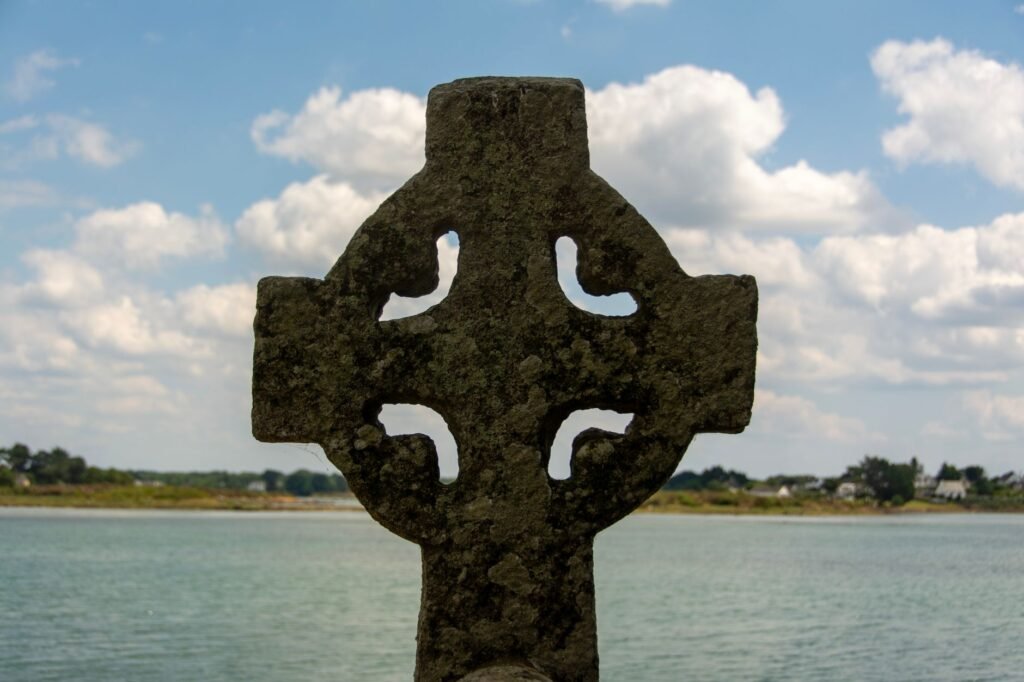
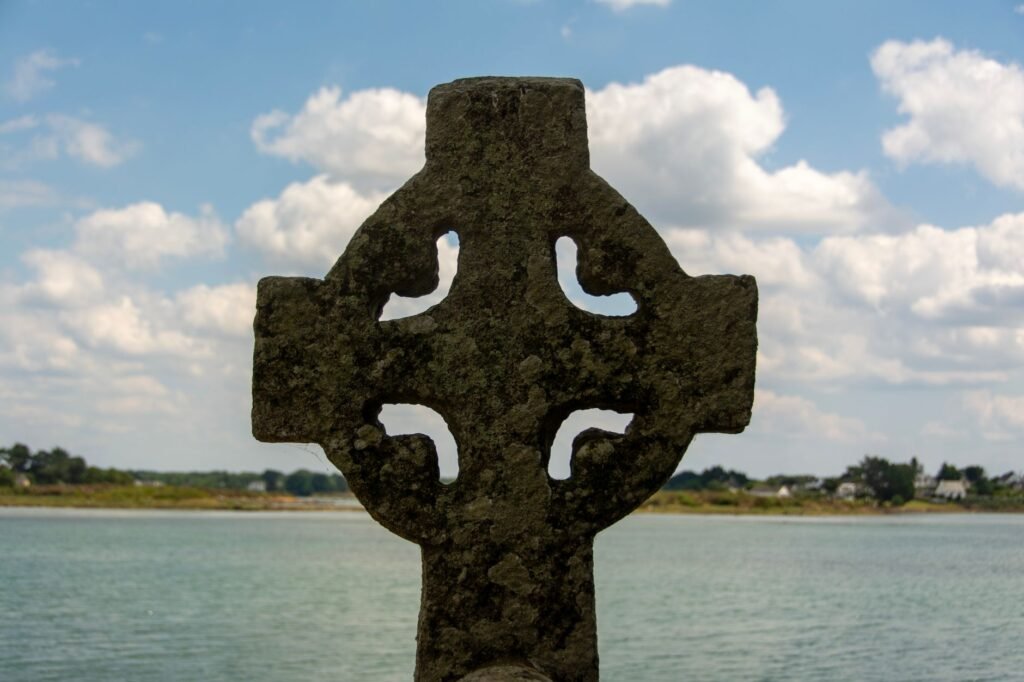
The term Celtic cross is modern. It refers to a cross with a ring or halo surrounding the intersection of the arms, often seen on high crosses, grave markers, and decorative stonework in Ireland and Britain.
The name is based on its association with Celtic lands and cultures, especially early medieval Ireland and Scotland. However, the word “Celtic” should not be taken to mean that the symbol is purely pre-Christian or uniquely tied to ancient pagan Celtic religion. Most surviving examples are clearly Christian monuments.
The ring has inspired many interpretations, but there is no single universally accepted meaning. Proposed explanations include:
- structural support in stone crosses
- a symbolic halo or solar image
- a sign of eternity or divine unity
- a design element inherited from earlier artistic traditions
Because of this uncertainty, scholarly caution is important: the Celtic cross is best understood as an early medieval Christian symbol with regional artistic features, not as a universally attested ancient pagan emblem.
Historical Context
Christian Cross in History
The cross became a Christian symbol after the crucifixion of Jesus in the 1st century CE. In the earliest centuries, Christians sometimes avoided public display of the cross because it was a Roman instrument of shame and execution.
Over time, especially after Christianity became legally tolerated and later dominant in the Roman Empire, the cross grew into a public sign of faith. It appeared in:
- church architecture
- liturgical objects
- manuscripts
- jewelry
- processional standards
- tombs and cemeteries
Different Christian communities developed different forms and emphases. In Western Christianity, the Latin cross is especially common. In Eastern Christianity, the Greek cross and Orthodox cross are also prominent.
Celtic Cross in History
The Celtic cross is most closely associated with early medieval insular Christianity, especially from around the 8th to 12th centuries. Large stone crosses and carved ringed crosses appear in Ireland and parts of Britain during the early Middle Ages.
These monuments were linked to:
- monasteries
- ecclesiastical centers
- public teaching and preaching
- memorial and devotional use
- artistic expression in Christian stone carving
The famous high crosses of Ireland are among the best-known examples. Their iconography often includes biblical scenes, interlace patterns, and local artistic motifs.
Important historical caution: while some popular literature claims the Celtic cross is an ancient symbol predating Christianity, the strongest surviving evidence for the ringed cross is medieval Christian, not prehistoric.
Main Characteristics
Christian Cross
The Christian cross is not one single design. Common forms include:
| Type | Description | Common Use |
|---|---|---|
| Latin cross | Vertical beam longer than the horizontal beam | Western Christianity |
| Greek cross | Four equal arms | Eastern traditions, church plans |
| Tau cross | T-shaped cross | Symbolic and historical uses |
| Orthodox cross | Usually includes an upper and lower slanted crossbar | Eastern Orthodox Christianity |
| Crucifix | Cross with the body of Christ depicted | Especially Catholic and some Anglican contexts |
Its main identifying feature is its function as the symbol of Christ’s passion and salvation.
Celtic Cross
The Celtic cross is usually recognized by:
- a ring surrounding the intersection of the arms
- arms of equal or near-equal length in many examples, though not always
- decorative carving such as knotwork, spirals, or biblical scenes
- strong association with stone monuments and memorial markers
In modern usage, the Celtic cross often appears as a decorative emblem on:
- grave markers
- jewelry
- tattoos
- logos
- church ornaments
- Celtic-inspired artwork
Key Difference
The simplest difference is structural:
- a Christian cross is a broad category of cross-shaped symbols used by Christians
- a Celtic cross is a specific cross form, usually ringed, associated with Insular Christian art
In other words, the Celtic cross is one variety within a Christian symbolic tradition, though it has a distinct regional identity.
Family and Genealogy
Because these are symbols rather than deities or mythic beings, “family and genealogy” applies differently here. Still, their symbolic relationships can be described.
Christian Cross: Symbolic Family
The Christian cross belongs to a wider family of Christian symbols and signs, including:
- the ichthys or fish
- the chi-rho
- the alpha and omega
- the crucifix
- the empty cross in some Protestant traditions
It is also related to the broader Christian narrative of:
- Jesus Christ
- the Passion
- the Resurrection
- the Trinity in theological interpretation
Celtic Cross: Artistic and Cultural Lineage
The Celtic cross is part of the artistic world of:
- early Irish Christianity
- Insular art
- monastic stone carving
- manuscript illumination
- interlace and knotwork traditions
Its “relatives” are therefore not mythic ancestors but artistic forms, such as:
- high crosses
- stone crosses
- ringed crosses
- carved memorial crosses
- decorative Celtic revival motifs from the 19th century onward
Symbols
Christian Cross Symbols
The Christian cross may be associated with:
- the empty cross: resurrection and hope
- the crucifix: Christ’s sacrifice
- the halo or nimbus in iconography: holiness
- white: purity, resurrection, celebration in some liturgical settings
- red: martyrdom and sacrifice
- gold: glory and divine kingship
Other objects often linked to the cross in Christian tradition include:
- nails
- crown of thorns
- the INRI inscription on crucifixes
- lamb imagery
- banners of victory
Celtic Cross Symbols
The Celtic cross is often decorated with:
- interlace and knotwork
- spirals
- zoomorphic designs
- biblical relief carvings
- sometimes sun-like circles or ring forms
The ring itself is the most debated feature. Common interpretations include:
- a stabilizing architectural element in stone
- a symbol of eternity
- a visual emphasis on the unity of heaven and earth
- a stylized halo around the cross
It is important not to overstate any one meaning, since the symbolism likely varied by region, period, and monument.
Sacred Animals
Christian Cross and Animals
The Christian cross is not primarily defined by animals, but Christian symbolism often includes:
- the lamb as a sign of Christ
- the dove as a symbol of the Holy Spirit
- the fish as an early Christian sign
- the lion in biblical imagery, especially for Christ or evangelists
These are associated with the broader Christian tradition rather than the cross alone.
Celtic Cross and Animals
The Celtic cross itself does not have a standard sacred animal. However, Celtic art in the Christian period often incorporated animal imagery such as:
- birds
- dogs
- serpents
- beasts in interlace patterns
These creatures may reflect both Christian symbolic content and decorative habits inherited from Insular art. Their meanings can vary, and in many cases are not definitively known.
Sacred Plants
Christian Tradition
The Christian cross is linked in art and devotion to several plants, including:
- olive: peace and biblical sacred history
- vine: Christ as the true vine
- lily: purity and resurrection in some traditions
- thorn: connected to the crown of thorns and suffering
- oak and cedar in biblical symbolism
Celtic Cross Tradition
The Celtic cross, especially in modern Celtic-inspired design, may be associated with:
- ivy
- shamrock
- oak
- hawthorn
These plants are more often linked to Celtic cultural identity broadly than to the cross itself. In some cases, modern decorative uses combine the cross with botanical motifs to evoke heritage, landscape, or continuity.
Sacred Places
Christian Cross and Sacred Places
The Christian cross is connected to holy sites throughout the Christian world, especially:
- Jerusalem, where the crucifixion is traditionally located
- churches and cathedrals worldwide
- pilgrimage routes
- cemeteries and memorial grounds
The Church of the Holy Sepulchre in Jerusalem is especially significant in Christian memory and devotion.
Celtic Cross and Sacred Places
The Celtic cross is strongly associated with the British Isles, particularly:
- Ireland
- Scotland
- Wales
- parts of England
- the Isle of Man
Important places include monastic and ecclesiastical centers where high crosses survive or were once erected. Famous examples can be found near early medieval religious sites, many of which are now archaeological or heritage locations rather than active cult centers.
Powers and Attributes
Since these are symbols rather than divine beings, “powers and attributes” refers to what they signify and how they function.
Christian Cross
The Christian cross symbolizes:
- salvation
- sacrifice
- forgiveness
- resurrection
- redemption
- victory over death
- divine love
Its authority comes from the central events of Christian belief, especially the Passion and Resurrection of Jesus.
Celtic Cross
The Celtic cross symbolizes:
- Christian faith in an Insular or Celtic cultural form
- continuity between belief and local artistry
- memorialization
- eternity, in some interpretations
- heritage and identity in modern use
Unlike the Christian cross in general, the Celtic cross often conveys a blend of religious devotion and regional identity.
Main Myths
Strictly speaking, neither symbol belongs to myth in the same way as gods and heroes do, but both are surrounded by historical narratives and popular legends.
Christian Cross Narratives
The Christian cross is tied to central Gospel accounts:
- Jesus’ crucifixion under Roman authority
- the discovery and veneration of the True Cross in later Christian tradition
- the transformation of the cross from a symbol of shame into one of salvation
Some later legends tell of the True Cross being found by Helena, mother of Emperor Constantine. This belongs to Christian tradition, though historians distinguish between devotional legend and independently verified history.
Celtic Cross Narratives
The Celtic cross is often surrounded by modern myths, especially claims that it is:
- purely pagan
- thousands of years older than Christianity
- a direct sun symbol from pre-Christian religion
These claims are widespread but not securely supported by surviving evidence. The best-attested historical forms are Christian. That does not mean earlier cultural influences were absent, only that the symbol as commonly recognized is not documented as an ancient pagan religious icon in the same way popular claims often suggest.
Relationship with Other Mythological Figures
Because this topic concerns symbols, this section is limited and must be understood in a historical-religious sense rather than a mythological one.
Christian Cross and Christ
The Christian cross is inseparable from Jesus Christ. Its meaning depends on:
- his crucifixion
- his resurrection
- theological interpretations of sacrifice and atonement
The cross also relates to:
- Mary, in devotional Christianity
- apostles and martyrs
- saints associated with the Passion
Celtic Cross and Christian Saints
The Celtic cross is often connected to saints and monastic figures in Irish and British Christianity, such as:
- Saint Patrick in Irish cultural memory
- Saint Columba
- Saint Brigid
- local abbots, bishops, and monastic founders
In many cases, the surviving cross is not directly linked to one named individual but to a religious community or site.
Worship and Cult
Christian Cross in Worship
The Christian cross is used in:
- church altars
- processions
- liturgy
- private prayer
- funerary rites
- baptisteries and church decoration
Different denominations use it differently:
- Catholic and Orthodox Christians often use crucifixes or iconographic cross forms prominently
- Protestant traditions may prefer the empty cross
- Anglican and Lutheran churches may use a variety of forms depending on tradition
The cross is not worshiped as an object in itself; rather, it is venerated as a sacred sign pointing to Christ.
Celtic Cross in Worship and Commemoration
The Celtic cross appears in:
- churchyards
- memorials
- grave markers
- devotional art
- pilgrimage settings
- heritage reconstructions
Historically, high crosses may have functioned as public teaching tools, markers of monastic presence, or devotional monuments. In modern times, the Celtic cross is also a cultural emblem, especially within Irish and Scottish identity.
Ancient Sources
Christian Cross Sources
The Christian cross is attested in early Christian literature and later theological writings. Relevant ancient and early sources include:
- the New Testament Gospels, which describe the crucifixion of Jesus
- Pauline letters, especially passages interpreting the cross theologically
- early Christian writers such as Tertullian, Origen, and Augustine
- later historical and devotional traditions about the True Cross
Because the cross was originally a Roman execution device, it is also indirectly illuminated by Roman historical sources on crucifixion practice.
Celtic Cross Sources
There is no single ancient literary source that “invented” the Celtic cross. Its evidence comes mainly from:
- surviving stone monuments
- inscriptions
- art historical analysis
- medieval ecclesiastical contexts in Ireland and Britain
Scholars often rely on archaeological evidence and comparative study of Insular art rather than classical literary testimony. This is important: the Celtic cross is known primarily through material culture, not through a classical mythological canon.
Roman Equivalent
Christian Cross
The Roman counterpart is not a different symbol but the same object’s historical context. The cross was originally a Roman instrument of execution, associated with punishment, humiliation, and imperial power.
Celtic Cross
The Celtic cross has no direct Roman equivalent. However, it was shaped within the broader post-Roman Christian world of Britain and Ireland, where Roman, native, and monastic artistic influences all interacted. The ringed form may reflect practical stone-carving concerns as well as stylistic preferences, but no simple Roman “translation” exists.
Influence on Modern Culture
Christian Cross in Modern Culture
The Christian cross is one of the most recognizable symbols in the world. It appears in:
- church architecture
- national flags and emblems
- funerary art
- fashion
- literature and film
- humanitarian and charitable organization logos
It can signal both explicit Christian identity and broader themes of sacrifice, hope, or redemption.
Celtic Cross in Modern Culture
The Celtic cross is widely used in:
- jewelry
- tattoos
- memorial stones
- logos for Irish or Celtic-themed products
- fantasy literature and games
- heritage tourism
- music album art and decorative design
Its appeal often comes from a combination of religious meaning, aesthetic balance, and cultural identity. In some contexts, however, it has also been misused in extremist symbolism. Because symbols can be reinterpreted politically, context matters greatly.
Curiosities
- The Celtic cross is not a single standardized design. Proportions and ornamentation vary significantly.
- Many famous Celtic crosses are actually medieval high crosses, not small handheld symbols.
- The ring on the Celtic cross is still debated by scholars; no single explanation is universally accepted.
- The Christian cross exists in many denominational forms, and some Christian groups avoid depicting the crucified body of Christ.
- In popular culture, the Celtic cross is sometimes mistakenly treated as a pre-Christian pagan sun cross, even though the best historical evidence points to Christian usage.
- The cross became a major Christian symbol only gradually; in the earliest centuries, believers did not always display it openly.
- A cross on a church or grave does not automatically mean the same thing in every culture; local tradition often changes the emphasis.
Frequently Asked Questions
1. What is the main difference between the Celtic Cross and the Christian Cross?
The main difference is that the Christian cross is a broad symbol of Christianity, while the Celtic cross is a specific ringed cross form associated especially with early medieval Ireland and Britain.
2. Is the Celtic Cross pagan or Christian?
The surviving historical evidence shows that the Celtic cross is primarily Christian, especially in its best-known medieval forms. Some modern claims link it to pagan origins, but these are not firmly supported by the evidence.
3. Does the ring on the Celtic Cross have a known meaning?
Not definitively. Scholars have proposed several explanations, including structural support, a solar association, or symbolic eternity, but no single interpretation is universally agreed upon.
4. Is every Christian cross a Celtic Cross?
No. The Celtic cross is only one form among many Christian crosses. Most Christian crosses do not have the ring around the intersection.
5. Why is the Celtic Cross associated with Ireland and Scotland?
Because many of the best-known surviving examples come from early medieval Insular Christianity, especially in Ireland and parts of Scotland, where stone carving traditions developed distinctive forms.
6. Can the Christian cross be used without the body of Christ?
Yes. Many Christian traditions, especially Protestant ones, use the empty cross to emphasize the Resurrection rather than the crucifixion scene.
7. Are Celtic crosses used in modern jewelry and tattoos for religious reasons?
Sometimes yes, but not always. They may express faith, ancestry, cultural identity, aesthetic preference, or commemoration. The meaning depends on the wearer and context.
8. Which is older: the Christian cross or the Celtic Cross?
The Christian cross as a symbol is older in its broad religious use. The Celtic cross is a later, more specific medieval form that developed within Christian artistic traditions.
Conclusion
The difference between the Celtic Cross and the Christian Cross lies in both form and historical meaning. The Christian cross is the central symbol of Christianity and appears in many styles across the global church. The Celtic cross is a distinctive ringed form associated especially with early medieval Christian art in Ireland and Britain.
Although modern usage sometimes blurs the two, they are not identical. The Celtic cross is best understood as a regional Christian expression with rich artistic heritage, while the Christian cross is the wider and more foundational symbol of the faith. Knowing the distinction helps prevent historical confusion and deepens appreciation for both symbols’ religious, cultural, and artistic significance.

Orin Vale has spent the better part of two decades tracing the threads that connect the world’s oldest stories — from the halls of Asgard to the banks of the Nile, from Olympus to the jungles of the Maya. What began as a childhood fascination with flood myths and trickster gods grew into years of independent study across comparative mythology and ancient religion, always chasing the same question: what did these stories mean to the people who first told them? Orin writes for readers who want more than trivia — the ones looking for the beliefs, fears, and truths that myths were built to carry.