Golden Apple of Discord vs Golden Apples of the Hesperides
Introduction
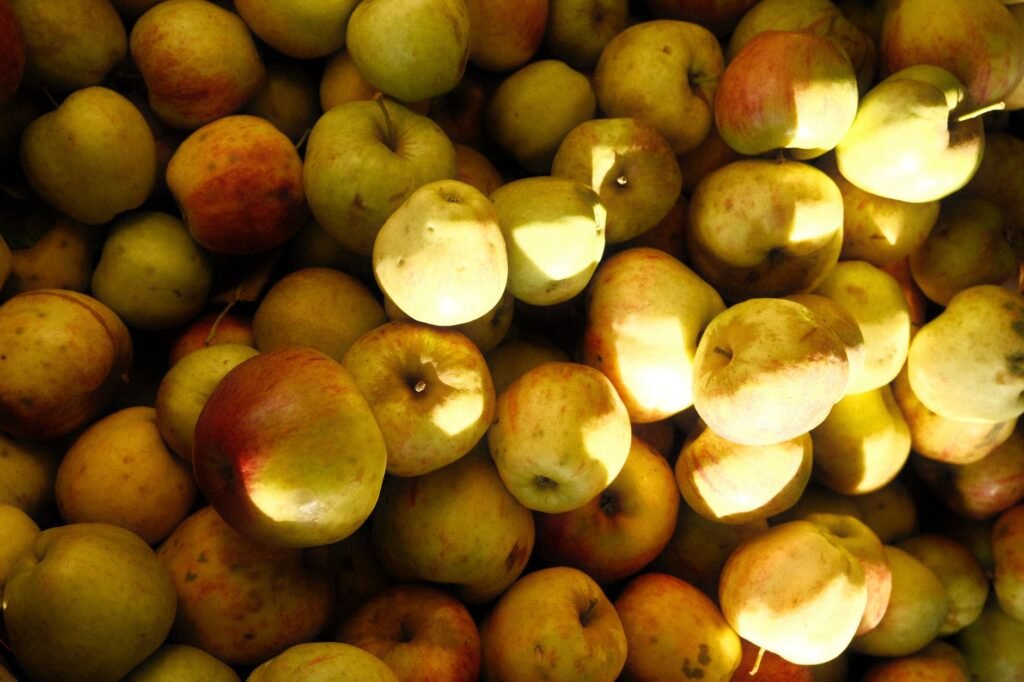
The phrase Golden Apple of Discord vs Golden Apples of the Hesperides points to two distinct but often confused motifs in Greek mythology. Both involve golden apples, both are connected to divine or semi-divine beings, and both have played major roles in later literature, art, and popular imagination. Yet they belong to very different mythic contexts.
The Golden Apple of Discord is the apple thrown by Eris, the goddess of strife, at the wedding of Peleus and Thetis. Its inscription, “to the fairest,” sparked the judgment of Paris and ultimately helped lead to the Trojan War. The Golden Apples of the Hesperides, by contrast, are a sacred, guarded fruit associated with the far western edge of the world, the daughters of evening, and the labor of Heracles. In many traditions they symbolize divine favor, immortality, and the heroic quest.
Although both are “golden apples,” they serve different narrative purposes and carry different meanings. The first is an agent of conflict; the second is an object of desire, danger, and completion. Understanding the difference between them is important for interpreting ancient myths accurately and for appreciating how Greek mythology uses a single symbol in multiple ways.
Origin and Meaning
The English phrase “golden apple” translates the Greek mēlon chrysoun or equivalent expressions found in later retellings. In Greek, mēlon can mean “apple,” but also more broadly “fruit” or, in some contexts, “sheep.” In mythological usage, however, it is usually understood as an apple or apple-like fruit.
The Golden Apple of Discord
The Apple of Discord is most closely associated with the goddess Eris (Strife). The story centers on a divine banquet at the wedding of Peleus and Thetis. Eris, excluded from the celebration, reportedly threw a golden apple into the company of goddesses with the inscription “to the fairest” (tēi kallistēi). This act created rivalry among Hera, Athena, and Aphrodite, leading to the judgment of Paris.
The name “apple of discord” has become a lasting metaphor in many languages for an object or issue that causes dispute.
The Golden Apples of the Hesperides
The Golden Apples of the Hesperides belong to a different mythological setting. They are fruits in a divine garden at the western edge of the world, guarded by the Hesperides and often by a serpent or dragon named Ladon. In the best-known tradition, they are part of the labor of Heracles, who must obtain them as one of his impossible tasks.
These apples are not merely decorative or symbolic. They are tied to divine property, boundary, and in some traditions immortality. Their exact nature varies across sources, and ancient authors do not always describe them in the same way.
Historical Context
Greek mythology developed through oral tradition, local cults, epic poetry, and later literary retellings. As a result, myths about golden apples should be understood within a broader cultural world where symbols carried layered meanings.
Apples in the Ancient Mediterranean
Apples were known and valued in the ancient Mediterranean as cultivated fruit, but in mythology they often exceeded ordinary agriculture. In Greek and Roman literature, apples could symbolize:
- beauty and attraction
- erotic desire
- fertility
- temptation
- divine favor
- reward or contest
Gold enhanced these associations by implying rarity, splendor, and otherworldly status. A “golden apple” therefore was not a naturalistic object but a mythic one, suited to stories of gods and heroes.
Mythic Function
The two apple traditions reflect different mythic functions:
- The Apple of Discord explains how conflict among gods can affect the human world.
- The Apples of the Hesperides express the difficulty of reaching a divine boundary and the heroic effort required to obtain a sacred prize.
One myth is catastrophic and political; the other is heroic and cosmological.
Main Characteristics
Although they share a name, the two kinds of golden apples differ sharply in purpose, setting, and symbolism.
| Feature | Golden Apple of Discord | Golden Apples of the Hesperides |
|---|---|---|
| Primary role | Causes dispute | Object of a heroic quest |
| Main divine link | Eris, Hera, Athena, Aphrodite | Hesperides, Hera, Heracles |
| Setting | Wedding feast of Peleus and Thetis | Far western garden or divine boundary |
| Famous inscription | “To the fairest” | Usually none; some versions connect them to divine ownership |
| Narrative result | Judgment of Paris; Trojan War tradition | Labor of Heracles; successful retrieval in some versions |
| Symbolic meaning | Strife, rivalry, beauty contest | Immortality, sacred treasure, boundary, reward |
Identifying Features
Golden Apple of Discord
- Usually appears as a single apple.
- Often marked with an inscription.
- Thrown, not harvested.
- Associated with competition among goddesses.
- Functions as a trigger for narrative conflict.
Golden Apples of the Hesperides
- Usually plural, though ancient sources vary.
- Guarded in a divine garden.
- Associated with a remote location at the edge of the world.
- Often protected by a dragon or serpent.
- Connected to Heracles’ eleventh labor in later canonical numbering.
Family and Genealogy
Because these are mythic objects rather than deities, family and genealogy apply indirectly through the figures connected to them.
The Apple of Discord
The main figures surrounding the Apple of Discord include:
- Eris: goddess of strife
- Peleus: mortal hero and groom
- Thetis: sea nymph and bride
- Hera, Athena, Aphrodite: the three goddesses who disputed the apple
- Paris: Trojan prince who judged the goddesses
The story is embedded in divine and heroic genealogies leading to the Trojan cycle.
The Apples of the Hesperides
The major related figures include:
- The Hesperides: nymphs of evening or the west
- Hera: in many traditions, guardian or owner of the garden
- Ladon: serpent or dragon guarding the trees
- Heracles: hero who sought the apples
- Atlas: in some versions, the one who retrieves the apples while Heracles holds up the sky
The Hesperides themselves vary in number and identity across traditions. Ancient authors do not agree on how many there were or exactly who their parents were.
Genealogical Variations
The Hesperides are variously described as daughters of:
- Nyx (Night)
- Atlas
- Hesperus
- sometimes other parentage depending on the source
These inconsistencies are typical of Greek myth, where local traditions and poetic invention often coexist.
Symbols
Golden apples are rich symbolic objects, but each myth emphasizes different meanings.
Symbols of the Apple of Discord
The Apple of Discord symbolizes:
- rivalry
- vanity
- beauty as a source of conflict
- divine jealousy
- the destructive consequences of competition
The phrase “to the fairest” is especially important because it turns beauty into a contest.
Symbols of the Apples of the Hesperides
The Apples of the Hesperides symbolize:
- divine treasure
- immortality or life-extension
- the unreachable west
- sacred enclosure
- the goal of a heroic quest
- the boundary between mortal and divine realms
In some interpretations, they also represent wisdom in knowing when and how to obtain what is sacred.
Sacred Animals
Ancient sources connect different animals to the myths, especially in the Hesperides cycle.
Apple of Discord
No specific sacred animal is central to the Apple of Discord itself. However, the goddesses involved have broader associations:
- Hera: peacock and cow in later tradition
- Athena: owl
- Aphrodite: dove, swan, sparrow, and others
These animals reflect the wider symbolic profiles of the goddesses, not the apple alone.
Apples of the Hesperides
The Hesperides myth is more clearly linked with guardian creatures:
- Ladon, a serpent or dragon, guards the apples in many accounts
- Heracles’ lion skin is sometimes visually associated with the hero’s approach to the garden
- In some artistic traditions, the dragon emphasizes the theme of protected sacred space
The serpent-like guardian reinforces the idea that the apples are not ordinary fruit but divine property.
Sacred Plants
The apple trees of the Hesperides are the clearest plant imagery in either myth.
Apple Trees of the Hesperides
The golden apples grow in a garden often described as remote, blessed, and guarded. The trees may be understood as divine or immortal. Their exact botanical nature is not specified in ancient sources, and scholars sometimes note that “apple” in Greek myth can serve as a general term for precious fruit.
Symbolically, the trees represent:
- abundance
- divine fertility
- sacred enclosure
- the edge of the world
- the distinction between mortal cultivation and divine possession
Other Plant Associations
The Apple of Discord does not center on a plant in a botanical sense, but the fruit itself becomes the emblem. In later art and literature, apples often stand in for desire or temptation, a pattern that has continued into Western cultural symbolism.
Sacred Places
The two myths are located in very different mythic geographies.
The Apple of Discord
The key setting is the wedding feast of Peleus and Thetis, which usually takes place in Thessaly or another heroic Greek context. The myth’s later consequences connect it to:
- Mount Ida in some versions
- Troy
- the broader Mediterranean heroic world
The apple itself creates a chain of events that reshapes history in the mythic imagination.
The Apples of the Hesperides
The Hesperides are usually placed at the far west of the world, a liminal region associated with sunset and the edge of the known cosmos. Ancient traditions vary widely in locating the garden, with suggestions including:
- near the Atlas region
- at the western ocean
- in the distant boundaries of the earth
This uncertainty is itself meaningful. The garden is less a mapped place than a mythic frontier.
Table: Key Locations
| Myth | Important Places |
|---|---|
| Apple of Discord | Wedding of Peleus and Thetis; Mount Ida; Troy |
| Apples of the Hesperides | The western garden; edge of the world; Atlas-associated regions |
Powers and Attributes
Because these are objects rather than beings, their “powers” are narrative and symbolic rather than literal.
Golden Apple of Discord
Its principal power is to provoke conflict. It acts as:
- a catalyst for divine competition
- a test of vanity and preference
- a narrative trigger for the Trojan War tradition
It has no beneficial power in the myth itself; its effect is disruptive by design.
Golden Apples of the Hesperides
The Hesperidean apples are often linked to:
- beauty beyond ordinary standards
- divine reward
- possible immortality
- heroic achievement
In some later interpretations, they are near-magical fruits associated with life, youth, or divine blessing. Ancient sources, however, do not always state these properties explicitly. Their significance is often inferred from the story context.
Main Myths
The Apple of Discord and the Judgment of Paris
The best-known version begins with the wedding of Peleus and Thetis. Eris, not invited, throws in a golden apple bearing the phrase “for the fairest.” Hera, Athena, and Aphrodite each claim it. Zeus refuses to decide and appoints Paris as judge.
Paris awards the apple to Aphrodite, who promises him Helen, the most beautiful woman in the world. This leads to Paris’ abduction or elopement with Helen and eventually to the Trojan War in the broader epic tradition.
This story explains several Greek mythic themes at once:
- divine rivalry
- the dangers of beauty contests
- the vulnerability of human judgment
- the mythic origin of war
The Apples of the Hesperides and Heracles
The most famous account concerns Heracles and his labor to obtain the apples. Ancient sources differ on how he succeeded:
- In some versions, Heracles directly kills or bypasses the guardian and takes the apples.
- In others, he seeks help from Atlas, who temporarily holds up the heavens while Heracles retrieves the fruit.
- Some traditions say Heracles does not retrieve them alone, but relies on divine or strategic assistance.
The labor is notable because it combines strength with intelligence. Heracles does not simply overpower the situation; he often must negotiate, endure, or trick others.
Additional Mythic Uses
The apples of the Hesperides also appear in broader heroic and cosmological imagery:
- as rewards at the boundary of the world
- as signs of divine ownership
- as objects whose theft or transfer requires special justification
Relationship with Other Mythological Figures
Apple of Discord
This myth is deeply connected to a cluster of major Olympian figures:
- Eris initiates the conflict.
- Hera represents royal power.
- Athena represents wisdom and war strategy.
- Aphrodite represents beauty and erotic desire.
- Paris becomes the human arbiter with catastrophic consequences.
The apple links divine characteristics to human history, especially the Trojan War cycle.
Apples of the Hesperides
The Hesperides myth connects to:
- Hera, who in many traditions is associated with the garden
- Atlas, the Titan who appears in some versions of the labor
- Heracles, whose success marks a major heroic achievement
- Ladon, the guardian monster
It also has indirect connections to Zeus and the broader Olympian order, since the Hesperides’ garden occupies a sacred, protected space within the cosmic landscape.
Worship and Cult
Neither the Apple of Discord nor the Apples of the Hesperides were typically worshipped as independent cult objects. They belong primarily to mythic narrative rather than formal cult practice.
Cultic Contexts
However, the figures connected to them were important in religion:
- Eris had limited or indirect cult significance compared with major Olympians.
- Hera, Athena, and Aphrodite were widely worshipped.
- Heracles had extensive hero cults across the Greek world.
- Atlas, Thetis, and some Hesperides figures appear more in myth than in organized worship.
Ritual and Symbolic Use
The motifs of golden apples may have influenced later symbolic uses in festivals, art, and literature, but there is no standard ancient ritual centered specifically on these apples as cult objects.
Ancient Sources
The myths appear across Greek and Roman literature, though no single source tells the whole story in one canonical form.
Important Ancient Sources for the Apple of Discord
- Homer: the Trojan material is foundational, though the apple episode itself is more fully developed in later tradition.
- Cypria (fragmentary epic tradition): associated with the prehistory of the Trojan War.
- Euripides and other tragedians: allude to related Trojan themes.
- Apollodorus, Bibliotheca: gives a concise mythographic account of Paris’ judgment.
- Hyginus, Fabulae: preserves Roman-era summaries.
- Ovid, Heroides and other works: contributes to the later literary reception of the Paris and Helen tradition.
Important Ancient Sources for the Apples of the Hesperides
- Hesiod, especially in traditions connected to the divine order and the western edge of the world
- Apollodorus, Bibliotheca: includes the labor of Heracles and the Hesperides
- Hyginus, Fabulae: gives alternative summaries
- Pausanias: preserves local mythic and cultic observations
- Ovid, especially in the Metamorphoses: retells many Heracles-related episodes in Roman poetic form
Source Variation
Ancient sources often differ in:
- the number of Hesperides
- the parentage of the Hesperides
- how Heracles obtained the apples
- whether the apples were literally apples or a symbolic fruit
Such variation is normal in mythological tradition.
Roman Equivalent
The Apple of Discord entered Roman literature with strong influence from Greek myth, especially through authors such as Ovid and mythographic compendia. The Roman world generally preserved the Greek names or their Latinized forms rather than replacing them with a distinct Roman counterpart.
The Golden Apples of the Hesperides were likewise adopted into Roman mythological and artistic tradition, especially through the figure of Hercules as the Roman equivalent of Heracles.
Roman Adaptation
- Eris is often rendered as Discordia.
- Heracles becomes Hercules.
- The Hesperides retain their Greek identity in most accounts.
- The mythic structure remains largely the same, though Roman poets sometimes emphasize moral, political, or rhetorical aspects differently.
Influence on Modern Culture
Both myths have had lasting influence, though in different ways.
Golden Apple of Discord
This myth has had a particularly strong afterlife because the phrase itself became proverbial. It appears in:
- political and diplomatic writing
- literature as a metaphor for a source of conflict
- art depicting the Judgment of Paris
- operas, paintings, and modern retellings of the Trojan cycle
The phrase “apple of discord” is now common in many languages to mean a divisive issue.
Golden Apples of the Hesperides
The Hesperides myth is less often used as a political metaphor, but it remains influential in:
- classical painting and sculpture
- fantasy literature
- children’s retellings of Greek myths
- games and fictional worlds inspired by classical antiquity
- symbolic references to quests, boundaries, and immortality
Comparative Legacy
The contrast between the two myths has also made them useful in education and literary criticism. One is often cited as an example of how a small object can cause a major war; the other as an example of a sacred object that marks the heroic edge of the world.
Curiosities
- The same symbol, a golden apple, can represent both destructive rivalry and sacred reward.
- In some ancient contexts, the Greek word for apple could overlap with words for other fruit, which complicates modern assumptions.
- The Apple of Discord is one of the few mythic objects whose inscription is as famous as the object itself.
- The Apples of the Hesperides are often tied to the far west, a region that ancient Greeks imagined as mysterious and liminal.
- Heracles’ retrieval of the apples is one of the clearest examples in myth where intelligence and negotiation matter as much as strength.
- The Judgment of Paris became one of the most frequently depicted scenes in Western art, especially from the Renaissance onward.
- Some later traditions combine or blur the two myths, but classical sources generally treat them as distinct narratives.
Frequently Asked Questions
1. What is the difference between the Golden Apple of Discord and the Golden Apples of the Hesperides?
The Golden Apple of Discord is a single apple thrown by Eris to cause a dispute among goddesses. The Golden Apples of the Hesperides are guarded fruits in a divine garden and are associated with Heracles’ labor.
2. Why is the Apple of Discord important in Greek mythology?
It triggers the Judgment of Paris, which in the mythic tradition leads to the Trojan War. It is one of the most consequential symbolic objects in Greek myth.
3. Are the Apples of the Hesperides really apples?
Ancient texts use a Greek word often translated as “apple,” but scholars note that it can sometimes mean fruit more generally. The precise botanical identity is uncertain.
4. Who guarded the Apples of the Hesperides?
Traditions vary, but the garden is often guarded by the Hesperides themselves and by the dragon or serpent Ladon.
5. Did Heracles steal the apples?
In some versions he did, but the exact method varies. In a famous tradition, he obtains them with Atlas’ help. Ancient sources do not all agree on the details.
6. What does “to the fairest” mean on the Apple of Discord?
It is an inscription that turns the apple into a prize for the most beautiful goddess, creating rivalry and leading to the judgment by Paris.
7. Are these apples mentioned by Homer?
Homer is central to the Trojan mythic world, but the full Apple of Discord episode is developed more clearly in later sources. The Hesperides also appear more explicitly in later literary and mythographic accounts.
8. Why are both objects called “golden apples”?
Because both are portrayed as special, radiant, and extraordinary fruits. “Golden” signals divine value and mythic significance rather than ordinary color alone.
Conclusion
The Golden Apple of Discord and the Golden Apples of the Hesperides are two distinct myths that share a single powerful symbol. One apple divides the gods and helps launch the Trojan cycle; the other belongs to a distant sacred garden and becomes the prize of a heroic labor. Together, they show how Greek mythology could use the same image to express very different ideas: conflict, beauty, ambition, divine property, and the boundary between mortal and immortal worlds.
Their enduring appeal lies in this contrast. The Apple of Discord reveals how a small symbolic object can unleash immense consequences. The Apples of the Hesperides reveal how a sacred object can embody the farthest reach of heroic aspiration. Both remain essential to the study of ancient myth and continue to shape modern language, art, and storytelling.

Orin Vale has spent the better part of two decades tracing the threads that connect the world’s oldest stories — from the halls of Asgard to the banks of the Nile, from Olympus to the jungles of the Maya. What began as a childhood fascination with flood myths and trickster gods grew into years of independent study across comparative mythology and ancient religion, always chasing the same question: what did these stories mean to the people who first told them? Orin writes for readers who want more than trivia — the ones looking for the beliefs, fears, and truths that myths were built to carry.