sacred space
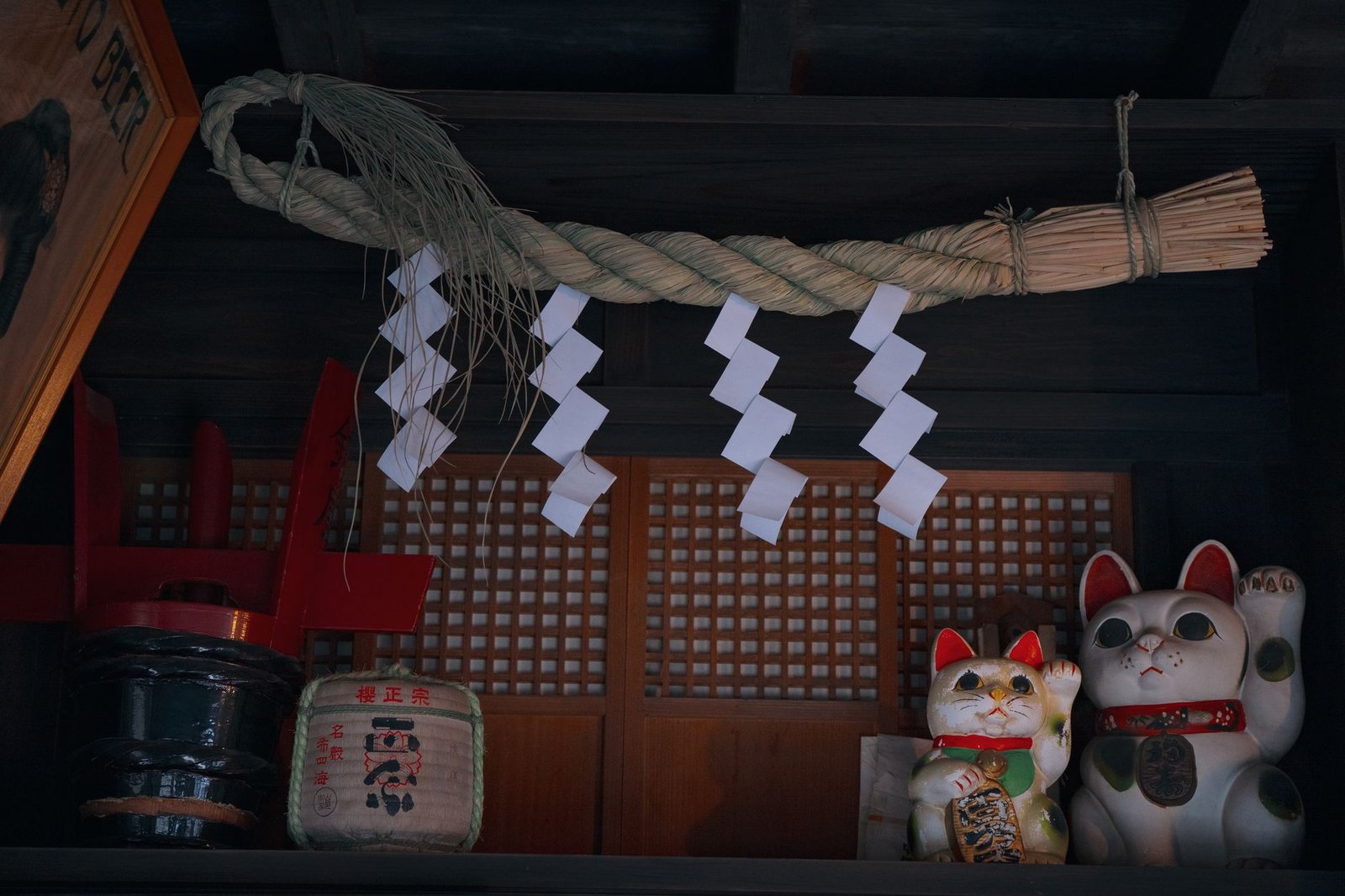
Shimenawa: Japanese Sacred Rope and Shinto Tradition
Shimenawa are sacred ropes in Shinto that mark spaces, objects, and natural forms as pure, protected, and set apart for kami. Made from braided straw, hemp, or other fibers, they reveal how Japanese ritual life connects boundary, purification, and reverence for nature in a single, enduring symbol.

Gohei: Definition, Uses, and Cultural Significance
Gohei is a distinctive ritual implement of Japanese Shinto, typically a wooden wand or staff adorned with folded white paper streamers that marks sacred space, symbolizes purity, and signals the presence of kami. Its history, meanings, and varied ceremonial uses reveal how a simple object became one of the most recognizable emblems of shrine practice.

Komainu: Japanese Guardian Lion-Dog Statues Explained
Komainu are the stone or metal guardian figures that stand at the entrances of many Japanese Shinto shrines, where they mark sacred space and repel evil. Tracing their origins through continental Asia and into Japan, this article explores how these paired “lion-dogs” developed distinctive forms, meanings, and roles in religious architecture.

Torii Gate: Religious Symbol or Architectural Structure
A torii gate is both a built structure and a profound religious marker, standing at the threshold between ordinary life and sacred Shinto space. This article examines its origins, symbolism, and architectural form, showing how the torii gate came to define Japanese sacred landscapes while raising the question of whether it is best understood as ritual sign or architecture.