Amaterasu and the Cave
Introduction

The story of Amaterasu and the cave is one of the best-known myths in Japanese tradition. It tells how Amaterasu Ōmikami, the sun goddess, withdrew into a cave after a family conflict, plunging the world into darkness. The other gods eventually coaxed her back out, restoring light and order. This myth is central to Shinto, Japanese religious history, and the symbolic understanding of imperial authority, cosmic balance, and the power of ritual.
Often called the “Ama-no-Iwato” myth, after the “Heavenly Rock Cave,” the narrative appears in Japan’s earliest written chronicles and has been retold in religion, literature, theater, art, and popular culture for centuries. It remains important not only as a creation-era legend but also as a foundational explanation of why the sun rises and why divine harmony must be maintained through ceremony and collective action.
Origin and Meaning
Amaterasu is commonly translated as “Shining in Heaven” or “Great August Deity Who Shines from Heaven.” The full title Amaterasu-Ōmikami combines several honorific and descriptive elements:
- Ama: heaven or sky
- terasu: to shine or illuminate
- Ōmikami: great august deity
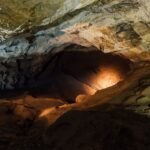
The cave is usually referred to as Ama-no-Iwato (天岩戸), meaning “Heavenly Rock Cave.” In the myth, Amaterasu hides herself in this cave, and the divine world is left in darkness until she is persuaded to emerge.
Historically, the myth was recorded in the early 8th-century chronicles:
- Kojiki (712)
- Nihon Shoki (720)
These texts preserve versions of older oral traditions, and their accounts are not always identical. The core episode is the same, but details differ in wording, sequence, and emphasis.
Historical Context
The cave myth belongs to the formative world of early Japanese state religion and mythic history. It is deeply connected to Shinto, the indigenous religious tradition of Japan, though the term “Shinto” itself became standardized later.
Several historical factors shaped the myth’s importance:
Imperial legitimacy
Amaterasu became associated with the Japanese imperial line. In traditional political thought, the emperor was understood as descended from her through the divine grandson Ninigi-no-Mikoto and, by later genealogical tradition, through Jimmu, the legendary first emperor.Ritual order and cosmic balance
The myth explains how disorder can arise when divine relationships break down. The sun disappears when Amaterasu retreats, and only coordinated ritual action restores order.Court religion and mythic codification
The earliest written versions were compiled in an environment where the Yamato court sought to preserve, systematize, and elevate sacred origin traditions.Agricultural and seasonal symbolism
Because the sun is essential to life, the story naturally resonates with concerns about fertility, renewal, and the rhythm of the year.
The myth is not merely a folk tale. It functions as a sacred narrative about social harmony, sacred authority, and the life-giving power of light.
Main Characteristics
Amaterasu is the principal solar deity in Japanese mythology. Her most important traits include:
- Solar radiance: she embodies light, warmth, and visibility.
- Order and sovereignty: she represents rightful rule and cosmic stability.
- Purity: in Shinto thought, purity is essential, and Amaterasu is strongly associated with sacred cleanliness and clarity.
- High divine status: she is often described as the highest or one of the highest kami in the mythic hierarchy.
The cave episode emphasizes a more human and emotional aspect of the goddess. She is not portrayed as distant and unmoved; rather, she is injured by conflict, especially the destructive behavior of her brother Susanoo, and responds by isolating herself. This makes the myth psychologically vivid as well as theologically meaningful.
Family and Genealogy
Amaterasu belongs to the primordial divine family described in Japanese mythic tradition. The family relationships vary slightly by source, but the broad structure is consistent.
| Figure | Relationship to Amaterasu | Notes |
|---|---|---|
| Izanagi | Father | A creator deity who, in the main tradition, gives birth to Amaterasu from purification after returning from the underworld |
| Izanami | Mother | In many accounts she is the creator goddess and mother of many deities |
| Tsukuyomi | Brother | Moon deity, often considered Amaterasu’s sibling |
| Susanoo | Brother | Storm and sea deity; central to the cave myth |
| Ninigi-no-Mikoto | Grandson | Sent from heaven to rule the earthly realm |
| Emperor Jimmu | Descendant in imperial tradition | Legendary first emperor in later genealogical tradition |
Parentage and Birth
In the best-known version, Amaterasu is born from Izanagi during his purification after his escape from the land of the dead. Different texts place her emergence from his left eye. This detail is often interpreted symbolically rather than literally.
Descendants
Amaterasu’s divine line is central to imperial legitimacy. Her descendants include:
- Ninigi-no-Mikoto, who descends to rule the land
- Later imperial ancestors in mythic genealogy
Symbols
Amaterasu is associated with symbols of light, purity, and sovereignty. Common symbolic motifs include:
- The sun: her most direct emblem
- Mirrors: sacred mirrors are among the Three Imperial Regalia and strongly linked to her cult
- White and gold: colors often associated with purity, radiance, and divinity
- Jewel and sword imagery: through the imperial regalia tradition, her authority is linked to sacred treasures
- Cave and doorway imagery: the Ama-no-Iwato cave symbolizes withdrawal, hidden power, and the possibility of return
The Sacred Mirror
The mirror is especially important. In the cave myth, a mirror is used in the divine stratagem to attract Amaterasu. When she sees her radiant reflection, she is drawn out of hiding. In later Japanese tradition, mirrors symbolize truth, self-recognition, and divine presence.
Sacred Animals
The myth of Amaterasu and the cave does not center on a single sacred animal in the way some traditions do, but several animals appear in associated iconography and ritual symbolism.
Commonly Associated Animals
- Roosters: In the cave myth, roosters are gathered and made to crow, signaling the dawn and helping persuade Amaterasu to emerge.
- Magpies or birds in general: Birds often symbolize messages between worlds, though specific bird associations vary by source and later interpretation.
- Sacred horses: In broader Shinto shrine culture, horses may appear in offerings, though this is not a unique feature of the cave myth.
Symbolic Significance
The rooster is the clearest animal symbol because it marks the coming of light. Its crowing suggests the triumph of dawn over darkness and the restoration of cosmic order.
Sacred Plants
No single plant is universally central to the cave story, but Japanese ritual and mythic symbolism often connect divinity with natural growth, purification, and fertility.
Plants that appear in related traditions or shrine practice include:
- Sakaki: an evergreen sacred tree used in Shinto ritual offerings
- Rice: associated with life, sustenance, and divine blessing
- Evergreens and ritual greenery: symbolizing vitality and continuity
Because the cave myth is embedded in Shinto, vegetation often functions as part of the ritual setting rather than as a fixed symbolic element in the story itself.
Sacred Places
Ama-no-Iwato
The most important location is the Heavenly Rock Cave, where Amaterasu hides. In myth, it is a liminal place: hidden, sealed, and set apart from the world of light.
Ise Grand Shrine
The most important historical shrine associated with Amaterasu is Ise Grand Shrine (Ise Jingū) in Mie Prefecture. It is the principal shrine dedicated to her worship and one of the holiest sites in Shinto.
Key features include:
- A long-standing center of imperial and national ritual
- The inner shrine, Naikū, dedicated to Amaterasu
- Periodic rebuilding in the tradition of shikinen sengū, which preserves ritual renewal through reconstruction
Other Places
Other locations linked to the myth exist in local tradition and later religious geography, but the cave episode itself is primarily mythic rather than tied to one historically fixed cave site. Several shrines and landscape sites in Japan claim associations with the story, reflecting regional devotion and local memory.
Powers and Attributes
Amaterasu’s powers are rooted in her identity as a sun deity and divine sovereign.
Principal Domains
- Sunlight
- Light and visibility
- Life and growth
- Order and harmony
- Imperial legitimacy
- Purity and sacred authority
Functional Meaning
Her role is not only to illuminate the earth physically. In mythic terms, her presence ensures that the cosmos remains intelligible and ordered. Her withdrawal signals:
- danger
- disorder
- loss of fertility
- social breakdown
- divine conflict
Her return restores the proper relationship between heaven, earth, and ritual community.
Main Myths
The Cave Myth
The best-known myth unfolds in several stages.
1. Susanoo’s disruptive behavior
In the standard narrative, Amaterasu’s brother Susanoo acts violently and destructively. Different versions describe his offenses differently, but they include acts that insult the sacred order. In some accounts, his behavior causes great distress to Amaterasu and other deities.
2. Amaterasu withdraws
Feeling offended, threatened, or exhausted by conflict, Amaterasu retreats into the Heavenly Rock Cave and blocks the entrance. As a result, the world falls into darkness.
3. Chaos in the world
With the sun hidden, the divine and human worlds suffer. The absence of light is not just a physical problem but a sign of cosmic disorder.
4. The gods devise a plan
The other deities gather outside the cave. In different sources, they:
- perform ritual dance
- produce music or noise
- place a mirror near the entrance
- decorate a sacred tree
- use roosters to announce dawn
The goddess Ame-no-Uzume plays a crucial role by performing an exuberant, possibly comic dance that causes the gods to laugh.
5. Amaterasu is lured out
Hearing the laughter and becoming curious, Amaterasu opens the cave door slightly. She sees her reflection in the mirror and steps further out. A strong deity then prevents her from retreating again.
6. Light returns
Once Amaterasu emerges, light returns to the world. The cosmic order is restored, and Susanoo is punished or expelled in many versions of the story.
Variations in the Sources
The myth is not uniform across all texts. Differences include:
- the exact reason for Amaterasu’s withdrawal
- the nature of Susanoo’s offense
- the sequence of ritual actions
- the role of specific deities
- whether the emphasis falls on humor, ritual, or political symbolism
These variations are important. They show that the myth was transmitted through multiple oral and literary traditions before being fixed in written form.
Relationship with Other Mythological Figures
Susanoo
Susanoo is the most important figure in the cave myth. He is often depicted as Amaterasu’s unruly brother and contrastive counterpart. Where she embodies light and order, he represents storm, disruption, and emotional volatility.
Tsukuyomi
Tsukuyomi, the moon deity, is often identified as another sibling, though his relationship to Amaterasu is less central in the cave story. In some traditions, the separation between sun and moon helps explain why they do not appear together in the sky.
Ame-no-Uzume
Ame-no-Uzume is crucial to the myth. Her dance and performance art help break the tension and trigger Amaterasu’s curiosity. She is sometimes regarded as a goddess of dawn, mirth, ritual performance, or inspiration.
Tajikarao
In many versions, the strong deity Tajikarao opens the cave further or ensures that Amaterasu cannot retreat. He represents force used in service of restoration.
Other Deities
The assembled gods act collectively. This is significant because the myth emphasizes community action rather than the efforts of a single hero. Divine cooperation, ritual intelligence, and symbolic performance all matter.
Worship and Cult
Amaterasu has been worshipped for centuries as one of Japan’s most important kami.
Core Elements of Worship
- offerings of rice, sake, and seasonal foods
- purification rites
- prayers for peace, prosperity, and imperial stability
- ritual attention to mirrors and sacred regalia
Ise Shrine Practices
At Ise Grand Shrine, worship of Amaterasu is especially prominent. The shrine has long been connected with imperial ritual, and its ceremonies reflect the importance of continuity, purity, and renewal.
Festivals and Rituals
Many festivals in Shinto shrines across Japan celebrate the return of light, the agricultural cycle, or divine blessings linked indirectly to Amaterasu. While not all of these are specific reenactments of the cave myth, the story informs the broader ritual imagination of Shinto.
Historical Worship
Historically, Amaterasu’s cult developed alongside state formation. Her status became especially important in the classical and medieval periods, when religious and political authority often reinforced each other.
Ancient Sources
The cave myth appears in Japan’s earliest historical and mythological records. The most important sources are:
- Kojiki (712)
- Nihon Shoki (720)
These works contain the most influential early versions of the story. They differ in details, reflecting different editorial aims and source traditions.
Later classical commentary and shrine tradition also shaped understanding of the myth. Unlike Greek myths preserved by authors such as Homer, Hesiod, or Ovid, the Amaterasu cycle comes primarily from early Japanese chronicles and Shinto traditions.
Important Source Features
- Kojiki often preserves a more mythopoetic, compact form
- Nihon Shoki includes multiple variants and more explicit historical framing
Roman Equivalent
There is no direct Roman equivalent to Amaterasu and the cave myth. However, some broad comparisons can be made cautiously.
Possible Analogies
- Sol: the Roman sun deity, though not equivalent in narrative role
- Apollo: associated with light, though much broader in function
- Ceres or seasonal myths: in terms of loss and restoration affecting the world
These comparisons are only partial. Amaterasu’s myth is distinct in its connection to imperial legitimacy, ritual restoration, and the specifically Japanese Shinto worldview.
Influence on Modern Culture
The story of Amaterasu and the cave continues to appear in modern media and culture in Japan and beyond.
Literature and Scholarship
The myth has been studied in:
- Japanese religious studies
- comparative mythology
- anthropology
- literary history
- political history
It is often discussed as a key text for understanding early Japanese identity and state formation.
Art and Performance
The cave scene has inspired:
- traditional paintings and prints
- Noh and other theatrical references
- shrine performances and ritual reconstructions
- modern visual art
Film, Television, and Games
The name Amaterasu is widely used in modern fiction, including:
- anime
- manga
- video games
- fantasy novels
- role-playing settings
The cave myth itself or motifs from it often appear in stories involving darkness, restoration, divine mirrors, or the return of the sun.
Popular Culture Significance
The myth remains recognizable because it combines:
- drama
- humor
- sacred symbolism
- a clear emotional arc
- a universal theme: light returning after loss
Curiosities
- The cave myth is one of the clearest examples in world mythology of a cosmic crisis caused by a divine withdrawal.
- Ame-no-Uzume’s dance is often seen as an early sacred performance, linking myth to Japanese theatrical traditions.
- The mirror in the story has had lasting importance in Japanese ritual culture and imperial symbolism.
- The myth shows that laughter and performance can have sacred power, not just solemn ritual.
- In some tellings, the gods’ celebration outside the cave is so lively that it becomes a model for collective ritual action.
- The story is sometimes interpreted as an explanation for solar cycles, though it is primarily a mythic narrative rather than a scientific theory.
- The cave episode helped make Amaterasu the central deity of the Ise Shrine tradition.
- The myth is one of the foundational stories connecting divine ancestry with Japanese imperial identity.
Frequently Asked Questions
1. What is the story of Amaterasu and the cave?
It is the myth in which the sun goddess Amaterasu hides in a cave after conflict with her brother Susanoo. The world becomes dark until the other gods lure her out.
2. Why did Amaterasu go into the cave?
In the main tradition, she withdrew because of Susanoo’s disruptive behavior and the distress it caused her. Some sources emphasize insult, fear, or exhaustion more than anger alone.
3. Who helped bring Amaterasu out of the cave?
The gods collectively helped, especially Ame-no-Uzume, whose dance amused the deities, and Tajikarao, who helped prevent Amaterasu from returning inside.
4. What does the cave symbolize?
The cave symbolizes hidden power, withdrawal, darkness, and the danger of cosmic disorder. Her emergence symbolizes renewal, light, and restored harmony.
5. Where is Amaterasu worshipped today?
She is most famously worshipped at Ise Grand Shrine in Japan, which remains the principal shrine dedicated to her.
6. Is the cave myth the same in all sources?
No. The core story is consistent, but the earliest sources present different versions of events, characters, and emphasis.
7. Why is Amaterasu important in Japanese history?
She is important because she is the central sun goddess in Shinto and is traditionally regarded as the ancestor of the Japanese imperial line.
8. Is there a real cave connected to the myth?
Several places in Japan are traditionally associated with the story, but the cave itself is primarily a mythic location rather than a single universally accepted historical site.
Conclusion
The myth of Amaterasu and the cave is a cornerstone of Japanese religious and cultural history. It explains the return of sunlight through divine cooperation, ritual performance, and the restoration of order after conflict. It also anchors major themes of Shinto: purity, harmony, sacred authority, and continuity.
As a story, it is both dramatic and symbolic. As a cultural inheritance, it has shaped shrine practice, imperial ideology, artistic expression, and modern interpretations of Japanese tradition. Its endurance across more than a millennium reflects the power of mythology to preserve identity, explain the world, and give lasting meaning to light after darkness.

Orin Vale has spent the better part of two decades tracing the threads that connect the world’s oldest stories — from the halls of Asgard to the banks of the Nile, from Olympus to the jungles of the Maya. What began as a childhood fascination with flood myths and trickster gods grew into years of independent study across comparative mythology and ancient religion, always chasing the same question: what did these stories mean to the people who first told them? Orin writes for readers who want more than trivia — the ones looking for the beliefs, fears, and truths that myths were built to carry.