Who Are the Norns in Norse Mythology?
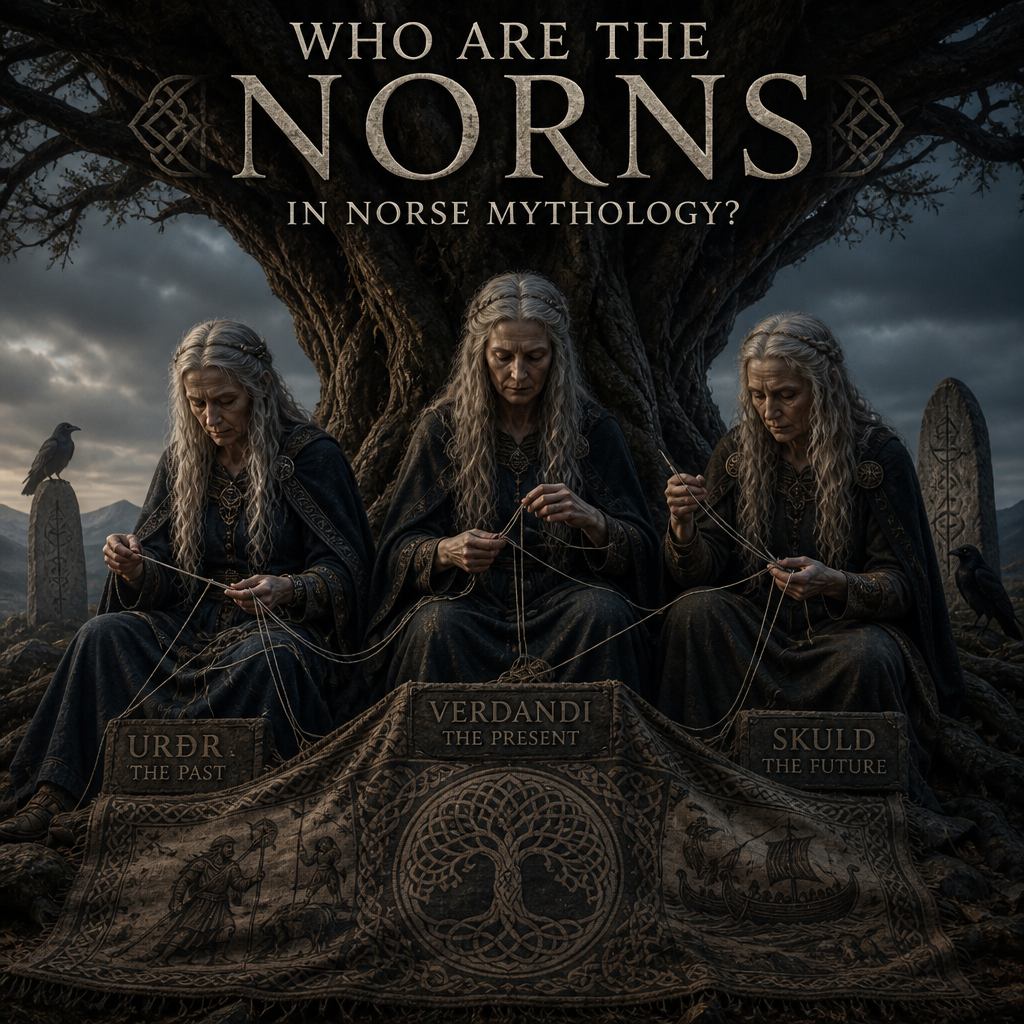
In Norse mythology, the Norns are mysterious beings connected with fate, destiny, and the shaping of life itself. They are among the most powerful figures in the mythic world, not because they wield weapons or rule kingdoms, but because they influence the course of events for gods and humans alike.
When asking who are the Norns in Norse mythology, the simplest answer is that they are fate-weaving women who determine the destinies of all beings. Yet their role is deeper and more complex than that. They stand at the roots of Yggdrasil, the World Tree, and help maintain the cosmic order.
The Three Most Famous Norns
The best-known Norns are three female figures named:
- Urd
- Verdandi
- Skuld
Their names are often interpreted as representing time:
- Urd means “what has happened” or “the past”
- Verdandi means “what is happening” or “the present”
- Skuld means “what shall be” or “the future”
Together, they symbolize the flow of time and the unfolding of fate. This does not mean they are simply goddesses of past, present, and future in a modern sense. Rather, they embody the forces that shape existence, from birth to death and beyond.
Where Do the Norns Live?
The Norns are said to dwell near the base of Yggdrasil, the immense ash tree that connects the Nine Worlds of Norse mythology. More specifically, they live by the Well of Urd, a sacred well associated with wisdom, fate, and cosmic memory.
Each day, the Norns draw water from the well and mix it with clay or white mud. They use this mixture to nourish Yggdrasil, preventing its branches and roots from decaying. This act shows that the Norns are not only concerned with individual destinies. They also help preserve the structure of the universe.
Their location at the World Tree is important. Yggdrasil links gods, giants, humans, the dead, and other beings. By standing at its roots, the Norns occupy a place of deep cosmic significance.
What Do the Norns Do?
The Norns are often described as beings who “shape” or “carve” fate. In some sources, they inscribe destiny onto wood, possibly using runes. In others, they are imagined as weaving or spinning the threads of life, though this image is more strongly developed in later interpretations and comparisons with other mythologies.
Their main roles include:
- Determining the fate of newborn children
- Shaping the lives of gods, humans, and other beings
- Maintaining Yggdrasil with water from the Well of Urd
- Representing the mysterious power of destiny
- Marking the limits of what even the gods can change
Unlike many gods in mythology, the Norns do not appear to seek worship, glory, or battle. Their power is quiet, ancient, and unavoidable.
Are the Norns Goddesses?
The Norns are sometimes called goddesses, but Norse sources do not always present them in the same way as the Aesir or Vanir gods, such as Odin, Thor, or Freyja. They are better understood as supernatural beings associated with fate.
Some Norns may come from different races or groups. Certain texts suggest that there are many Norns, not just the famous three. Some are benevolent, giving people good lives, while others bring misfortune. This means the three Norns at Yggdrasil may be the greatest or most important among many fate-shaping beings.
This wider idea makes the Norns even more intriguing. Fate in Norse mythology is not controlled by a single figure. It is part of a vast and ancient system woven into the universe.
The Norns and the Gods
One of the most striking things about the Norns is that their power seems to extend even over the gods. In Norse mythology, the gods are mighty but not all-powerful. They can be brave, wise, clever, and magical, but they cannot fully escape fate.
This is especially clear in the myth of Ragnarok, the destined doom of the gods. Odin knows that Ragnarok is coming and seeks wisdom to understand it, but he cannot prevent it entirely. The deaths of major gods such as Odin, Thor, Freyr, and Loki are foretold.
The presence of the Norns helps explain this worldview. Fate is not merely a prediction; it is a deep force that even divine beings must face.
The Norns Compared to Other Fate Figures
Many mythologies include female figures connected with destiny. In Greek mythology, the Moirai, or Fates, spin, measure, and cut the thread of life. In Roman mythology, the Parcae play a similar role.
The Norns are often compared to these figures, but they belong to a distinctly Norse understanding of fate. Norse destiny is closely tied to action, honor, memory, and the inevitable movement toward death. A person may not be able to avoid fate, but they can choose how to meet it.
This idea is central to the heroic tone of many Norse stories. Courage matters because the end is certain.
Why Are the Norns Important?
The Norns are important because they reveal how the Norse people understood life and destiny. Their presence suggests that existence is shaped by forces older and greater than gods, kings, or warriors.
They also show that fate is not separate from the natural and cosmic world. By tending Yggdrasil, the Norns connect destiny with the health of the universe itself. Life, death, time, and memory all meet at the roots of the World Tree.
Final Thoughts
So, who are the Norns in Norse mythology? They are the powerful female beings who shape fate, guard the mysteries of time, and tend the roots of Yggdrasil. The three most famous Norns—Urd, Verdandi, and Skuld—are linked with what has been, what is, and what will come.
Their role is quiet but immense. They do not rule from a golden hall or ride into battle. Instead, they stand beside the Well of Urd, carving destiny into the fabric of the cosmos. In a mythic world filled with gods, giants, monsters, and heroes, the Norns remind us that even the greatest powers must answer to fate.

Orin Vale has spent the better part of two decades tracing the threads that connect the world’s oldest stories — from the halls of Asgard to the banks of the Nile, from Olympus to the jungles of the Maya. What began as a childhood fascination with flood myths and trickster gods grew into years of independent study across comparative mythology and ancient religion, always chasing the same question: what did these stories mean to the people who first told them? Orin writes for readers who want more than trivia — the ones looking for the beliefs, fears, and truths that myths were built to carry.