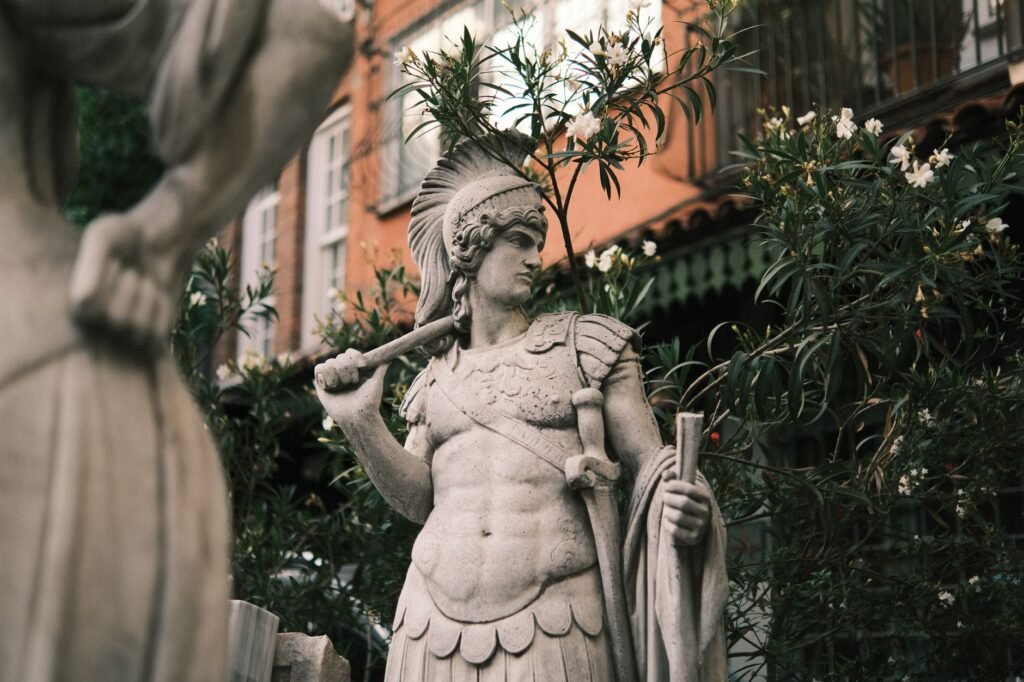
Who Is Ares in Greek Mythology?
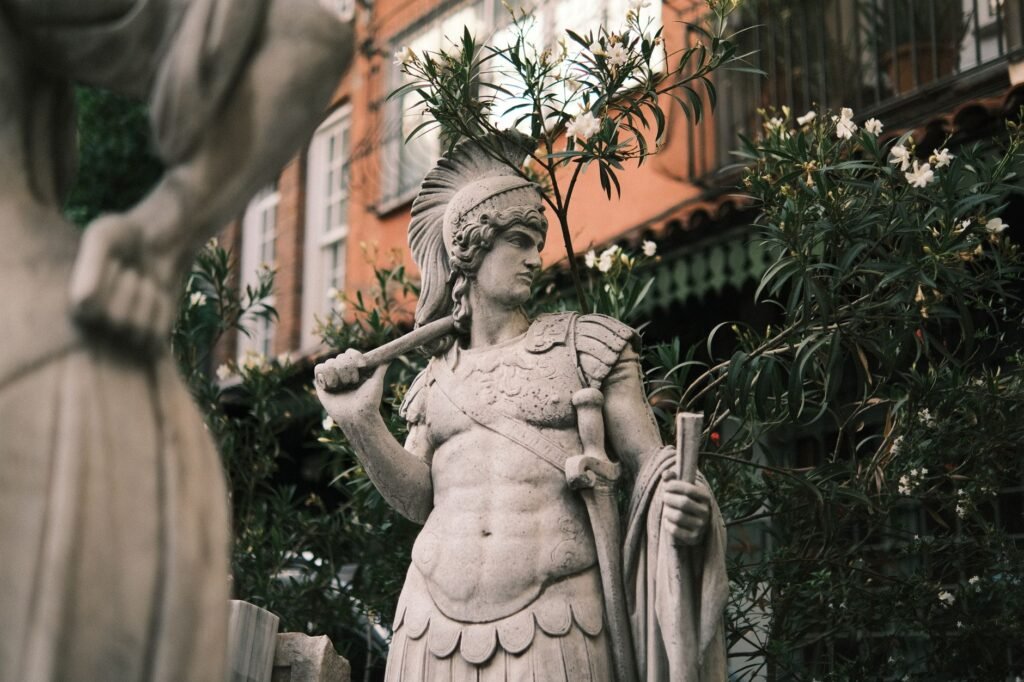
Ares is one of the most famous and complicated gods in ancient Greek mythology. Known as the god of war, he represents the violent, chaotic, and bloodthirsty side of battle. While other gods could be strategic, wise, or protective, Ares was often linked with rage, conflict, and destruction.
Although he was one of the Twelve Olympians, Ares was not always admired by the Greeks. In fact, many myths describe him as impulsive, aggressive, and unpopular among both gods and mortals. Yet his role in Greek mythology is important because he shows how the ancient Greeks viewed war as both powerful and terrifying.
Ares as the God of War
Ares ruled over the brutal nature of warfare. He was associated with battle cries, bloodshed, weapons, courage, and fear. Unlike Athena, who also had a connection to war, Ares did not represent strategy or wisdom in battle. Instead, he embodied violence itself.
Athena was the goddess of tactical warfare, discipline, and heroic protection. Ares, by contrast, stood for the wild emotions that take over during combat. This difference is one reason Athena was often respected, while Ares was frequently disliked.
In myths and ancient poetry, Ares often appears on battlefields surrounded by noise and destruction. He was sometimes accompanied by terrifying figures connected to war and fear, including his sons Phobos and Deimos, whose names mean “Fear” and “Terror.”
The Family of Ares
Ares was the son of Zeus, king of the gods, and Hera, queen of the gods. As a child of the two most powerful Olympian deities, Ares had a high position among the gods. However, his personality often caused tension with his divine family.
Zeus himself is shown in some myths as disapproving of Ares. In Homer’s Iliad, Zeus calls Ares hateful and complains about his love of conflict. This shows that even the king of the gods had little patience for Ares’ violent nature.
Ares had several children in mythology, often with different goddesses or mortal women. Some of his most well-known children include:
- Phobos — the spirit of fear
- Deimos — the spirit of terror
- Harmonia — goddess of harmony
- Eros — in some traditions, the god of love and desire
The fact that Ares could be connected to both fear and harmony reflects the complexity of Greek myth. Even a god of violence could be part of stories involving love, family, and balance.
Ares and Aphrodite
One of the most famous stories about Ares involves his affair with Aphrodite, the goddess of love and beauty. Aphrodite was married to Hephaestus, the god of blacksmiths and craftsmanship, but she became romantically involved with Ares.
Hephaestus discovered the affair and created a clever trap. He made an invisible net and placed it over the bed where Ares and Aphrodite met. When the two were caught, Hephaestus called the other gods to witness their shame.
This myth is often remembered because it combines comedy, scandal, and divine embarrassment. It also highlights the contrast between Ares and Hephaestus. Ares was strong and passionate, while Hephaestus was clever and skilled. In the end, intelligence defeated brute force.
Ares in the Trojan War
Ares plays a role in the events of the Trojan War, especially in Homer’s Iliad. During the war, he supports the Trojans, though his loyalty is not always firm. Like many Greek gods, Ares becomes involved in human conflict and takes sides in battle.
One of the most memorable moments involving Ares occurs when he is wounded by the Greek hero Diomedes, with help from Athena. After being injured, Ares cries out and returns to Olympus to complain to Zeus.
This scene makes Ares seem less heroic than expected. Instead of being an unbeatable war god, he appears emotional and even foolish. The story shows that Ares’ strength does not always lead to victory, especially when he faces wisdom and strategy.
Symbols of Ares
Ares was linked to several symbols that reflected his violent nature and connection to warfare. These symbols often appeared in art, stories, and religious imagery.
Common symbols of Ares include:
- The spear
- The helmet
- The shield
- The sword
- The boar
- The dog
- The vulture
The spear and helmet clearly connect Ares to battle. Animals such as the boar and vulture reflect danger, aggression, and death. These symbols helped ancient people recognize Ares as a fierce and destructive force.
How Was Ares Worshipped?
Compared with many other Olympian gods, Ares did not have as many temples or major festivals in Greece. This may be because the Greeks feared and disliked the kind of war he represented. They understood that war could be necessary, but they did not celebrate senseless violence.
However, Ares was worshipped in some places. He was especially important in regions that valued military strength. In Sparta, a society famous for its warrior culture, Ares had a stronger presence than in many other Greek city-states.
Ares was also associated with courage and physical power. While he could symbolize destruction, he also represented the bravery required to face danger in battle.
Ares Compared to Mars
Ares is often compared to Mars, the Roman god of war. Although they share many similarities, they were not viewed in exactly the same way.
To the Greeks, Ares was often seen as reckless and dangerous. To the Romans, Mars was a much more respected figure. Mars was not only a god of war but also a guardian of Rome and a symbol of military discipline, agriculture, and national strength.
This difference shows how Greek and Roman cultures had different attitudes toward war. The Greeks often separated wise strategy from violent chaos, while the Romans saw military power as central to their identity.
Why Ares Matters in Greek Mythology
So, who is Ares in Greek mythology? He is the god of war, but more specifically, he is the god of war’s most violent and uncontrolled side. He represents rage, bloodshed, fear, and the destructive energy of battle.
Ares was powerful, but he was not always respected. His myths often show him being defeated, mocked, or criticized. This makes him different from many other Olympian gods, who were usually portrayed with greater honor.
Still, Ares remains an important figure because he reveals a truth about ancient Greek beliefs: war was both necessary and horrifying. Through Ares, the Greeks gave a divine form to the chaos of battle and the dangers of uncontrolled aggression.

Orin Vale has spent the better part of two decades tracing the threads that connect the world’s oldest stories — from the halls of Asgard to the banks of the Nile, from Olympus to the jungles of the Maya. What began as a childhood fascination with flood myths and trickster gods grew into years of independent study across comparative mythology and ancient religion, always chasing the same question: what did these stories mean to the people who first told them? Orin writes for readers who want more than trivia — the ones looking for the beliefs, fears, and truths that myths were built to carry.