Introduction
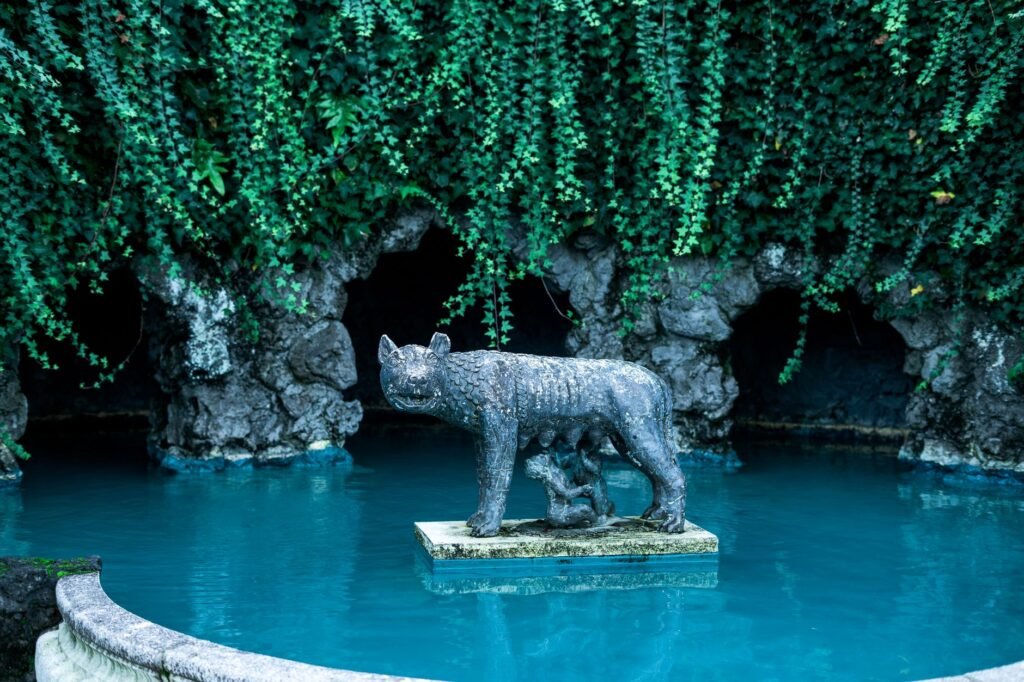
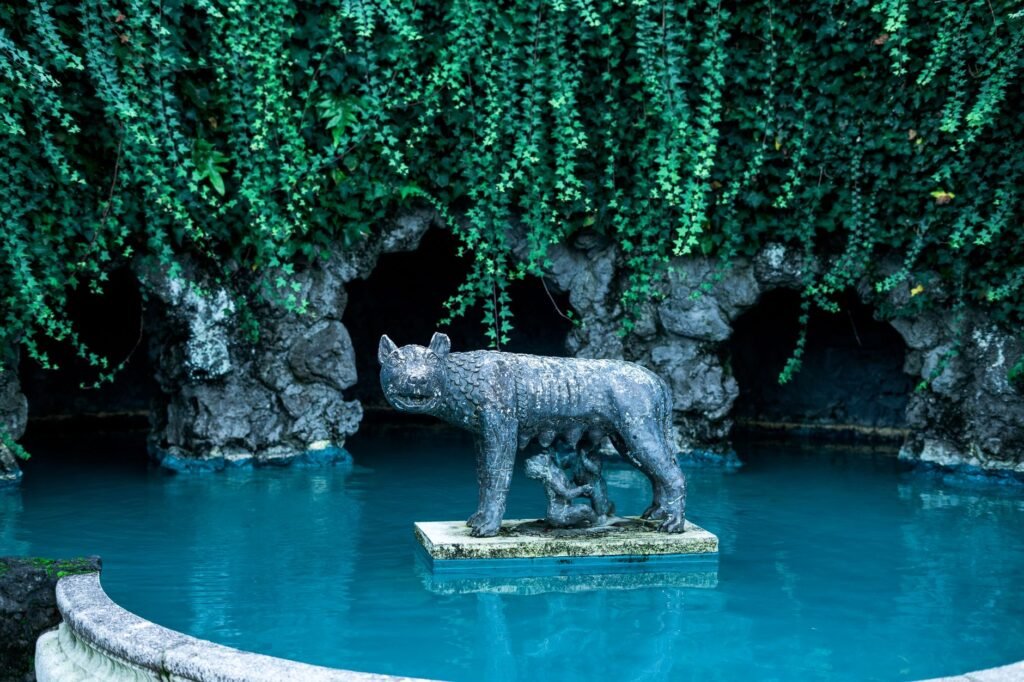
The She-Wolf of Rome, commonly known as the Lupa Capitolina, is one of the most enduring symbols of Roman identity. In modern usage, the term usually refers to the famous bronze statue of a she-wolf suckling the infant twins Romulus and Remus, the legendary founders of Rome. The image has come to represent not only the mythic origin of the city but also ideas of protection, motherhood, resilience, and Roman continuity.
The Lupa Capitolina occupies a special place at the intersection of mythology, archaeology, political symbolism, and art history. The twins are usually identified with the founding legend of Rome, while the wolf evokes older Italic and Roman associations with wilderness, fertility, and divine protection. Because the statue has been copied, reinterpreted, and reused across centuries, it has become one of the most recognizable emblems of Rome itself.
Origin and Meaning
The Latin word lupa means “she-wolf,” but in some ancient contexts it could also carry a secondary meaning related to a prostitute. In the foundational Roman myth, however, the word is used in its literal sense: a female wolf who nurses the exposed twins.
The phrase Lupa Capitolina is modern and refers specifically to the bronze sculpture traditionally displayed on the Capitoline Hill in Rome. The association with the Capitoline Hill reflects the statue’s longstanding location in the civic and symbolic heart of the city.
The term has two overlapping meanings:
- Mythological: the she-wolf who saved Romulus and Remus.
- Material and artistic: the bronze sculpture that became the best-known visual representation of that legend.
The exact date of the statue remains debated. For centuries it was believed to be an Etruscan work from antiquity, but many modern scholars have argued that the wolf itself may be medieval, while the twins were added in the Renaissance. The question is still discussed, and scholarly opinion has not always been unanimous. What is certain is that the image powerfully shaped how Rome imagined its origins.
Historical Context
The She-Wolf of Rome belongs to the broader Roman foundation myth, a tradition that linked the city’s beginnings to divine and heroic ancestry. According to the main legend, the twins Romulus and Remus were born to Rhea Silvia, a Vestal Virgin, and the god Mars. Because their birth threatened the authority of the ruling order, they were abandoned on the riverbank. A she-wolf discovered them and nursed them until a herdsman later found and raised them.
This story developed in an environment where Roman culture emphasized:
- lineage and legitimacy
- the sanctity of the city
- signs of divine favor
- the tension between civilization and wilderness
The wolf was not merely a wild animal. In Roman religious thought, it could also represent a force of nature that, when properly interpreted, served the city’s destiny. The legend thus transformed a creature of the forest into a guardian of the future capital of empire.
Historically, the image of the wolf and twins became especially important in periods when Rome wished to stress its ancient origins and political continuity. It was used in imperial, civic, medieval, Renaissance, and modern contexts, each giving the image new meaning.
Main Characteristics
The central visual features of the Lupa Capitolina are highly distinctive.
The bronze sculpture
The famous statue shows:
- a standing she-wolf
- her body alert and tense
- her head turned slightly, as if watching over the scene
- the infant twins, traditionally Romulus and Remus, beneath her
The wolf is often depicted with:
- prominent fur texture
- pointed ears
- a lean, muscular body
- a vigilant expression
The twins, in many versions, are shown reaching upward or suckling, reinforcing the idea of maternal care and survival against impossible odds.
Stylistic importance
The sculpture is admired not only for its mythic subject but also for its visual power. The wolf’s posture combines:
- danger and tenderness
- wilderness and guardianship
- animal realism and symbolic meaning
Because of the uncertainty surrounding its date, the work is important in art historical debates about:
- Etruscan bronzework
- medieval revival of classical forms
- Renaissance restoration practices
Identifying features
The image is identifiable by:
- the she-wolf
- the two infants
- the foundational Roman legend
- its association with Rome’s origin story
Family and Genealogy
In mythological terms, the She-Wolf of Rome does not have a conventional family genealogy in the way a deity or hero might. She is not a goddess with parents, spouse, or descendants in the standard sense. Her significance comes from her role in the survival of the twin founders.
Mythic relationships
The main relational network surrounding the she-wolf includes:
- Romulus and Remus: the infants she nursed
- Rhea Silvia: their mother
- Mars: their divine father in the most common tradition
- Faustulus: the shepherd who later found and raised the twins
- Acca Larentia: in some accounts, the wife of Faustulus or a foster mother connected to their upbringing
The she-wolf herself functions as a foster-mother figure rather than a biological ancestor.
Symbols
The Lupa Capitolina is rich in symbolic meaning. Its imagery has been used to express Roman civic identity across many centuries.
Main symbolic themes
| Symbol | Meaning |
|---|---|
| She-wolf | Protection, wild nature, maternal strength, divine favor |
| Twins | Founding, duality, future political conflict, continuity |
| Suckling | Nurture, survival, legitimacy, rebirth |
| Bronze material | Durability, prestige, public memory |
| Capitoline Hill | Civic authority, Rome’s sacred-political center |
The wolf as symbol
In Roman culture, the wolf could symbolize both danger and protection. It was an ambivalent animal:
- feared as a predator
- respected as a powerful force of nature
- linked to Mars and martial identity
- used in origin myths to show that Rome emerged from hardship
The twins as symbols
Romulus and Remus represent:
- the city’s mythical beginning
- the possibility of brotherhood and conflict
- the transition from abandonment to sovereignty
Their presence beside the wolf gives the image its foundational meaning.
Sacred Animals
The she-wolf is the central animal associated with this tradition.
Wolf symbolism in Roman culture
In Roman religious imagination, wolves were connected to:
- Mars, the god of war
- frontier strength and wilderness
- protective power
- omens and divine signs
The wolf was not a simple household animal. It was a creature of the edge of civilization, which made it an ideal emblem for the threshold between chaos and city order.
Other animal associations
Although the wolf is primary, the legend also intersects with other animals indirectly, especially through pastoral imagery:
- sheep and herds, through the shepherd who finds the twins
- birds and river life, in some versions of the abandoned infants’ survival
- the broader pastoral world of early Latium
Sacred Plants
There is no universally established “sacred plant” directly tied to the She-Wolf of Rome in the way some deities have sacred trees or herbs. However, the legend and its artistic tradition are often discussed in connection with plants that belong to the Roman landscape.
Indirect plant associations
The most relevant plant-related associations are symbolic rather than strictly cultic:
- fig trees, especially the Ficus Ruminalis, which is central in some accounts of the twins’ rescue
- riverbank vegetation, which frames the exposure of the infants
- the natural landscape of Latium, contrasting with the later urban order of Rome
In the foundation myth, the fig tree is particularly important. Some ancient sources place the twins near a sacred fig tree on the bank of the Tiber, where the wolf finds them. This tree is not a “plant of the wolf” in a strict religious sense, but it is a notable element of the legend.
Sacred Places
The She-Wolf of Rome is strongly connected to several important locations in Roman tradition and memory.
The Capitoline Hill
The most famous location is the Capitoline Hill in Rome, where the statue is traditionally housed and from which it takes its modern name. The Capitoline was one of the most important civic and religious centers of ancient Rome.
The Palatine Hill
The foundation myth is also closely associated with the Palatine Hill, where Romulus is said to have founded Rome. The Palatine is central to the story of the twins and the origins of the city.
The Tiber River
The twins are exposed near the Tiber River, which is crucial to the legend. The river is both a threat and a means of survival: the infants are cast into it, but its waters carry them to safety.
Other related places
| Place | Significance |
|---|---|
| Capitoline Hill | Traditional home of the statue; civic and symbolic center |
| Palatine Hill | Site of Rome’s legendary founding |
| Tiber River | Scene of the infants’ abandonment and rescue |
| Lupercal | Cave or site associated with the she-wolf and the twins in later tradition |
The Lupercal, a cave or sacred site on the Palatine, became especially important in later Roman memory as the place where the she-wolf nursed the twins.
Powers and Attributes
Strictly speaking, the She-Wolf of Rome is not a deity with formal divine powers. However, within mythic tradition and symbolic interpretation, she embodies several attributes.
Mythic functions
The she-wolf’s principal “powers” are:
- protection of the abandoned
- nurturing of future founders
- connection between wild nature and civic destiny
- legitimation of Rome’s origins
Symbolic attributes
She is associated with:
- maternal strength
- survival against adversity
- guardianship
- primal vitality
- the transition from nature to civilization
These attributes help explain why the image remained potent in Roman and post-Roman culture. It communicates endurance without requiring explicit divine status.
Main Myths
The central myth is the story of Romulus and Remus. The she-wolf plays a decisive role in preserving the future of Rome.
The foundation legend
A common version of the story runs as follows:
- Rhea Silvia, a Vestal Virgin, becomes pregnant.
- The twins Romulus and Remus are born.
- Their enemies order that the infants be exposed.
- They are abandoned near the Tiber River.
- A she-wolf discovers them and nurses them.
- A shepherd, often named Faustulus, finds and raises them.
- The twins later return to power and become involved in the foundation of Rome.
- Romulus ultimately becomes the city’s founder, while Remus dies in the conflict that follows.
Variations in ancient tradition
Ancient sources do not all tell the story in exactly the same way. In some traditions:
- the wolf may be treated more literally as an animal
- in others, the term lupa may imply a woman or be used in a more ambiguous fashion
- the rescue scene may involve the fig tree and the Lupercal
- the details of the twins’ later upbringing differ
Most Roman readers, however, understood the she-wolf episode as a foundational miracle of the city.
The statue and the myth
The statue itself is not the myth, but it became the most powerful visual expression of the story. Over time, the bronze wolf and the twins merged in public memory with the founding narrative so completely that the image itself began to function as an icon of Rome.
Relationship with Other Mythological Figures
The She-Wolf of Rome is tied to a broader network of Roman mythic characters.
Romulus and Remus
Her most important relationship is with the twins.
- She acts as their first caretaker.
- She enables their survival.
- Without her, the founding myth loses its dramatic beginning.
Mars
The wolf’s link to Mars is indirect but significant. In Roman tradition, the twins are often said to be sons of Mars, and the wolf’s fierce nature resonates with the martial character of the god.
Rhea Silvia
Rhea Silvia is the human mother of the twins. The she-wolf replaces the absent biological mother as the immediate provider of life.
Faustulus and Acca Larentia
These figures belong to the foster-family phase of the myth. They transform the children from abandoned royal infants into future leaders.
Aeneas and Trojan ancestry
Roman origin myths were often layered. The story of Romulus and Remus was connected to the wider legend of Aeneas, the Trojan ancestor of the Romans. The she-wolf belongs to the later, specifically Roman foundation cycle that complements the Trojan descent narrative.
Worship and Cult
There is no evidence of a formal cult devoted specifically to the She-Wolf of Rome as a goddess. However, the wolf appears in Roman religious life through related festivals, rites, and public memory.
Lupercalia
The most important ritual context is the Lupercalia, an ancient Roman festival held in February. It was associated with fertility, purification, and pastoral themes, and it was connected to the Lupercal and to the mythical setting of the twins’ rescue.
Public and civic use
The she-wolf image was used in:
- civic monuments
- coins
- official emblems
- later political symbolism
- Roman identity rituals in broad cultural terms
Offerings and reverence
While not a deity receiving standard temple offerings, the image and the myth behind it inspired reverence in the form of:
- public display
- commemorative art
- festivals linked to Rome’s origin story
- patriotic symbolism
Ancient Sources
The she-wolf legend is known from several classical authors, though no single ancient source tells the entire story in identical form.
Major ancient references
| Author | Work | Relevance |
|---|---|---|
| Livy | Ab Urbe Condita | Major narrative of Rome’s early history, including the twins |
| Dionysius of Halicarnassus | Roman Antiquities | Detailed account of Rome’s legendary origins |
| Plutarch | Life of Romulus | Biographical treatment of Romulus and the wolf episode |
| Ovid | Fasti | Explores Roman festivals and mythic memory |
| Virgil | Aeneid | Broader framework for Roman origin and destiny |
| Cicero | Various works | References to Roman civic symbols and traditions |
| Servius | Commentary on Virgil | Preserves interpretive traditions and background material |
Points of caution
Ancient authors differ in emphasis and detail. Some are more historical, others more literary or symbolic. When discussing the she-wolf, it is important to distinguish between:
- the mythic story
- the later literary elaboration
- the material history of the statue
Roman Equivalent
The She-Wolf of Rome does not have a direct “Roman equivalent” because she is already a Roman symbol rather than a foreign deity adapted into Roman religion.
However, in a broader sense, she can be understood as part of Roman tradition’s own system of symbolic figures:
- she functions like an emblem of the city
- she occupies a role similar to civic personifications
- she is tied to Rome’s self-understanding in the way that other cultures use founding symbols
If the term “Roman equivalent” is applied to her place in the religious-symbolic system, the closest comparison is to other Roman civic icons such as Roma, the personification of the city, or the Capitoline she-wolf as a visual sign of origin and legitimacy.
Influence on Modern Culture
The She-Wolf of Rome has had a major afterlife in modern culture. It remains one of the most recognizable images of classical antiquity.
In art and architecture
The wolf and twins have appeared in:
- municipal coats of arms
- sculptures and fountains
- monuments in Italy and abroad
- school emblems and civic logos
In politics and national symbolism
The image has sometimes been used to evoke:
- Roman heritage
- Italian identity
- municipal pride
- continuity with antiquity
Because of its strong association with Rome’s origin, the symbol has also been adapted in political contexts, sometimes in ways that scholars and historians treat cautiously.
In literature and media
The legend appears in:
- historical novels
- children’s books about mythology
- films and television programs on ancient Rome
- educational materials
- video games set in the classical world
In popular culture
The she-wolf is frequently used as shorthand for “Rome” itself. It appears in:
- sports branding
- tourist imagery
- university and museum identity
- tattoos and decorative art
Its endurance shows how a single ancient image can remain culturally legible across centuries.
Curiosities
- The Lupa Capitolina is one of the most famous Roman symbols, but its date is disputed.
- For a long time, the statue was widely thought to be ancient Etruscan.
- Many modern scholars now argue that the wolf may be medieval, while the twins were added later.
- The image of the she-wolf and twins became especially important in Renaissance Rome, when classical heritage was rediscovered and celebrated.
- The wolf’s stance creates a striking contrast: she looks fierce, yet she performs an act of nurture.
- The word lupa can have more than one meaning in Latin, which has led to interpretive discussion in some ancient and modern readings.
- The she-wolf is one of the rare mythic figures whose meaning comes from both story and artifact.
- The statue’s fame is partly due to its ability to represent both a legendary past and a living civic identity.
Frequently Asked Questions
What is the She-Wolf of Rome?
The She-Wolf of Rome, or Lupa Capitolina, is the famous image of a she-wolf nursing the twin founders of Rome, Romulus and Remus.
Is the Lupa Capitolina an ancient statue?
Its date is debated. For many years it was thought to be ancient, but some scholars argue that the wolf itself may be medieval and that the twins were added later in the Renaissance.
Why is the she-wolf important in Roman mythology?
She is important because she rescues and nurses Romulus and Remus, making her a key figure in Rome’s foundation legend.
Where is the statue located?
The statue is traditionally associated with the Capitoline Hill in Rome.
What does the wolf symbolize?
The wolf symbolizes protection, survival, wilderness, and the fierce strength from which Rome emerged.
Who were Romulus and Remus?
According to Roman legend, they were the twin sons of Rhea Silvia and Mars, and the founders of Rome in its mythic origin story.
Is there a cult or religion devoted to the She-Wolf?
No separate cult of the she-wolf is known. However, the image is connected to Roman religious traditions and the festival of the Lupercalia.
Why is the statue still famous today?
It remains famous because it combines art, myth, and civic identity in one powerful image that has become a symbol of Rome worldwide.
Conclusion
The She-Wolf of Rome (Lupa Capitolina) is far more than a famous statue. It is a condensed expression of Roman myth, identity, and memory. Through the legend of Romulus and Remus, the she-wolf represents the paradox at the heart of Rome’s self-image: a city born from exposure and danger, yet sustained by protection and destiny.
Whether viewed as an ancient bronze, a medieval work, a Renaissance symbol, or a timeless emblem of Rome, the Lupa Capitolina remains one of the most recognizable images of the classical world. Its enduring power lies in its ability to unite myth and history, civilization and wilderness, vulnerability and strength.

Orin Vale has spent the better part of two decades tracing the threads that connect the world’s oldest stories — from the halls of Asgard to the banks of the Nile, from Olympus to the jungles of the Maya. What began as a childhood fascination with flood myths and trickster gods grew into years of independent study across comparative mythology and ancient religion, always chasing the same question: what did these stories mean to the people who first told them? Orin writes for readers who want more than trivia — the ones looking for the beliefs, fears, and truths that myths were built to carry.