Romulus and Remus

The Founding of Rome by Romulus and Remus Explained
The founding of Rome by Romulus and Remus is the enduring Roman foundation myth, blending divine lineage, royal conflict, abandonment, survival, and brotherly rivalry into a story that explained the city’s sacred origins. Though not verifiable history, it shaped Roman identity and continues to illuminate how legends can serve politics, memory, and cultural authority.

The Death of Remus: Roman Mythology and Meaning
The death of Remus is a central episode in Roman foundation myth, portraying the fatal conflict between the twin brothers Remus and Romulus as a turning point in the birth of Rome. Told in multiple ancient versions, the story explores themes of boundary, authority, and fratricide, inviting readers to examine how myth shaped Roman ideas of law and power.

Founding of Rome: Myth or History Explained
The founding of Rome lies between myth and history, preserving the legendary tale of Romulus and Remus while also reflecting the real growth of Iron Age settlements along the Tiber. This article examines how Roman tradition, archaeology, and later historical writing shaped the enduring question of whether Rome began in 753 BCE or emerged gradually from earlier communities.
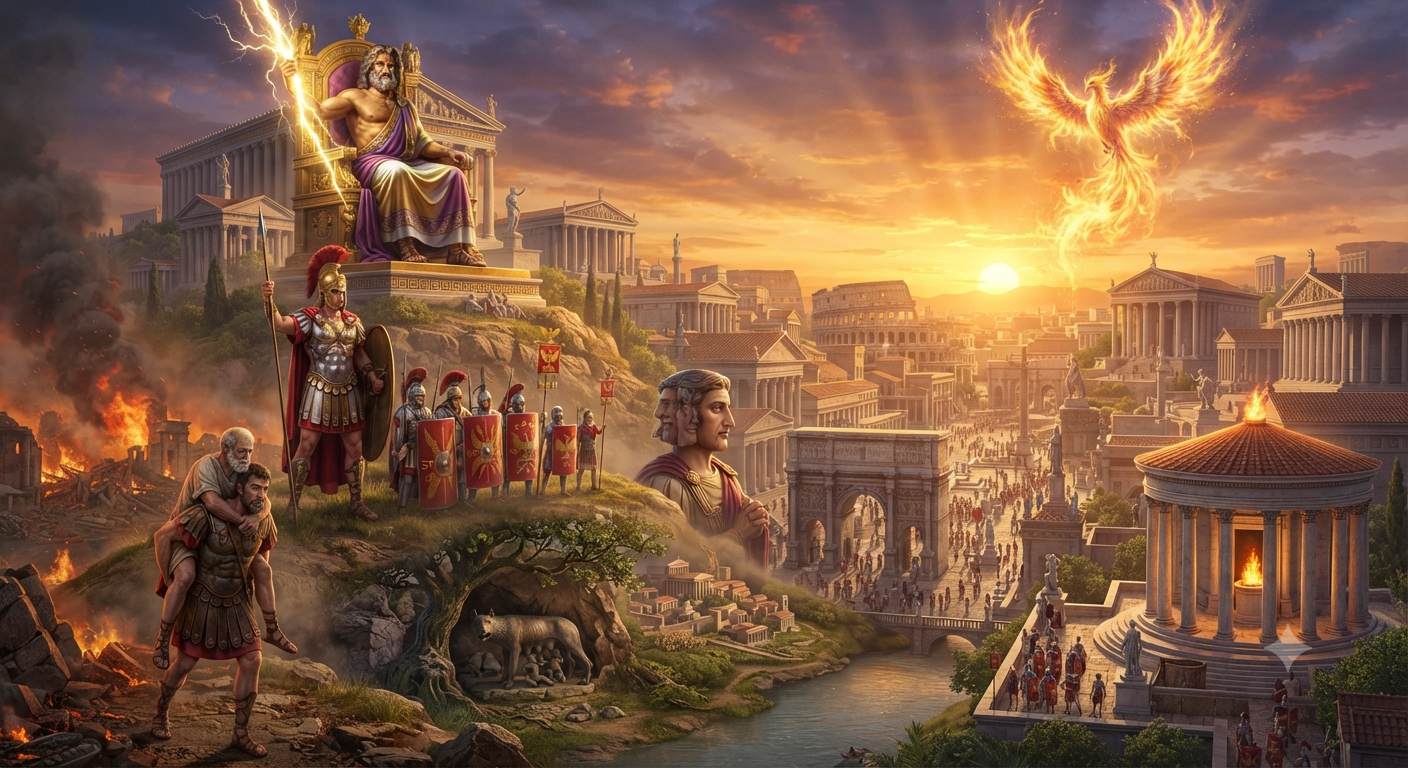
Roman Mythology: The Complete Guide to the Gods, Symbols, Creatures, and Myths of Ancient Rome
Historical and Geographic Context Roman mythology developed across more than a thousand years, from the legendary founding of Rome in ...
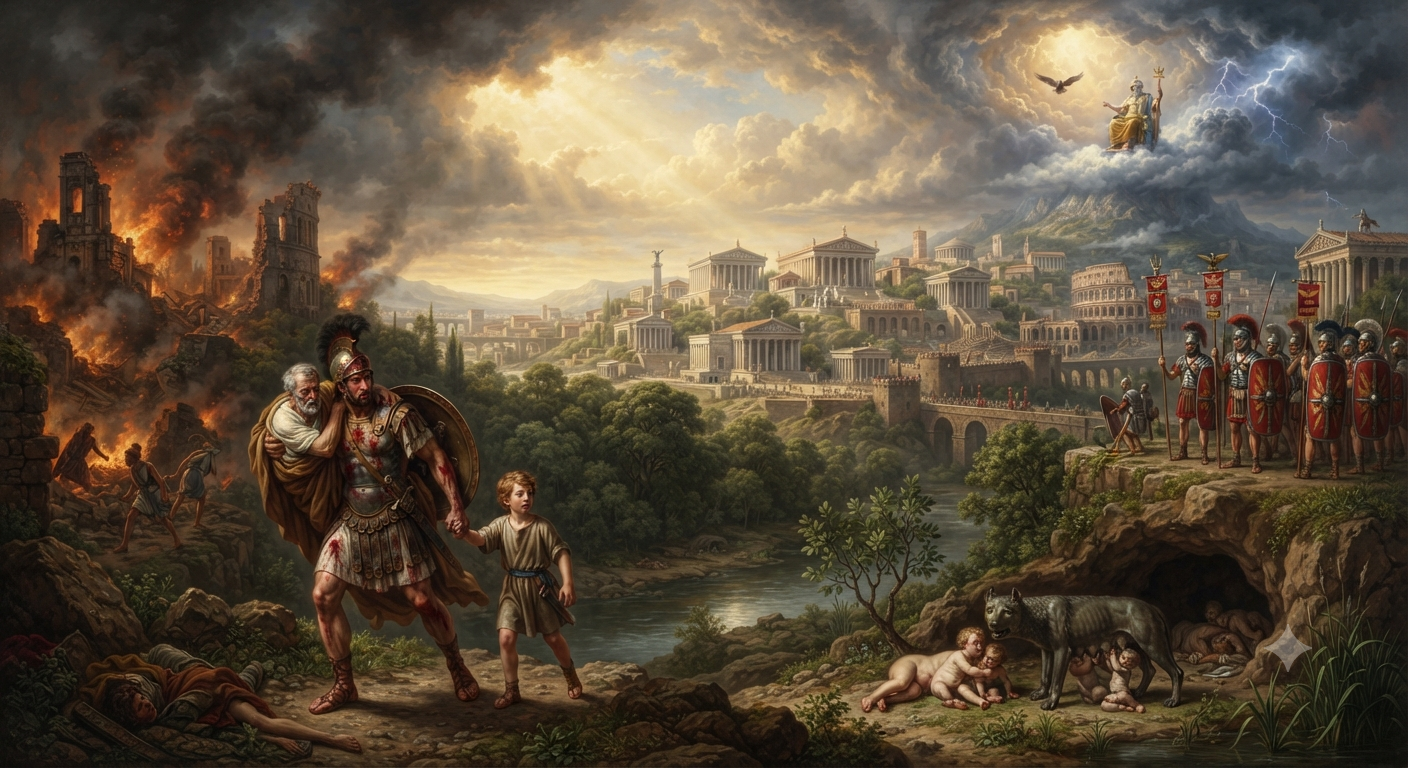
Roman Myths and Legends: The Complete Guide
Roman mythology’s greatest narratives are stories of founding — of a city, a people, and a set of values. This ...

She-Wolf of Rome (Lupa Capitolina): History and Meaning
The She-Wolf of Rome, or Lupa Capitolina, is a powerful emblem of the city’s legendary origins, combining the myth of Romulus and Remus with a bronze image that has shaped Roman identity for centuries. Its debated dating, layered meanings, and enduring political and artistic influence reveal why this familiar figure continues to invite closer study.
Mars (Roman God): Meaning, Myths, and Worship
Mars (Roman god) was among the most important figures in the Roman pantheon, revered not only as a god of war but also as a protector of agriculture, civic order, and the state. His central role in Roman religion, myth, and imperial identity, from the story of Romulus and Remus to the rituals that marked the seasons and military campaigns, reveals a deity whose influence reached far beyond the battlefield.
Quirinus: Roman God of War and State
Quirinus is a major yet elusive figure in Roman religion, associated with the Roman state, civic identity, armed power, and the Quirinal hill. Later equated with the deified Romulus, he may also preserve an older divine role linked to citizenship, fertility, and communal order, raising questions that continue to shape scholarly debate.