Founding of Rome: Myth or History
Introduction
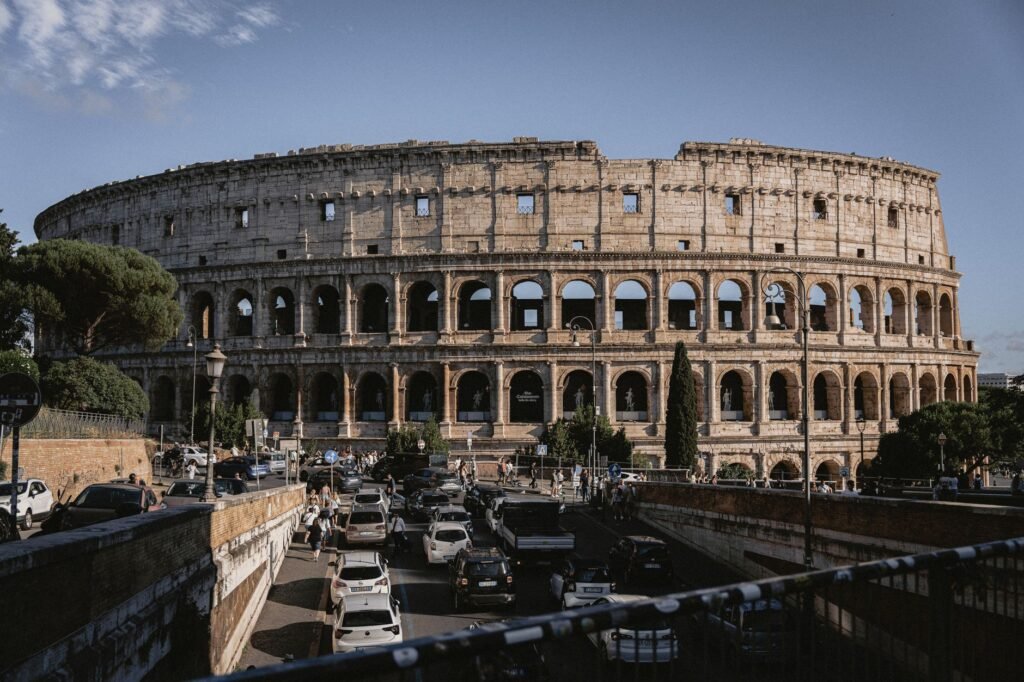
The founding of Rome is one of the most famous origin stories in world history. It sits at the meeting point of legend and historical inquiry, combining heroic myth, political memory, archaeology, and later literary tradition. For ancient Romans, the story of Rome’s beginnings helped explain their city’s destiny, institutions, and values. For modern readers, it raises a larger question: was Rome founded by the legendary Romulus in 753 BCE, or did the city emerge gradually from several settlements in central Italy?
The answer is not simply “myth” or “history.” The traditional story of Romulus and Remus belongs to mythology, but it reflects genuine ancient beliefs about identity, kingship, violence, kinship, and civic order. At the same time, archaeological evidence shows that Rome developed over time from multiple Iron Age communities on the hills near the Tiber. The founding of Rome, therefore, is best understood as a blend of mythical foundation narrative and historical urban formation.
Origin and Meaning
The name Rome is traditionally linked to Romulus, the city’s legendary founder. Ancient writers sometimes treated the city’s name as derived from the founder’s name, though modern scholarship is more cautious. The etymology is uncertain and may not have a simple single origin.
Different ancient and later explanations included:
- a connection with Romulus
- a link to an older settlement name on the Tiber
- a possible association with a local river or landscape term
The city’s traditional foundation date, 753 BCE, was calculated by Roman antiquarians, especially Varro, and later became the standard chronological marker. This date is not a direct archaeological fact but a scholarly reconstruction from antiquity.
Historical Context
To understand the founding of Rome, it is necessary to place it in the context of central Italy in the early Iron Age. The area around the lower Tiber River was inhabited by communities that practiced agriculture, animal husbandry, and river trade. The hills where Rome later developed offered defensible terrain and access to water routes.
Archaeological background
Archaeology indicates that:
- small settlements existed on the Roman hills by the 9th and 8th centuries BCE
- these communities gradually became more interconnected
- burial practices, huts, and defensive features suggest a slow urbanization process
- by the late 8th and 7th centuries BCE, the area shows signs of increasing social complexity
This evidence does not support a single dramatic “founding day” in the literal sense. Instead, it suggests a long process of synoecism—the merging of separate settlements into a larger urban center.
Cultural and religious context
The Romans believed that cities were not just built, but ritually founded. Foundation involved auspices, boundary marking, sacrifices, and divine approval. In this sense, the story of Romulus fits a common ancient pattern: cities were often given sacred beginnings, even when their actual growth was gradual.
Main Characteristics
The founding of Rome is characterized by the interaction of myth, ritual, and state memory. Its main features include:
- a founder-hero, Romulus
- a twin motif, through Romulus and Remus
- conflict over legitimacy, kingship, and territory
- divine ancestry through Mars and the royal line of Alba Longa
- a foundation marked by violence, especially Remus’s death
- the creation of the first civic and political institutions
The story is not a neutral historical record. It is a foundational myth that explains why Rome claimed divine favor, martial strength, and the authority to absorb outsiders.
Family and Genealogy
The traditional genealogy of Rome’s founder is central to the myth.
Genealogical outline
| Figure | Relationship | Notes |
|---|---|---|
| Aeneas | Mythical ancestor | Trojan hero who reached Italy after the fall of Troy |
| Ascanius / Iulus | Son of Aeneas | Linked to the royal line of Alba Longa |
| Numitor | Descendant of Aeneas | Rightful king of Alba Longa in Roman tradition |
| Rhea Silvia | Daughter of Numitor | A Vestal Virgin in the legend |
| Mars | Divine father of the twins in some versions | God of war; divine paternity legitimizes Rome’s martial identity |
| Romulus and Remus | Twins | Central figures in the founding myth |
The key family story
In the best-known version, Rhea Silvia, the daughter of Numitor, was forced to become a Vestal Virgin so that she would not bear heirs who could challenge her uncle Amulius. Despite this, she conceived twin sons, usually said to be by Mars. Amulius ordered the infants to be exposed. They survived, were suckled by a she-wolf, and later raised by a shepherd and his wife.
This story is not historical in a modern sense, but it gave Rome a noble, sacred, and tragic origin.
Symbols
Several symbols are closely associated with the founding of Rome and its legendary founder.
Major symbolic elements
- The she-wolf: represents survival, wild nurture, and divine protection
- The twins: symbolize duality, kinship, rivalry, and the unstable origin of political power
- The plow: associated with boundary-making in ritual foundation
- The pomerium: the sacred boundary of the city
- Mars: symbol of military power and divine ancestry
- The augury: birds and omens used to determine divine approval
The most famous symbolic scene is the she-wolf nursing the infants. It became one of the most enduring images of Rome in later art and political iconography.
Sacred Animals
The founding myth is most strongly associated with one animal: the she-wolf.
The she-wolf
The she-wolf is important because:
- she rescues the abandoned twins
- she embodies wild nature transformed into civic origin
- she became a symbol of Rome itself
However, ancient language may be more complex than modern retellings suggest. Some scholars note that Latin could use lupa both for a wolf and, in some contexts, for a prostitute. This has led to alternative interpretations of the legend’s earliest form, though the wolf reading became canonical in Roman tradition.
Other animals
- Birds appear in augury, which was crucial in deciding where and how to found cities.
- Livestock, especially in pastoral settings, connect the legend to the rural world of early Italy.
Sacred Plants
No single sacred plant is central to the founding of Rome in the way the she-wolf is central among animals. Still, several plants appear in Roman religious and foundation contexts.
Relevant plants and meanings
- Fig tree: linked to the tale of the twins, especially the Ficus Ruminalis, near the Lupercal
- Laurel: later associated with triumph and divine favor, though not specific to the original foundation myth
- Grain and cereals: reflect the agricultural base of early Roman life and ritual
The fig tree is especially important because it appears in the landscape of the infant twins’ survival and in the sacred geography of early Rome.
Sacred Places
The founding of Rome is tied to several specific places, some historical, some legendary.
Key locations
| Place | Significance |
|---|---|
| Palatine Hill | Often identified as the site of Romulus’s settlement and the core of early Rome |
| Capitoline Hill | Later major religious and political center |
| Lupercal | Cave or sacred spot associated with the she-wolf and the twins |
| Ficus Ruminalis | Sacred fig tree near the early legend |
| Alba Longa | Mythical predecessor city in the royal genealogy |
| Tiber River | Geographic and symbolic setting for exposure, survival, and trade |
The Palatine
The Palatine Hill is especially important. Archaeology confirms early habitation there, and Roman tradition placed Romulus’s hut and the earliest city on or near this hill. The hill became a powerful symbol of Rome’s origins and later elite residence.
The Lupercal
The Lupercal was associated with the cave where the twins were found by the she-wolf. The exact historical nature of the site is debated, but it became part of the sacred topography of Rome.
Powers and Attributes
Because the founding of Rome is a story rather than a deity, it does not possess “powers” in the divine sense. However, the legend attributes several civic and ideological functions to the founding act.
Functions of the foundation myth
- Legitimating sovereignty: Rome’s rulers and institutions were linked to divine favor
- Explaining violence: Romulus’s killing of Remus dramatizes the cost of political order
- Defining boundaries: the city’s sacred limits were marked by ritual
- Creating identity: the myth distinguished Romans from neighboring peoples
- Justifying expansion: Rome’s openness to outsiders in later tradition echoed the mixed origins of its early population
The story also presents Rome as born from conflict, which Romans could interpret as a sign of both strength and danger.
Main Myths
The founding of Rome includes several interlocking myths.
1. The Trojan ancestry myth
Roman tradition linked Rome to Troy through Aeneas, a hero of Homeric epic and later Roman legend. This gave Rome an ancient, prestigious lineage connected to the Mediterranean heroic past.
2. The Alba Longa genealogy
Aeneas’s descendants supposedly founded Alba Longa, from which Numitor and Rhea Silvia descended. This created a dynastic bridge between Troy and Rome.
3. The birth of Romulus and Remus
Rhea Silvia’s conception by Mars, the exposure of the twins, and their rescue by a she-wolf form the most famous part of the legend.
4. The contest for the city
Romulus and Remus later disputed where the city should be founded and who should rule. Different ancient versions describe:
- a quarrel over which hill to settle
- disagreement over omens from birds
- conflict over the right to name and rule the city
5. The death of Remus
The most famous version says Romulus killed Remus after Remus mocked or violated the new boundary. This act has been interpreted in several ways:
- as a ritualized warning against trespass
- as a mythic explanation for the seriousness of Roman law
- as a symbolic statement that civic order is born through fratricide
6. The opening of Rome to outsiders
Later traditions about Romulus include the asylum on the Capitoline, where fugitives and outsiders were welcomed into the new city. This helped explain Rome’s later growth as a power that incorporated diverse peoples.
Relationship with Other Mythological Figures
The founding of Rome is closely connected with a wide network of mythic figures.
Aeneas
Aeneas is the most important ancestral figure. Roman authors, especially later poets, integrated him into Rome’s origins to give the city a heroic and pan-Mediterranean pedigree.
Mars
Mars is the divine father in many versions of the twins’ story. His role emphasizes martial destiny and divine sanction.
Rhea Silvia
Rhea Silvia is a tragic mother figure. Her forced virginity and divine conception underscore the conflict between dynastic politics and sacred order.
Numitor and Amulius
These brothers represent legitimate and illegitimate rule. Their conflict prepares the political context of the twins’ birth.
Hercules, Faunus, and local Italian deities
Roman foundation stories sometimes overlap with older Italian and local religious traditions. The city’s mythic landscape was not purely Trojan; it also incorporated native Italic cults and place legends.
Worship and Cult
The founding of Rome was not worshiped as a deity, but it was remembered through rituals, anniversaries, and civic cult.
Foundation-related practices
- Boundary rituals: marking the pomerium and defining sacred space
- Augury: using birds to read divine approval
- Annual commemorations: especially the city’s traditional birthday
- Public recitation of origin stories: reinforcing civic identity
Associated cults and festivals
The most relevant festival is Lupercalia, an ancient Roman festival connected with purification, fertility, and the Lupercal. While the precise relationship between the festival and the Romulus-and-Remus story is complex, ancient Romans associated the area and the rite with the city’s earliest traditions.
Roman religious culture treated foundations as sacred acts, so the origin of the city belonged in the broader world of ritual practice.
Ancient Sources
Our knowledge of the founding of Rome comes mainly from Roman and Greek authors writing centuries after the supposed event. No contemporary written record of the founding survives.
Major ancient sources
Livy, Ab Urbe Condita
Gives the canonical Roman narrative, while often signaling uncertainty or variant traditions.Dionysius of Halicarnassus, Roman Antiquities
Offers a detailed account and tries to reconcile Greek and Roman traditions.Plutarch, Life of Romulus
Preserves many variants and moral reflections on Romulus.Virgil, Aeneid
Does not narrate the founding directly in historical prose, but provides the Trojan ancestry that underpins Roman origin ideology.Ovid, Fasti and Metamorphoses
Presents Roman festival lore and mythic episodes related to the origins of the city.Varro
Important for chronology; his dating helped fix the traditional 753 BCE foundation year.Festus, Cassius Dio, and others
Preserve later antiquarian details and alternate traditions.
What the sources show
The ancient sources do not agree on every detail. They preserve a tradition, not a single fixed historical record. Differences include:
- who fathered the twins
- how the twins were rescued
- the exact reason for Remus’s death
- the role of birds, hills, and ritual boundaries
- whether Rome was founded at one moment or through a sequence of settlements
Roman Equivalent
The topic does not have a simple “Roman equivalent,” since it is already a Roman foundation tradition. However, in Roman religious and political thought, the founding of the city was often paired with other foundational acts:
- the founding of colonies
- the dedication of temples
- the marking of sacred and civic boundaries
- the creation of magistracies and laws
In a broader sense, Rome’s founding myth functioned as the Roman version of a civilizational origin story, comparable to Greek city foundations or heroic genealogies elsewhere in the ancient Mediterranean.
Influence on Modern Culture
The founding of Rome has had a lasting impact on literature, art, politics, and popular culture.
In literature and art
The image of the she-wolf and twins has been reproduced in sculpture, painting, coins, emblems, and civic imagery for centuries. Renaissance and later European artists repeatedly returned to the theme because it combines drama, beauty, and political symbolism.
In political symbolism
Roman origin imagery has been used to evoke:
- authority
- endurance
- civilization
- military power
- imperial legitimacy
In film, television, and games
The founding legend appears in:
- historical dramas
- documentaries about the ancient world
- strategy and city-building games
- novels and retellings of Roman myth
In modern scholarship and identity
The myth continues to fascinate historians and archaeologists because it illustrates how societies convert complex origins into memorable narratives. It also remains a major topic in studies of national memory and myth-making.
Curiosities
- The traditional date of 753 BCE was not recorded by eyewitnesses; it is a later ancient scholarly calculation.
- Ancient Romans often treated the founding of the city as both a religious and political event.
- The killing of Remus has been interpreted as a mythic warning that crossing sacred boundaries is a serious offense.
- Rome’s origin story was shaped over centuries and was not fixed in a single canonical form from the beginning.
- The she-wolf became so closely identified with Rome that the image survived into modern civic and national symbolism.
- Archaeology suggests that early Rome was a process of urban aggregation, not a single act of foundation.
- The story of Rome’s origins helped Romans explain why their city was both deeply ordered and marked by internal conflict.
Frequently Asked Questions
1. Was Rome founded by Romulus?
According to Roman tradition, yes. Historically, however, Rome was probably formed gradually by the merging of settlements on the Palatine and surrounding hills.
2. Is the story of Romulus and Remus true?
It is best understood as a mythic foundation narrative rather than a literal historical account. It reflects Roman beliefs and values, not verifiable eyewitness history.
3. Why is 753 BCE important?
It is the traditional date for the founding of Rome, calculated by ancient scholars. It is important historically as a conventional reference point, not as a confirmed exact day.
4. What does the she-wolf symbolize?
The she-wolf symbolizes survival, divine protection, and Rome’s wild but powerful beginnings. She is also one of the city’s most recognizable symbols.
5. Did the Romans believe their city came from Troy?
Yes, many Romans accepted a Trojan ancestry through Aeneas. This gave Rome a prestigious heroic past and linked it to the wider world of Greek epic tradition.
6. What do archaeologists say about early Rome?
Archaeologists generally believe that Rome emerged gradually from several villages and settlements, especially during the 8th and 7th centuries BCE.
7. Why does the founding myth matter?
It matters because it shaped Roman identity, political ideology, and later ideas about empire, law, and destiny. It also remains central to understanding how myths and history interact.
Conclusion
The founding of Rome: myth or history is not an either-or question. The legendary tale of Romulus, Remus, the she-wolf, and the sacred boundary belongs to myth, but it is a myth rooted in a real historical landscape. Archaeology indicates that Rome arose through a gradual process of settlement growth and consolidation, while ancient literature transformed that process into a dramatic origin story.
This combination of evidence and legend is precisely what makes the founding of Rome so important. It shows how ancient societies explained their beginnings, justified their institutions, and turned political memory into sacred narrative. Rome’s origin is therefore both a historical problem and a cultural achievement: a story that helped create the city’s identity and continued to shape Western imagination for more than two millennia.

Orin Vale has spent the better part of two decades tracing the threads that connect the world’s oldest stories — from the halls of Asgard to the banks of the Nile, from Olympus to the jungles of the Maya. What began as a childhood fascination with flood myths and trickster gods grew into years of independent study across comparative mythology and ancient religion, always chasing the same question: what did these stories mean to the people who first told them? Orin writes for readers who want more than trivia — the ones looking for the beliefs, fears, and truths that myths were built to carry.