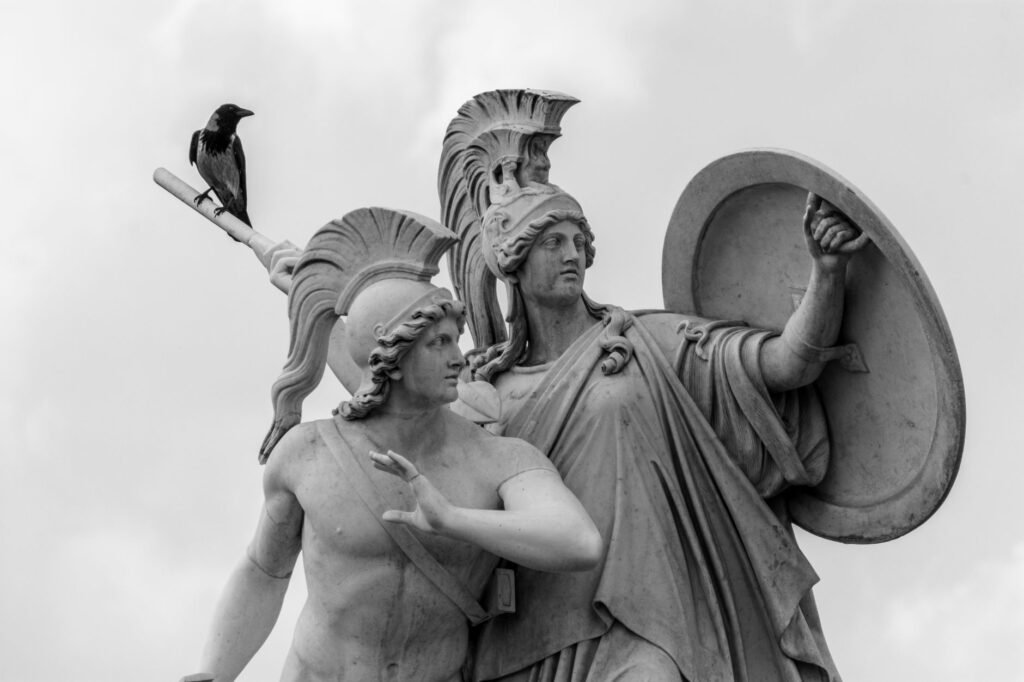
Who Is Athena in Greek Mythology?
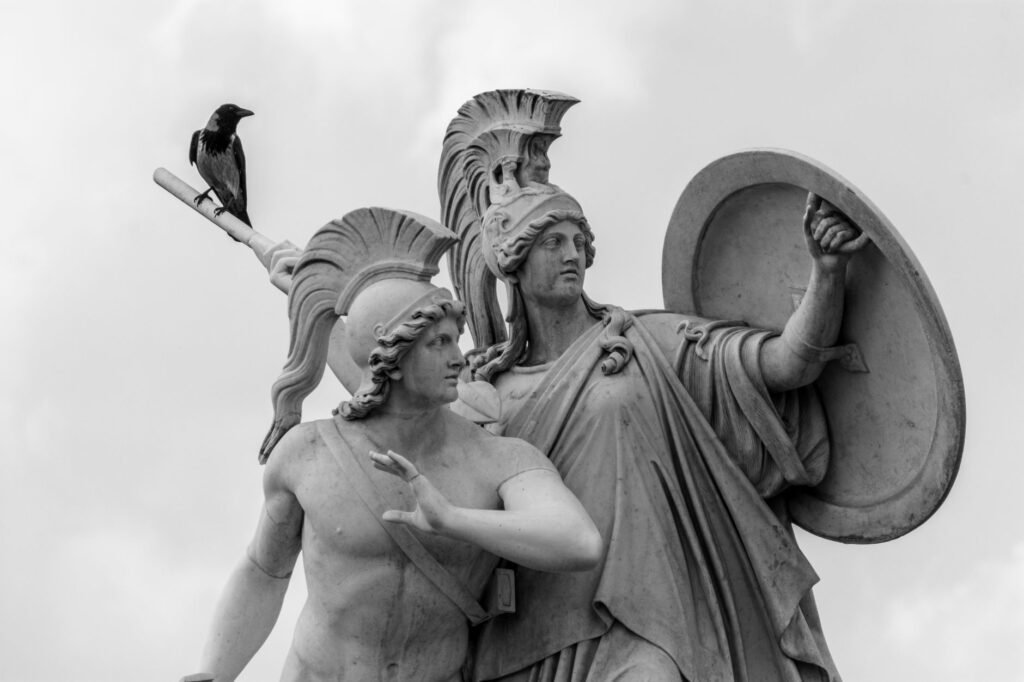
Athena is one of the most important and widely respected goddesses in Greek mythology. She is best known as the goddess of wisdom, warfare, strategy, crafts, and civic life. Unlike gods associated mainly with chaos or passion, Athena represents intelligence, discipline, courage, and careful judgment.
In ancient Greece, Athena was honored as a protector of cities, a guide for heroes, and a symbol of reason. Her influence appears in many famous myths, from the birth of heroes to the founding of Athens itself.
Athena’s Role Among the Greek Gods
Athena was one of the Twelve Olympians, the major gods and goddesses who lived on Mount Olympus. She was the daughter of Zeus, king of the gods, and she held a special place among the Olympians because of her wisdom and strong sense of justice.
Athena was not a goddess of reckless violence. Although she was connected with war, she represented strategy, planning, and defense rather than bloodlust. This made her different from Ares, the god of war, who often symbolized the brutal and destructive side of battle.
Athena’s power came from intelligence as much as strength. She helped mortals and gods solve problems through cleverness, patience, and skill.
The Unusual Birth of Athena
One of the most famous stories about Athena is the myth of her birth. According to Greek mythology, Zeus swallowed Metis, a goddess of wisdom, after hearing a prophecy that Metis would bear a child more powerful than he was.
Later, Zeus developed a terrible headache. To relieve his pain, the god Hephaestus split open Zeus’s head with an axe. From Zeus’s head emerged Athena, fully grown and wearing armor.
This dramatic birth explains Athena’s close association with wisdom and war. Since she came from the head of Zeus, she was seen as a goddess of intellect, reason, and divine strategy.
Goddess of Wisdom and Strategy
Athena is often remembered as the goddess of wisdom. In Greek thought, wisdom was not just knowledge. It also meant good judgment, practical skill, and the ability to make the right decision in difficult situations.
As a goddess of strategy, Athena guided warriors and leaders who used intelligence rather than brute force. She supported those who were brave but also thoughtful.
Some of the qualities connected with Athena include:
- Clear thinking
- Discipline
- Courage
- Fair judgment
- Strategic planning
- Practical skill
- Protection of communities
Because of these qualities, Athena was admired by warriors, rulers, artisans, and citizens alike.
Athena and the City of Athens
Athena is closely connected with the city of Athens, which was named in her honor. One famous myth tells of a contest between Athena and Poseidon to decide who would become the city’s patron deity.
Poseidon struck the ground with his trident and produced a spring of water. In some versions, the water was salty; in others, he created a horse. Athena offered the olive tree, which provided food, oil, wood, and trade.
The people chose Athena’s gift because it was more useful and peaceful. As a result, Athena became the protector of Athens.
The Parthenon, one of the most famous temples of the ancient world, was built on the Acropolis in her honor. It celebrated Athena as the guardian of the city and a symbol of Athenian power, culture, and wisdom.
Athena as a Protector of Heroes
Athena often appears in myths as a helper of heroes. She did not simply hand them victory; instead, she offered guidance, encouragement, and clever advice.
Athena and Odysseus
One of Athena’s most famous relationships is with Odysseus, the hero of Homer’s Odyssey. Athena admired Odysseus because he was clever, patient, and resourceful. She helped him return home after the Trojan War and guided his son Telemachus as he searched for news of his father.
Athena’s support was essential to Odysseus’s success. She helped him use disguise, planning, and careful timing to reclaim his home.
Athena and Perseus
Athena also helped Perseus in his quest to defeat Medusa. She gave him guidance and, in some versions, a polished shield so he could look at Medusa’s reflection instead of facing her deadly gaze directly.
This story shows Athena’s connection to strategy. Perseus succeeds not through strength alone, but by following wise advice.
Athena and Heracles
Athena assisted Heracles during some of his labors as well. Even the strongest of Greek heroes benefited from her intelligence and divine support.
Symbols of Athena
Athena is often shown with symbols that reflect her personality and powers. These symbols helped ancient people recognize her in art, sculpture, and literature.
Common symbols of Athena include:
- The owl: A symbol of wisdom and watchfulness
- The olive tree: A sign of peace, prosperity, and civilization
- The helmet: A reminder of her role in war and defense
- The spear: A symbol of strength and readiness
- The shield or aegis: A sign of protection and divine authority
- Medusa’s head: Often shown on her shield as a protective symbol
The owl of Athena became especially famous and remains a symbol of wisdom today.
Athena’s Personality and Values
Athena is usually portrayed as calm, confident, and fair. She values self-control, skill, and intelligence. She rewards courage when it is guided by wisdom, but she can punish arrogance and disrespect.
Like many Greek gods, Athena could be stern. Myths sometimes show her reacting harshly when mortals challenge the gods or fail to show proper respect. However, she is also one of the more orderly and protective deities in Greek mythology.
Athena represents the idea that true strength includes thought, discipline, and responsibility.
Why Athena Still Matters Today
Athena remains a powerful figure because her qualities are still admired. She stands for wisdom in leadership, courage in conflict, and creativity in daily life. Her myths continue to influence literature, art, philosophy, and popular culture.
When people ask, “Who is Athena in Greek mythology?” the answer is more than simply “a goddess of wisdom.” Athena is a complex symbol of intelligence, protection, strategy, and civilization. She shows that power is greatest when it is guided by reason.
Conclusion
Athena is one of the most respected figures in Greek mythology. As the goddess of wisdom, strategic warfare, crafts, and civic protection, she played a major role in the lives of gods and mortals. From her dramatic birth from the head of Zeus to her role as patron of Athens, Athena represents intelligence, courage, and practical skill.
Her stories continue to inspire because they show that wisdom and strength are most powerful when they work together.

Orin Vale has spent the better part of two decades tracing the threads that connect the world’s oldest stories — from the halls of Asgard to the banks of the Nile, from Olympus to the jungles of the Maya. What began as a childhood fascination with flood myths and trickster gods grew into years of independent study across comparative mythology and ancient religion, always chasing the same question: what did these stories mean to the people who first told them? Orin writes for readers who want more than trivia — the ones looking for the beliefs, fears, and truths that myths were built to carry.