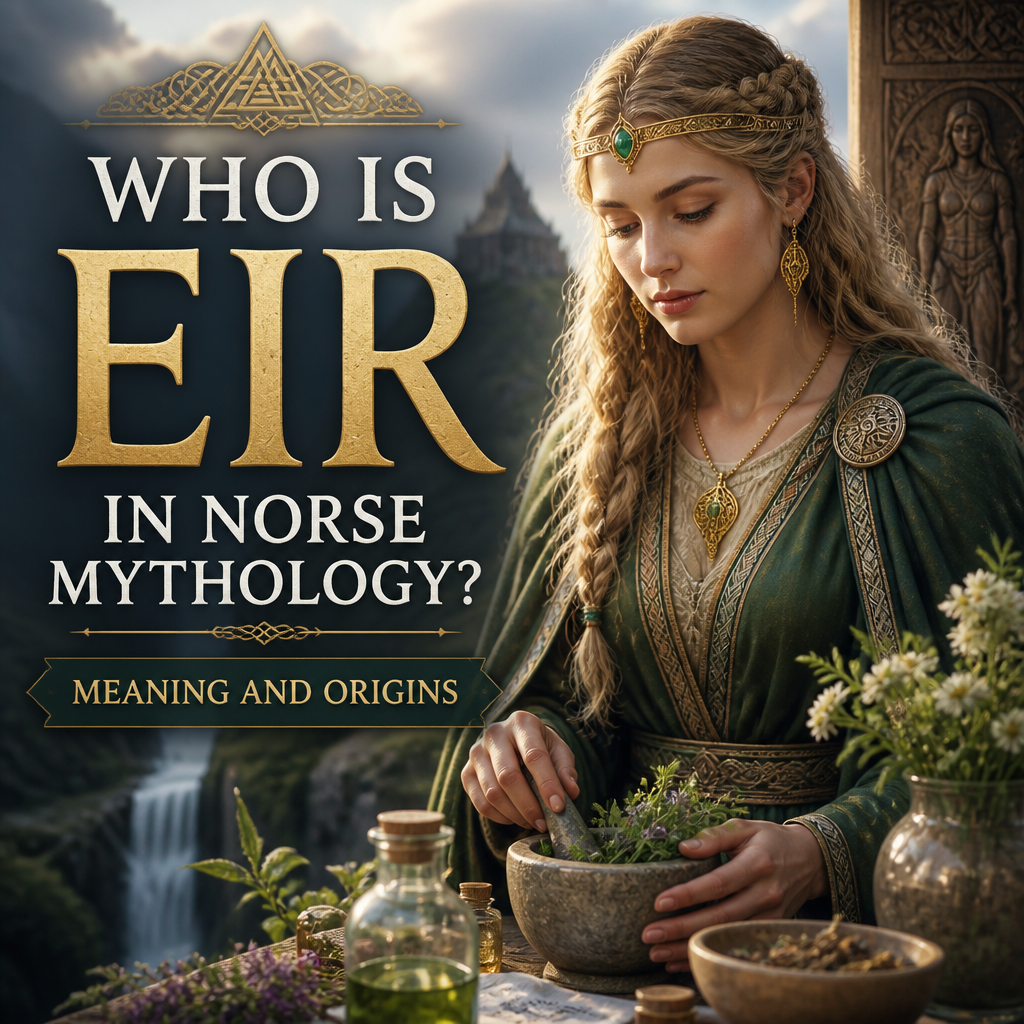
Who Is Eir in Norse Mythology?
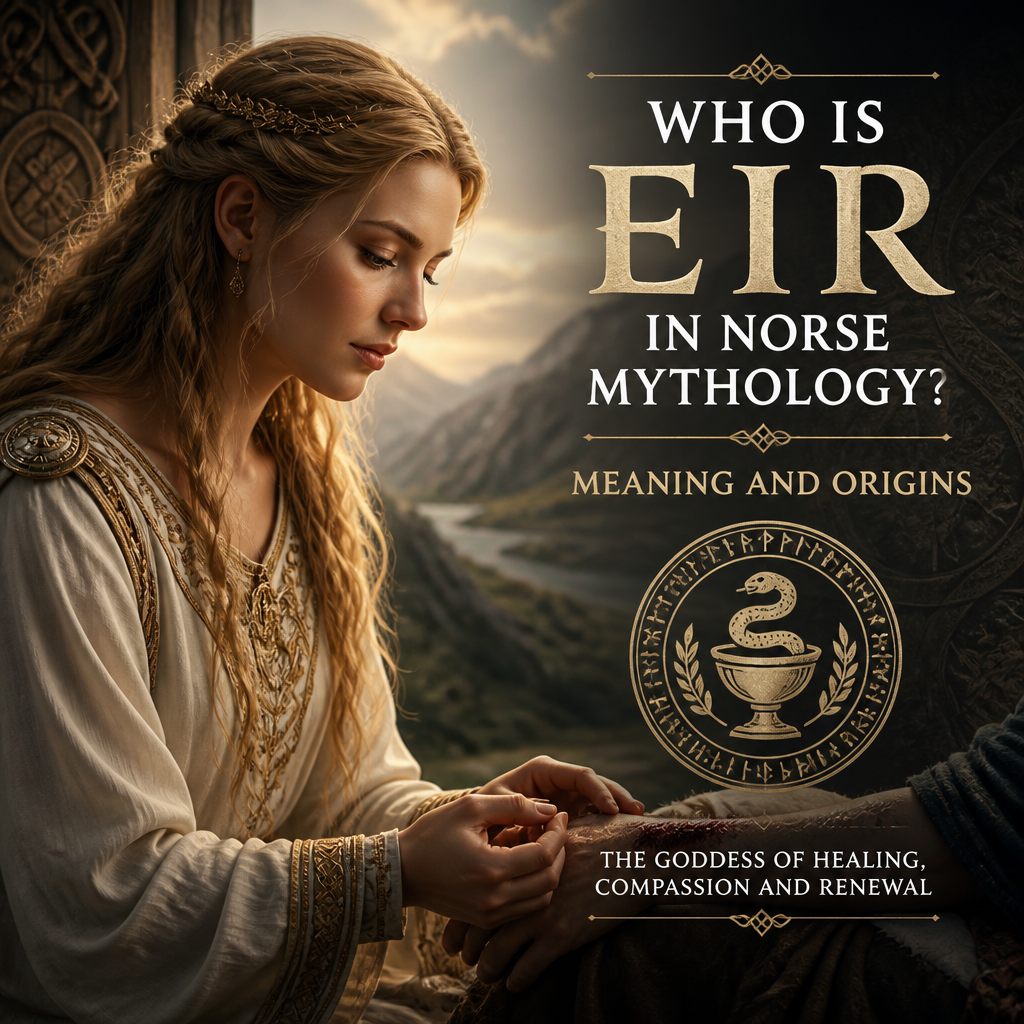
Eir is one of the lesser-known yet fascinating figures in Norse mythology. Often associated with healing, mercy, and medical skill, she appears in several Old Norse sources as a being connected to care and restoration. Unlike the more famous gods such as Odin, Thor, or Freyja, Eir’s role is subtle and somewhat mysterious, which has made her a subject of debate among scholars and mythology enthusiasts.
So, who is Eir in Norse mythology? In simple terms, Eir is commonly understood as a goddess or divine figure linked to healing. However, the surviving sources do not provide a detailed mythology for her. Instead, they offer brief references that hint at her importance in the Norse understanding of health, protection, and perhaps even fate.
Eir as a Healing Goddess
The name Eir is often translated as “mercy,” “help,” or “protection.” These meanings fit well with her usual association with healing and care. In a world where injury, illness, and death were constant realities, a divine figure connected to medicine would have held deep symbolic value.
Eir is sometimes described as the best of physicians. This has led many modern readers to view her as a goddess of healing, comparable in some ways to healing deities in other mythological traditions. Yet Norse mythology rarely presents its divine beings in neat categories. Eir’s identity shifts depending on the source, and she may have been understood differently in various contexts.
Her healing aspect suggests several possible roles:
- A divine healer who aided gods or humans
- A protective figure invoked in times of illness
- A symbolic personification of mercy or medical skill
- A being connected to women’s healing practices and care
Because the sources are limited, much of Eir’s significance must be interpreted from small clues rather than long stories.
Eir Among the Ásynjur
One of the main references to Eir appears in the Prose Edda, written by the Icelandic scholar Snorri Sturluson in the 13th century. In this work, Eir is listed among the Ásynjur, the goddesses of the Æsir. This places her in the company of major female deities such as Frigg, Sif, and Idunn.
Snorri states that Eir is “the best physician,” which is the strongest direct evidence for her healing role. The statement is brief, but it has shaped most later interpretations of Eir. Being named among the Ásynjur suggests that she was not merely an abstract idea, but a divine figure recognized within the Norse mythological world.
However, unlike Frigg or Freyja, Eir does not appear in surviving myths as a main character. There are no famous tales of her healing a wounded god or intervening in a heroic saga. This silence does not mean she was unimportant. Many Norse deities and spirits are known only through fragments, names, or poetic references.
Eir and the Valkyries
Eir is also mentioned in connection with the valkyries, the powerful female figures who choose the slain on the battlefield and serve Odin. In the poem Fjölsvinnsmál, Eir is named among maidens who sit on a hill called Lyfjaberg, often interpreted as “healing mountain” or “mountain of healing herbs.”
This setting strengthens the link between Eir and healing. Lyfjaberg is described as a place where women and the sick may find help. The mention of Eir in this context suggests that she may have been connected not only to divine medicine but also to protective or restorative magic.
Her possible association with valkyries adds complexity to her identity. Valkyries are often linked with battle and death, but they also have roles as protectors, cup-bearers, and supernatural women with knowledge of fate. If Eir was understood as a valkyrie in some traditions, her healing power may have stood alongside the valkyries’ better-known connection to warfare.
Is Eir a Goddess, Valkyrie, or Disir?
One of the most interesting questions about Eir is what kind of being she truly is. The sources present her in different ways, and scholars have proposed several possibilities.
Eir may be:
A Goddess
Her listing among the Ásynjur supports the idea that she was a goddess. In this view, Eir belongs to the divine family of the Æsir and represents healing, medical skill, and mercy.
A Valkyrie
Her appearance among maidens associated with Lyfjaberg suggests a possible valkyrie identity. This does not necessarily contradict her status as a goddess, since Norse supernatural categories can overlap.
A Disir or Protective Spirit
Some scholars suggest that Eir may have been connected to the dísir, female ancestral or protective spirits in Norse belief. The dísir were often associated with fate, family welfare, and protection, making a healing connection plausible.
A Personification of Healing
It is also possible that Eir was partly a personified concept. Since her name relates to mercy and help, she may have represented the idea of healing itself.
Eir’s Role in Norse Belief
Although Eir does not have many surviving myths, her presence reveals something important about Norse religion. Norse mythology is often remembered for its dramatic stories of battle, monsters, and doom, but it also contained ideas of care, recovery, and protection.
Eir embodies this quieter side of the mythological world. She represents the hope of healing in a culture where physical survival was never guaranteed. Whether invoked as a goddess, imagined as a valkyrie, or remembered as a protective female spirit, Eir stands for the power to mend and preserve life.
Her connection to women is also notable. Healing in many ancient societies was often associated with women’s knowledge of herbs, childbirth, household care, and ritual practice. Eir’s placement among female divine figures may reflect the sacred importance of these forms of wisdom.
Why Eir Remains Important Today
Modern interest in Eir has grown as readers look beyond the most famous Norse gods and explore the wider mythological tradition. She is especially meaningful to those drawn to themes of healing, compassion, and resilience.
Eir’s mystery is part of her appeal. Because the old sources say so little, she invites careful interpretation rather than simple definition. She reminds us that mythology is not always preserved in complete stories. Sometimes a name, a title, or a brief poetic reference is enough to suggest an entire world of belief.
Conclusion
Eir in Norse mythology is best known as a divine healer, described in the Prose Edda as the best of physicians and associated in poetry with healing places and supernatural women. She may be understood as a goddess, a valkyrie, a protective spirit, or a personification of mercy and medical aid.
Though her surviving mythology is brief, Eir’s significance is powerful. She represents healing within a tradition often dominated by tales of conflict and fate. In that sense, Eir offers a vital reminder that Norse mythology was not only about war and destruction, but also about protection, care, and the hope of restoration.

Orin Vale has spent the better part of two decades tracing the threads that connect the world’s oldest stories — from the halls of Asgard to the banks of the Nile, from Olympus to the jungles of the Maya. What began as a childhood fascination with flood myths and trickster gods grew into years of independent study across comparative mythology and ancient religion, always chasing the same question: what did these stories mean to the people who first told them? Orin writes for readers who want more than trivia — the ones looking for the beliefs, fears, and truths that myths were built to carry.