Who Is Eos in Greek Mythology?
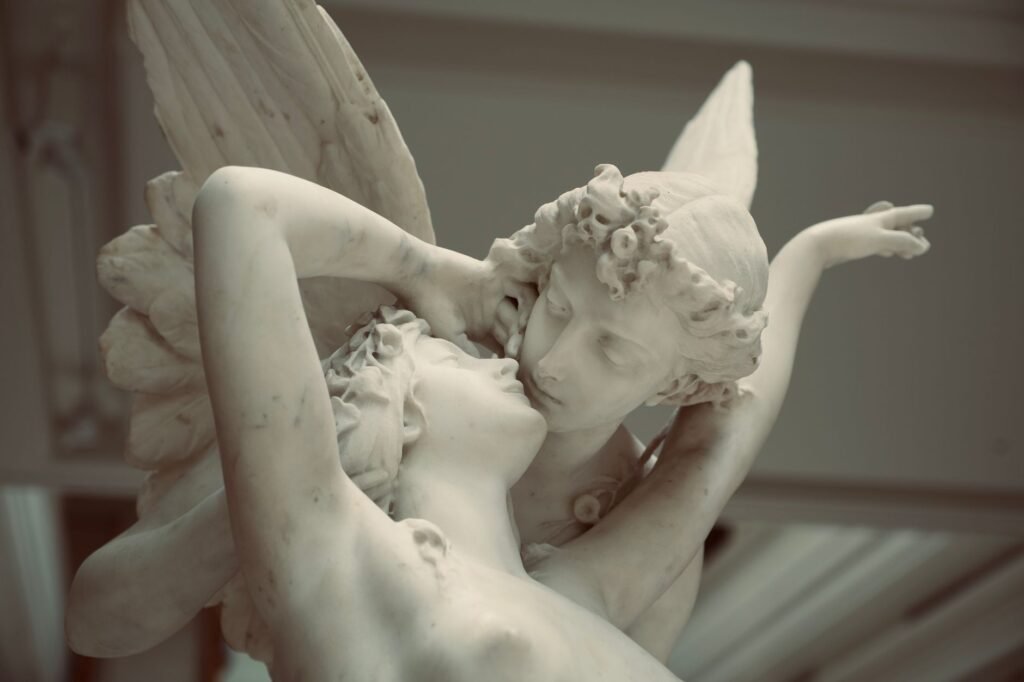
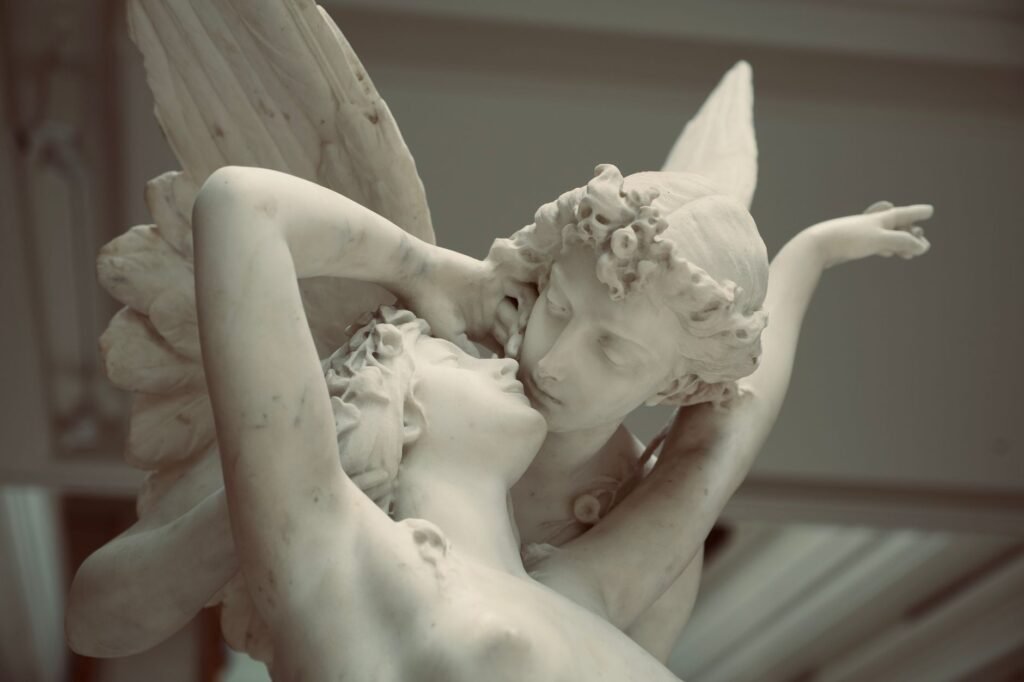
In Greek mythology, Eos is the goddess of the dawn. Each morning, she rises from the edge of the world to bring light to the sky and announce the arrival of the sun. Often described as rosy-fingered or saffron-robed, Eos represents the beautiful, glowing transition between night and day.
Though she is not as widely known as Zeus, Athena, or Aphrodite, Eos plays an important role in ancient Greek stories. She appears in poetry, art, and myth as a divine figure connected with renewal, desire, and the passing of time.
The Origins of Eos
Eos is usually said to be the daughter of the Titans Hyperion and Theia. Her siblings are Helios, the sun god, and Selene, the moon goddess. Together, these three divine beings represent the major lights of the sky.
In this family, Eos has a specific role: she opens the gates of heaven so Helios can begin his daily journey across the sky. While Selene rules the night and Helios rules the day, Eos belongs to the brief and magical moment between them.
Her Roman equivalent is Aurora, a name still associated with the dawn and with natural light displays such as the aurora borealis.
What Was Eos the Goddess Of?
Eos was primarily the goddess of dawn. Her presence marked the beginning of a new day, making her a symbol of hope, awakening, and fresh starts.
Ancient writers often described her in vivid, poetic language. In Homer’s epics, she is famously called “rosy-fingered Dawn,” a phrase that suggests the pink and gold streaks of early morning light spreading across the horizon.
Eos was associated with:
- The first light of morning
- Renewal and new beginnings
- The passage of time
- Beauty and desire
- The boundary between night and day
Because dawn happens every day, Eos was seen as an ever-returning goddess. Her daily appearance reminded the ancient Greeks of both continuity and change.
How Eos Is Described in Myth and Art
Eos is often shown as a beautiful winged goddess. In ancient Greek art, she may appear flying across the sky, driving a chariot, or carrying a young man in her arms. Her wings emphasize her speed and her connection to the heavens.
She is usually imagined wearing bright or golden robes, reflecting the colors of sunrise. The descriptions of Eos are full of warmth and light, making her one of the most visually striking figures in Greek mythology.
Some traditions say she rides in a chariot drawn by horses. In this image, she travels ahead of her brother Helios, preparing the world for the sun’s arrival.
Eos and Her Love Stories
Many myths about Eos focus on her love affairs. She was known for falling in love with mortal men, often with tragic results. These stories reveal an important theme in Greek mythology: relationships between gods and mortals rarely end happily.
Eos and Tithonus
One of the most famous stories about Eos involves Tithonus, a handsome prince of Troy. Eos loved him deeply and asked Zeus to grant him immortality. However, she forgot to ask for eternal youth.
As a result, Tithonus lived forever but continued to age. Over time, he became weaker and more fragile, trapped in an endless life without the strength or beauty of youth. In some versions of the myth, he eventually shriveled into a cicada.
This story is often interpreted as a warning about the dangers of incomplete wishes. It also reflects the Greek awareness that immortality without youth could be a curse rather than a blessing.
Eos and Cephalus
Another well-known myth tells of Eos and Cephalus, a mortal hunter. Eos abducted him because of his beauty, but Cephalus remained devoted to his wife, Procris.
Their story varies depending on the source, but it often involves jealousy, mistrust, and tragedy. In many versions, Cephalus eventually returns to Procris, yet their relationship is damaged by suspicion. The myth ends sadly when Cephalus accidentally kills her during a hunt.
This tale connects Eos with passion and longing, but also with the destructive consequences of desire.
The Children of Eos
Eos was the mother of several important mythological figures. With the Titan Astraeus, she had children who were connected to the sky and winds.
Her children include:
- Anemoi, the wind gods, such as Boreas, Notus, Eurus, and Zephyrus
- Astraea, sometimes associated with justice and the stars
- Eosphorus, the morning star
- The stars, in some traditions
Through her children, Eos is linked not only to dawn but to the wider movements of the heavens. She belongs to a cosmic family of deities who shape the natural world.
Eos in Homer’s Epics
Eos appears often in ancient Greek literature, especially in the works of Homer. In The Iliad and The Odyssey, she is not usually a central character, but her daily arrival helps structure the rhythm of the poems.
When Homer writes that “rosy-fingered Dawn” appears, it signals a new day in the story. This repeated image gives the epics a sense of movement and continuity. Eos becomes more than just a goddess; she becomes a poetic marker of time.
Her presence also adds beauty to scenes of war, travel, and hardship. Even in dark moments, dawn returns.
Why Eos Matters in Greek Mythology
Eos matters because she represents one of the most universal human experiences: the arrival of morning. Every day, dawn brings light after darkness. For the ancient Greeks, this natural event was not merely physical but divine.
Her myths also explore deeply human themes. Through Eos, Greek mythology reflects on love, aging, longing, beauty, and mortality. Her story with Tithonus especially shows the tension between divine power and human limits.
Eos is both gentle and powerful. She is the soft light at sunrise, but she is also an immortal goddess whose desires can change mortal lives forever.
Final Thoughts
So, who is Eos in Greek mythology? She is the goddess of the dawn, the sister of Helios and Selene, and the radiant figure who opens the sky each morning. Known for her beauty, her winged form, and her tragic love stories, Eos brings both light and complexity to Greek myth.
Her daily return made her a symbol of renewal, while her myths reminded the Greeks that even divine love could carry sorrow. Whether described as rosy-fingered, golden-robed, or swift-winged, Eos remains one of the most graceful and poetic goddesses of the ancient world.

Orin Vale has spent the better part of two decades tracing the threads that connect the world’s oldest stories — from the halls of Asgard to the banks of the Nile, from Olympus to the jungles of the Maya. What began as a childhood fascination with flood myths and trickster gods grew into years of independent study across comparative mythology and ancient religion, always chasing the same question: what did these stories mean to the people who first told them? Orin writes for readers who want more than trivia — the ones looking for the beliefs, fears, and truths that myths were built to carry.