Who Is the King of the Norse Gods?
If you have ever explored Norse mythology, you have probably come across mighty gods, magical realms, fearsome giants, and world-shaking prophecies. But one question often comes up first: who is the king of the Norse gods?
The answer is Odin.
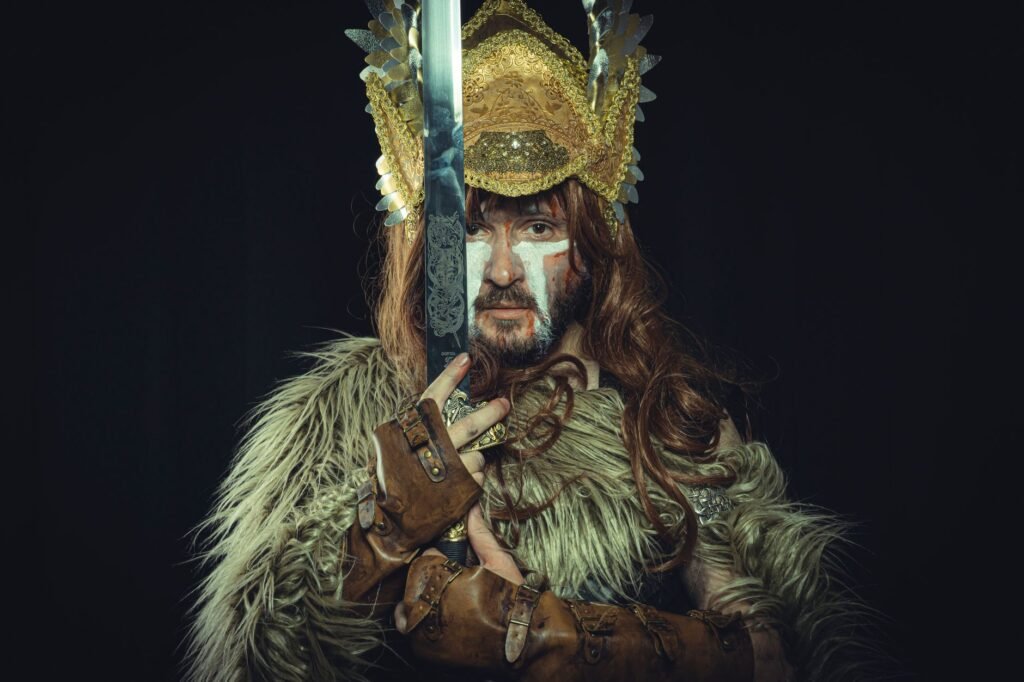
Odin is the chief of the Aesir gods and the ruler of Asgard, the divine realm where many of the most important Norse gods live. He is one of the most complex figures in mythology: a god of wisdom, war, poetry, magic, death, and kingship. Unlike a simple heroic ruler, Odin is mysterious, restless, and often willing to sacrifice anything in pursuit of knowledge.
Odin: The All-Father
Odin is often called the All-Father, a title that reflects his high status among the gods. In Norse mythology, he is associated with creation, leadership, and the fate of gods and humans alike.
He is the father of many famous gods, including:
- Thor, the thunder god
- Baldr, the beloved god of beauty and light
- Víðarr, a silent god linked to vengeance
- Váli, another god of vengeance
As king of the gods, Odin rules from Asgard, one of the Nine Worlds in Norse cosmology. His great hall is Valhalla, where fallen warriors chosen by the Valkyries prepare for the final battle of Ragnarök.
Why Is Odin the King of the Norse Gods?
Odin’s kingship is not only based on strength. In fact, Thor is usually seen as the strongest of the gods physically. Odin’s power comes from his wisdom, magic, authority, and deep knowledge of fate.
He is a ruler who seeks understanding at any cost. This makes him different from many other mythological kings. Odin is not just a commander; he is a seeker.
Odin’s Search for Wisdom
One of the most famous stories about Odin explains how far he would go for knowledge. Odin wanted to drink from Mímir’s well, a source of great wisdom. The price was one of his eyes.
Odin accepted the sacrifice. This is why he is often described as one-eyed.
In another story, Odin hung himself from the world tree, Yggdrasil, for nine nights. Wounded by a spear and without food or drink, he endured suffering to discover the secrets of the runes, powerful symbols connected to magic, fate, and language.
These stories show that Odin’s authority comes from sacrifice and insight, not simply from royal privilege.
Odin’s Symbols and Companions
Odin is easy to recognize in Norse myth because he has several powerful symbols and companions.
His Ravens: Huginn and Muninn
Odin has two ravens named Huginn and Muninn. Their names mean “thought” and “memory.” Each day, they fly across the world and bring information back to him.
This connects Odin to knowledge, observation, and awareness. As king, he wants to know what happens in every realm.
His Wolves: Geri and Freki
Odin is also accompanied by two wolves, Geri and Freki. Wolves are powerful and dangerous animals in Norse mythology, often associated with battle and death.
Their presence reinforces Odin’s connection to war and the wild forces of the world.
His Spear: Gungnir
Odin carries a magical spear called Gungnir. It never misses its target and is one of the great divine weapons of Norse mythology.
While Thor is known for his hammer, Mjölnir, Odin’s spear represents authority, warfare, and sacred power.
His Horse: Sleipnir
Odin rides Sleipnir, an eight-legged horse and one of the fastest beings in myth. Sleipnir can travel between worlds, making him a fitting mount for a god who moves through realms of the living, the dead, and the divine.
Odin and Thor: Who Is More Important?
Many people ask who is the king of the Norse gods because Thor is often more famous in modern culture. Thanks to comics, films, and popular retellings, Thor is widely recognized as a heroic figure with immense strength.
However, in traditional Norse mythology, Odin is the king, not Thor.
Thor is the protector of gods and humans. He fights giants, defends Asgard, and represents strength, thunder, and courage. Odin, meanwhile, governs from a higher and more mysterious position. He is concerned with fate, wisdom, kingship, magic, and the coming doom of Ragnarök.
In simple terms:
- Odin is the ruler and strategist
- Thor is the defender and warrior
- Both are essential, but Odin holds the highest rank
Odin’s Role in Ragnarök
Ragnarök is the great end-times event in Norse mythology. It is a final battle in which many gods, giants, and monsters meet their fate.
Odin knows that Ragnarök is coming. Much of his behavior is shaped by his desire to understand fate and prepare for it. He gathers fallen warriors in Valhalla because they will fight beside the gods during the final battle.
At Ragnarök, Odin faces Fenrir, the monstrous wolf. According to the myths, Fenrir kills Odin. Later, Odin’s son Víðarr avenges him.
This ending shows an important part of Norse mythology: even the king of the gods cannot escape fate.
Is Odin Like Zeus?
Odin is sometimes compared to Zeus, the king of the Greek gods. Both are rulers of a divine family and both hold great authority. However, they are very different in personality and symbolism.
Zeus is strongly connected to the sky, thunder, law, and kingship. Odin is more closely linked with wisdom, magic, war, poetry, death, and prophecy.
Odin is darker and more mysterious. He often travels in disguise, tests humans, and seeks hidden knowledge. He is not always predictable or comforting, but he is always powerful.
Final Answer: Who Is the King of the Norse Gods?
So, who is the king of the Norse gods? The king of the Norse gods is Odin, the All-Father and ruler of Asgard.
He is the chief of the Aesir, the father of major gods like Thor and Baldr, and the master of wisdom, war, magic, and poetry. His rule is defined not only by power, but by sacrifice, knowledge, and his constant struggle against fate.
Odin remains one of the most fascinating figures in world mythology because he is not a simple king. He is a warrior, wanderer, magician, poet, and seeker of truth. As the king of the Norse gods, Odin stands at the center of the myths, watching over the Nine Worlds with one eye and carrying the burden of all he knows.

Orin Vale has spent the better part of two decades tracing the threads that connect the world’s oldest stories — from the halls of Asgard to the banks of the Nile, from Olympus to the jungles of the Maya. What began as a childhood fascination with flood myths and trickster gods grew into years of independent study across comparative mythology and ancient religion, always chasing the same question: what did these stories mean to the people who first told them? Orin writes for readers who want more than trivia — the ones looking for the beliefs, fears, and truths that myths were built to carry.