Who Is Triton in Greek Mythology?
Triton is one of the most recognizable sea figures in ancient myth, yet he is often overshadowed by his famous father, Poseidon. So, who is Triton in Greek mythology? Triton is a sea god, the son of Poseidon and Amphitrite, and a divine messenger of the ocean. He is usually described as a merman-like figure with the upper body of a man and the tail of a fish.
In Greek mythology, Triton represents the power, mystery, and wildness of the sea. He is best known for carrying a conch shell, which he blows like a trumpet to calm or stir the waves.
Triton’s Divine Family
Triton’s parentage places him among the most important beings of the sea.
His father, Poseidon, is one of the twelve Olympian gods and rules over the ocean, earthquakes, and horses. His mother, Amphitrite, is a sea goddess and queen of the sea. Together, they form a powerful divine couple connected to the vast and unpredictable waters.
Triton is often described as living with his parents in a golden palace beneath the sea. This underwater palace was imagined as a magnificent place filled with sea creatures, coral, and divine attendants.
Triton’s Place Among Sea Deities
Greek mythology includes many sea gods and spirits. Triton belongs to this rich group of oceanic beings, which also includes:
- Nereus, the wise “Old Man of the Sea”
- The Nereids, sea nymphs who often help sailors
- Oceanus, a Titan associated with the great river encircling the world
- Pontus, a primordial god of the sea
- Proteus, a shape-shifting sea god
Among these figures, Triton stands out as Poseidon’s herald. His role is not usually that of a ruler, but of a powerful attendant and messenger who acts on behalf of the sea god.
What Did Triton Look Like?
Triton’s appearance is one of the reasons he remains memorable. Ancient artists often portrayed him as a hybrid creature: human from the waist up and fish-like from the waist down.
This image helped connect him directly to the sea. His muscular human form suggested divine strength, while his fish tail showed his belonging to the underwater world.
In some artwork, Triton appears with other sea creatures, such as dolphins, horses, or sea monsters. Later artistic traditions sometimes expanded his image into a whole group of “tritons,” male sea spirits similar to mermaids or mermen.
Triton and the Conch Shell
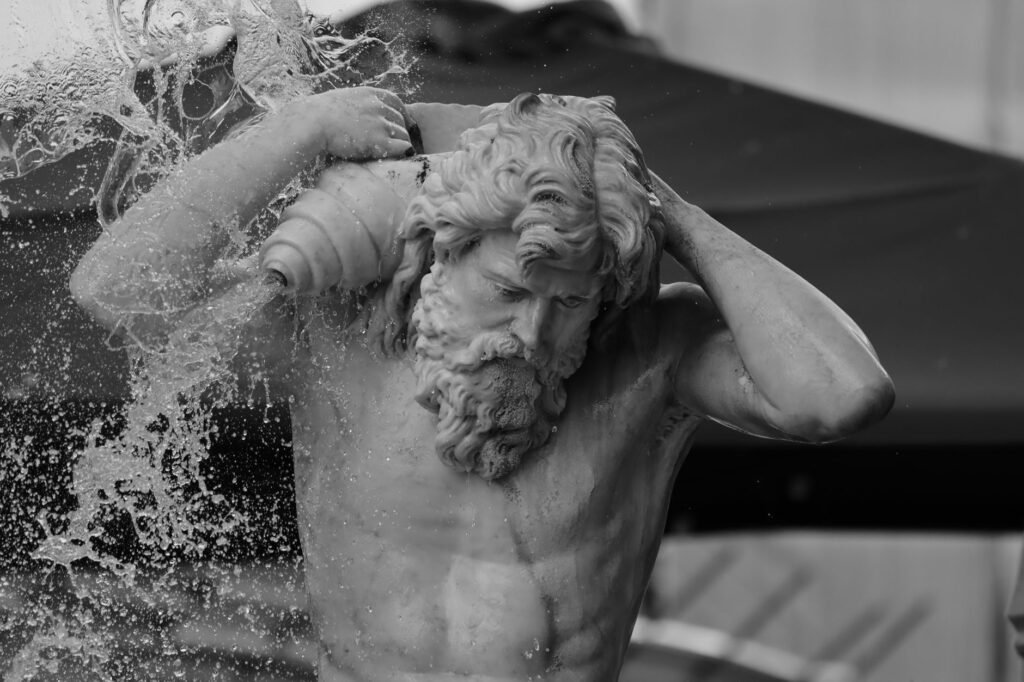
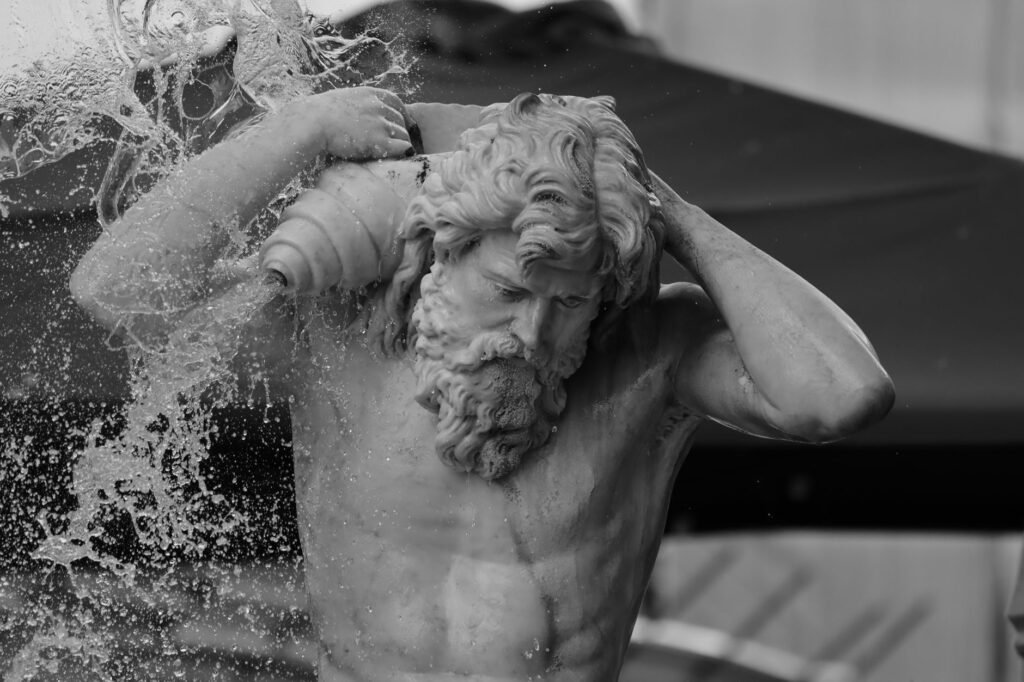
One of Triton’s most important symbols is the conch shell. According to myth, Triton used this shell as a trumpet. When he blew into it, its sound could command the sea.
The conch shell had two main powers:
- It could calm the waves
- It could raise or stir the waters
This made Triton an important figure for sailors and storytellers. The sea was both essential and dangerous in the ancient Greek world. A god who could control the waves represented both hope and fear.
Triton’s shell also reinforced his role as a herald. Just as human messengers used trumpets to announce the arrival of kings or armies, Triton used his conch to announce the will and presence of Poseidon.
Triton in Famous Myths
Triton does not appear in as many major myths as Zeus, Athena, or Heracles, but he plays meaningful roles in several stories.
Triton and the Argonauts
One of the best-known stories involving Triton appears in the myth of the Argonauts, the heroes who sailed with Jason in search of the Golden Fleece.
In one version of the tale, the Argonauts become stranded in the desert region of Libya after their ship is carried off course. Triton appears to them and helps guide them back to the sea. In this story, he acts as a helpful divine figure, offering direction and assistance to lost travelers.
This myth shows Triton as more than just a symbol of ocean power. He can also be a guide, especially for those who respect the gods.
Triton and Heracles
Another myth connects Triton with Heracles, the great Greek hero. In some accounts, Heracles wrestles Triton while searching for information or attempting to prove his strength.
This type of story follows a common mythological pattern: a hero confronts a mysterious sea being and must overpower him to gain knowledge or success. Like other sea gods, Triton may be difficult to defeat because he belongs to a shifting, unpredictable realm.
Was Triton a God or a Monster?
Triton can seem monster-like because of his hybrid body, but in Greek mythology he is not usually treated as a monster. He is a god or divine sea being.
His fish tail and strange appearance reflect the ancient Greek idea that the sea was full of unusual and powerful life. Beings associated with the ocean often had mixed forms because the sea itself was mysterious and hard to understand.
Triton’s nature is divine rather than evil. He may be intimidating, but he is not simply a creature to be feared. He serves Poseidon, carries messages, and controls the waters through his shell.
Triton’s Legacy in Art and Culture
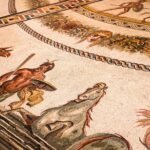
Triton’s image became especially influential in later art. Ancient Greek and Roman artists frequently used his form in sculptures, mosaics, and pottery. Over time, “Triton” also became a general term for merman-like sea figures.
During the Renaissance and later periods, Triton appeared in fountains, paintings, and decorative designs. His conch shell, flowing hair, and fish tail made him a popular symbol of the ocean’s beauty and strength.
Even today, Triton’s name appears in literature, astronomy, and popular culture. Neptune’s largest moon is named Triton, using the Roman equivalent of Poseidon’s sea-world associations. The name continues to suggest mystery, depth, and the power of the sea.
Why Triton Matters in Greek Mythology
Triton may not be the most famous Greek god, but he plays an important symbolic role. He connects the authority of Poseidon with the living movement of the ocean. Through his conch shell, he gives voice to the sea itself.
To understand who is Triton in Greek mythology, it helps to see him as both a character and a symbol. He is Poseidon’s son, Amphitrite’s child, a messenger, a guide, and a divine merman of the deep.
Most of all, Triton represents the ancient Greek view of the sea: powerful, beautiful, dangerous, and filled with gods.

Orin Vale has spent the better part of two decades tracing the threads that connect the world’s oldest stories — from the halls of Asgard to the banks of the Nile, from Olympus to the jungles of the Maya. What began as a childhood fascination with flood myths and trickster gods grew into years of independent study across comparative mythology and ancient religion, always chasing the same question: what did these stories mean to the people who first told them? Orin writes for readers who want more than trivia — the ones looking for the beliefs, fears, and truths that myths were built to carry.