Anyone asking who is Loki in Norse mythology encounters a figure unlike any other in the pantheon: a shapeshifting trickster who is neither fully ally nor fully enemy to the gods he lives among. Loki in Norse mythology occupies a uniquely unstable position, technically a jötunn, or giant, by birth, yet accepted into the ranks of the Aesir through blood-oath with Odin himself. Understanding who is Loki in Norse mythology requires accepting ambiguity as the defining feature of his character — he is a source of clever solutions and catastrophic betrayals in equal measure, making him one of the most complex figures in the entire Norse mythological tradition.
Loki — The Trickster of Norse Mythology
Loki’s most defining trait within Norse mythology is his role as a trickster, a figure whose cunning and unpredictability set him apart from the more straightforwardly heroic or authoritative gods surrounding him. Unlike Thor, whose strength is stable and reliable, or Odin, whose wisdom is deliberate and measured, Loki in Norse mythology operates through deception, wit, and constant transformation, making him a destabilizing presence wherever he appears.
Technically born a jötunn, one of the giants often positioned as adversaries to the Aesir gods, Loki nonetheless lived among the Norse gods in Asgard, complicating any simple classification of him as either friend or foe. This dual identity is central to understanding who is Loki in Norse mythology: he belongs fully to neither group, existing instead in a liminal space that allows him to move between worlds, alliances, and loyalties with unusual freedom.
Loki’s role as trickster extended beyond mere mischief into genuinely consequential territory, as his schemes frequently produced both benefits and disasters for the gods around him. Norse mythology repeatedly shows Loki solving problems — often ones he created himself — through cleverness rather than force, reinforcing his identity as a god defined by intellect and manipulation rather than raw power.
This ambiguous, shifting nature is precisely what distinguishes Loki from trickster figures in many other mythological traditions. Rather than remaining a purely comedic or purely villainous character, Loki in Norse mythology evolves across the mythological timeline, moving from a mischievous but tolerated companion of the gods toward an increasingly dangerous adversary whose actions ultimately threaten the entire cosmic order.
Origins and Family of Loki
Loki was born to the giant Fárbauti and the goddess or giantess Laufey, depending on the source, placing his origins among the jötnar rather than the Aesir gods he would later live alongside. This giant heritage remains an essential detail for anyone exploring who is Loki in Norse mythology, as it explains the persistent tension between his position within Asgard and his fundamental outsider status.
Despite his giant lineage, Loki became blood brother to Odin, the chief of the Aesir gods, through a formal oath that bound the two together and granted Loki a place among the Norse gods. This relationship gave Loki access to Asgard and involvement in the affairs of the Aesir, even as his giant ancestry continued to mark him as fundamentally different from gods like Thor, Baldr, and Odin himself.
Loki’s family life took a darker turn through his relationship with the giantess Angrboða, with whom he fathered three monstrous children: the wolf Fenrir, the world serpent Jörmungandr, and Hel, ruler of the underworld realm bearing her name. These offspring became central figures in Norse mythology in their own right, each destined to play a significant role in the eventual downfall of the gods during Ragnarök.
Loki also had a more conventional family life with his wife Sigyn, who remained loyal to him even after his eventual punishment by the gods. This relationship stands in contrast to his chaotic dealings with Angrboða and their monstrous children, illustrating the layered, sometimes contradictory family structure surrounding Loki in Norse mythology — a mixture of loyalty, monstrosity, and consequence that mirrors his own dual nature.
Symbols and Depictions of Loki
Unlike gods such as Thor, associated firmly with his hammer Mjölnir, or Odin, linked to his spear Gungnir, Loki in Norse mythology lacks a single fixed symbol or weapon, reflecting his fundamentally unstable identity. This absence of a consistent emblem is itself telling, reinforcing that Loki’s defining trait is not a possession or weapon but his capacity for change itself.
Loki’s most consistent characteristic across Norse sources is his shapeshifting ability, which he employs repeatedly throughout the myths to solve problems, escape danger, or manipulate outcomes. He is described transforming into a mare, a fly, a seal, and various other forms depending on the situation, using transformation as both a practical tool and a defining expression of his trickster nature.
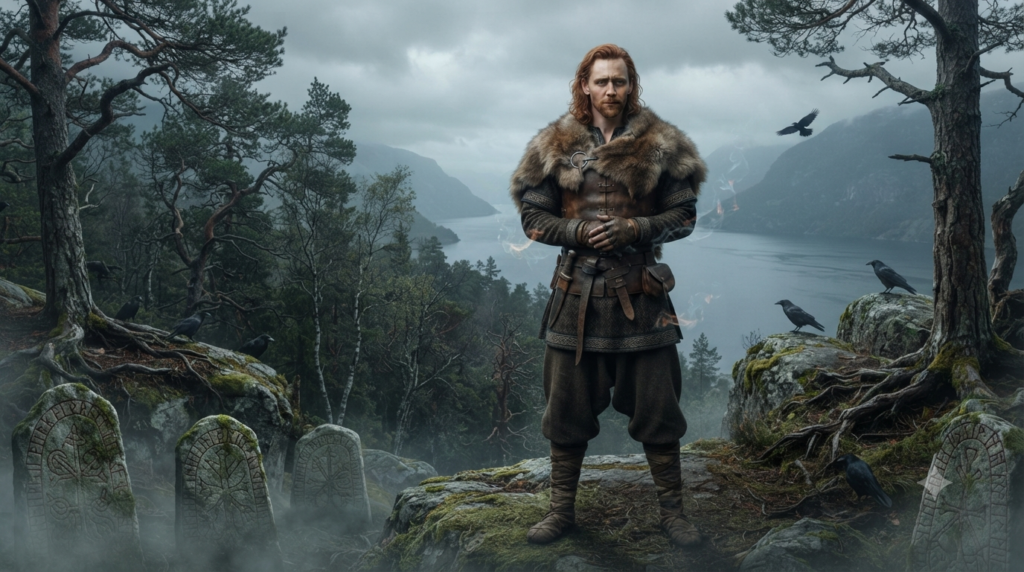
Ancient Norse depictions of Loki are considerably rarer than those of gods like Thor or Odin, with fewer surviving runic stones or carvings clearly identifiable as representing him specifically. This relative scarcity in physical representation stands in contrast to his prominent role in the written mythological sources, suggesting that Loki’s significance was expressed more through narrative than through consistent visual or ritual symbolism.
The lack of a fixed physical symbol for Loki in Norse mythology reinforces his broader thematic role as a figure of transformation and unpredictability. Where other gods could be immediately identified through consistent attributes, Loki resists this kind of fixed representation, embodying instability not just in personality but in how he was remembered and depicted across the surviving Norse mythological record.
Loki’s Role Among the Aesir
Loki occupied a genuinely paradoxical position among the Aesir gods, simultaneously useful and dangerous, welcomed and distrusted. His cleverness made him valuable in moments requiring quick thinking or creative solutions, and Norse mythology frequently shows the gods turning to Loki when conventional strength or wisdom proved insufficient to resolve a crisis.
At the same time, many of the crises requiring Loki’s clever intervention were problems he had caused in the first place, creating a recurring pattern throughout Norse mythology in which Loki both breaks and repairs the order of Asgard. This cycle reinforced his reputation as an unreliable, if occasionally indispensable, member of the divine community, never fully trusted despite his repeated usefulness.
Loki’s relationship with Thor in particular illustrates this complicated dynamic, as the two frequently appear together in myths involving travel, conflict, or negotiation with giants. Loki’s wit complements Thor’s strength in several stories, yet this partnership never fully erases the underlying tension surrounding Loki’s true loyalties, a tension that grows increasingly pronounced as Norse mythology progresses toward its final, apocalyptic myths.
This ambiguous standing among the Aesir sets Loki apart from straightforwardly heroic gods and positions him as one of Norse mythology’s most psychologically complex figures. Rather than occupying a clear role as ally or enemy, Loki in Norse mythology exists in constant negotiation between the two, a status that ultimately proves unsustainable as his actions grow more destructive over time.
Key Myths Featuring Loki
One of the most striking myths involving Loki describes the birth of Sleipnir, Odin’s eight-legged horse, which resulted from Loki transforming into a mare to distract a stallion during a contest involving the construction of Asgard’s walls. This myth showcases Loki’s shapeshifting ability in service of the gods, demonstrating how his trickery, however strange, could ultimately benefit Asgard rather than threaten it.
The death of Baldr represents the most consequential myth involving Loki, marking a decisive turning point in his relationship with the Aesir. After learning that Baldr was invulnerable to all things except mistletoe, Loki orchestrated his death through deception, manipulating the blind god Höðr into delivering the fatal blow. This act transformed Loki from a tolerated troublemaker into a genuine enemy of the gods, fundamentally altering his role within Norse mythology.
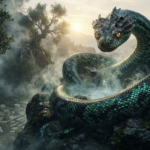
As punishment for orchestrating Baldr’s death, the gods bound Loki with the entrails of one of his own sons and placed a venomous serpent above him, condemning him to suffer as its poison dripped onto his face. Only his wife Sigyn’s loyalty, catching the venom in a bowl, offered him any relief, though Norse mythology describes his writhing in agony whenever she emptied it, an image that reinforced the severity of his fall from Asgard’s favor.
Loki’s earlier involvement in the construction of Asgard’s walls also reveals his morally ambiguous role among the gods. Tasked with resolving a bargain that threatened to cost the gods dearly, Loki used deception to protect Asgard’s interests, illustrating once again how his trickery, while often self-serving or destructive, could also function as a tool the gods relied upon in moments of genuine need.
Loki and Ragnarök
Loki’s ultimate role in Norse mythology culminates in Ragnarök, the prophesied apocalyptic battle that brings about the destruction of the gods and the world itself. Following his punishment for Baldr’s death, Loki eventually breaks free from his bonds, and Norse mythology positions this escape as one of the triggering events leading directly into the final conflict.
During Ragnarök, Loki leads the forces of chaos against the Aesir, aligning himself fully with the giants and monstrous beings he had long existed alongside without fully belonging to. This includes his own monstrous children, Fenrir and Jörmungandr, who play devastating roles in the battle, fighting directly against Odin and Thor as the cosmic order collapses.
Loki himself is fated to face Heimdall, guardian of the Bifröst bridge, in a confrontation that Norse mythology describes as mutually fatal, with both figures killing one another during the chaos of Ragnarök. This final battle cements Loki’s transformation from ambiguous trickster to active agent of destruction, resolving the tension that defined his character throughout the earlier myths.
Loki’s role in Ragnarök provides the clearest answer to why his earlier ambiguity mattered so deeply within Norse mythology. His journey from tolerated troublemaker to leader of the forces opposing the gods illustrates a broader theme within Norse cosmology: chaos and order exist in constant tension, and Loki, more than any other figure, embodies the eventual triumph of chaos in the mythology’s final, catastrophic chapter.
Why Loki Matters in Norse Mythology Today
Modern fascination with Loki continues to grow, driven largely by his uniquely complex characterization compared to more straightforward mythological figures. Unlike purely heroic or purely villainous gods, Loki in Norse mythology offers a psychologically rich figure whose motivations remain genuinely difficult to categorize, making him an especially compelling subject for contemporary reinterpretation.
Loki’s presence in modern literature, film, and popular culture has introduced his name to audiences who may know little else about Norse mythology, yet these adaptations frequently draw directly from his original ambiguous, shapeshifting nature. This enduring appeal demonstrates how thoroughly Loki’s core identity as a trickster has translated across centuries, remaining relevant even as the surrounding cultural context has changed dramatically.
The complexity of Loki’s relationships — blood brother to Odin, father of monsters, husband to the loyal Sigyn, and eventual enemy of the gods — offers modern audiences a figure whose story resists easy moral categorization. This nuance is central to why the question of who is Loki in Norse mythology continues to generate deep interest rather than a simple, one-dimensional answer.
Ultimately, Loki matters in Norse mythology today because he represents the necessary presence of unpredictability within any ordered system. His journey from useful trickster to catalyst of Ragnarök reflects a broader truth the Norse mythological tradition consistently returns to: order cannot exist without acknowledging the chaos that constantly threatens to unravel it, and Loki remains its most vivid embodiment.
FAQ — Quick Answers About Loki in Norse Mythology
Who is Loki in Norse mythology?
Loki is the trickster figure in Norse mythology, a shapeshifting jötunn who lives among the Aesir gods and plays both helpful and destructive roles throughout the mythological tradition.
Is Loki a god or a giant?
Loki is technically a jötunn, or giant, by birth, though he became blood brother to Odin and lived among the Aesir gods in Asgard.
Who are Loki’s children?
Loki fathered the monstrous Fenrir, Jörmungandr, and Hel with the giantess Angrboða, and had additional children with his wife, Sigyn.
Why was Loki punished by the gods?
Loki was punished after orchestrating the death of Baldr, the beloved god killed through Loki’s manipulation of the blind god Höðr.
What role does Loki play in Ragnarök?
Loki leads the forces of chaos against the Aesir during Ragnarök, ultimately facing Heimdall in a battle that results in both of their deaths.
Conclusion
Anyone who sets out to answer who is Loki in Norse mythology encounters a figure defined by contradiction — part giant, part trusted companion, part catastrophic betrayer of the gods he once served. From the birth of Sleipnir to the death of Baldr, Loki’s story traces a path from clever troublemaker to the central architect of the gods’ downfall at Ragnarök.
His shapeshifting nature, his tangled family of monsters and loyal companions, and his eventual role leading the forces of chaos all reinforce why Loki remains one of the most psychologically complex figures in Norse mythology. Unlike gods defined by a single virtue or vice, Loki’s identity resists easy resolution, mirroring the broader tension between order and chaos that runs throughout Norse cosmology.
Ultimately, Loki endures in Norse mythology not despite his contradictions, but because of them — a trickster whose unpredictable nature makes him one of the most enduringly fascinating figures in the entire mythological tradition.

Orin Vale has spent the better part of two decades tracing the threads that connect the world’s oldest stories — from the halls of Asgard to the banks of the Nile, from Olympus to the jungles of the Maya. What began as a childhood fascination with flood myths and trickster gods grew into years of independent study across comparative mythology and ancient religion, always chasing the same question: what did these stories mean to the people who first told them? Orin writes for readers who want more than trivia — the ones looking for the beliefs, fears, and truths that myths were built to carry.