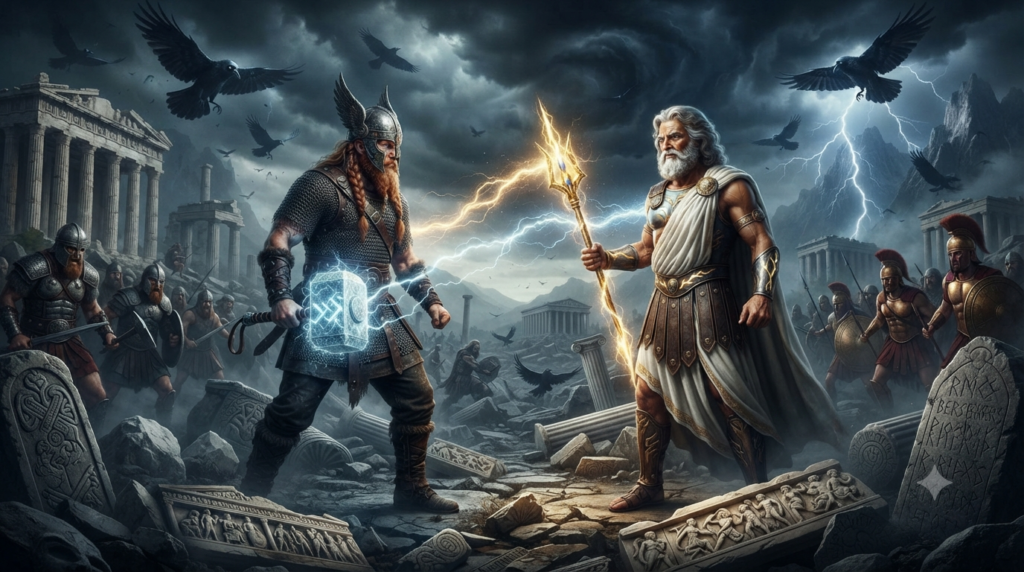
Anyone asking did Thor kill Zeus should know upfront that the answer is no, and more importantly, that no myth from either Norse or Greek tradition describes these two thunder gods ever meeting, let alone fighting one another. This question typically stems from modern pop culture comparisons rather than any documented ancient source, mixing two entirely separate mythological traditions that developed independently across different regions and time periods. Understanding did Thor kill Zeus requires recognizing that Thor belongs to Norse mythology while Zeus belongs to Greek mythology, and that no ancient text from either tradition records any encounter, confrontation, or crossover event between them whatsoever.
Why Thor and Zeus Never Actually Meet in Mythology
Thor belongs specifically to Norse mythology, originating within Scandinavian religious tradition, while Zeus belongs specifically to Greek mythology, developing within an entirely separate ancient Mediterranean cultural and religious context, making did Thor kill Zeus a question involving two figures who never existed within the same original mythological framework.
No surviving ancient source, whether Greek texts like Hesiod’s Theogony and Homer’s epics or Norse sources like the Poetic Edda and Prose Edda, contains any account describing an encounter between Thor and Zeus, confirming that did Thor kill Zeus has no basis whatsoever within any genuine historical or mythological documentation from either tradition.
It’s worth distinguishing between sharing a general domain and existing within the same mythological narrative: both Thor and Zeus are associated with thunder, but this thematic similarity never translated into any documented meeting between them within their respective, entirely separate ancient religious and cultural traditions.
Understanding this fundamental separation between Norse and Greek mythology provides the essential foundation for accurately addressing did Thor kill Zeus, confirming that this question describes an event with no basis in authentic ancient mythological sources from either cultural tradition.
Where This Idea Comes From
Questions like did Thor kill Zeus typically emerge from modern popular culture, where video games, online content, and casual comparisons frequently blend mythological figures from entirely different traditions into hypothetical scenarios never present within any actual ancient source material.
The God of War video game franchise offers a relevant example, having explored Greek mythology extensively in its earlier installments before later shifting to Norse mythology in subsequent games, though these represent separate narrative treatments within the same franchise rather than any actual crossover event between the two traditions themselves.
Online content featuring hypothetical “which god would win” comparisons has also significantly contributed to questions like did Thor kill Zeus, reflecting genuine popular interest in comparing mythological figures across different traditions, even though these comparisons remain speculative exercises rather than references to any documented mythological event.
Recognizing these modern cultural sources helps explain why did Thor kill Zeus circulates as a search question despite lacking any genuine mythological basis, confirming that this curiosity stems from contemporary cross-mythology comparison rather than confusion about any actual ancient narrative source.
How Thor and Zeus Actually Compare
Both Thor and Zeus hold significant positions as primary thunder deities within their respective mythological traditions, providing a legitimate basis for comparison even though did Thor kill Zeus itself describes an event that never actually occurs within either mythology specifically.
An important distinction exists regarding their relative status: Zeus holds the position of supreme ruler within Greek mythology as king of the gods, while Thor, despite his significant power and popularity, does not hold the equivalent supreme position within Norse mythology, a role instead held by Odin as chief of the Aesir gods.
This difference in relative hierarchical position adds important nuance to any comparison between the two figures, since accurately comparing Thor and Zeus requires recognizing that they occupy somewhat different structural positions within their respective mythological systems, despite their shared association with thunder specifically.
Understanding these genuine similarities and differences provides a more accurate and mythologically grounded way to engage with curiosity behind did Thor kill Zeus, redirecting toward legitimate comparison rather than an invented crossover event absent from either tradition’s actual source material.
What Happens to Each God in Their Own Mythology
Within Norse mythology specifically, Thor meets his end during Ragnarök, killed by the venom of Jörmungandr, the Midgard Serpent, following their mutually fatal confrontation, representing his documented mythological fate entirely separate from any connection to did Thor kill Zeus as a hypothetical scenario.
Zeus, by contrast, does not possess any definitive death myth within surviving Greek mythological tradition, generally understood as remaining permanently immortal and continuing to rule as king of the gods throughout the broader narrative scope of Greek mythology as it has come down to us today.
This significant difference reinforces that each god’s mythological fate belongs entirely to their own separate tradition, with Thor’s documented death occurring specifically through his conflict with Jörmungandr rather than through any encounter with Zeus, directly addressing why did Thor kill Zeus has no legitimate answer within either mythology.
Recognizing these separate, tradition-specific narrative outcomes reinforces that did Thor kill Zeus remains entirely absent from authentic mythological sources, with each god’s actual documented fate belonging exclusively to the distinct religious and narrative tradition that originally created them.
FAQ — Quick Answers About This Common Mix-Up
Did Thor kill Zeus?
No, there is no myth in either Norse or Greek mythology describing an encounter or battle between Thor and Zeus.
Do Thor and Zeus ever meet in any ancient myths?
No, Thor and Zeus belong to entirely separate mythological traditions with no documented meeting in any surviving ancient source.
Why do people ask if Thor killed Zeus?
This question typically stems from modern pop culture comparisons, video games, and online “who would win” discussions rather than actual mythology.
Is Thor the king of the Norse gods like Zeus is for the Greek gods?
No, Odin holds the position of chief among the Aesir gods in Norse mythology, while Thor holds a different, though still significant, role.
How does Zeus die in Greek mythology?
Zeus does not have a definitive death myth in Greek mythology and is generally understood as remaining permanently immortal.
Conclusion
Anyone who sets out to answer did Thor kill Zeus finds a clear no, since these two thunder gods belong to entirely separate mythological traditions with no documented encounter in any surviving ancient source. This question reflects modern pop culture curiosity rather than genuine mythological history.
Understanding each god’s actual documented fate, Thor’s death during Ragnarök against Jörmungandr and Zeus’s status as permanently immortal within Greek mythology, provides a far more accurate picture than any invented crossover scenario absent from either tradition’s authentic source material.
Ultimately, did Thor kill Zeus finds its most honest answer in recognizing that comparing these two significant thunder gods remains legitimate and interesting, but only when approached as thoughtful cross-mythological comparison rather than as reference to any actual documented mythological event.

Orin Vale has spent the better part of two decades tracing the threads that connect the world’s oldest stories — from the halls of Asgard to the banks of the Nile, from Olympus to the jungles of the Maya. What began as a childhood fascination with flood myths and trickster gods grew into years of independent study across comparative mythology and ancient religion, always chasing the same question: what did these stories mean to the people who first told them? Orin writes for readers who want more than trivia — the ones looking for the beliefs, fears, and truths that myths were built to carry.