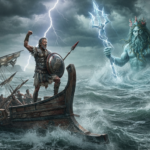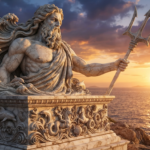
Anyone asking who is stronger, Zeus or Odin, should first understand that these two figures never actually meet or compete in any documented ancient source, since Zeus belongs to Greek mythology while Odin belongs to Norse mythology, two entirely separate religious and cultural traditions with no genuine historical or narrative overlap. This means who is stronger, Zeus or Odin, remains inherently a hypothetical, analytical comparison rather than a question with a definitive mythological answer drawn from any actual ancient text. Understanding who is stronger, Zeus or Odin, requires comparing their respective powers, authority, and roles thoughtfully, examining what each figure actually represents within their own distinct mythological tradition before drawing any meaningful conclusions.
Zeus’s Power and Authority
Zeus commands direct authority over the sky and thunder, wielding his iconic thunderbolt as both weapon and symbol of his supreme power, establishing one of the clearest and most immediately recognizable answers relevant to who is stronger, Zeus or Odin, when comparing their respective signature abilities.
As king of the Olympian gods, Zeus holds essentially uncontested supreme authority within Greek mythology, having secured this position decisively through victory in the Titanomachy and his subsequent successful defense against Typhon, providing substantial documented evidence of his considerable combat capability and enduring authority.
This established supremacy reflects a Greek mythological structure in which Zeus’s rule, while not entirely unlimited, faces no serious ongoing internal challenge from other Olympian gods, reinforcing his position as unambiguously dominant within his own specific mythological and cosmological framework relevant to who is stronger, Zeus or Odin.
Understanding Zeus’s combination of elemental power, decisive military victories, and essentially unchallenged authority provides essential grounding for who is stronger, Zeus or Odin, establishing the specific strengths that any meaningful comparison with Odin must take fully into account.
Odin’s Power and Authority
Odin holds the position of Allfather, leading the Aesir gods within Norse mythology, though his authority reflects somewhat different emphasis compared to Zeus, incorporating wisdom, seiðr magic, and prophecy alongside his recognized combat capability, adding important nuance to who is stronger, Zeus or Odin as a broader comparison.
Odin’s power extends significantly into knowledge and magical ability, reflected through his famous sacrifice of an eye for wisdom and his ordeal hanging from Yggdrasil to gain knowledge of the runes, demonstrating a distinctly different path toward power compared to Zeus’s more directly combat and authority-focused mythological characterization.
Odin’s spear, Gungnir, alongside his ravens Huginn and Muninn, who gather knowledge from across the world, reinforce his particular combination of martial capability and intellectual, almost strategic power, providing important context for who is stronger, Zeus or Odin regarding the specific nature of each figure’s strength.
This emphasis on wisdom and sacrifice alongside combat capability distinguishes Odin’s power profile meaningfully from Zeus’s more straightforwardly dominant authority, adding genuine complexity to who is stronger, Zeus or Odin when examining what “strength” actually encompasses within each distinct mythological tradition.
Comparing Their Roles as “King of the Gods”
Zeus’s authority within Greek mythology reflects a more strictly hierarchical structure, positioning him as essentially unchallenged ruler whose word carries final, decisive authority among the Olympian gods, relevant to understanding who is stronger, Zeus or Odin regarding pure positional authority specifically.
Odin, by contrast, actively pursues additional knowledge and power through personal sacrifice and ordeal, reflecting a Norse mythological structure that values wisdom gained through genuine struggle and cost, adding an important dimension to who is stronger, Zeus or Odin beyond simple hierarchical position alone.
This difference reveals something meaningful about each underlying mythological tradition’s core values: Greek mythology emphasizing established, secured authority following decisive victory, while Norse mythology emphasizes ongoing pursuit of wisdom even at genuine personal cost, relevant context for who is stronger, Zeus or Odin.
Recognizing this distinction in underlying values significantly enriches who is stronger, Zeus or Odin, demonstrating that comparing these figures requires examining not just raw power, but the very different mythological frameworks that shaped what strength and authority actually meant within each specific tradition.
Physical Power and Combat
Zeus’s documented combat victories, particularly against Typhon and the Titans, provide substantial evidence of significant physical power and combat capability, offering important, concrete evidence directly relevant to who is stronger, Zeus or Odin regarding demonstrated battlefield performance specifically.
Odin, meanwhile, faces a very different documented fate within Norse mythology, prophesied to die during Ragnarök at the jaws of Fenrir, providing a striking contrast relevant to who is stronger, Zeus or Odin, since Norse mythology explicitly incorporates its chief god’s eventual defeat within its broader cosmological structure.
This contrast proves particularly significant: Greek mythology contains no equivalent definitive death myth for Zeus, while Norse mythology explicitly builds Odin’s eventual death into Ragnarök’s inevitable structure, revealing a meaningful difference in how each tradition conceptualized ultimate divine vulnerability relevant to who is stronger, Zeus or Odin.
This difference suggests that Greek mythology generally portrayed Zeus’s authority as more permanently secured, while Norse mythology embraced eventual cosmic destruction, including Odin’s own death, as a fundamental, unavoidable feature of its broader cosmological worldview central to fully understanding who is stronger, Zeus or Odin.
So, Who Is Stronger?
Ultimately, who is stronger, Zeus or Odin, has no single objective answer, since these two figures operated within entirely separate mythological systems using genuinely different criteria for measuring power, authority, and success throughout their respective traditions.
If raw combat power and secured, unchallenged authority serve as the primary criteria, Zeus’s documented victories and permanently established rule provide a compelling case relevant to who is stronger, Zeus or Odin, given his consistent mythological portrayal as essentially unchallenged within his own tradition.
If wisdom, sacrifice, and resilience in the face of inevitable cosmic destruction serve as the primary criteria instead, Odin’s willingness to pursue knowledge through genuine personal cost offers an equally compelling case relevant to who is stronger, Zeus or Odin, reflecting different but equally significant mythological values.
This genuinely open conclusion reflects honest engagement with who is stronger, Zeus or Odin, acknowledging that any definitive answer depends entirely on which specific criteria are prioritized, rather than pretending either mythological tradition provides an objective, universally applicable measure of strength.
FAQ — Quick Answers About Zeus and Odin
Who is stronger, Zeus or Odin?
There is no definitive answer, since Zeus and Odin belong to separate mythological traditions with different criteria for power, authority, and strength.
Do Zeus and Odin ever meet in mythology?
No, there is no ancient source, Greek or Norse, describing any encounter between Zeus and Odin.
What is Zeus’s greatest strength?
Zeus’s greatest strength lies in his secured, essentially unchallenged authority following decisive victories over the Titans and Typhon.
What is Odin’s greatest strength?
Odin’s greatest strength combines combat capability with wisdom and magic, gained specifically through significant personal sacrifice.
Does Odin die in Norse mythology while Zeus does not in Greek mythology?
Yes, Odin is prophesied to die during Ragnarök, while Zeus has no equivalent definitive death myth within Greek mythology.
Conclusion
Anyone who sets out to answer who is stronger, Zeus or Odin, discovers that no definitive answer exists, since these two figures belong to entirely separate mythological traditions built around genuinely different values and criteria for measuring divine power and authority.
Zeus’s secured, essentially unchallenged rule following decisive combat victories contrasts meaningfully with Odin’s ongoing pursuit of wisdom through genuine sacrifice and his prophesied eventual death during Ragnarök, revealing two distinct visions of what it means to be a supreme mythological ruler.
Ultimately, who is stronger, Zeus or Odin, finds its most honest answer not in declaring a single winner, but in appreciating how each figure’s particular strengths reflect the distinct values and worldview of the mythological tradition that created them.

Orin Vale has spent the better part of two decades tracing the threads that connect the world’s oldest stories — from the halls of Asgard to the banks of the Nile, from Olympus to the jungles of the Maya. What began as a childhood fascination with flood myths and trickster gods grew into years of independent study across comparative mythology and ancient religion, always chasing the same question: what did these stories mean to the people who first told them? Orin writes for readers who want more than trivia — the ones looking for the beliefs, fears, and truths that myths were built to carry.