In the ancient Greek imagination, the arrival of spring was not merely a change in weather but a divine event of profound cosmic significance. The Greeks explained the rebirth of the natural world each year through a rich tapestry of myth, with the goddess of spring standing at the very center of this sacred cycle. While the Horae, the goddesses of the seasons, personified the changing year, it was Persephone who became the definitive mythological figure associated with spring. Her story of loss, grief, and eventual return to the world above ground provided a powerful and enduring explanation for the annual death and resurrection of the earth’s vegetation.
This exploration delves into the multifaceted figure of the Greek god/goddess of spring, examining the central myth of Persephone, the role of her mother Demeter, and the personifications of the seasons known as the Horae. By understanding their origins, relationships, and symbols, we gain a deeper appreciation for how the ancient Greeks understood the natural world and its cycles of life, death, and renewal. From the pomegranate seeds that bound Persephone to the underworld to the blooming flowers of Thallo, the goddess of spring, this article uncovers the divine forces that bring life back to the world each year.
Persephone: The Central Figure of Spring
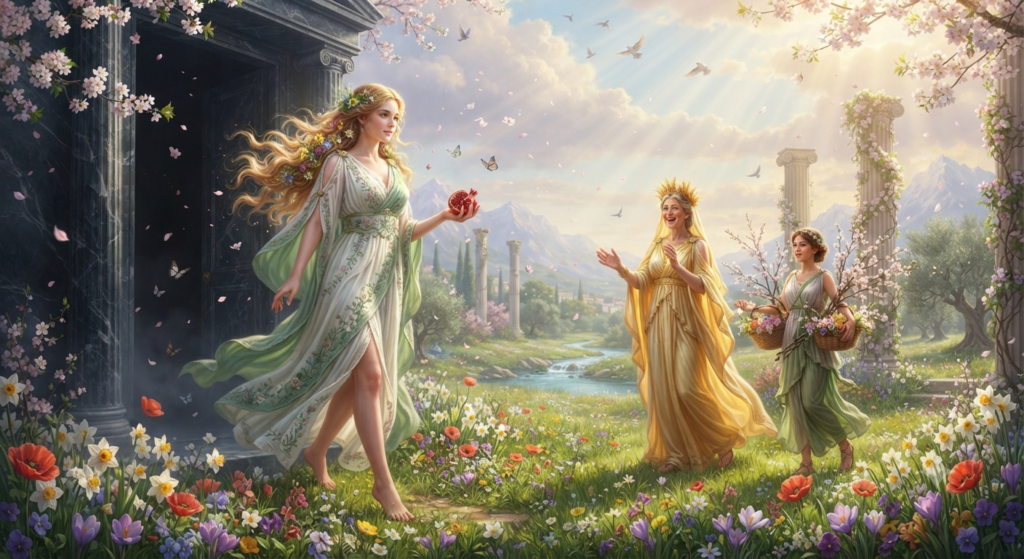
When asking who is the Greek god/goddess of spring, the most prominent and enduring answer is Persephone. She is the goddess whose annual journey from the underworld to the realm of the living marks the very beginning of spring. Her story is intrinsically linked with the agricultural cycle, as her presence on earth corresponds with the flourishing of crops and the blooming of flowers, while her descent into the underworld brings about the barren, dormant months of winter.
The myth of Persephone begins with her abduction by Hades, the god of the underworld. As the daughter of Zeus, the king of the gods, and Demeter, the goddess of agriculture and grain, Persephone was a beloved maiden whose disappearance plunged her mother into such profound grief that she neglected her duties. The earth became barren, and humanity faced starvation. This catastrophic event forced Zeus to intervene, sending Hermes to retrieve Persephone from the underworld. However, because Persephone had eaten a handful of pomegranate seeds while in Hades, she was bound to that realm. A compromise was reached: she would spend two-thirds of the year with her mother on Olympus and the remaining one-third in the underworld with her husband. Her return to the surface each year was celebrated as the season of spring, a time of renewal and growth.
Demeter: The Mother Who Brings Spring
While Persephone is the goddess who returns to bring spring, the story cannot be told without her mother, Demeter. It is Demeter’s sorrow and subsequent joy that physically manifests as the changing seasons. As the goddess of agriculture, Demeter held the power of life and death over the harvest. When her daughter was taken, her grief was so immense that she caused a great famine, refusing to let the earth bear fruit until Persephone was returned.
The Eleusinian Mysteries, one of the most important religious cults in ancient Greece, were centered around Demeter and Persephone. These secret rituals promised initiates a blessed afterlife, drawing a parallel between Persephone’s journey to the underworld and the fate of the human soul. The myth of Demeter and Persephone thus became a powerful allegory for the cycle of birth, death, and rebirth, with spring representing the promise of renewed life. The goddesses of the seasons, the Horae, acted as their divine attendants, accompanying Persephone on her journey and ushering in the season of growth.
The Horae: Personifications of the Seasons
The Horae, known as the Horai, were the goddesses of the seasons and the natural order of time. They were the daughters of Zeus and the Titaness Themis, the goddess of divine law and order. Their role was to maintain the natural cycles of the cosmos, promoting fertility and ensuring the balance of the year. They were considered benevolent forces that brought good things to both gods and humanity.
The number and names of the Horae varied, but in the agricultural context, they were often a triad: Thallo (Blooming), Auxo (Growth), and Carpo (Fruit). Each represented a distinct part of the growing season. Thallo, the goddess of spring, was the one who carried flowers and brought the bloom of new life. It was Thallo who was said to accompany Persephone on her annual journey from the underworld, symbolically bringing spring to the earth. In this way, the Horae were the divine mechanics of the seasons, ensuring the orderly procession of the year that allowed for planting, growth, and harvest.
Symbols and Iconography of the Spring Goddess
The imagery associated with the goddess of spring is rich with symbols of fertility, growth, and the awakening of the natural world. Persephone is often depicted as a young and beautiful maiden holding sheaves of grain, a torch, or a royal sceptre. The sheaf of grain directly connects her to agricultural bounty and the life-giving power of spring. The pomegranate is perhaps her most famous symbol, representing her binding to the underworld and the cycle of life, death, and rebirth. When she eats the pomegranate seeds, she becomes bound to Hades, ensuring her annual return to the realm of the dead.
The Horae, particularly Thallo, are depicted as beautiful maidens carrying the produce of spring. Thallo is shown with flowers, symbolizing the blooming of the season. Flowers, freshness, and fragrance were the hallmarks of these goddesses. They were frequently shown in the company of the Muses, the Graces, and Aphrodite, dancing to Apollo’s music, embodying the beauty and charm that spring brings to the world. This iconography served to remind the ancient Greeks of the divine forces that governed the natural world and their dependence on the goddesses for a successful harvest.
The Enduring Legacy of the Spring Goddess
The myth of the Greek god/goddess of spring has left a profound and lasting legacy on Western culture, art, and thought. The story of Persephone’s abduction and return is one of the most influential allegories in the classical tradition, shaping our understanding of nature’s cycles for over two millennia. The myth not only explains the changing seasons but also serves as a powerful metaphor for spiritual renewal and the hope of life after death, a theme at the heart of the Eleusinian Mysteries. The idea of a young goddess who descends to the underworld and returns, bringing life back to the world, has resonated throughout history, appearing in countless works of art, literature, and music from antiquity to the present day.
The Horae also left their mark on the language itself. The English word “hour” is derived from the Latin hora, which comes from the Greek hōra. The personification of the seasons, especially Spring as a maiden crowned with flowers, remains a common theme in Western art. Artists and sculptors throughout the Renaissance and beyond continued to depict the seasons as graceful maidens, a direct inheritance from the ancient Greek Horae. Their legacy is a testament to the ancient world’s profound connection to the natural world and their enduring attempt to explain its mysteries through powerful and beautiful stories.
Frequently Asked Questions About Who is the Greek god/goddess of spring?
Who is the Greek god/goddess of spring?
The primary Greek goddess of spring is Persephone. Her annual return from the underworld to the world of the living brings the season of spring, causing flowers to bloom and crops to grow.
What is the myth of Persephone and the seasons?
The myth explains the seasons through Persephone’s abduction by Hades. Her mother, Demeter, caused a great famine until Zeus forced Hades to return her. However, because Persephone had eaten pomegranate seeds in the underworld, she was bound to spend part of each year there. Her return to her mother in spring brings life to the earth, while her descent in winter causes the death of plants.
What does the pomegranate symbolize in Persephone’s myth?
The pomegranate symbolizes Persephone’s bond to the underworld. By eating its seeds, she was required to return to Hades for a portion of each year, representing the cycle of life, death, and rebirth that governs the seasons.
Who were the Horae in Greek mythology?
The Horae were the goddesses of the seasons and the natural order of time. They were the daughters of Zeus and Themis and were responsible for the cycles of nature and the fertility of the earth.
Which Hora is specifically associated with spring?
Thallo is the Hora specifically associated with spring. Her name means “Blooming,” and she was depicted carrying flowers. She is said to have accompanied Persephone on her annual journey from the underworld.
What is the connection between Demeter and spring?
Demeter is Persephone’s mother and the goddess of agriculture. Her grief over losing her daughter caused the earth to become barren, and her joy at Persephone’s return brought life back, making her a central figure in the story of spring.
What is the Roman equivalent of Persephone?
Persephone’s Roman equivalent is Proserpina, who also presides over the cycle of seasons.
How was the goddess of spring depicted in ancient Greek art?
Persephone was often depicted as a young goddess holding sheaves of grain or a torch. The Horae, like Thallo, were shown as beautiful maidens carrying seasonal produce, with spring being represented by flowers and blooming branches.
Conclusion
The Greek god/goddess of spring is a complex and layered figure, most powerfully embodied by the myth of Persephone and represented by the Horae, the goddesses of the seasons. Persephone’s story of abduction, grief, and annual return to the world above provided the ancient Greeks with a profound explanation for the life-giving power of spring. Her mother, Demeter, was the driving force behind this cycle, her grief and joy manifesting as the changing seasons. The Horae, as the divine companions and personifications of the seasons, oversaw the natural order that made this rebirth possible. Their combined legacy is a reminder of the ancient world’s deep reverence for the cycles of nature and the enduring human hope for renewal. The myth of the goddess of spring continues to resonate, reminding us that even in the depths of winter, the promise of life and growth is never far away.

Orin Vale has spent the better part of two decades tracing the threads that connect the world’s oldest stories — from the halls of Asgard to the banks of the Nile, from Olympus to the jungles of the Maya. What began as a childhood fascination with flood myths and trickster gods grew into years of independent study across comparative mythology and ancient religion, always chasing the same question: what did these stories mean to the people who first told them? Orin writes for readers who want more than trivia — the ones looking for the beliefs, fears, and truths that myths were built to carry.