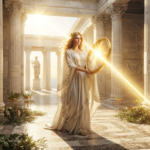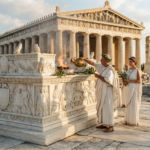
In the vast and intricate tapestry of Greek mythology, one figure stands supreme among the divine inhabitants of the celestial realm. The answer to the question of who is the queen of Mount Olympus (Hera)? is unequivocally Hera, the goddess of marriage, women, and childbirth, and the formidable wife of Zeus, the king of the gods. As the reigning queen of the Olympian pantheon, Hera occupies a position of immense authority and prestige, ruling from the golden halls of Mount Olympus alongside her husband. Her role, however, extends far beyond that of a mere consort; she is a powerful, complex, and often terrifying deity whose influence pervades countless myths, from the Trojan War to the labors of Heracles. This article will explore the definitive guide to Hera, delving into her origins, her powers, her tumultuous family relationships, and her enduring legacy as the archetypal queen of the gods. By understanding Hera, we gain a profound insight into the ancient Greek perception of marriage, female power, and the often volatile dynamics of the divine family.
Origins and Historical Background of Hera
The origins of Hera are deeply rooted in the ancient world, pre-dating the classical Greek pantheon that is so familiar today. Unlike some Olympian deities who were imported or adapted from other cultures, Hera is considered a purely Greek goddess, with her worship extending back to the Mycenaean period of the second millennium BCE . Evidence from the Bronze Age suggests she was already a significant figure in the Greek world, with a major cult center established on the island of Samos as early as the Mycenaean era, which flourished from the 8th century BCE onwards .
Hera was the daughter of the Titans Cronus and Rhea, making her a sibling to some of the most powerful figures in the cosmos, including Zeus, Poseidon, Hades, Hestia, and Demeter . According to the foundational myth of the divine succession, Cronus, fearing a prophecy that one of his children would overthrow him, swallowed each of his offspring at birth. Hera, like her brothers and sisters, was imprisoned within her father’s stomach until Zeus, the youngest, led a rebellion that forced Cronus to regurgitate his children. Following their victory in the great Titanomachy, the war against the Titans, the siblings divided the universe among themselves, with Zeus claiming the sky and Mount Olympus, and Hera becoming his wife and the queen of the gods .
The historical importance of Hera in the Greek world cannot be overstated. Her primary cult centers were located in Argos, which possessed a magnificent sanctuary, the Heraion of Argos, established in the 8th century BCE, and on the island of Samos, which claimed to be her birthplace . She was also greatly revered at Olympia, where a temple was dedicated to her from 650 to 600 BCE, and at Mycenae and Sparta . Interestingly, some scholars suggest that the worship of Hera may actually predate the worship of Zeus, with the oldest places of worship in Greece dedicated to her . This indicates that she was a powerful, independent goddess in her own right before she became the wife of Zeus in the mythological narrative, and that the coming of the Hellenic peoples shifted the pantheon towards a more male-dominated structure .
The Mythological Role of Hera
As the queen of Mount Olympus and the goddess of marriage, Hera’s mythological role is defined by her fierce protection of marital bonds, her authority over women, and her often vengeful response to the infidelities of her husband, Zeus. She is the embodiment of the ideal wife and mother, yet her myths are frequently dominated by her jealous and vindictive nature, which makes her one of the most complex and feared figures in the Greek pantheon .
Hera’s primary function is as the patron and protector of married women. She presided over all aspects of marriage, from the betrothal to the wedding ceremony, and was responsible for the legitimacy of heirs and the safeguarding of family dynasties . In this role, she was seen as a force for stability and order within society. However, her own marriage to Zeus was far from stable, and she became the archetypal wronged wife, constantly battling against her husband’s endless affairs with both goddesses and mortal women. Unable to retaliate against the all-powerful Zeus directly, Hera directed her immense wrath at his lovers and the illegitimate children born from these unions . Her mythological role, therefore, is a powerful allegory for the tensions within the institution of marriage in ancient Greece, particularly the double standard that expected fidelity from wives but not from husbands.
Beyond her domestic sphere, Hera was also a political and military force. She was the patroness of cities like Argos and Samos, a protector of kings and empires, and a goddess of the sky and stars . In the Iliad, she is a major player in the Trojan War, using her powers to aid the Greeks and scheme against Zeus, whom she opposed because the Trojan prince Paris had judged her to be less beautiful than Aphrodite . Hera’s character is a fascinating blend of divine majesty, fierce protectiveness, and terrifying vengeance, a figure who was both deeply revered and greatly feared .
Family and Relationships
The family of Hera is central to understanding her character, motivations, and actions. Her relationships, particularly with Zeus, are fraught with drama and conflict.
Hera and Zeus: A Tumultuous Marriage
The marriage of Hera and Zeus is the most famous and tumultuous union in all of Greek mythology. According to myth, Zeus seduced Hera by transforming himself into a cuckoo bird, a form that appeared to be in distress, which Hera took pity on and held to her breast. Once he had her in his grasp, he revealed his true identity and raped her . The cuckoo became one of her sacred symbols, a reminder of this divine deception. Despite this rocky beginning, and Zeus’s incessant infidelity, Hera remained remarkably loyal to her marriage, with no myths describing her taking a lover . This unwavering fidelity highlights her nature as the goddess of marriage, even as her relationship with Zeus was characterized by intense jealousy, frequent arguments, and mutual suspicion. There were even occasions where she conspired with other gods, such as Poseidon and Athena, to stage a coup against him, a rebellion that ended with Zeus severely punishing her by hanging her from the heavens with a golden chain and iron anvils fastened to her feet .
Hera’s Children
Hera and Zeus had several children together, though their parentage varies slightly across different sources. Their canonical divine children are Ares, the god of war; Hebe, the goddess of youth; and Eileithyia, the goddess of childbirth . The births of Eileithyia and Hebe were seen as positive aspects of her role as a family goddess. The relationship with Ares, however, was more complex, as she protected him fiercely despite his brutish nature.
The most famous story involving Hera’s children is the birth of Hephaestus, the god of fire and forge. In some accounts, Hephaestus is the son of Hera and Zeus. In a more prominent version, however, Hera gave birth to Hephaestus parthenogenetically (without a father) as an act of retaliation against Zeus for producing Athena from his own head . Disgusted by his ugliness, Hera threw her newborn son from Mount Olympus, which crippled him for life. This act of rejection would come back to haunt her, as Hephaestus later trapped her in a magical, inescapable throne, and she only secured her freedom by promising him the hand of Aphrodite in marriage .
Enemies and Victims
Hera’s most famous relationships, however, were with her enemies, who were almost exclusively the lovers of Zeus and their offspring. Her wrath was legendary, and she pursued these victims with relentless fury. Some of her most notable victims include:
- Heracles: The greatest Greek hero was the son of Zeus and the mortal Alcmene, and Hera’s hatred for him was so deep that her name was given to him (“Hera-famous”) in the hopes of appeasing her . She sent two serpents to kill him as an infant, delayed his birth, drove him mad, causing him to murder his own family, and set the impossible Twelve Labors for him in an attempt to get him killed .
- Leto: When Leto was pregnant with Zeus’s twins, Apollo and Artemis, Hera forbade any land from giving her shelter or refuge on which to give birth. It was only on the floating island of Delos, which was not technically “solid land,” that Leto could deliver her children .
- Semele: The mortal mother of Dionysus was tricked by the ever-jealous Hera into asking Zeus to reveal himself in his divine form. The sight of the god in his full glory was too much for a mortal to bear, and Semele was instantly incinerated .
- Io: Hera turned Io, one of Zeus’s lovers, into a cow to protect her from her husband, and then set the hundred-eyed giant Argus to keep watch over her .
- Callisto: Another of Zeus’s lovers, she was turned into a bear and hunted by Artemis, an act that Hera instigated or condoned .
Symbols and Meaning
Hera is associated with a distinct and symbolic iconography that conveys her status, powers, and domains. Her symbols are rich with meaning and are a key to understanding her character.
- The Peacock: The peacock is the most famous animal associated with Hera . The “eyes” on the peacock’s tail feathers are said to represent the hundred eyes of her watchman Argus, whom she placed to guard Io, and which she later set on the bird’s tail as a memorial after his death . The peacock symbolizes her all-seeing wisdom, her vigilance, and her majestic beauty, and in Hellenistic times, her chariot was drawn by these magnificent birds .
- The Cow: The cow is another sacred animal of Hera, reflecting her role as a mother, nurturer, and goddess of fertility and femininity . In many ancient depictions, Hera is described as “ox-eyed” or “cow-faced” in the Homeric epics, a reference to her large, beautiful eyes, but also a connection to her nurturing, maternal aspects .
- The Cuckoo: This bird is a direct symbol of her marriage to Zeus, as it was the guise he assumed to seduce her . It represents both the beginning of their union and the deception that defined it.
- The Pomegranate: A symbol of fertility, marriage, and the underworld, the pomegranate is often depicted in Hera’s hand, signifying her domain over blood, birth, and death . It connects her to the cycle of life and the sustenance of royal power.
- The Diadem (Polos) and Sceptre: As the queen of the gods, Hera is almost always depicted wearing a high, cylindrical crown called a polos, and holding a royal sceptre . These are the ultimate symbols of her sovereignty, authority, and regal status on Mount Olympus. The lotus-topped sceptre she often carries is a symbol of power and ancient authority .
- The Lily: The lily is associated with Hera, signifying purity, motherhood, and the protective nature she sometimes exhibits .
Powers and Characteristics
As an Olympian goddess, Hera possessed immense power, both in her divine domain and in her influence over the lives of mortals and gods. Her abilities reflected her profound cosmic status and her particular spheres of influence. The answer to who is the queen of Mount Olympus (Hera)? is incomplete without understanding the extent of her divine authority.
Hera’s primary powers revolved around the institutions she represented. She was the goddess of marriage and could oversee, bless, or curse marital unions. She could bestow fertility and assist women in childbirth, but she could also cause protracted labor or death in childbirth, as she did to the mothers of Zeus’s children . As a sky goddess, she had control over the air, clouds, and storms, capable of granting clear skies or unleashing violent tempests .
Furthermore, Hera was a shapeshifter, able to transform herself and others. She turned Io into a cow and Callisto into a bear, and she could assume various disguises to interfere in mortal affairs . She was also a goddess of kings, empires, and heirs, and her favor or disfavor could determine the fate of dynasties and entire nations . Hera’s character is often described as majestic and solemn, but also jealous, vengeful, and unforgiving . She never forgot an injury and could hold a grudge for generations, as she did against the descendants of Paris for his judgment in the beauty contest . However, she was also fiercely loyal to those she favored, such as the Argonauts, whom she aided on their quest because their leader Jason had once helped her when she was in disguise .
Worship and Religious Importance
Hera was one of the most widely and fervently worshipped deities in the ancient Greek world, with her cult reflecting her importance as the queen of the gods and the guardian of the social order . Her worship was not simply a matter of state religion but was deeply personal to women.
Her primary sanctuaries were the Heraion of Argos in the Peloponnese, a massive temple complex that was one of the most important religious sites in Greece, and the Heraion of Samos, an Aegean island that was a major center of her cult from the Mycenaean period onwards . She also had significant temples at Olympia, Corinth, Sparta, Perachora, and Tiryns . At Samos, a great annual festival was held in her honor, featuring processions, sacrifices, and athletic competitions .
Across Greece, sporting competitions specifically for women, called the Heraia, were held in her honor . These games were a rare opportunity for women to gather and compete in footraces, offering a direct parallel to the male-dominated Olympic Games held for Zeus. Additionally, annual marriage festivals (hierogamy) were held in some cities, where married couples would re-enact the sacred marriage of Zeus and Hera, a ritual designed to ensure the fertility and prosperity of the community .
Ancient Sources
Hera is a central figure in virtually all ancient Greek literature, from epic poetry to drama and philosophy. The most important sources for her myths and character include:
- Homer’s Iliad and Odyssey (c. 8th century BC): In the Iliad, Hera is a major character, actively supporting the Greek armies against Troy and frequently conspiring against Zeus. She is described with the epithets “white-armed,” “ox-eyed,” and “Hera of Argos” . The Odyssey also features her, though less prominently.
- Hesiod’s Theogony (c. 7th century BC): This foundational poem details the genealogy of the gods, explicitly listing Hera as the daughter of Cronus and Rhea and describing her place as the wife of Zeus and mother of Ares, Hebe, and Eileithyia .
- The Homeric Hymns (c. 7th-6th centuries BC): These hymns, particularly the ones to Hera, Apollo, and Dionysus, provide crucial details about her myths and her role in the pantheon .
- Apollodorus’s Bibliotheca (c. 1st-2nd centuries AD): This “Library” of Greek mythology is a comprehensive compilation of myths, providing a clear and systematic account of the stories involving Hera.
- Ovid’s Metamorphoses (1st century AD): The Roman poet’s masterpiece retells many Greek myths, including numerous episodes featuring Hera (whom he calls Juno), such as the punishment of Semele and the story of Io .
- Pausanias’s Description of Greece (2nd century AD): This travelogue provides invaluable descriptions of Hera’s temples, sanctuaries, and the local cult practices associated with her, especially at Argos and Samos .
Artistic Representations
Hera was a popular subject in ancient Greek and Roman art, and her depiction is remarkably consistent, conveying her status as a regal and powerful deity .
In vase painting and sculpture, Hera is most often shown as a majestic, seated figure, emphasizing her queenly authority. She typically wears the polos, a high, cylindrical crown that was a mark of goddesses and high-ranking women in ancient Greece . She also holds a royal sceptre, often topped with a lotus flower, and is sometimes depicted wearing a bridal veil, a nod to her role as the goddess of marriage . On Attic red- and black-figure pottery, she is frequently identifiable by her attributes and her august bearing, though without them, she can be hard to distinguish from other goddesses .
In large-scale sculpture, the most famous representation is the colossal statue of Hera that once stood in her temple at Argos, made by the renowned sculptor Polycletus. It depicted her seated, wearing a crown adorned with the Charites (Graces) and Horae (Seasons), holding a pomegranate in one hand and a sceptre in the other . She is often accompanied by her sacred animals: the peacock, the cuckoo, and the cow .
Cultural Influence
Hera’s influence extends far beyond the ancient temples and texts; she is a foundational figure in Western culture. As the archetype of the queen and the wife, her stories have been a source of inspiration and analysis for millennia.
Her name, “Hera,” has become synonymous with a jealous, powerful, and matronly woman. The term “Hera” is often used colloquially to describe a stately or imposing female figure, or one who is fiercely possessive of her spouse. The Roman equivalent of Hera was Juno, who was similarly the queen of the gods and the goddess of marriage. While Juno shared many of Hera’s attributes, the Roman conception of her placed a greater emphasis on her as the protector of the state and its women, making her a central figure in Roman civic religion. The month of June is named after Juno and was considered the most auspicious time for weddings .
Modern psychoanalysis has also engaged with Hera’s archetype. The “Hera complex” is a term sometimes used to describe a pattern of behavior in which a woman views herself primarily through her relationship to a powerful man and directs her aggression toward his other relationships. This highlights her enduring relevance as a psychological model for certain aspects of female experience. Hera remains a powerful and complex figure, a testament to the ancient Greeks’ sophisticated understanding of the difficulties within marriage, the nature of power, and the destructive potential of jealousy.
Legacy
The legacy of Hera is a powerful and multifaceted one. She is the queen of the gods, a role that signifies the importance of female power and authority within the divine order. However, she is also the embodiment of the “jealous wife,” a figure whose vengeance is legendary. This duality is at the heart of her enduring appeal and her complex legacy.
On the one hand, Hera represents the sanctity of marriage and the family, serving as a protector of women and a guardian of legitimate heirs. Her widespread and ancient worship shows that she was a vital force for social cohesion. On the other hand, her myths reveal the ancient world’s anxieties about female power, depicting it as often irrational and destructive when threatened. Her ceaseless persecution of Zeus’s lovers and children highlights the extreme consequences of a patriarchal system that allowed male gods to act with impunity while holding their wives to a strict standard of fidelity.
In the modern era, Hera’s story has been revisited by authors and artists who seek to give her a more nuanced voice. Writers like Natalie Haynes, in books such as A Thousand Ships, have explored the perspective of women in Greek myth, offering a more sympathetic view of Hera as a woman wronged by her husband and forced to channel her rage into a world that gave her no other outlet. Hera’s legacy endures because her story, with its themes of betrayal, power, and injustice, remains a potent and relevant allegory for the complexities of human relationships.
Frequently Asked Questions About Who is the queen of Mount Olympus (Hera)?
Why is Hera considered the queen of Mount Olympus?
Hera is the queen of Mount Olympus because she is the wife of Zeus, the king of the gods. Her status as his consort elevates her to the position of supreme authority among the goddesses. Additionally, she is the goddess of marriage, women, and childbirth, making her the matriarchal figure of the divine family and the patroness of human society.
What are Hera’s most famous symbols and what do they mean?
Hera’s most famous symbols are the peacock, which symbolizes her majestic pride and all-seeing wisdom; the cow, which represents her nurturing and maternal aspects; the cuckoo, which recalls Zeus’s trick to seduce her and symbolizes their marriage; and the pomegranate, a symbol of fertility, marriage, and the cycle of life and death . She is also depicted with a crown (polos) and sceptre, which are the ultimate symbols of her royal sovereignty .
Who were Hera’s parents and siblings?
Hera was the daughter of the Titans Cronus and Rhea . Her siblings included Zeus (who became her husband), Poseidon, Hades, Hestia, and Demeter . All of them were swallowed by their father, Cronus, and later rescued by Zeus.
Did Hera have any children, and who were they?
Hera had several children. With Zeus, her children were Ares (the god of war), Hebe (the goddess of youth), and Eileithyia (the goddess of childbirth) . In some myths, she gave birth to Hephaestus alone, without Zeus, as an act of revenge for his solo birth of Athena .
Why was Hera so jealous and vengeful?
Hera was notoriously jealous because of the constant infidelity of her husband, Zeus . As the goddess of marriage, she was deeply affronted by his affairs and his illegitimate children. Since she could not punish the all-powerful Zeus, she directed her immense wrath at his lovers and their offspring.
What was Hera’s role in the story of Heracles?
Hera was the relentless tormentor of Heracles because he was the son of Zeus and a mortal woman, Alcmene . She tried to kill him as an infant, drove him mad, and forced him to perform the Twelve Labors in the hope that he would perish. Heracles was named in her honor, a testament to how much her persecution defined his life .
How did Hera support the Greeks in the Trojan War?
Hera supported the Greeks (Achaeans) in the Trojan War because of the Judgment of Paris. Paris, a Trojan prince, chose Aphrodite as the most beautiful goddess over Hera and Athena, earning their eternal enmity . Hera used her powers and influence to aid the Greek cause and conspired to ensure Troy’s downfall.
How was Hera worshipped in ancient Greece?
Hera was worshipped across Greece, with major cult centers at Argos and Samos . She had magnificent temples dedicated to her, and festivals like the Heraia, which were sporting competitions for women, were held in her honor . She was also venerated through annual marriage festivals that reenacted the sacred marriage of Zeus and Hera .
Conclusion
Hera, the queen of Mount Olympus, stands as one of the most complex, powerful, and enduring figures in the entire Greek mythological tradition. She is far more than merely the wife of Zeus; she is the goddess of marriage, the protector of women, the patron of empires, and a formidable divine force in her own right. Her story, from her birth as a swallowed Titan to her reign on Olympus, is a chronicle of divine drama, characterized by intense loyalty, profound rage, and relentless vengeance. She is the archetypal wronged wife, whose jealousy against her husband’s countless infidelities has made her one of the most famous figures in myth. Yet, this characterization often overshadows her importance as a stabilizing force in both the cosmos and human society, overseeing the sanctity of marriage and the legitimacy of heirs.
Her legacy is a powerful reminder of the ancient Greek struggle to understand the nature of marriage, power, and gender. Hera’s myths are not just entertaining tales; they are profound explorations of the tensions within the family unit and the often-destructive consequences of a patriarchal system. Today, she remains a potent cultural symbol, featured in literature, film, and art, and a subject of psychological analysis. The question of who is the queen of Mount Olympus (Hera)? leads to an answer that is as complex as the character herself: she is the majestic, powerful, and vengeful goddess who embodies both the ideals of marriage and the wrath that can arise when those ideals are broken.

Orin Vale has spent the better part of two decades tracing the threads that connect the world’s oldest stories — from the halls of Asgard to the banks of the Nile, from Olympus to the jungles of the Maya. What began as a childhood fascination with flood myths and trickster gods grew into years of independent study across comparative mythology and ancient religion, always chasing the same question: what did these stories mean to the people who first told them? Orin writes for readers who want more than trivia — the ones looking for the beliefs, fears, and truths that myths were built to carry.