The question of who are the Kalingoi in Greek mythology? opens a fascinating window into the ancient Greek understanding of the distant and exotic peoples of India. The Kalingoi (also spelled Calingi or Kalingi) were a legendary tribe described by Greek and Roman writers as inhabiting the eastern coast of India, in a region known for its wealth, powerful armies, and peculiar customs . Unlike many mythical peoples whose existence was purely fantastical, the Kalingoi represent an intriguing intersection of Greek mythology, early ethnography, and historical reality. They were not the creation of poetic imagination alone, but rather a real population that the Greeks encountered through the accounts of travelers, diplomats, and historians during and after the campaigns of Alexander the Great. This article will serve as a definitive guide to the Kalingoi, exploring their origins in classical literature, their depiction as both a powerful kingdom and a fantastical tribe, and their enduring legacy in the history of cultural exchange between Greece and India.
Origins and Historical Background of the Kalingoi
The origins of the Kalingoi in Greek literature are rooted in the period of intense cultural and commercial contact between the Hellenistic world and the Indian subcontinent. The earliest Greek mentions of the Kalingoi are generally associated with the writings of Megasthenes, the Greek ambassador who lived at the court of the Mauryan emperor Chandragupta in Pataliputra around the turn of the 3rd century BCE . Megasthenes’s lost work, the Indica, was a detailed account of India that served as the primary source for many later Greek and Roman authors.
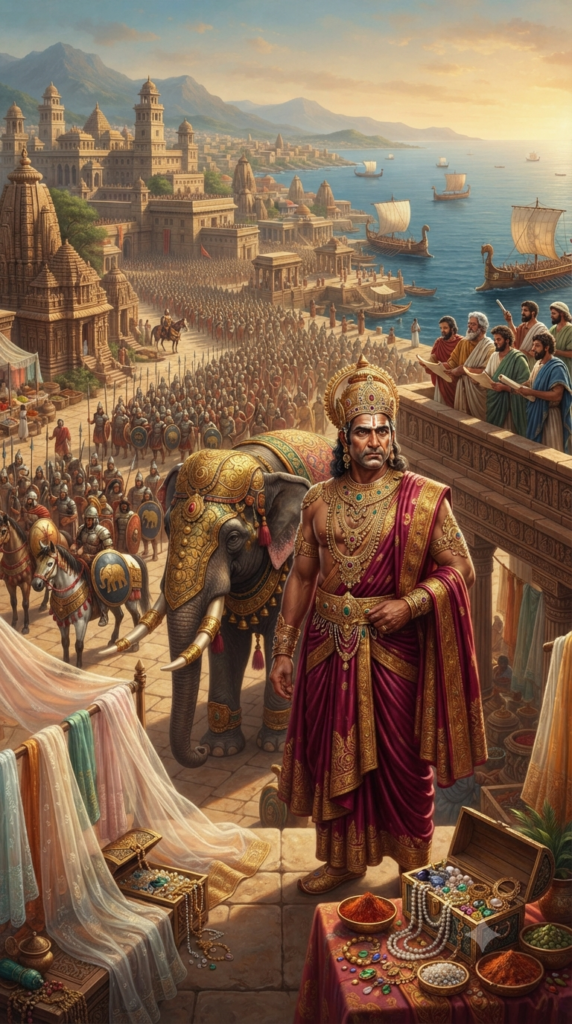
Megasthenes described the Kalingoi as one of the major tribes of India, inhabiting the region that corresponds roughly to modern-day Odisha and the northern coastal areas of Andhra Pradesh . His accounts, preserved in fragments by later writers, provided the Greek world with its first comprehensive picture of the peoples living along the Ganges and the eastern coast of the subcontinent. The Kalingoi were notable for their power and organization. Megasthenes is said to have described their capital as Parthalis, and recorded that their king commanded a formidable army of 60,000 foot-soldiers, 1,000 cavalry, and 700 war elephants .
The historical importance of the Kalingoi in ancient India is well-documented. The Kalinga kingdom was a major political entity that existed from the 6th century BCE onwards. It was famous for its maritime trade, its textiles—particularly fine muslin which was highly prized in the Roman Empire—and its elephants, which were a key component of its military might . The kingdom was so significant that it is mentioned not only in Greek sources but also in the Buddhist Jataka tales, the Mahabharata, and the inscriptions of the Mauryan emperor Ashoka. The Kalingoi, therefore, are a rare example of a figure from Greek mythologized ethnography that can be directly and confidently mapped onto a historical people.
The Mythological Role of the Kalingoi
In the context of Greek mythology and ethnography, the Kalingoi occupied the role of a powerful and exotic people at the edge of the known world. They were a part of the broader Greek fascination with India, a land that was believed to be the source of incredible wealth, strange animals, and peoples with peculiar customs. They were often discussed alongside other tribes like the Mandaloi (Mandei) and the Malli, who were also powerful and warlike peoples living along the Ganges .
Some Greek sources, however, elevated the Kalingoi from a mere historical people to a category of legendary beings. Pliny the Elder, for example, mentions various branches of the Kalingoi, including the “Mactocalingae” (Madhya-Kalinga or “Middle Kalinga”), which he describes as one of the “brahmanical” peoples of the Ganges . This suggests a perception of the Kalingoi not just as a tribe, but as a class of people with a specific religious and social identity. A curious and perhaps legendary account appears in some sources, which describes the Calingi as a tribe of short-lived Indian men who reached maturity at the age of five and died aged eight . This fantastical detail, which seems to contradict the other accounts of their military power, may reflect a conflation of the Kalingoi with other legendary Indian tribes, or it may be an example of the kind of exaggerated and mythologized ethnography that characterized Greek writing about India.
Family and Relationships
The Kalingoi, as a legendary tribe, were not integrated into the genealogical family trees of the gods and heroes in the same way as the figures of Greek myth. However, they were closely associated with the broader geography and ethnography of the Ganges region.
Relationship to Other Indian Tribes
According to the Greek accounts derived from Megasthenes, the Kalingoi were one of several major tribes in the Ganges valley. They were distinct from, but closely related to, several other powerful groups. The Mandaloi (Mandei) and the Malli lived to the north and west of them, while the Gangerides, who lived near the mouths of the Ganges, were another powerful nation . The Modo-Galingoi, who lived on an island in the Ganges, are thought to be a branch of the Kalingoi, perhaps the Madhya-Kalinga (“Middle Kalinga”) . Beyond them lived the Andaroi, whom modern scholars identify with the Andhras of Southern India . These relationships established the Kalingoi as part of a complex geopolitical landscape that was of great interest to the Greeks.
Symbols and Meaning
The symbols associated with the Kalingoi were not abstract mythological symbols, but rather the concrete signs of their power and their wealth.
- The War Elephant: The elephant was the most important symbol of the Kalingoi’s military might. The fact that their king commanded 700 of these powerful beasts was a key detail for the Greeks, who were always impressed by the elephants of India. The elephant symbolized the power, wealth, and exotic nature of the Indian kingdoms.
- Fine Muslin: The Kalingoi were famous for their cotton textiles, particularly a fine muslin that was highly sought after in the Roman Empire. This textile symbolized the wealth and sophistication of the Kalingoi and their importance in the ancient trade networks.
- The Island: The mention of an island inhabited by the Modo-Galingoi in the Ganges has a certain symbolic resonance. The island represents a place of mystery and otherness, a distinct and separate realm of these legendary people.
Powers and Characteristics
The “powers” of the Kalingoi were not magical abilities, but rather the characteristics of a powerful and wealthy kingdom.
- Military Power: The Kalingoi were known for their large armies and their powerful war elephants. They were a formidable force, as their army of 60,000 infantry and 700 elephants suggests .
- Wealth: The Kalingoi were renowned for their wealth, derived from their trade in textiles, spices, pearls, and precious stones . Their fine muslin was so sought after that, according to some accounts, Roman authorities considered imposing an embargo because the wearing of such fine cloth was having an effect on public morals .
- Maritime Trade: The Kalingoi were a seafaring people, with a strong maritime tradition. They were involved in extensive trade with Southeast Asia, and in fact, are believed to have led the first Hindu colonization of Java around 75 CE .
- Short Lifespan (in legend): In a more mythologized version, the Calingi were described as short-lived men who reached maturity at five and died at eight. This fanciful detail seems to be an invention, perhaps based on a misunderstanding of Indian cycles of time or a simple fictional embellishment.
Worship and Religious Importance
The Kalingoi did not have a formal cult of worship in the Greek world. Their religious importance, as perceived by the Greeks, was primarily based on their association with the broader culture of India.
Pliny the Elder’s designation of the Mactocalingae as a “brahmanical” people is significant . It implies that the Greeks were aware of the Kalingoi as a distinct religious and social class, one associated with the Brahmins, the priestly and learned caste of India. This suggests that the Kalingoi were not seen as a pagan or monstrous people, but as a people with a distinct and recognized religious tradition. This understanding was part of the broader Greek respect for the Brahmins, who were often depicted as wise philosophers. Furthermore, the mention of Kalinga as a place with large Buddhist monasteries in the account of the Chinese pilgrim Hiuen-Tsang shows that the region was a significant center of religious activity, a fact that may have been known to the Greeks through later contacts.
Ancient Sources
The Kalingoi are mentioned in several key ancient sources, including:
- Megasthenes’s Indica (c. 300 BCE): The foundational text for the Greek understanding of India. His account of the Kalingoi was preserved in fragments by later writers like Strabo, Arrian, and Diodorus Siculus.
- Pliny the Elder’s Natural History (c. 77 CE): The Roman encyclopedist mentions the Kalingoi (which he spells “Calíngæ”) and their various branches, including the “Mactocalingae” .
- Ptolemy’s Geography (c. 150 CE): The Greek geographer provides a detailed description of the Kalingoi and their territory, mentioning the river “Cainas” as a border .
- The Periplus of the Erythraean Sea (c. 1st century CE): A Greek guide to the trade of the Indian Ocean, which mentions Kalinga as a source of ivory and muslin .
- Apollodorus’s Library and other compilations: These later works sometimes refer to the Kalingoi, though often in a more mythologized form, such as the description of the short-lived Calingi .
Artistic Representations
The Kalingoi are not a subject in surviving Greek or Roman art. Unlike the gods and heroes of mythology, they were a legendary people rather than a series of individual figures, making them more difficult to depict in narrative art. However, their influence can be seen in the broader artistic representation of India. The depiction of Indian elephants in Roman mosaics and the use of Indian imagery in Roman art, such as the famous “Nilotic” scenes, may sometimes allude to the Kalingoi indirectly. The lack of specific artistic representations, however, only underscores the Kalingoi’s status as a people whose identity was defined more by their geographical and political reality than by their iconography.
Cultural Influence and Historical Legacy
The legacy of the Kalingoi is multifaceted. They represent a rare instance where Greek myth and historical reality intersect. The accounts of the Kalingoi by Greek writers, which preserve detailed and accurate descriptions of their location, their military might, and their maritime trade, are a testament to the sophistication of ancient geographical knowledge .
The most significant legacy of the Kalingoi is the name itself. The word “Kalinga” is the ancient name for the region that corresponds to modern-day Odisha and parts of Andhra Pradesh. It is a name that has been preserved in Indian texts, inscriptions, and traditions for over two millennia. The Greek spelling, “Kalingoi,” is a direct transliteration of the Sanskrit and Prakrit name for the people and the kingdom. The name “Kalinga” has continued to be used in modern times, with the state of Odisha being historically known as Kalinga.
Frequently Asked Questions About Who are the Kalingoi in Greek mythology?
Who were the Kalingoi in Greek mythology?
The Kalingoi (also spelled Calingi or Kalingi) were a legendary tribe described by Greek and Roman writers as inhabiting the eastern coast of India, in the region corresponding to modern-day Odisha. Unlike purely mythical peoples, they were a real historical population, known for their power, wealth, and extensive trade networks .
Where did the Kalingoi live?
According to Greek geographers like Megasthenes and Ptolemy, the Kalingoi lived in eastern India, along the coast, near the sea. Their territory was bordered by the river Prinas and the river Cainas (Cane), which flows into the Ganges . They were placed “nearest the sea,” with other tribes like the Mandei and Malli living inland.
Were the Kalingoi a real people or a myth?
The Kalingoi were a real historical people. The name “Kalinga” refers to a powerful kingdom that existed in eastern India from the 6th century BCE onwards. They are mentioned in ancient Indian texts like the Mahabharata, the Buddhist Jataka tales, and the inscriptions of Ashoka, confirming their historical existence.
What did Greek writers say about the Kalingoi?
Greek writers like Megasthenes described the Kalingoi as a powerful tribe with a large army. The king of the Kalingoi commanded 60,000 foot-soldiers, 1,000 cavalry, and 700 war elephants . Pliny the Elder mentioned various branches of the Kalingoi, including the “Mactocalingae” or “Madhya-Kalinga” .
What is the connection between the Kalingoi and the word “Kalinga”?
The Greek word “Kalingoi” is a direct transliteration of the Sanskrit and Prakrit name “Kalinga” for the people and the kingdom. The region of Kalinga corresponds roughly to the modern Indian state of Odisha, and the name has survived in Indian culture and history for thousands of years.
What were the Kalingoi known for in ancient times?
The Kalingoi were known for their wealth, particularly in textiles. They produced a fine muslin that was highly prized in the Roman Empire . They were also known for their maritime trade, their war elephants, and their extensive trade in spices, pearls, and precious stones. They were so powerful that they led the first Hindu colonization of Java around 75 CE .
What is the “short-lived” Calingi legend?
Some sources describe the Calingi as a tribe of Indian men who reached maturity at the age of five and died aged eight . This fantastical account is a mythologized detail that contradicts the more historical accounts of the Kalingoi as a powerful and wealthy kingdom. It may reflect a conflation of the Kalingoi with other legendary Indian tribes.
How do we know about the Kalingoi today?
Our knowledge comes from a combination of Greek and Indian sources. Greek accounts, preserved in works by Megasthenes, Pliny the Elder, and Ptolemy, provide the ancient Greek perspective. Indian sources, including Buddhist texts and the inscriptions of Ashoka, confirm their historical existence and their importance in the history of the subcontinent .
Conclusion
The Kalingoi of Greek mythology and ethnography stand as a unique and fascinating bridge between the ancient worlds of Greece and India. They are a rare example of a figure from Greek legend that can be confidently identified with a historical people. The Greek accounts of the Kalingoi, which describe a powerful kingdom with vast armies of elephants, a thriving maritime trade, and exquisite textiles, are remarkably consistent with what we know from Indian sources about the ancient Kalinga kingdom. The question of who are the Kalingoi in Greek mythology? leads to an answer that is as much about history as it is about myth. They represent the ancient Greek desire to understand the world beyond their shores, a world that was filled with incredible wealth, strange customs, and powerful peoples. Their legacy is a name that has survived for over two millennia, a name that still evokes the rich cultural and political heritage of the eastern coast of India.

Orin Vale has spent the better part of two decades tracing the threads that connect the world’s oldest stories — from the halls of Asgard to the banks of the Nile, from Olympus to the jungles of the Maya. What began as a childhood fascination with flood myths and trickster gods grew into years of independent study across comparative mythology and ancient religion, always chasing the same question: what did these stories mean to the people who first told them? Orin writes for readers who want more than trivia — the ones looking for the beliefs, fears, and truths that myths were built to carry.