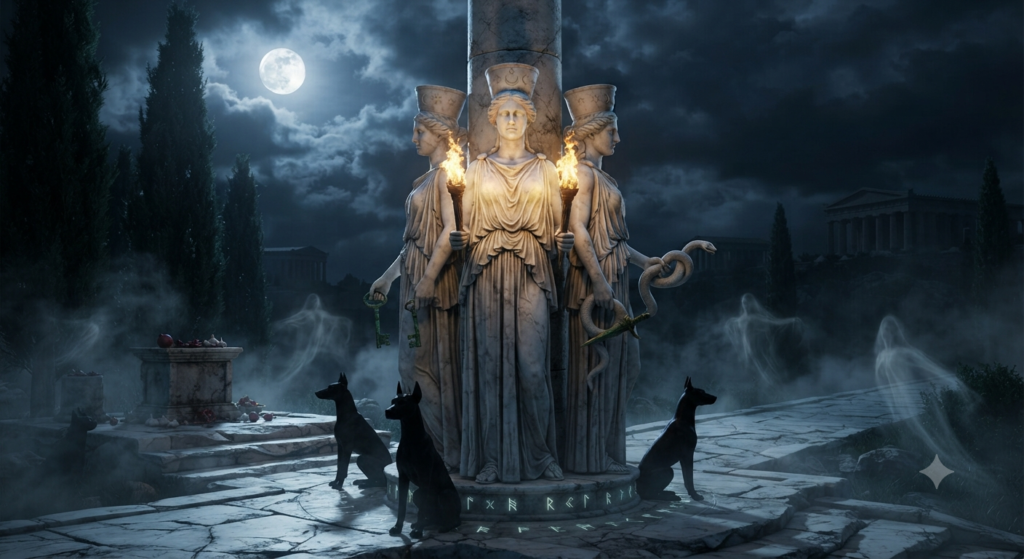
In the vast pantheon of Greek mythology, few deities possess an iconography as distinctive and immediately recognizable as Hecate, the goddess of magic, witchcraft, ghosts, and the crossroads. Her visual representation evolved over centuries, but a core set of characteristics remained constant, creating a powerful and enduring image that has captivated artists, scholars, and spiritual practitioners for over two millennia. To understand what does a statue of Hecate typically look like is to delve into the artistic and religious traditions of ancient Greece and Rome, where the goddess was depicted in forms that reflected her complex and often fearsome nature. This comprehensive guide explores the defining features, attributes, and variations of Hecate’s statuary, from her canonical triple-bodied form to her more intimate, single-figure representations, revealing how the ancients visually interpreted one of their most enigmatic and powerful deities.
The Origins of Hecate’s Iconography
The artistic tradition of representing Hecate was not a static formula but a development that crystallized in the 5th century BCE. Before this period, Hecate was often depicted as a single, majestic figure, often holding torches. However, the iconography that would become synonymous with the goddess emerged in the late 5th century BCE in Athens. According to the ancient traveler and geographer Pausanias, the sculptor Alkamenes was the first to portray Hecate in the so-called Triformis style—the triple-bodied form. This groundbreaking statue, known as the Hecate Epipyrgidia, was erected around 425 BCE on the bastion of the Temple of Athena Nike at the entrance to the Acropolis in Athens.
Alkamenes’s creation was deliberately archaistic, meaning he intentionally imitated the stiff, linear style of clothing and posture that had been characteristic of the sixth century BCE. This stylistic choice was not a lack of skill but a deliberate artistic decision to create a sense of ancient, venerable power. The original statue, now lost, established the canonical model for Hecate’s triple-bodied form, which was then widely copied and adapted throughout the Hellenistic and Roman periods. This development is the foundation for understanding what does a statue of Hecate typically look like.
The Canonical Triple Form: The Hekataion
The most typical and iconic representation of Hecate is the triple-bodied form, often referred to as a Hekataion. Understanding this form is essential to answering what does a statue of Hecate typically look like.
The Three Bodies and Heads
A standard Hekataion consists of three female figures, each identical in form, standing with their backs against a central pillar or column. Their bodies are arranged facing in three different directions, allowing the goddess to see all paths at a crossroads. This triple form is directly linked to her role as the protector of the crossroads, where she was venerated under the epithets Trioditis or Trivia (literally “goddess of the three ways”). Each of the three figures is typically clad in a girded peplos with a long overfold, a form of archaic Greek dress that Alkamenes revived. The drapery often exhibits a linear, symmetrical quality, with folds that are rigid and vertical, giving the statue a solemn, ancient appearance.
The Unique Headwear: The Polos
One of the most distinctive features of a Hecate statue is the headwear worn by the three figures. In many Roman copies of the Alkamenes type, the three heads are surmounted by a single, high cylindrical crown called a polos (also known as a kalathos). The polos was a head-covering often worn by goddesses, but for Hecate, it took on a specific meaning. In some representations, the polos is a kalathos, a grain-measure basket, which serves as a powerful reference to her ancient chthonic role as a goddess of fertility, the underworld, and the cycle of life and death. In other examples, the polos may be a simpler, low head-covering. The polos is a near-ubiquitous feature of the triple-bodied Hecate, making it a key aspect of what does a statue of Hecate typically look like.
Her Hands and Attributes
The hands of Hecate’s triple figures are crucial for identifying her attributes. These attributes vary depending on the specific cult context and regional artistic tradition. In the most common depictions:
- Torches: One of the most ubiquitous attributes is the torch. In the Vatican, one figure typically holds two torches, while in other representations, each of the three figures may hold a torch. The torch is a direct reference to her role as a goddess of the night and her association with the underworld. In the myth of Persephone’s abduction, Hecate is the goddess who accompanies the maiden on her journeys, and the torch was used to illuminate the darkness of the underworld.
- Keys: Another common attribute is a key. Hecate is often referred to as the “key-bearer” (Kleidouchos), a title that references her role as the guardian of the gates of the underworld. Holding a key symbolized her power to open the door between worlds and her authority over entry into the realm of the dead.
- Patera and Jug: In some Roman copies, one figure may hold a patera (a shallow dish used for libations) while another holds a jug. These attributes are associated with her cultic role and her power over offerings and household rituals.
- Snakes and Daggers: Some statues also depict Hecate holding a serpent and a dagger, further emphasizing her association with witchcraft and the underworld. The serpent is a traditional chthonic symbol, representing death, rebirth, and the earth’s fertility.
- Pomegranate: In a notable Roman copy in the Rijksmuseum van Oudheden in Leiden, the three figures hold a torch (now missing) and a pomegranate is held between the thumb and index finger. The pomegranate, a symbol of marriage and the underworld (as seen in the myth of Persephone), further links Hecate to the realm of Hades.
- Regional Variations: A recent discovery of a statuette at the ancient city of Blaundos in Eastern Lydia reveals a rare triple Hecate holding a dog (her primary animal), a ram’s head, and a grape cluster. This demonstrates that local traditions could add new iconographic details to the established triple form.
The Single-Figure Depictions
While the triple-bodied form is the most famous, Hecate was not exclusively depicted in this way. In classical sculpture, Hecate was often portrayed in one of two ways: either as a woman holding two torches or as the three-bodied form. The single-figure depictions are also crucial to understanding what does a statue of Hecate typically look like.
The Torch-Bearer
In this form, Hecate is depicted as a single female figure, often holding two torches. This image is common in smaller household shrines and votive offerings. A well-known type of single statuette features a woman holding a torch in each hand, sometimes accompanied by a key or other attributes. This form emphasizes her role as a guide and a bringer of light in the darkness. It may also represent Hecate as a “prayer-answering” goddess who could be propitiated by her devotees.
Archaistic Single Figures
Some single-figure statues of Hecate are made in a deliberately archaistic style, mimicking the stiff, linear quality of archaic Greek sculpture. These statues typically wear a girded peplos and have long, elegant hands. A notable example from the Roman Imperial period (1st Century AD) in the National Museums Liverpool shows a single female figure in this style, with her hair in rows of bulbous curls and long shoulder locks. Although this particular statue is missing its attributes, the style and pose are identified as similar to depictions of Hecate, indicating that single-figure representations were often crafted in this “old-fashioned” manner to evoke an ancient, powerful presence.
Hecateion in Context
Hecate statues were not simply works of art; they were functional religious objects that served a specific purpose. They were often placed in doorways, at crossroads, and in household shrines to act as apotropaic devices—that is, to ward off evil and the malevolent powers of witchcraft. In a world where spirits and demons were believed to be a constant threat, Hecate’s image was a powerful form of protection. The Roman wall paintings found in Boscoreale show a statue of Hecate placed in a rural landscape, demonstrating how her image was integrated into the domestic and agricultural environment as a guardian.
The Hekataion was a successful artistic innovation. Copies were produced not only in Greece but also in Roman territories across the Mediterranean, from Italy to the Levant. The triple form was often carved on a pillar, which itself was a hermaic pillar (a type of pillar with a head and genitals in earlier Greek tradition), but for Hecate, the pillar served as a central support for the three female figures. This form was both visually striking and theologically effective, allowing the goddess to watch over all directions.
Later Artistic and Cultural Influence
Hecate’s iconography did not disappear with the fall of the Roman Empire. She has had a lasting influence on Western art and culture, particularly in the Renaissance and modern fantasy genres. Her triple form was a recurring motif in the art of the occult, where she was seen as a figure of the Triple Goddess, representing the maiden, mother, and crone. In modern literature and cinema, Hecate is frequently depicted as a powerful sorceress or witch, often with her signature torches or keys. The enduring popularity of her image in games, films, and neopagan art attests to the power of her original iconography. The question of what does a statue of Hecate typically look like has been answered time and again by artists who draw on this ancient visual tradition.
Frequently Asked Questions About What does a statue of Hecate typically look like?
What is the most common form of a Hecate statue?
The most iconic and common form of a Hecate statue is the triple-bodied Hekataion. This consists of three identical female figures standing with their backs against a central pillar, facing in three different directions. The first known statue of this type was created in Athens by the sculptor Alkamenes around 425 BCE.
Why is Hecate depicted with three bodies?
Hecate is depicted with three bodies to reflect her role as the goddess of the crossroads and her ability to see in all directions. The triple form, known as Hecate Triformis or Trioditis (“of the three ways”), allowed her to watch over all paths and act as a powerful guardian against evil spirits. The three forms may also be connected to her association with the three phases of the moon.
What attributes do statues of Hecate hold?
Statues of Hecate typically hold one or more of the following attributes: torches, keys, serpents, daggers, paterae (libation bowls), and pomegranates. Torches are the most ubiquitous, representing her role as a guide through the darkness of the underworld. The key signifies her power over the gates of the underworld, while the serpent and dagger emphasize her connection to magic and the chthonic realm.
What is the polos on Hecate’s head?
The polos (or kalathos) is a high, cylindrical crown worn by the three heads of a Hekataion. In many statues, it is a single, unified crown that sits atop all three heads. When it takes the form of a kalathos (a basket for measuring grain), it serves as a symbol of the underworld, fertility, and the cycle of life and death.
Are there single-figure statues of Hecate?
Yes. While the triple-bodied form is the most famous, Hecate was also commonly depicted as a single female figure holding two torches. These single-figure statues were particularly popular for household shrines and smaller votive offerings, and some were crafted in a deliberately archaistic style to emphasize the goddess’s ancient power.
How were Hecate statues used in ancient times?
Hecate statues were used primarily as apotropaic devices, meaning they were meant to ward off evil. They were placed at doorways, crossroads, and in household shrines to protect the inhabitants from malevolent spirits and the powers of witchcraft. They were not typically found in grand temples but were instead used as protective guardians.
What materials were Hecate statues made from?
Most surviving Hecate statues from antiquity are made of marble. The Metropolitan Museum of Art, the Louvre, and the Rijksmuseum van Oudheden all hold significant marble examples. However, they could also be made of bronze, terracotta, or other materials depending on the budget of the patron. Some were small statuettes, while others were over 75 cm tall.
Did Hecate’s appearance change over time?
The core iconography established by Alkamenes in the 5th century BCE remained remarkably stable for centuries. However, regional variations did appear. For example, a recently discovered statuette from Blaundos in Lydia depicts Hecate holding a dog, a ram’s head, and a grape cluster, which are unusual attributes. Over the long term, her image also became more strongly associated with witchcraft and the darker aspects of her nature in the late Hellenistic and Roman periods.
Conclusion
To answer what does a statue of Hecate typically look like is to explore the intersection of ancient art, religion, and magic. The goddess of the crossroads is visually defined by her archetypal triple-bodied form, a revolutionary creation by the sculptor Alkamenes in the 5th century BCE. This canonical image, with its three faces, unified polos crown, and attributes of torches and keys, became one of the most recognizable and potent symbols of the ancient world. It was a visual formula that was not merely artistic but deeply functional, designed to protect and ward off evil. Whether depicted in her majestic triple form, guarding the gates of doorways and crossroads, or as a single torch-bearer in a private shrine, Hecate’s statues offered a powerful, tangible connection to the divine world of magic, night, and the spirits of the dead. Her iconography has proven remarkably durable, ensuring that the visual essence of her ancient power continues to be recognized and revered to this day.

Orin Vale has spent the better part of two decades tracing the threads that connect the world’s oldest stories — from the halls of Asgard to the banks of the Nile, from Olympus to the jungles of the Maya. What began as a childhood fascination with flood myths and trickster gods grew into years of independent study across comparative mythology and ancient religion, always chasing the same question: what did these stories mean to the people who first told them? Orin writes for readers who want more than trivia — the ones looking for the beliefs, fears, and truths that myths were built to carry.