How Did Isis Hide and Raise Horus in the Marshes of Chemmis?
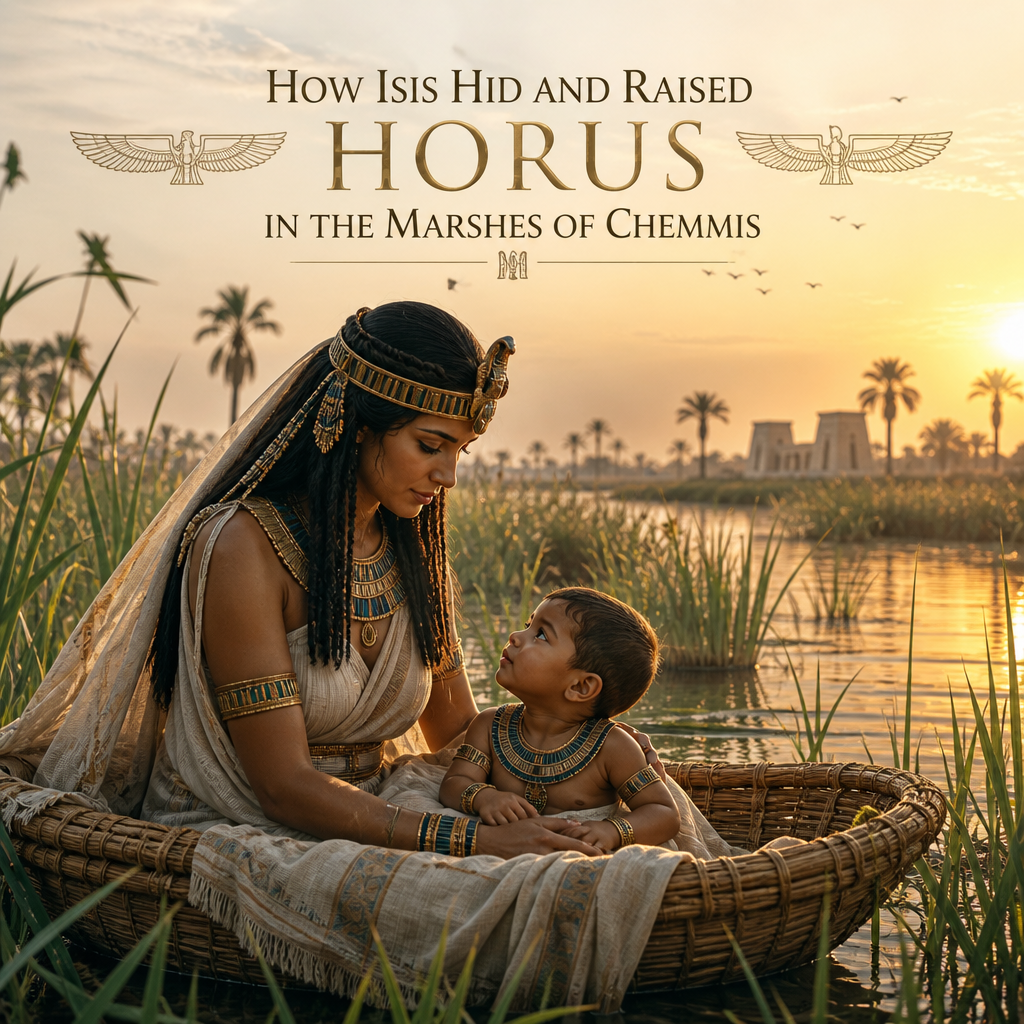
The story of Isis hiding and raising Horus in the marshes of Chemmis is one of the most powerful episodes in ancient Egyptian mythology. It is a tale of grief, protection, magic, and royal destiny. After the murder of Osiris by his jealous brother Seth, Isis became both a mourning wife and a determined mother. Her mission was to protect her son Horus until he was strong enough to challenge Seth and reclaim his father’s throne.
In Egyptian belief, this hidden childhood was not just a family story. It explained the divine right of kingship, the triumph of order over chaos, and the protective power of motherhood.
The Death of Osiris and the Birth of Horus
To understand why Isis had to hide Horus, it helps to begin with Osiris. Osiris was a divine king associated with fertility, resurrection, and the afterlife. His brother Seth, linked with violence, disorder, and the desert, plotted against him. Seth murdered Osiris and seized power.
Isis searched for Osiris’s body and used her magical knowledge to revive him long enough to conceive a child. That child was Horus, the future avenger of his father and rightful heir to the throne of Egypt.
Because Horus represented a direct threat to Seth’s rule, Isis knew her son would be in danger from the moment he was born.
Why Isis Fled to the Marshes of Chemmis
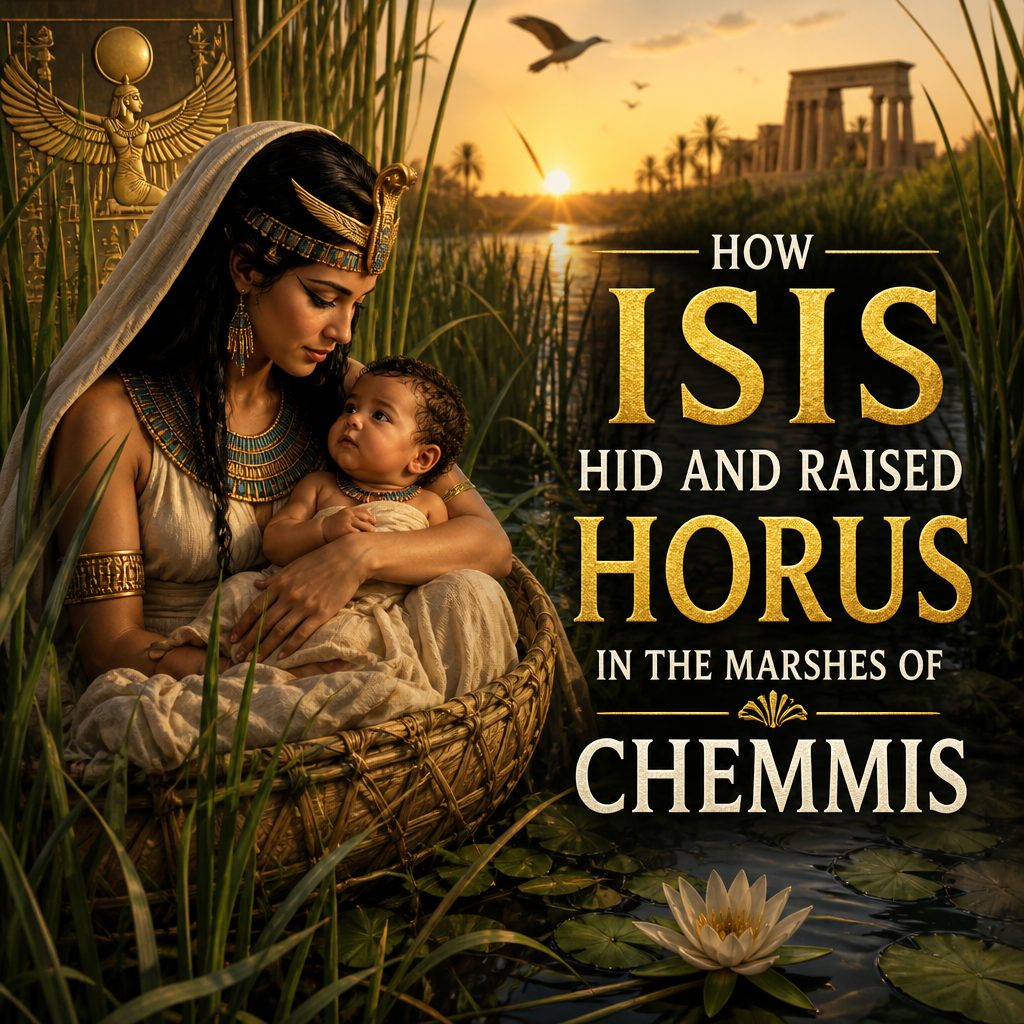
The marshes of Chemmis were believed to be a hidden, sacred place in the Nile Delta. They were filled with reeds, papyrus, pools, birds, insects, and winding waterways. This landscape offered natural protection. It was difficult to search, easy to hide within, and closely connected to fertility and rebirth.
Isis fled there to keep Horus away from Seth’s spies and violence. In myth, Chemmis became a secret refuge where the divine child could grow in safety.
The marshes also had symbolic meaning. In Egyptian thought, marshlands were places where life emerged from water and mud. They reflected creation itself. By raising Horus there, Isis was nurturing the future restorer of order in a place associated with renewal.
How Isis Hid Horus in the Reeds
Isis hid Horus among the dense papyrus thickets of Chemmis. The reeds shielded the child from view and created a natural hiding place. Some traditions describe Isis placing Horus in a floating papyrus island or concealed shelter, protected from both human enemies and supernatural threats.
During the day, she guarded him carefully. When she needed to leave to find food or seek help, she relied on secrecy and magic. She was not simply hiding as an ordinary mother might. Isis was the greatest magician among the gods, and her protective spells were central to Horus’s survival.
Her concealment of Horus involved:
- Physical hiding among papyrus reeds and marsh plants
- Magical protection through spells, amulets, and divine words
- Divine assistance from gods such as Thoth and Nephthys
- Isolation from Seth’s forces and the dangerous politics of the divine court
The marshes became both nursery and fortress.
The Dangers Horus Faced as a Child
Even in hiding, Horus was not safe from danger. Ancient Egyptian texts describe the child Horus suffering threats from scorpions, snakes, wild animals, illness, and Seth’s influence. These dangers reflected real fears in Egyptian life, especially for children.
One famous theme is Horus being stung or bitten by a poisonous creature. Isis, returning to find him lifeless or gravely ill, cried out in grief. Her cries reached the gods, and divine help arrived. Thoth, the god of wisdom and sacred speech, often appears in these stories to provide healing spells.
These myths were deeply important to ordinary Egyptians. The suffering and healing of Horus became a model for magical protection. Spells describing Isis saving Horus were used by Egyptians to protect their own children from poison, sickness, and harm.
Isis as the Protective Mother
The image of Isis nursing or holding the child Horus became one of the most beloved images in Egyptian religion. In the marshes of Chemmis, she was not shown as a distant goddess but as a devoted mother struggling to keep her child alive.
Her role combined tenderness and power. She fed Horus, comforted him, hid him, healed him, and defended him. Yet she also used profound magical knowledge and divine authority. Isis represented the idea that motherhood itself could be a sacred force.
This is one reason her worship lasted for thousands of years and spread beyond Egypt. People saw in Isis a goddess who understood suffering and could protect the vulnerable.
The Role of Chemmis in Horus’s Destiny
Chemmis was not just a hiding place. It was the setting where Horus survived long enough to fulfill his destiny. By growing up in secret, Horus avoided Seth’s attempts to destroy him. When he reached maturity, he emerged to claim his inheritance.
The conflict between Horus and Seth became a central myth of Egyptian kingship. Horus stood for rightful rule, order, and continuity. Seth represented disruption and violence. Their struggle was not only personal; it was cosmic.
Because Isis preserved Horus in the marshes, the line of legitimate kingship could continue. Every living pharaoh was later associated with Horus, while the dead king was associated with Osiris. In this way, the hidden child of Chemmis became the divine model for Egyptian monarchy.
Magic, Secrecy, and Survival
The question of how did Isis hide and raise Horus in the marshes of Chemmis has more than one answer. She hid him through cleverness, secrecy, and the natural cover of the Delta marshes. She raised him through nursing, care, and constant vigilance. Most importantly, she protected him through magic.
In Egyptian mythology, words had power. A spoken spell could heal poison, command gods, or repel enemies. Isis knew the secret names and sacred formulas that allowed her to act with extraordinary authority. Her magic turned the fragile refuge of Chemmis into a protected divine space.
The Meaning of the Myth
The story of Isis and Horus in Chemmis endured because it spoke to many levels of Egyptian life. It was a myth about a goddess and her son, but it was also about every mother and child, every rightful ruler, and every hope that order could survive chaos.
Isis hid Horus in the marshes because he was the future. She raised him there because the world depended on his survival. Among reeds, water, and hidden paths, Horus grew from a vulnerable child into the god who would challenge Seth and restore balance.
The marshes of Chemmis therefore became more than a secret refuge. They became a symbol of protection, rebirth, and the quiet strength that preserves life until it is ready to rise.

Orin Vale has spent the better part of two decades tracing the threads that connect the world’s oldest stories — from the halls of Asgard to the banks of the Nile, from Olympus to the jungles of the Maya. What began as a childhood fascination with flood myths and trickster gods grew into years of independent study across comparative mythology and ancient religion, always chasing the same question: what did these stories mean to the people who first told them? Orin writes for readers who want more than trivia — the ones looking for the beliefs, fears, and truths that myths were built to carry.