Who Is Gaia in Greek Mythology?
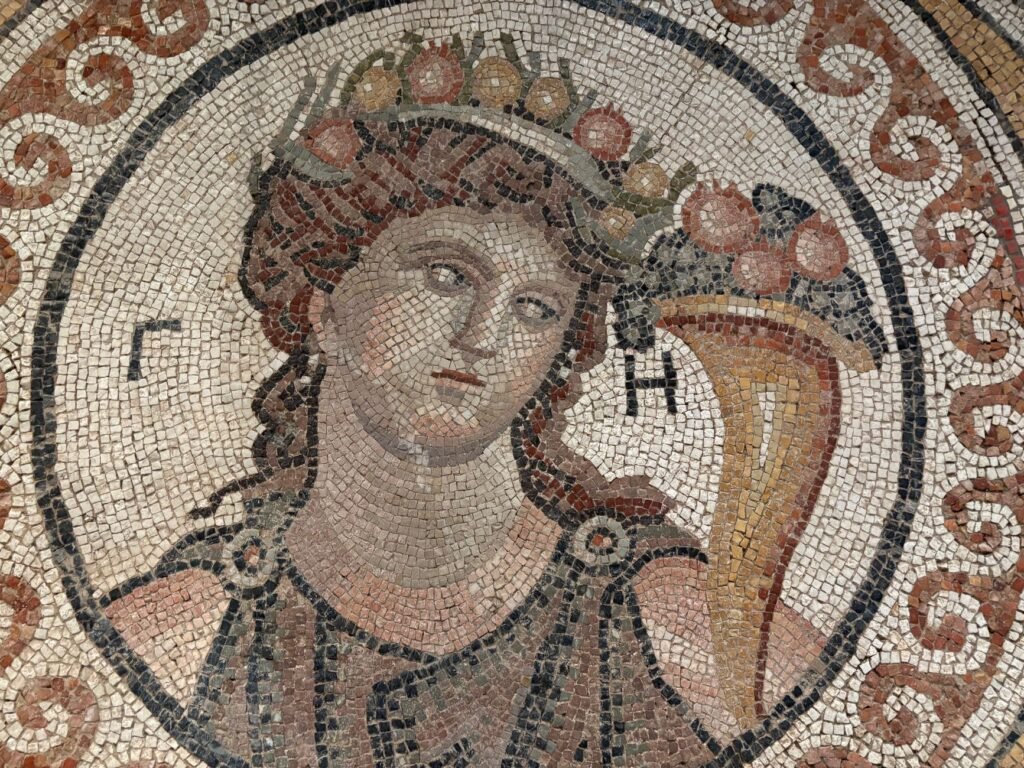
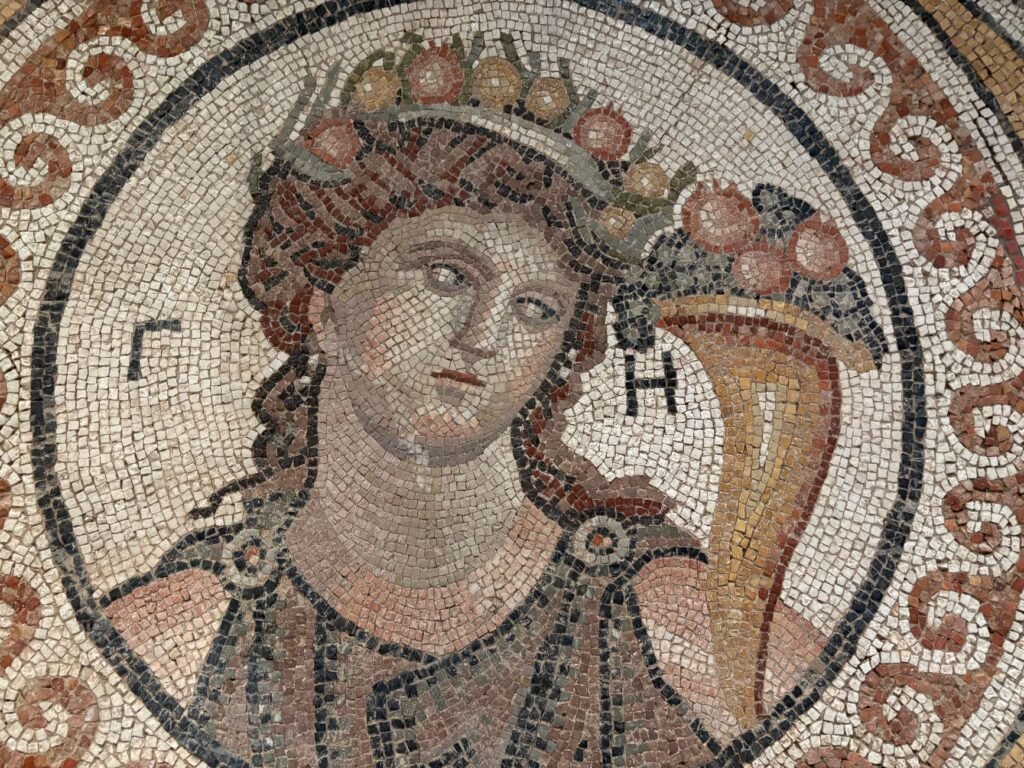
In Greek mythology, Gaia is the primordial goddess of the Earth. She is one of the first beings to emerge at the beginning of creation and is often described as the mother of all life. Before the Olympian gods ruled from Mount Olympus, before Zeus wielded thunderbolts, and before humans walked the world, Gaia existed as the living Earth itself.
Her name is sometimes spelled Gaea, and in ancient Greek, it means “Earth” or “land.” Gaia is not simply a goddess who represents the planet; she is the Earth. Mountains, valleys, soil, forests, and the ground beneath all living things are part of her divine presence.
Gaia’s Place in the Beginning of Creation
According to Hesiod’s Theogony, one of the most important ancient sources for Greek mythology, the universe began with Chaos. Chaos was not evil or disorder in the modern sense, but a vast, empty gap or void.
From Chaos came Gaia, the Earth. She appeared as a stable foundation for everything that would follow. Alongside her came other primordial forces, including Tartarus, the deep abyss beneath the Earth, and Eros, the power of love and creation.
Gaia’s arrival marks the beginning of structure in the cosmos. She provided a place where gods, monsters, and eventually mortals could exist. In this way, Gaia is one of the most essential figures in Greek myth because nearly every divine family line begins with her.
Gaia as the Mother of the Gods
Gaia is best known as a great mother figure. Without needing a partner, she gave birth to several powerful beings, including:
- Uranus, the sky
- Ourea, the mountains
- Pontus, the sea
Uranus became both her son and her consort. Together, Gaia and Uranus produced many of the earliest divine beings, including the Titans, the Cyclopes, and the Hecatoncheires.
The Titans included famous figures such as Cronus, Rhea, Oceanus, Hyperion, and Themis. These beings would later become the parents and grandparents of many Olympian gods. For example, Cronus and Rhea became the parents of Zeus, Hera, Poseidon, Hades, Demeter, and Hestia.
Because of this, Gaia is often called the ancestral mother of the gods.
Gaia and Uranus: A Violent Family Conflict
Although Gaia was a nurturing mother, her myths are also filled with conflict. Uranus, the sky god, became cruel and fearful of his powerful children. According to myth, he imprisoned some of them deep within Gaia, causing her great pain.
Gaia could no longer bear this suffering. She created a sickle from flint and asked her Titan children to help overthrow Uranus. Most were afraid, but Cronus, the youngest Titan, agreed.
When Uranus came to Gaia, Cronus attacked him with the sickle and overthrew him. This act separated the sky from the Earth and allowed the imprisoned children to be released. It also began a repeating pattern in Greek mythology: sons overthrowing fathers in struggles for divine power.
Gaia and the Rise of Zeus
After Cronus defeated Uranus, he became ruler of the cosmos. However, he soon repeated his father’s mistakes. Fearing that one of his own children would overthrow him, Cronus swallowed each child born to his wife, Rhea.
Rhea eventually tricked Cronus by hiding their youngest son, Zeus, and giving Cronus a stone wrapped in cloth instead. When Zeus grew up, he forced Cronus to release his swallowed siblings and led a rebellion against the Titans.
Gaia appears in some versions of the myth as a prophetic figure who knew that Cronus would fall to his child, just as Uranus had fallen to Cronus. Her connection to prophecy is important, because Gaia was believed to possess ancient wisdom rooted in the Earth itself.
Gaia’s Children and Descendants
Gaia’s family tree is vast and sometimes confusing because Greek myths vary by source. Still, many major beings are connected to her.
Important Children of Gaia
Some of Gaia’s most famous children include:
- Uranus: the sky god
- Pontus: the sea
- The Titans: the older generation of gods
- The Cyclopes: one-eyed giants associated with craft and thunderbolts
- The Hecatoncheires: hundred-handed giants
- The Giants: powerful beings who fought the Olympian gods
- Typhon: a monstrous storm giant, in some traditions
Through these children and descendants, Gaia is linked to both creation and chaos. She gives life to gods, natural forces, and terrifying monsters alike.
Gaia as a Goddess of Prophecy
Gaia was not only a mother goddess but also a source of deep knowledge. In some traditions, the oracle at Delphi originally belonged to Gaia before it became associated with Apollo.
This connection makes sense because Gaia was ancient even among gods. As the Earth, she witnessed everything from the beginning. Her wisdom was not quick or fleeting; it was old, steady, and rooted in the foundations of the world.
People in ancient Greece respected the Earth as a source of signs, dreams, and sacred knowledge. Gaia’s prophetic role reflects this belief.
Gaia’s Relationship with the Olympian Gods
Gaia’s relationship with the Olympians, especially Zeus, was complicated. At times, she helped the divine order move forward. At other times, she opposed Zeus and the Olympian gods.
One famous example is the Gigantomachy, the battle between the Giants and the Olympians. In some myths, Gaia gave birth to the Giants because she was angry over the defeat and imprisonment of the Titans. The Giants challenged Zeus and the Olympians but were eventually defeated.
Gaia also appears in myths involving Typhon, one of the most fearsome monsters in Greek mythology. Typhon battled Zeus for control of the cosmos, and in some versions, Gaia was connected to his birth. These stories show Gaia as a power older than Olympus, not always willing to accept Zeus’s rule without resistance.
What Does Gaia Symbolize?
Gaia symbolizes the Earth as both nurturing and powerful. She is the ground that supports life, but she is also capable of producing earthquakes, monsters, and rebellion. Her myths show that nature is not passive. It creates, protects, resists, and renews.
Gaia can be understood as a symbol of:
- Fertility and motherhood
- The natural world
- Ancient wisdom
- Creation and birth
- Resistance against oppression
- The deep power of the Earth
Unlike many later gods who rule specific areas, Gaia represents something universal. Every living being depends on her.
Gaia’s Legacy Today
Gaia remains one of the most recognizable figures from Greek mythology. Her name is often used in modern discussions of nature, ecology, and the planet as a living system. The “Gaia hypothesis,” for example, is a scientific idea suggesting that Earth’s living and nonliving systems interact in ways that help maintain conditions for life.
While this modern use is different from the ancient goddess, it reflects the same powerful idea: Earth is not just a background setting for life. It is active, interconnected, and essential.
Conclusion
So, who is Gaia in Greek mythology? Gaia is the primordial goddess of the Earth, the mother of gods, Titans, giants, and countless forces of nature. She appears at the beginning of creation and remains one of the deepest powers in Greek myth.
She is nurturing, wise, and life-giving, but also fierce when her children suffer or when cosmic balance is disturbed. As the living Earth, Gaia stands at the root of Greek mythology’s divine family tree and continues to symbolize the enduring power of nature itself.

Orin Vale has spent the better part of two decades tracing the threads that connect the world’s oldest stories — from the halls of Asgard to the banks of the Nile, from Olympus to the jungles of the Maya. What began as a childhood fascination with flood myths and trickster gods grew into years of independent study across comparative mythology and ancient religion, always chasing the same question: what did these stories mean to the people who first told them? Orin writes for readers who want more than trivia — the ones looking for the beliefs, fears, and truths that myths were built to carry.