Badb
Introduction
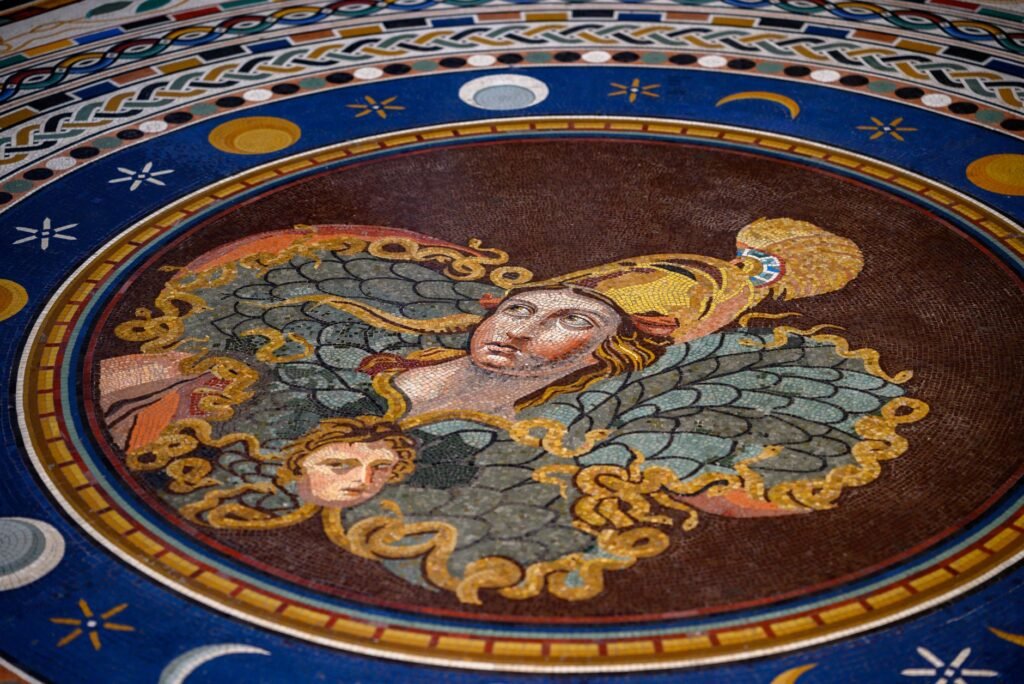
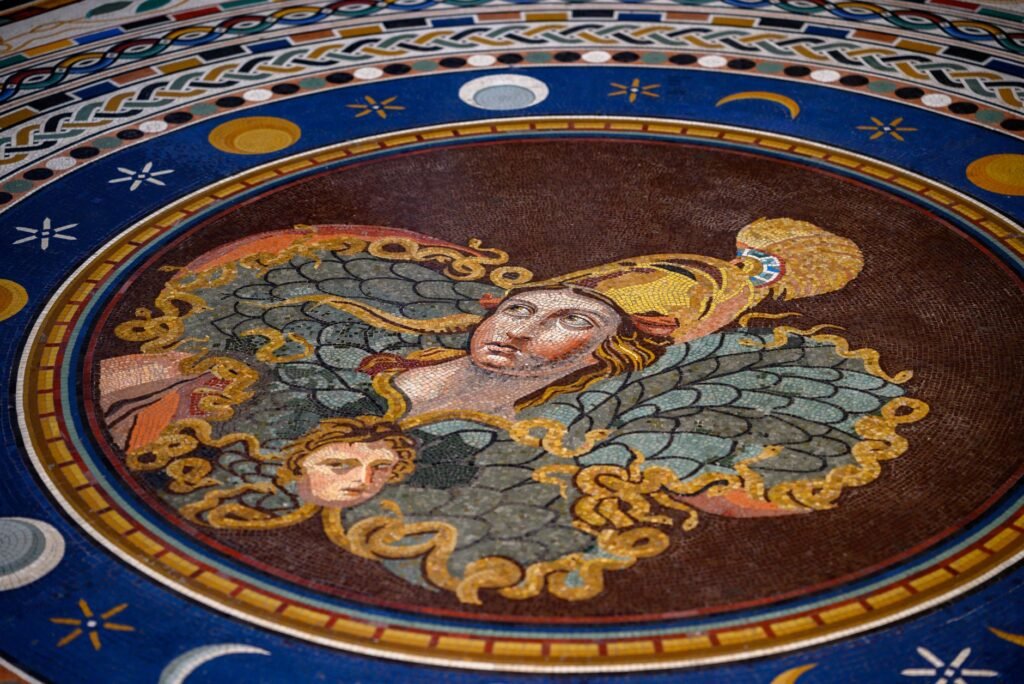
Badb is a prominent figure in Irish mythology, best known as a goddess or supernatural being associated with war, battle frenzy, death, prophecy, and sovereignty. She is one of the most elusive and powerful figures in the early medieval Irish tradition, appearing both as an individual deity and as one member of a larger triad of war goddesses commonly called the Morrígna. In mythological and literary texts, Badb often appears in the form of a crow or raven, hovering over battlefields and foretelling slaughter.
Her importance lies not only in her role as a divine force of war, but also in what she reveals about early Irish ideas of kingship, fate, and the supernatural. Badb is at once a bringer of terror and a source of prophetic knowledge. She belongs to a mythological world in which warfare, sovereignty, and the otherworld are closely intertwined.
Origin and Meaning
The name Badb is generally understood in Old Irish as meaning “crow” or “battle-crow.” This connection to a crow-like bird is central to her symbolism and literary presentation. In Irish tradition, birds of prey and carrion birds are often associated with death on the battlefield, making the name especially appropriate for a war goddess.
The etymology is usually linked to the idea of a crow or raven as a battlefield omen. While the precise linguistic history is complex and discussed by scholars in relation to Celtic language and mythology, the association with carrion birds is well established in the sources. Badb’s name may also be related to older Indo-European patterns in which war and bird imagery overlap, though specific reconstructions are necessarily cautious.
In medieval Irish texts, Badb is both a proper name and, at times, a generic term for a war-frenzy or battle-hag figure. This dual usage suggests that the figure may have been both a specific goddess and a broader mythic type.
Historical Context
Badb belongs to the corpus of early Irish mythological literature preserved in medieval manuscripts, though the traditions themselves are much older. These texts were written down by Christian scribes, but they preserve pre-Christian mythic material, often in transformed or euhemerized forms.
Her main context is the mythological cycle of Irish literature, especially stories about supernatural beings, divine tribes, and the ancient history of Ireland. Badb is associated with the Tuatha Dé Danann, the supernatural people who populate Irish myth. She appears in narratives where war, kingship, and otherworldly power intersect.
Important historical and cultural features of her tradition include:
- The close link between battle and prophecy
- The role of supernatural women in determining the fate of kings and warriors
- The symbolism of birds as omens of death
- The idea that sovereignty and violence are intertwined in mythic Ireland
Because the surviving evidence comes from medieval manuscripts rather than from direct pagan cult records, any reconstruction of Badb’s worship in pre-Christian Ireland must remain cautious. What can be said with confidence is that she was a powerful mythic figure in Irish literary tradition and likely reflects older religious concepts.
Main Characteristics
Badb is most commonly characterized as:
- A war goddess or battle spirit
- A shape-shifter, often appearing as a crow or raven
- A prophetess, announcing the outcome of battle
- A figure associated with terror, frenzy, and doom
- A member, in many traditions, of a divine trio with Macha and the Morrígan
In some texts, Badb is not merely a bird but a divine woman who cries over battlefields, incites fear, and delivers prophecies. Her cry can demoralize enemies and signal impending death. She is not a nurturing or protective deity in the ordinary sense; rather, she embodies the violent and inevitable dimensions of war.
Badb’s presence is often atmospheric and symbolic. She may appear on the battlefield as a washer at the ford, an omen-bird, or a frightening female figure. Her role is less about direct combat and more about shaping the psychological and supernatural environment of war.
Family and Genealogy
The genealogy of Badb varies by source and is not entirely consistent. Irish mythological texts often present deities and supernatural beings in different familial arrangements depending on the narrative.
Common associations
Badb is often linked to:
- The Morrígna, a group of war goddesses
- The Tuatha Dé Danann, the supernatural race in Irish myth
- In some traditions, she is identified with or treated as a manifestation of the Morrígan
Variations in tradition
Some sources distinguish Badb as one member of a trio that also includes:
- Macha
- The Morrígan
- Sometimes Nemain or other related figures are included in broader war-goddess groupings
Other texts blur these distinctions, and the names may overlap in function or identity. Scholars have long noted that Irish mythological figures do not always map neatly onto a single “family tree” in the way modern readers might expect.
No universally agreed list of parents, spouse, or children for Badb exists in the surviving sources. Where genealogies do appear, they are often secondary to the narrative or are shaped by later medieval literary conventions.
Symbols
Badb is associated with a set of powerful symbols tied to death, prophecy, and battle.
| Symbol | Meaning |
|---|---|
| Crow / raven | Battle, carrion, omen, death |
| Battlefield | Her principal domain and setting |
| Blood | Violence, slaughter, fate |
| Cry or shriek | Prophecy, terror, supernatural warning |
| Washer-at-the-ford imagery | Death foretelling and fate |
The crow is her most important symbol. In Celtic and wider European traditions, corvid birds are frequently linked to the dead and to battlefields. Badb’s bird form makes her a visual emblem of war’s aftermath and inevitability.
The battle cry or terrifying shriek is also symbolic. It represents the psychological collapse of the enemy and the revelation of fate. Badb does not simply witness battle; she announces and intensifies it.
Sacred Animals
Badb is especially associated with birds, above all the crow and raven. These birds are central to her identity and symbolic function.
Crow and raven
In Irish tradition, the crow is a battlefield bird, drawn to the dead. Its dark plumage and scavenging behavior made it a powerful symbol of mortality. Badb’s bird form emphasizes:
- Death and the proximity of corpses
- Omens and foreknowledge
- The unsettling boundary between human and animal
- The idea that war is accompanied by supernatural observation
Other animal associations
Specific sacred animals beyond corvids are not consistently attached to Badb in the sources. Because she belongs to a mythological system rich in animal symbolism, later interpretation sometimes connects her more broadly to ravens, wolves, and other creatures of death and battle. However, the most secure association is with the crow or raven.
Sacred Plants
There are no widely agreed sacred plants uniquely associated with Badb in the surviving medieval sources. Unlike deities whose cults can be tied to specific ritual plants, Badb is primarily defined through bird imagery, battle, and prophecy.
That said, Irish myth often places supernatural figures in landscapes filled with symbolic vegetation, especially in scenes of liminality such as riverbanks, fords, and battlefields. Later folkloric interpretations sometimes link her to dark, thorny, or blood-colored plants, but these associations are not securely attested as ancient tradition.
A careful summary is therefore:
- No specific sacred plant is securely established
- Any plant symbolism is secondary or interpretive rather than directly attested
- Her imagery is dominated by bird and battlefield motifs rather than floral symbolism
Sacred Places
Badb is not associated with a single universally recognized temple or shrine. Irish mythology generally preserves fewer explicit temple traditions than Greco-Roman religion. Nevertheless, several places and landscape types are repeatedly connected with her functions.
Battlefields
Her primary sacred space is the battlefield itself. This is where she appears as a crow, cries over the dead, and foretells the outcome of conflict.
Fords and river crossings
The motif of the ford is significant in Irish literature, especially in stories of prophetic women and death omens. Fords are liminal spaces, places of transition between territories and states of being. Badb’s presence in such places emphasizes her role as a boundary-crossing figure.
Otherworldly landscapes
As a supernatural being, Badb is also associated with mythic spaces connected to the Tuatha Dé Danann and the Irish otherworld. These are not always named with precision in the sources, but they function as zones where divine forces intervene in human affairs.
Powers and Attributes
Badb’s powers center on war, prophecy, terror, and fate.
Main domains
- War and battle
- Prophecy and divination
- Death and slaughter
- Battle frenzy and psychological terror
- Sovereign power and the fate of rulers
She is not simply a goddess of combat in the narrow sense. Rather, she represents the total condition of war: the fear before battle, the violence itself, and the death that follows.
Key attributes
| Attribute | Description |
|---|---|
| Prophetic speech | Announces outcomes and doom |
| Bird transformation | Appears as crow or raven |
| Terror-inducing presence | Weakens enemies psychologically |
| Battlefield sovereignty | Linked to kingship and legitimacy |
| Liminality | Moves between human and otherworldly realms |
Badb’s voice is especially important. In many traditions, she cries out over warriors, and her cry functions as an omen. This makes her a figure of audible fate: one hears her before one sees her.
Main Myths
Badb appears in several important episodes of Irish mythological literature, though the details vary by text.
The First Battle of Mag Tuired
One of the most important mythic contexts for Badb is the First Battle of Mag Tuired, in which the Tuatha Dé Danann fight the Fomorians. In this tradition, Badb is involved with the supernatural dimensions of battle and the fate of combatants. She contributes to the mythic atmosphere of conflict, where divine beings influence the outcome.
The Second Battle of Mag Tuired
Badb also appears in traditions connected to the Second Battle of Mag Tuired, one of the central mythic battles in Irish literature. Here, the war goddesses and supernatural forces play a major role in supporting or undermining warriors and kings. Badb’s relation to the battle underscores her identity as a force that accompanies and interprets warfare.
The prophecy after battle
One of Badb’s most famous functions is to cry or prophesy after battle, lamenting the dead and announcing future violence. In some texts, her lament is not simply mourning; it is a form of supernatural knowledge. She foretells the suffering of those who survive and the instability that follows war.
The washer at the ford motif
Badb is sometimes associated with the broader Irish motif of the washer at the ford, a female figure who washes bloodstained clothes at a river crossing as an omen of death. While this motif is not unique to Badb and is more commonly linked with figures such as the Morrígan, it belongs to the same mythic complex of female death prophecy.
Relationship with Other Mythological Figures
Badb’s relationships are best understood as part of a network of overlapping mythic identities rather than as fixed family bonds.
The Morrígan
Badb is closely associated with the Morrígan, and in some traditions the two are difficult to distinguish. At times, Badb appears as one of the Morrígna, a plural form referring to a group of war goddesses. In other contexts, the Morrígan may function as a singular figure who includes or overlaps with Badb.
Macha
Macha is frequently paired with Badb in the war-goddess triad. Both are associated with sovereignty, battle, and supernatural female power. Their exact relationship changes across texts.
Nemain
Some traditions also connect Badb with Nemain, another frightening female figure associated with frenzy and battle chaos. The boundaries between these figures can be blurred in medieval literature.
Heroes and kings
Badb interacts with kings and warriors as an omen-bringer and judge. Her role is often not alliance or friendship in a human sense, but rather the testing of legitimacy and martial ability. She is a figure whose approval or anger signals whether a ruler is in harmony with the supernatural order.
Worship and Cult
Direct evidence for a formal cult of Badb in pre-Christian Ireland is limited. The surviving sources do not provide a detailed temple structure, priesthood, or ritual calendar comparable to those of better-documented ancient religions.
What can be said cautiously
- She likely belonged to a broader pre-Christian mythic and religious worldview
- Her association with sovereignty suggests possible links to kingship rituals
- Her battle imagery may have corresponded to ritual or poetic traditions around war and omen-reading
- Medieval texts preserve the memory of her power more clearly than evidence of organized worship
Offerings and rites
No specific offerings to Badb are securely attested in ancient sources. However, the wider Irish tradition includes ritualized storytelling, poetry, and invocations of supernatural forces. It is possible that such cultural practices preserved older forms of engagement with beings like Badb, but this remains speculative.
Festivals
No verified festival dedicated specifically to Badb is known from the sources. Any modern claims of a fixed ancient festival should be treated with caution unless clearly supported by evidence.
Ancient Sources
Badb appears in a number of medieval Irish sources, which are the primary witnesses to her mythology.
Important source types
- Mythological and pseudo-historical Irish prose texts
- Battle narratives
- Sovereignty and prophecy tales
- Poetic material preserved in manuscript tradition
Key texts and traditions
Some of the most relevant sources include:
- The Second Battle of Mag Tuired
- The First Battle of Mag Tuired
- Various tales in the Irish mythological cycle
- Prophetic and poetic passages in medieval Irish literature
Unlike Greek or Roman religion, there is no single classical author such as Homer or Hesiod for Badb. Her tradition is dispersed across several Irish manuscripts compiled by Christian scribes, often centuries after the oral traditions they preserve.
Scholars approach these sources critically, distinguishing between early mythic material and later literary shaping.
Roman Equivalent
Badb does not have a direct Roman equivalent. No Roman goddess matches her precisely in role, symbolism, and cultural context.
That said, some comparisons are sometimes made for interpretive purposes:
- Bellona, a Roman war goddess, is the closest functional parallel
- The Furies or Erinyes may resemble Badb in their terrifying, fate-laden presence
- Victory or war-omens in Roman religion share partial thematic overlap
These parallels are only approximate. Badb belongs to a specifically Irish mythological framework in which war, prophecy, and sovereignty are intertwined in ways that have no exact Roman counterpart.
Influence on Modern Culture
Badb has gained renewed attention in modern studies of Celtic mythology, neopaganism, fantasy literature, and academic work on Irish myth.
Modern literary and cultural presence
Badb appears in:
- Retellings of Irish myths
- Fantasy novels and role-playing games inspired by Celtic tradition
- Academic discussions of war goddesses and sovereignty figures
- Modern pagan and reconstructive spiritual contexts
Broader influence
Her image as a crow goddess or battlefield prophet has influenced contemporary depictions of:
- Dark female deities
- Bird-associated divine beings
- Mythic war spirits
- Archetypal “battle maiden” figures
In modern popular culture, Badb is often conflated with the Morrígan or presented as part of a trio of war goddesses. While such uses can popularize her, they may simplify the distinctions found in medieval sources.
Curiosities
- Badb’s bird form makes her one of the clearest examples of a battlefield omen deity in Irish mythology.
- Her name is related to the idea of a crow, which fits her role as a scavenger-bird associated with death.
- In some texts, the distinction between Badb and the Morrígan becomes so blurred that modern readers may find them difficult to separate.
- She is one of several Irish mythic figures whose power is expressed through voice—especially cries, warnings, and prophecies.
- Badb belongs to a mythological pattern in which female supernatural beings control the meaning of battle, not merely its physical outcome.
- The lack of a clearly attested cult does not diminish her importance; it reflects the fragmentary survival of early Irish religious evidence.
- Modern depictions often emphasize her as a “dark goddess,” but the medieval sources portray her primarily as a prophetic war-being rather than a purely symbolic figure.
Frequently Asked Questions
1. Who is Badb in Irish mythology?
Badb is an Irish mythological figure associated with war, prophecy, death, and battle frenzy. She is often portrayed as a crow or raven and is linked to the supernatural forces that influence battles.
2. Is Badb the same as the Morrígan?
Not always. In some traditions, Badb is a separate figure; in others, she overlaps with or is included within the Morrígan complex. The sources are not fully consistent.
3. What does the name Badb mean?
The name is commonly understood to mean “crow” or “battle-crow,” reflecting her strong association with birds that appear on battlefields.
4. What powers does Badb have?
Badb is associated with prophecy, battle terror, death omens, and the shaping of battlefield fate. She may appear in bird form and cry out to announce doom.
5. Does Badb have a Roman equivalent?
No exact Roman equivalent exists. Bellona is sometimes mentioned as a rough functional parallel, but the comparison is only partial.
6. Was Badb worshipped in ancient Ireland?
There is no clear evidence of a formal, organized cult dedicated specifically to Badb. However, she was clearly an important mythological and religious figure in Irish tradition.
7. What animals are connected with Badb?
The crow and raven are the principal animals associated with Badb. These birds symbolize death, battlefields, and prophecy.
8. Where does Badb appear in the sources?
She appears in medieval Irish texts, especially those connected with the battles of Mag Tuired and other mythological narratives involving the Tuatha Dé Danann.
Conclusion
Badb is one of the most striking figures in Irish mythology: a war goddess, prophetic crow, and embodiment of the terrors and inevitability of battle. She represents a worldview in which war is never merely human conflict but a supernatural event shaped by divine powers, omens, and fate.
Although the surviving sources are fragmentary and sometimes inconsistent, they reveal Badb as a major presence in the Irish mythological imagination. Her association with the crow, her battlefield cries, and her links to kingship and prophecy have ensured her lasting significance in both scholarship and modern cultural interpretation. Badb remains an essential figure for understanding the mythic language of war, death, and sovereignty in early Ireland.

Orin Vale has spent the better part of two decades tracing the threads that connect the world’s oldest stories — from the halls of Asgard to the banks of the Nile, from Olympus to the jungles of the Maya. What began as a childhood fascination with flood myths and trickster gods grew into years of independent study across comparative mythology and ancient religion, always chasing the same question: what did these stories mean to the people who first told them? Orin writes for readers who want more than trivia — the ones looking for the beliefs, fears, and truths that myths were built to carry.