Arianrhod
Introduction
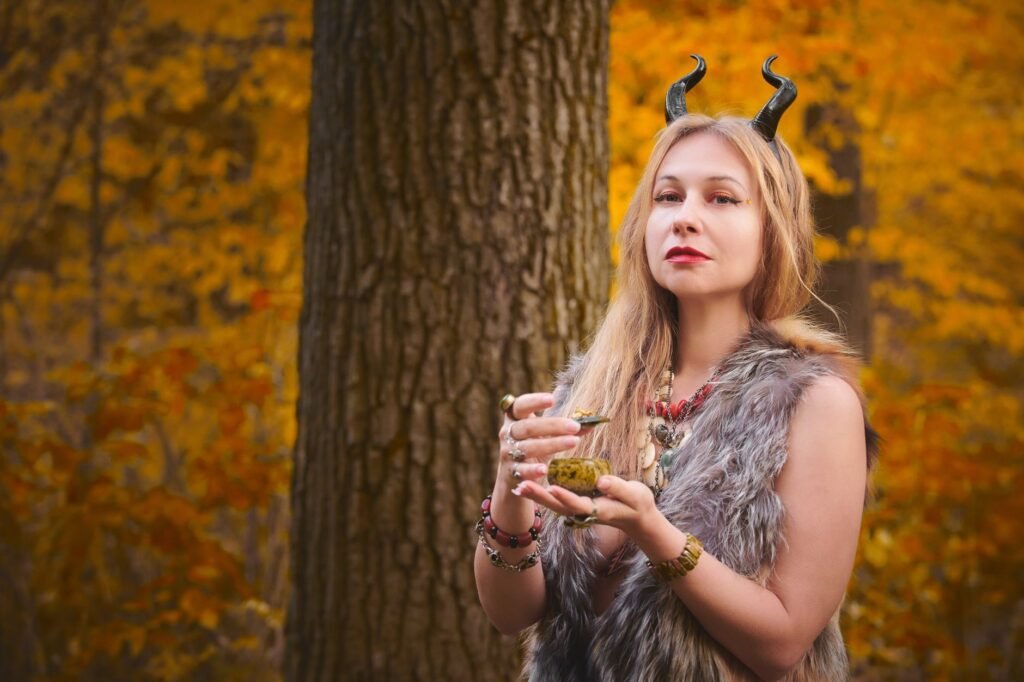
Arianrhod is one of the best-known figures in Welsh mythology and medieval Welsh literature. She appears in the Mabinogion, especially in the tale commonly called Math fab Mathonwy, where she is presented as a powerful, enigmatic woman associated with sovereignty, fate, and the otherworld. Over time, Arianrhod has also become a prominent modern symbol in Welsh cultural identity, Pagan spirituality, and literary interpretation.
Although often described in popular retellings as a goddess, the surviving medieval texts do not uniformly frame her in that way. Her status is complex: she may preserve traces of an older divine figure, but the extant sources present her through the literary and mythic conventions of medieval Wales. For this reason, Arianrhod is important not only as a mythological character but also as a case study in how older traditions were reshaped in medieval literature.
Origin and Meaning
The name Arianrhod is usually explained in Welsh as meaning “silver wheel” or “silver circle”. The name is formed from:
- arian = silver
- rhod = wheel, circle, or turning object
This interpretation has made Arianrhod closely associated with celestial imagery, especially the moon, stars, and cyclical movement. Some modern writers have linked her name to the Milky Way or to a cosmic wheel, but such associations are interpretive rather than explicitly stated in the medieval sources.
The historical origin of the figure is not fully recoverable. She appears in medieval Welsh prose, and scholars generally treat her as part of the mythological material circulating in early Welsh tradition. Whether she was once a pre-Christian deity, a noblewoman from heroic legend, or a literary synthesis of both remains debated.
Historical Context
Arianrhod belongs to the world of medieval Welsh myth and literature, especially the material preserved in the Middle Welsh prose tales collectively known as the Mabinogion. These tales were written down in manuscripts from the 13th and 14th centuries, though they preserve older oral traditions.
The cultural setting of these narratives includes:
- a society influenced by native Welsh heroic tradition
- the Christian scribal culture of medieval Wales
- inherited mythological themes that may reach back to pre-Christian Celtic beliefs
- a literary environment in which kingship, honor, taboo, and magical power are central concerns
Arianrhod’s role reflects this mixed context. She is not worshipped in the surviving texts as a standard Christian-era saint or a clearly defined cult goddess. Instead, she functions as a mythic and literary figure embedded in a symbolic narrative about legitimacy, lineage, and the forces governing birth and destiny.
Main Characteristics
Arianrhod is usually characterized by several recurring features:
- Powerful and aloof: She is not a passive figure. In the Mabinogion, she reacts strongly to humiliation and loss of control.
- Associated with sovereignty and fate: Her story concerns inheritance, naming, and the destinies of her sons.
- Connected to the sky or celestial imagery: Her name suggests silver, circular motion, or a heavenly wheel.
- Mother figure with difficult relationships: Her motherhood is central to her myth, but it is marked by conflict, denial, and magical constraint.
- Ambiguous status: She is often treated as a supernatural woman, but the surviving texts do not offer a single definitive theological role.
In modern interpretations, Arianrhod is frequently presented as a goddess of the moon, stars, reincarnation, or feminine sovereignty. These ideas are influential, though they go beyond what the medieval manuscripts explicitly state.
Family and Genealogy
Arianrhod’s family relationships are one of the most famous aspects of her myth.
In the Mabinogion
In Math fab Mathonwy, Arianrhod is the daughter of Dôn. She has two sons:
- Dylan ail Don
- Lleu Llaw Gyffes
Her brother is Gwydion, a major magician and trickster figure in Welsh tradition. Gwydion plays a decisive role in the events surrounding Arianrhod and her sons.
Relationships and disputed points
The surviving texts do not provide a consistent, fully developed family tree equivalent to later mythological systems. Important points include:
- Dôn is generally presented as Arianrhod’s mother in the Fourth Branch of the Mabinogion.
- Gwydion is her brother, though in some later genealogical traditions the relationships are interpreted differently or expanded.
- Dylan ail Don is one of her sons and is associated with the sea.
- Lleu Llaw Gyffes is the better-known son, a figure linked to skill, kingship, and later transformation into the owl in the tale.
Arianrhod is not clearly identified in the medieval text as having a husband. Her sons are born under unusual magical circumstances, and the narrative emphasizes her refusal to acknowledge one of them.
Family overview
| Figure | Relationship to Arianrhod | Notes |
|---|---|---|
| Dôn | Mother | Named in the Mabinogion |
| Gwydion | Brother | Magician and major antagonist/helper in her story |
| Dylan ail Don | Son | Linked with the sea |
| Lleu Llaw Gyffes | Son | Central hero of her myth |
Symbols
Arianrhod is associated with a number of symbolic images, some explicit in later tradition and some inferred from her name and narrative role.
Common symbols linked to Arianrhod
- Silver: Connected to her name and to lunar or celestial symbolism
- Wheel or circle: Suggested by the meaning of rhod
- The sky or stars: A common modern association derived from her name and mythic stature
- The moon: Frequently linked in contemporary spirituality, though not directly established in the medieval tale
Narrative symbols
The Mabinogion also gives her story symbolic weight through recurring motifs:
- Thresholds and tests
- Naming as power
- Virginity, legitimacy, and social shame
- Birth and control of lineage
- Transformation and fate
These are not “symbols” in the narrow iconographic sense, but they are central to understanding Arianrhod’s mythological meaning.
Sacred Animals
No animal is universally or unequivocally identified as Arianrhod’s sacred animal in the medieval Welsh texts. However, modern traditions and interpretive systems often associate her with certain animals based on symbolism rather than direct evidence.
Frequently associated animals in later interpretation
- Owl: Sometimes linked to wisdom, night, and mystery. This association is often connected more broadly with Lleu’s transformation than with Arianrhod herself.
- Sea creatures: Because one of her sons, Dylan, is associated with the sea, some modern writers extend marine symbolism to her.
- Birds: In broader Celtic-inspired spirituality, birds can represent the soul, movement between worlds, or celestial connection.
Caution on interpretation
Because the medieval sources do not assign Arianrhod a clearly attested animal emblem, such associations should be treated as modern symbolic developments, not ancient certainties.
Sacred Plants
No plant is securely documented as sacred to Arianrhod in the surviving medieval sources. Any plant associations found in modern pagan or neo-pagan practice are interpretive rather than historical.
Later symbolic associations
Modern practitioners sometimes connect Arianrhod with plants that evoke:
- Moonlight or silver color
- Sea and shoreline
- Wisdom, mystery, or transformation
Examples sometimes mentioned in contemporary contexts include silver-leaved plants, herbs associated with the moon, or coastal flora. However, these choices vary widely and are not based on a single authoritative ancient tradition.
Sacred Places
Arianrhod is not associated with a historically attested temple or cult site in the way that some ancient deities are. Nevertheless, several places and landscapes are linked to her in modern or interpretive contexts.
In mythic geography
The Mabinogion does not provide a clearly defined sanctuary for her. Instead, her story unfolds in a legendary landscape of courts, magical spaces, and places ruled by supernatural law.
Later associations
Some modern traditions connect Arianrhod with:
- The sky
- The moon and stars
- Circular stone monuments
- Welsh hills and coastal landscapes
A modern Welsh-language and cultural association has linked her name to Caer Arianrhod, a legendary or literary place-name that appears in Welsh tradition. The exact meaning and historical grounding of such references can vary, and readers should distinguish between literary geography and archaeological evidence.
Powers and Attributes
Arianrhod’s powers are best understood through her actions in the Mabinogion and through later interpretive tradition.
In the medieval tale
Arianrhod displays the following attributes:
- Authority over lineage and recognition
- Magical resistance
- Power to impose taboos or geasa
- Control over naming and social status
- A capacity to shape the destiny of her children
Broader interpretive domains
In modern mythological and spiritual frameworks, Arianrhod is often described as governing:
- the moon
- the stars
- fate and destiny
- female sovereignty
- initiation and transformation
- karmic or cyclical time
These broader domains are influential in contemporary culture but should not be confused with direct statements from medieval Welsh prose.
Main Myths
Arianrhod’s principal myth comes from the Fourth Branch of the Mabinogion, Math fab Mathonwy.
The testing of virginity
In the tale, Arianrhod is associated with a virginity test involving Math, king of Gwynedd, whose feet must rest in the lap of a virgin when he is not at war. When Arianrhod is brought before him, she gives birth to a son, Dylan, immediately upon crossing or entering the scene in a dramatic and supernatural way. She is then ashamed and denies the child.
This episode establishes her as a figure of sudden, dangerous fertility and social disruption.
Lleu’s birth and the threefold curse
Later, Arianrhod is tricked into naming or acknowledging another son, Lleu, only after being deceived by Gwydion. She responds by laying down three taboos or curses on the child:
- He shall never have a name unless she gives it.
- He shall never bear arms unless she arms him.
- He shall never have a wife of any human race.
Gwydion repeatedly circumvents these prohibitions through magic and ingenuity. The tale turns Arianrhod’s curses into a narrative engine driving Lleu’s emergence as a hero.
Lleu’s wife and the final insult
Gwydion and Math create a wife for Lleu from flowers, named Blodeuwedd. She later betrays Lleu, and the cycle of transformation continues. Although Arianrhod is not central to this later part of the story, her earlier actions shape the whole narrative structure.
Significance of the myth
Arianrhod’s myth explores:
- the politics of recognition
- the power of maternal refusal
- the social consequences of shame
- the tension between magical authority and heroic destiny
The story is not simply about a mother rejecting a child; it is about the fragile relationship between public legitimacy and supernatural power.
Relationship with Other Mythological Figures
Arianrhod’s interactions with other figures are crucial to her mythic role.
Math fab Mathonwy
Math is the king within whose court the drama unfolds. His role is indirect but important, since Arianrhod’s presence and the conditions surrounding the virginity test lead into the central conflict.
Gwydion
Gwydion is Arianrhod’s brother and the main instigator of the tale’s action. He:
- deceives her into acknowledging her son
- helps raise Lleu
- repeatedly defeats her imposed taboos
Their relationship is marked by family ties, magical contest, and narrative conflict.
Lleu Llaw Gyffes
Lleu is Arianrhod’s son and the central beneficiary of the story. His myth depends on her resistance, and the tale presents their relationship as unresolved and emotionally severe.
Dylan ail Don
Dylan is another son of Arianrhod, but he is far less developed in the narrative. He is associated with the sea and appears as a more elemental figure. His myth is separate from the main conflict involving Lleu.
Dôn
Dôn is generally named as Arianrhod’s mother in the Mabinogion. As a maternal figure, Dôn links Arianrhod to a broader mythic family sometimes called the “children of Dôn.”
Worship and Cult
There is no secure evidence for a historical cult of Arianrhod comparable to the documented cults of classical Mediterranean deities. No temples, priesthoods, votive inscriptions, or unambiguous ritual calendars survive that can be confidently attributed to her in antiquity.
What can be said safely
- Arianrhod is attested in medieval literary sources, not in a clearly documented ancient temple cult.
- Later neo-pagan and revivalist traditions have treated her as a goddess and included her in devotional practice.
- Modern worship may involve rituals focused on the moon, destiny, transformation, or feminine power, but these are contemporary reconstructions.
Contemporary devotional themes
Modern practices associated with Arianrhod may include:
- moon rituals
- prayer or meditation on destiny
- rites of initiation
- storytelling and poetry
- honoring Celtic or Welsh heritage
These are modern spiritual applications rather than evidence of ancient standardized worship.
Ancient Sources
Arianrhod is primarily known from Welsh medieval literature, not from Greco-Roman authors.
Key primary sources
- The Mabinogion, especially the tale Math fab Mathonwy
- Middle Welsh manuscript traditions preserved in works such as the White Book of Rhydderch and the Red Book of Hergest
- Later Welsh genealogical and poetic material that may echo older traditions, though often indirectly
Important note on source criticism
The Mabinogion is not a single ancient book but a modern label for a group of medieval Welsh prose tales. Its stories preserve older mythic material, but they were written down by Christian scribes. This means that Arianrhod’s portrayal is filtered through medieval literary transmission.
Roman Equivalent
Arianrhod does not have a universally accepted Roman equivalent.
Possible but uncertain comparisons
Scholars and modern writers sometimes compare her with:
- Luna or Selene because of celestial associations
- Juno or Minerva in broad terms of sovereignty or feminine authority
- mythic mother figures associated with fate and legitimacy
However, these comparisons are approximate and should not be treated as direct equivalences. The Roman world did not preserve a one-to-one counterpart for Arianrhod as a distinct Welsh mythic figure.
Influence on Modern Culture
Arianrhod has enjoyed significant modern revival, especially in literature, spirituality, and popular culture.
Literature and scholarship
She appears frequently in:
- modern retellings of Welsh myth
- feminist reinterpretations of medieval narratives
- academic studies of Celtic mythology
- poetry and fantasy literature
Her story has attracted attention because it combines motherhood, power, shame, magic, and fate in a way that resonates with modern readers.
Pagan and neo-pagan traditions
Arianrhod is widely respected in some contemporary Pagan communities as:
- a moon goddess
- a deity of the stars
- a guardian of initiation
- a figure of feminine sovereignty
These identities are modern devotional interpretations, often informed by reconstructionist or eclectic spiritual practice.
Art, games, and fantasy media
The name Arianrhod appears in:
- fantasy novels
- role-playing games
- video games
- comic books
- themed artwork and digital media
In many of these contexts, the name is used for characters or places evoking mystery, celestial power, or ancient Welsh flavor.
Cultural significance
For many readers today, Arianrhod represents:
- Welsh mythic heritage
- women’s power and complexity
- the survival of premodern myth in modern imagination
- the interpretive richness of the Mabinogion
Curiosities
- Arianrhod’s name is often translated as “silver wheel”, making her one of the most visually evocative figures in Welsh mythology.
- She is one of the central female figures in the children of Dôn mythic family.
- Her story is a key example of how naming can function as a magical and social act in Celtic literature.
- She is not a simple villain. In the medieval text, her response to humiliation can be read as both punitive and tragic.
- Her myth has been especially important in modern feminist and neo-pagan readings.
- The texts about her are among the best-known surviving examples of Welsh myth in prose form.
- Some modern depictions overstate her status as an “ancient goddess”; historically, that claim is not directly proven by the surviving sources.
Frequently Asked Questions
1. Who is Arianrhod?
Arianrhod is a major figure in Welsh mythology, best known from the Mabinogion. She is associated with magic, destiny, and motherhood, and is often interpreted as a celestial or goddess-like figure.
2. Is Arianrhod a goddess?
The surviving medieval Welsh texts do not clearly label her as a goddess, but many modern scholars and spiritual traditions treat her as preserving qualities of an older divine figure. Her exact status remains debated.
3. What does the name Arianrhod mean?
The name is commonly understood as “silver wheel” or “silver circle” in Welsh.
4. Who are Arianrhod’s children?
Her sons are Dylan ail Don and Lleu Llaw Gyffes, according to the Mabinogion.
5. What is Arianrhod famous for in myth?
She is famous for the episode in which she denies motherhood, places curses on Lleu, and becomes entangled in a struggle over naming, legitimacy, and fate.
6. Is there evidence of temples or ancient worship of Arianrhod?
No secure archaeological or historical evidence identifies a temple cult for Arianrhod. Most evidence comes from medieval literature and later modern spiritual revival.
7. What is Arianrhod associated with in modern culture?
She is often associated with the moon, stars, feminine power, and Welsh cultural identity, especially in literature and neo-pagan practice.
8. Where does Arianrhod appear in the Mabinogion?
She appears most prominently in the Fourth Branch, Math fab Mathonwy.
Conclusion
Arianrhod is one of the most compelling figures in Welsh mythology because she resists simple classification. She appears in medieval literature as a powerful, difficult, and symbolic woman whose actions shape the destiny of her sons and the arc of a major mythic cycle. Her name suggests silver and celestial motion, while her story explores themes of sovereignty, taboo, recognition, and transformation.
Although the historical reality behind Arianrhod is uncertain, her cultural importance is clear. She remains central to the study of Welsh myth, medieval literature, and the modern reinterpretation of Celtic tradition. Whether viewed as a mythic mother, a literary figure, or a goddess in later devotional practice, Arianrhod continues to inspire scholarship, spirituality, and artistic imagination.

Orin Vale has spent the better part of two decades tracing the threads that connect the world’s oldest stories — from the halls of Asgard to the banks of the Nile, from Olympus to the jungles of the Maya. What began as a childhood fascination with flood myths and trickster gods grew into years of independent study across comparative mythology and ancient religion, always chasing the same question: what did these stories mean to the people who first told them? Orin writes for readers who want more than trivia — the ones looking for the beliefs, fears, and truths that myths were built to carry.