Spear of Lugh
Introduction
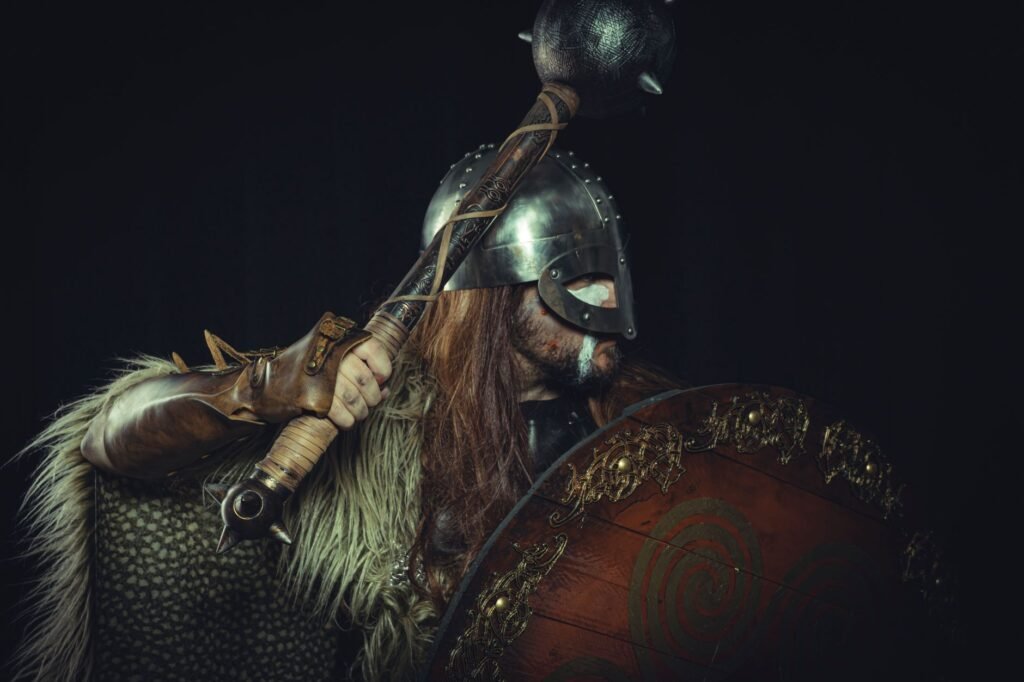
The Spear of Lugh is one of the great supernatural weapons of Irish mythology. Associated with Lugh Lámfada (“Lugh of the Long Arm”), a prominent god-hero of the Tuatha Dé Danann, the spear is renowned as an unstoppable weapon that brought victory in battle and symbolized mastery, sovereignty, and lethal skill. In later literary tradition, it is often counted among the Four Treasures of the Tuatha Dé Danann, a set of wondrous objects linked to divine authority and the mythic history of Ireland.
Although the spear appears in only a limited number of surviving texts, it has become one of the most memorable objects in Celtic myth. It stands at the intersection of religion, kingship, warfare, and heroic legend, and it continues to attract attention in modern retellings of Irish mythology.
Origin and Meaning
The spear is usually described simply as the spear of Lugh, but in some modern scholarly and popular discussions it is also identified with later Irish legendary weapons such as the Gáe Assail or the Spear of the King of the Fairies. These identifications are not always certain, and different traditions do not always use the same names.
The name Lugh is generally connected with a pan-Celtic divine figure whose name appears in several ancient forms across the Celtic world. The meaning of the name has been debated by scholars, and while various proposals exist, no single explanation is universally accepted. The epithet Lámfada means “long-armed” or “of the long arm,” a title usually interpreted as a sign of skill, reach, or martial prowess.
The spear itself has no single universally fixed native Irish name in the surviving early sources. In mythological literature, it is primarily defined by its connection to Lugh and by its extraordinary qualities rather than by a stable proper name.
Historical Context
The Spear of Lugh belongs to the mythological world of the Tuatha Dé Danann, the semi-divine people who, in Irish tradition, came to Ireland before the arrival of the Milesians. These stories were preserved in medieval manuscripts by learned Christian scribes who recorded older oral and literary materials. As a result, the myths reflect a mixture of pre-Christian belief, heroic storytelling, and later literary shaping.
In that context, divine weapons were not merely tools of war. They were signs of legitimacy, power, and sacred kingship. A weapon that could not fail in battle belonged to the realm of cosmic order, not ordinary combat. The Spear of Lugh functions in this way: it is not just a weapon, but an emblem of the dangerous, authoritative force associated with a god of many skills.
The wider cultural background includes a strong Irish interest in sovereignty, warrior kingship, and specialized excellence. Lugh himself is associated with many arts and crafts, which makes his spear especially significant. It reflects the idea that true power comes from complete mastery rather than brute force alone.
Main Characteristics
The spear is most often characterized as a weapon that:
- Always strikes its target
- Brings victory to its bearer
- Requires careful control, since it can be dangerous if not restrained
- Represents divine or royal authority
- Belongs to a figure associated with many arts and skills
In some accounts, the spear is so deadly that it must be kept in check by magical means. One famous tradition says that the spear needed to be immersed in a sleeping potion or held in special conditions to prevent it from harming those around it. Such descriptions place it among the classic “uncanny weapons” of world mythology: powerful, dangerous, and semi-conscious in their effect.
Key features in tradition
| Feature | Description |
|---|---|
| Owner | Lugh |
| Type | Magical spear / divine weapon |
| Main function | Unerring battle victory |
| Symbolic value | Sovereignty, skill, martial power |
| Mythic status | One of the great treasures of the Tuatha Dé Danann in later tradition |
| Nature | Dangerous and potentially uncontrollable |
The spear’s importance lies not only in its power but in what that power represents. Lugh is a figure of complete excellence, and his spear reflects that perfection in martial form.
Family and Genealogy
The genealogical background of Lugh varies somewhat across sources, which is common in Irish myth. He is generally presented as the son of Cian and Ethniu (or Ethliu), though some versions differ in details.
- Father: Cian, a member of the Tuatha Dé Danann
- Mother: Ethniu/Ethliu, often described as daughter of Balor
- Grandfather on mother’s side: Balor of the Fomorians
This lineage is important because it places Lugh between two mythic peoples often in conflict: the Tuatha Dé Danann and the Fomorians. The spear, as Lugh’s weapon, is therefore connected to a figure who bridges or challenges cosmic and dynastic boundaries.
Lugh is not usually associated with a spouse in the core mythological texts in the same way as some other figures. His role is more prominent as a warrior, king, and divine champion. The spear similarly has no offspring or direct “family” in a biological sense, though it can be viewed as part of a mythic family of treasures and weapons.
Symbols
The Spear of Lugh is associated with several symbolic ideas that recur in Irish mythology:
- The spear itself, representing precise violence, kingship, and conquest
- Light and radiance, because Lugh is often linked to brightness, brilliance, and excellence
- Long reach, implied by Lugh’s epithet and by the spear’s efficacy
- Divine favor, since the weapon belongs to a god-hero
- Legitimate power, especially in battle and rulership
In Celtic contexts, weapons often carry symbolic weight beyond their practical use. The spear can signify the rightful ability to defend the community and maintain order. In Lugh’s case, it also points to the unity of skill and authority: the best ruler or champion is one whose power is both effective and justified.
Sacred Animals
The surviving myths do not strongly associate the Spear of Lugh with a single sacred animal in the way that some deities are linked to specific beasts. However, Lugh himself is sometimes connected in broader Celtic symbolism with creatures that suggest speed, vigilance, and martial alertness.
Because the sources are limited, any animal associations should be treated cautiously. Later symbolic interpretations may connect Lugh and his weapon with:
- Hounds, as companions of warriors and markers of hunt and battle
- Ravens or crows, common in war imagery across Celtic and Indo-European traditions
- Horses, which in myth often signify royal movement and heroic power
These links are interpretive rather than strictly attested in every early text. The spear’s symbolism is primarily weapon-based rather than zoomorphic.
Sacred Plants
There is no universally recognized sacred plant specifically and securely linked to the Spear of Lugh in the surviving early sources. In Irish myth, plants often carry healing, protective, or sovereign meanings, but the spear itself is not consistently tied to a particular tree, herb, or flower.
That said, the wider mythological world of the Tuatha Dé Danann includes plants and trees as important symbols of wisdom, healing, and sacred geography. Later Celtic interpretation sometimes associates war and sovereignty with:
- Oak, symbolizing strength and endurance
- Ash, often linked with spears and martial equipment in broader Indo-European symbolism
- Rowan, associated in folklore with protection
These connections are not direct ancient attestations of the Spear of Lugh, but they help explain how later readers have understood the weapon within a larger symbolic landscape.
Sacred Places
The spear is connected to the mythic geography of Ireland through Lugh’s role in major legendary events. Its sacred places are therefore less a fixed list of temples and more a network of mythic sites.
Important locations associated with Lugh and his weapon
- Tara: The royal center of Ireland in myth and tradition, closely associated with sovereignty and high kingship.
- Mag Tuired: The battlefield where the Tuatha Dé Danann fought major mythic conflicts, especially the Second Battle of Mag Tuired.
- Brí Léith: In some traditions connected with Lugh’s cult and festivals.
- Tailtiu: The site linked to the funeral games established by Lugh in honor of his foster mother, Tailtiu.
These places matter because the spear is not merely a personal object; it belongs to a deity whose actions shape the mythic landscape of Ireland. The weapon is therefore part of a sacred political geography.
Powers and Attributes
The Spear of Lugh is primarily a weapon of inevitable effectiveness. Its attributes are usually described in mythic rather than technical terms, and different sources emphasize different aspects.
Commonly attributed powers
- Unerring accuracy
- Victory in battle
- Magical potency
- Potential self-activity or dangerous force
- Association with royal and divine legitimacy
Some traditions suggest that the spear is not merely thrown but can function as an almost autonomous force. Such descriptions belong to a mythic mode of storytelling in which weapons are animated by divine will.
Lugh himself is a god associated with many crafts, skills, and perhaps all-round excellence. The spear reflects this comprehensive mastery in martial form. It is a weapon fit for a figure who is not just a warrior but a champion of civilization, order, and technical skill.
Main Myths
The spear appears in several important mythic and legendary contexts. The most significant are tied to the battles of the Tuatha Dé Danann and to Lugh’s role as a leading figure among them.
The Second Battle of Mag Tuired
This is the most famous context for Lugh’s martial greatness. Lugh enters the Tuatha Dé Danann’s struggle against the Fomorians and eventually plays a decisive role in the battle against Balor, his maternal grandfather. In the broader mythic cycle, the battle represents the triumph of the Tuatha Dé Danann over destructive forces.
The spear is part of the background of Lugh’s victory, embodying the power that makes him a unique champion. While different texts highlight different weapons and actions, the spear belongs to the mythic identity of a warrior who cannot be defeated by ordinary means.
Lugh’s arrival at Tara
In the tale of Lugh’s arrival at the court of Tara, he demonstrates that he possesses the skills of many crafts and gains entry because of his unique excellence. Although the spear is not always central in this episode, it is consistent with the image of Lugh as a figure whose mastery includes warfare and weaponry.
The Four Treasures of the Tuatha Dé Danann
Later tradition groups the spear with three other marvelous objects: the Stone of Fal, the Sword of Nuada, and the Cauldron of the Dagda. The exact status of this grouping varies by source and is most clearly developed in medieval literary tradition rather than in the earliest strata of myth.
The spear’s inclusion in this set reinforces its role as a symbol of sacred kingship and supernatural power.
Possible identification with other spear traditions
Some later tales and interpretations connect Lugh’s spear with other named magical spears in Irish literature. These identifications are sometimes debated because the surviving texts do not always clearly state that they are the same object. It is therefore safest to say that the spear of Lugh belongs to a broader family of mythic spear traditions rather than to equate it unconditionally with every later magical spear in Irish legend.
Relationship with Other Mythological Figures
The Spear of Lugh is best understood through Lugh’s relationships with other beings in Irish mythology.
With the Tuatha Dé Danann
Lugh is one of the most important members of the Tuatha Dé Danann, and his spear reinforces his status as a divine champion. It is a weapon serving the collective defense and dignity of this mythic people.
With the Fomorians
The Fomorians are often depicted as chaotic or hostile powers in Irish myth. Lugh’s spear belongs to the conflict between order and destructive otherness. Because Lugh’s maternal grandfather is Balor, the spear also stands within a family conflict that gives the myth added dramatic force.
With Nuada
Nuada, another major figure of the Tuatha Dé Danann, is associated with the sword among the Four Treasures. The contrast between sword and spear is not explicit in every source, but later tradition often presents the treasures as complementary symbols of authority.
With the Dagda
The Dagda’s cauldron symbolizes abundance and sustenance, while Lugh’s spear symbolizes deadly force and battlefield success. Together they suggest that sovereignty requires both provision and defense.
With Balor
Balor is Lugh’s most famous adversary. Their confrontation is central to Lugh’s heroic identity. The spear’s role in this narrative reinforces Lugh’s reputation as the god-hero who overcomes monstrous tyranny.
Worship and Cult
Direct evidence for a formal cult of the Spear of Lugh is limited. Irish mythological texts were recorded in Christian manuscripts and do not preserve a straightforward record of pagan ritual centered on the weapon. Nevertheless, Lugh himself appears to have been an important deity in pre-Christian Ireland, and traces of seasonal celebration and cultic memory survive in later tradition.
Lugh and seasonal observance
Lugh is associated with Lughnasadh, the harvest festival traditionally held at the beginning of August. The festival is linked to assembly, games, honor, and social order. It is often said in tradition to commemorate Tailtiu, Lugh’s foster mother, though the exact historical development of the festival is complex.
The spear, as Lugh’s emblem of martial power, may have symbolically complemented this wider cultic complex of kingship, assembly, and community order.
Offerings and ritual meaning
No secure ancient liturgical system for the spear itself survives. However, weapons in Indo-European and Celtic religious settings were sometimes deposited as offerings, dedicated in sanctuaries, or treated as sacred objects. The Spear of Lugh belongs in this broader pattern of reverence for powerful armament.
Because the evidence is indirect, claims about specific rituals should be made carefully. The safest conclusion is that the spear is a mythic symbol of divine kingship rather than an object with a clearly documented independent cult.
Ancient Sources
The Spear of Lugh is known from medieval Irish sources rather than from Greek or Roman classical authors. Important texts include:
- Lebor Gabála Érenn (The Book of the Taking of Ireland)
- Cath Maige Tuired (The Battle of Mag Tuired)
- Oidheadh Chloinne Tuireann (The Fate of the Children of Tuireann)
- Various saga and pseudo-historical traditions preserved in medieval Irish manuscripts
Source notes
| Source | Relevance |
|---|---|
| Cath Maige Tuired | Major account of Lugh’s role in battle and the Tuatha Dé Danann |
| Lebor Gabála Érenn | Mythic history of Ireland, including the Tuatha Dé Danann |
| Oidheadh Chloinne Tuireann | Explores Lugh’s demands and his relationship to magical objects and compensation |
| Other saga traditions | May preserve related or parallel spear traditions |
Because these sources were written down in a Christian monastic environment, they may reflect both inherited pagan lore and literary reinterpretation. They are invaluable, but they must be read critically.
Roman Equivalent
There is no exact Roman equivalent to the Spear of Lugh. Roman religion and myth do not provide a one-to-one counterpart to this specific Irish sacred weapon.
At a broad comparative level, some readers have compared Lugh with Roman figures associated with skill, light, or war, such as Mercury or Mars, depending on the aspect emphasized. However, these comparisons are only approximate and should not be treated as direct identifications.
The spear itself is best understood as a uniquely Irish mythic object rather than as a simple adaptation of a Roman pattern.
Influence on Modern Culture
The Spear of Lugh has had a durable afterlife in modern retellings of Celtic myth, fantasy literature, games, and popular culture. It appears in works that draw on Irish legend for symbolic weapons, lost treasures, and heroic world-building.
Areas of modern influence
- Fantasy fiction, where magical spears often echo Lugh’s weapon as a symbol of flawless power
- Role-playing games and video games, which frequently draw on Celtic myth for weapons, quests, and divine artifacts
- Illustration and visual art, where the spear is depicted as part of the Tuatha Dé Danann’s treasure set
- Mythological retellings, which present Lugh as a heroic or godlike champion
Modern interest in the spear is also shaped by the popularity of Celtic spirituality and neo-mythological storytelling. In such contexts, the weapon often serves as a symbol of precise action, skill, and rightful sovereignty.
Curiosities
- The Spear of Lugh is famous partly because it belongs to a god known for many talents, not just battle.
- In some later traditions, the spear is so deadly that it must be handled with care or kept under restraint.
- The weapon is often grouped with three other treasures, although the exact list and wording vary by source.
- Lugh’s reputation as a master of arts makes his spear unusual: it represents not random violence, but disciplined power.
- The surviving evidence comes mainly from medieval Irish literature, not from inscriptions or classical descriptions.
- Some modern retellings blend several different Irish magical spears into one, but the ancient texts do not always support that simplification.
Frequently Asked Questions
What is the Spear of Lugh?
The Spear of Lugh is a magical weapon from Irish mythology associated with the god-hero Lugh. It is described as a spear that never misses and that brings victory in battle.
Is the Spear of Lugh one of the Four Treasures of the Tuatha Dé Danann?
Yes, in later Irish literary tradition it is commonly included among the Four Treasures, alongside the Stone of Fal, the Sword of Nuada, and the Cauldron of the Dagda.
Does the spear have a specific name?
Not always in the surviving early sources. It is often simply referred to as Lugh’s spear, though later tradition and modern discussion sometimes connect it with other named magical spears.
What powers does the spear have?
It is usually said to strike its target without fail and to guarantee victory. Some traditions also portray it as dangerously powerful or difficult to control.
Which myth is most closely linked to the spear?
The spear is most strongly associated with Lugh’s role in the Second Battle of Mag Tuired, where he is a decisive champion against the Fomorians.
Is there a Roman equivalent to the Spear of Lugh?
No exact Roman equivalent exists. Any comparison with Roman gods or weapons is approximate and not a direct identification.
Is the spear still important today?
Yes, it remains an important symbol in modern interpretations of Irish mythology, especially in literature, art, and fantasy media that draw on Celtic themes.
Was the spear used in real history?
There is no evidence that the Spear of Lugh was a historical weapon. It belongs to mythological tradition, though it reflects cultural values around warfare, kingship, and sacred power.
Conclusion
The Spear of Lugh is one of the most striking mythic weapons in Irish tradition. More than a battlefield tool, it embodies the authority, brilliance, and martial excellence of Lugh himself. Through its connection with the Tuatha Dé Danann, the battles against the Fomorians, and the broader symbolic world of sovereignty and skill, the spear occupies a lasting place in the mythic imagination of Ireland.
Because the surviving sources are medieval and sometimes inconsistent, the spear must be approached with care. Yet even with those limitations, its significance is clear. It remains a powerful emblem of divine kingship, heroic victory, and the enduring richness of Irish mythology.

Orin Vale has spent the better part of two decades tracing the threads that connect the world’s oldest stories — from the halls of Asgard to the banks of the Nile, from Olympus to the jungles of the Maya. What began as a childhood fascination with flood myths and trickster gods grew into years of independent study across comparative mythology and ancient religion, always chasing the same question: what did these stories mean to the people who first told them? Orin writes for readers who want more than trivia — the ones looking for the beliefs, fears, and truths that myths were built to carry.