Cerridwen
Introduction
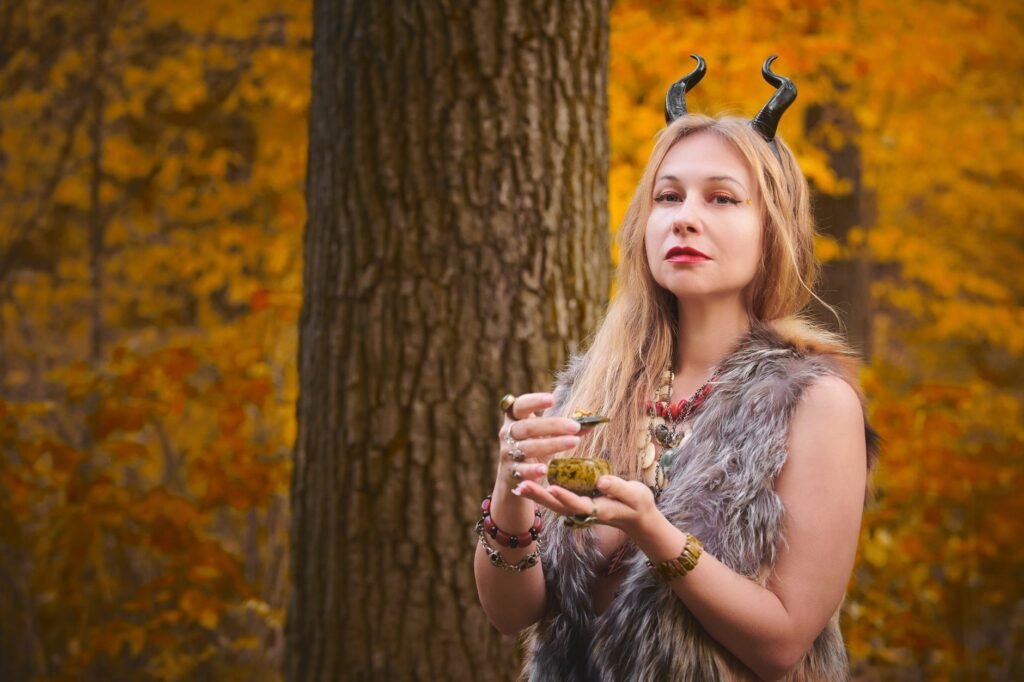
Cerridwen is a major figure in Welsh mythology, best known as a powerful enchantress, goddess-like figure, and keeper of hidden wisdom. She appears most prominently in medieval Welsh literature, especially in the Tales of Taliesin, where she is associated with inspiration, transformation, prophecy, and the cauldron of knowledge. Although her precise status is debated by scholars, Cerridwen has become one of the best-known names from the Welsh mythological tradition and a symbol of magical power, feminine sovereignty, and the pursuit of wisdom.
Her importance lies not only in the stories told about her, but also in the way those stories preserve older Celtic ideas about sacred cauldrons, poetic inspiration, and the overlap between divine power and magical practice. In modern culture, Cerridwen has also become an influential symbol in neo-paganism, literature, and interpretations of Celtic spirituality.
Origin and Meaning
The name Cerridwen is generally interpreted as a Welsh personal or divine name, but its exact etymology is uncertain. Several scholarly explanations have been proposed, and no single derivation is universally accepted.
Commonly suggested interpretations connect the name with Welsh elements meaning:
cerdd: poetry, music, or craftgwen/wen: white, fair, blessed, or sacred
Under this reading, the name has sometimes been understood as something like “fair inspiration” or “blessed poetry,” though such translations are not certain and should be treated cautiously. Other proposals link the name to older Brittonic forms or to the broader Celtic pattern of divine names associated with sovereignty and wisdom.
Because the surviving texts are medieval Welsh literary works rather than inscriptions or clearly dated cult records, the name’s historical origin remains partly obscure. The figure of Cerridwen may preserve pre-Christian mythic material, but the literary form in which she survives was shaped by medieval Welsh scribes and poets.
Historical Context
Cerridwen belongs to the world of medieval Welsh literature, especially the material now grouped under the Mabinogion and related texts. She appears most famously in the story of Taliesin, preserved in medieval manuscripts but likely drawing on older oral traditions.
The cultural background of these stories includes:
- Pre-Christian Celtic mythic themes
- Medieval Welsh poetic culture
- The importance of genealogies and heroic ancestry
- The prestige of inspired poetry and knowledge
- The symbolic role of cauldrons in Celtic tradition
In Welsh tradition, poets were not merely entertainers; they were custodians of memory, status, praise, and social order. The figure of Cerridwen, as guardian of a magical potion that grants wisdom and poetic inspiration, fits this cultural setting well.
Scholars often emphasize that the surviving stories are not straightforward “survivals” of pagan religion. Instead, they are literary texts shaped in a Christian medieval context, while retaining mythic and possibly much older cultural motifs.
Main Characteristics
Cerridwen is usually portrayed as a powerful, formidable female figure associated with magic, transformation, and hidden wisdom. Her most recognizable traits include:
- Possession of a magical cauldron
- Association with inspiration and prophecy
- Ability to transform and chase
- A fearsome and commanding presence
- Connection to knowledge that must be earned or guarded
In the Taliesin narrative, she is not a remote, purely benevolent goddess. She is complex, capable of anger, cunning, and determination. Her magic is not decorative; it is practical and powerful. She prepares a potion meant to bestow awen—a Welsh concept often translated as inspiration or poetic genius—on her son, but the potion leads to a series of events that transform both her son and the future poet Taliesin.
Cerridwen is also often interpreted as a liminal figure: one who stands at the boundary between creation and destruction, ignorance and wisdom, human and supernatural power.
Family and Genealogy
The family relationships of Cerridwen are mainly known from medieval Welsh sources, and details can vary by text. In the best-known version of the Taliesin story, she is described as the mother of Morfran or Afagddu (the child’s name varies in different traditions), a son who is said to be exceptionally ugly and unpromising.
She is also associated with:
- A husband or partner named Tegid Foel in some versions
- A daughter, Creirwy, described in some traditions as beautiful and fair
- A household or family circle centered around her magical practice
Some later retellings and modern interpretations expand or systematize her genealogy, but the medieval sources themselves are limited and inconsistent. It is safest to say that Cerridwen is primarily known through her role as mother and magical guardian rather than through a fully developed divine family tree.
Genealogical Summary
| Relationship | Name | Notes |
|---|---|---|
| Husband/partner | Tegid Foel | Appears in some Welsh traditions |
| Son | Afagddu / Morfran | Central to the Taliesin story |
| Daughter | Creirwy | Known from some traditions as exceptionally beautiful |
| Associated figure | Gwion Bach | Not family, but central to her myth |
Symbols
Cerridwen’s most important symbol is the cauldron, which represents transformation, wisdom, and the hidden process by which knowledge is created. In Celtic and Welsh myth, cauldrons often symbolize abundance, rebirth, or inspiration.
Other symbols associated with Cerridwen include:
- The brew or potion: a magical substance conveying wisdom or poetic inspiration
- The moon: in modern symbolism, often linked to feminine magic, though this is more a later interpretive association than a securely ancient one
- The owl: a common modern emblem of wisdom connected to Cerridwen, though not firmly attested in early sources
- The dark vessel or hidden fire of transformation: an interpretive motif rather than a strict ancient icon
Because the sources do not provide a standardized iconography, many symbolic associations with Cerridwen come from later literary, occult, or neo-pagan traditions.
Sacred Animals
No animal is universally and securely established as Cerridwen’s sacred animal in the ancient sources. However, later traditions and symbolic readings often associate her with animals that reflect her qualities.
Commonly linked animals include:
- Hens or birds in modern storytelling and symbolic art, because of the chase scene involving Gwion’s transformations
- Owl: often linked to wisdom and night knowledge in later interpretations
- Hound or greyhound: sometimes associated with pursuit and the hunt, though not specifically as a sacred animal of Cerridwen
- Hare: connected through transformation motifs in broader Celtic folklore, though not uniquely hers
In strict historical terms, these animal links should be treated as interpretive rather than canonical.
Sacred Plants
The ancient Welsh texts do not provide a fixed list of plants sacred to Cerridwen. Nevertheless, modern tradition often associates her with plants used in herbal magic, fertility symbolism, or visionary work.
Plants commonly linked to her in later spiritual practice include:
- Mugwort: associated with dreams and visionary states
- Broom: sometimes linked with cleansing and witchcraft
- Yew: often associated with death, wisdom, and liminality in Celtic contexts
- Oak: a general Celtic symbol of strength and sacred wisdom
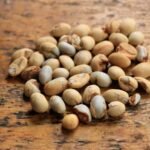
- Barley or grain: tied to cauldrons, brewing, and transformative nourishment
These associations largely reflect later mystical or pagan reconstruction rather than direct ancient testimony. Still, they align with Cerridwen’s role as a wielder of hidden knowledge and change.
Sacred Places
No securely identified historical sanctuary of Cerridwen is known. She belongs to mythic rather than archaeologically documented religion. However, several places are linked to her in literary or traditional association.
The Sea of Ceridwen
In some later interpretations, the cauldron or domain of Cerridwen is imagined as a liminal otherworldly place—partly domestic, partly magical—rather than a specific temple or shrine.
Welsh Mythic Landscapes
Cerridwen is associated broadly with the Welsh landscape of myth, especially the regions in which Taliesin stories are set. These traditions connect her with:
- Rivers and lakes
- Enclosed household spaces where magic is practiced
- Otherworldly boundaries and thresholds
Later Local Associations
Some modern local traditions, especially in Wales, have connected Cerridwen with sacred or poetic landscapes more generally. These associations are culturally meaningful but should not be mistaken for ancient temple sites.
Powers and Attributes
Cerridwen’s powers are central to her mythic identity. She is not simply a witch in the later folkloric sense; she is a master of transformative knowledge.
Her main attributes include:
- Transformation
- Inspiration
- Prophecy
- Magical brewing
- Wisdom guarded through ordeal
- Feminine sovereignty
- Revenge and pursuit
- Control over the process of becoming
A key aspect of her mythology is that wisdom is not casually given. It must be prepared, guarded, and pursued. The potion she brews is associated with the granting of awen, a concept that became central in Welsh poetic tradition.
Commonly Associated Domains
| Domain | Meaning in Cerridwen’s myth |
|---|---|
| Wisdom | Knowledge hidden in the cauldron |
| Poetry | Inspiration for bards and seers |
| Transformation | Physical and spiritual change |
| Prophecy | Foreknowledge and insight |
| Magic | Enchantment and spellworking |
| Motherhood | Protective and demanding maternal power |
Main Myths
Cerridwen is best known through the Taliesin cycle, especially the story in which her son is denied the gift of wisdom and another boy, Gwion Bach, receives it by accident.
The Cauldron of Inspiration
In the classic tale, Cerridwen prepares a potion in a cauldron for her son, who is said to be unattractive and lacking in wisdom. The potion must brew for a year and a day. A blind man named Morda is left to tend the fire, while the young boy Gwion Bach is assigned to stir the cauldron.
Three drops of the potion accidentally leap onto Gwion’s finger, and he instinctively licks them, receiving the gift of knowledge and inspiration. The rest of the potion becomes poisonous. Cerridwen realizes what has happened and pursues Gwion in a dramatic shape-shifting chase.
The Shape-Shifting Chase
During the chase, Gwion changes form repeatedly to escape. Cerridwen transforms in response. In different versions, they become a sequence of animals and forms such as:
- hare and greyhound
- fish and otter
- bird and hawk
- grain and hen
The transformations culminate in Gwion being swallowed by Cerridwen, after which he is reborn. This rebirth leads to the emergence of Taliesin, the great poet.
This myth is rich in symbolic meaning. It combines:
- Initiation
- Death and rebirth
- The transfer of wisdom
- The dangerous pursuit of knowledge
- The authority of poetic inspiration
Taliesin’s Birth
After swallowing Gwion, Cerridwen becomes pregnant and eventually gives birth to Taliesin. In the myth, the child is extraordinary from the beginning and is later recognized as a poet of great wisdom and status. Taliesin himself becomes a central figure in Welsh literary tradition.
The story explains Taliesin’s extraordinary poetic gift through mythic transformation. Cerridwen is therefore both adversary and necessary agent in the making of the poet.
Relationship with Other Mythological Figures
Cerridwen’s most important relationship is with Gwion Bach, whose accidental ingestion of the potion triggers the central myth. She is also deeply linked with Taliesin, since her actions lead to his mythic origin.
Key Relationships
- Gwion Bach: pursued as thief or beneficiary of the potion; later reborn as Taliesin
- Taliesin: poetically born from the mythic sequence involving Cerridwen
- Afagddu / Morfran: her son for whom the potion was originally prepared
- Tegid Foel: named in some traditions as her partner or husband
Cerridwen also resonates with broader Celtic and Welsh mythic patterns, especially other figures associated with sacred cauldrons, inspiration, and sovereignty. Some scholars compare her with goddesses or magical women from other Celtic traditions, though such comparisons are interpretive and not always directly supported by sources.
Worship and Cult
There is no clear evidence of an organized ancient cult of Cerridwen comparable to the better-documented worship of classical deities. Most information about her comes from literature rather than archaeology or ritual manuals.
That said, her myth strongly suggests themes that may have had religious or ritual significance in older Celtic culture:
- Cauldron symbolism
- Poetic inspiration as sacred power
- Transformation and rebirth
- The role of wise women or magical practitioners
- The authority of hidden knowledge
In the medieval and modern periods, Cerridwen has been treated as a spiritual figure in Welsh revivalism, esoteric traditions, and neo-pagan practice. Offerings, meditations, and ritual invocations associated with her are modern devotional forms rather than historically documented ancient rites.
Ancient Sources
Cerridwen is not attested in the way that Greek or Roman deities are attested in classical literature, but she appears in medieval Welsh sources that preserve older mythic material.
Important Sources
The Hanes Taliesin (“The Tale of Taliesin”)
The most important narrative source for Cerridwen and her cauldron.The Book of Taliesin
A medieval Welsh manuscript containing poems associated with Taliesin, though not all directly about Cerridwen.The Mabinogion
Cerridwen is not a central figure in the main tales usually included under this title, but modern readers often encounter her through related Welsh mythological material.Later Welsh antiquarian and folkloric traditions
These preserve expanded or adapted understandings of her role.
Because the surviving evidence is medieval and literary, scholars approach the figure with caution. It is not always possible to separate pre-Christian elements from later poetic development.
Roman Equivalent
Cerridwen does not have a direct Roman equivalent. She is a Welsh mythological figure with functions that overlap loosely with several classical goddesses, but no one-to-one adaptation is recognized in ancient sources.
Modern comparisons are sometimes made with figures such as:
- Ceres: because of nourishment, grain, and transformative abundance
- Minerva: because of wisdom and craft
- Hecate: because of magic, liminality, and occult knowledge
These parallels are only approximate. Cerridwen remains distinctly rooted in Welsh myth and should not be reduced to a Roman counterpart.
Influence on Modern Culture
Cerridwen has had significant influence on modern literature, spirituality, and popular culture, especially from the 19th century onward.
In Literature
Writers interested in Celtic myth and Welsh identity have drawn on Cerridwen as a symbol of poetic and magical power. She appears in retellings of Welsh legend, fantasy literature, and poetry inspired by Celtic themes.
In Neo-Paganism and Spiritual Movements
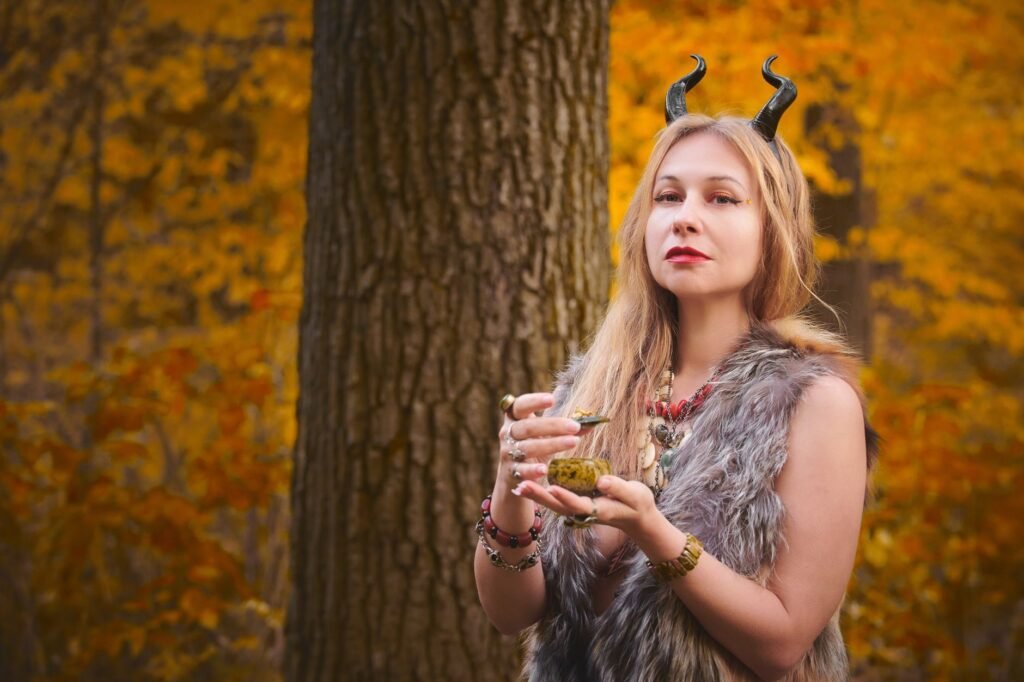
Cerridwen is especially important in modern pagan and goddess-centered spirituality. She is often interpreted as:
- a goddess of inspiration
- a keeper of transformation
- a mother of the poetic tradition
- a symbol of the dark cauldron of rebirth
These interpretations are modern spiritual developments, not direct continuations of an ancient cult, but they have made Cerridwen widely recognizable beyond Wales.
In Art and Popular Media
Cerridwen has appeared or been referenced in:
- fantasy novels
- role-playing games
- visual art inspired by Celtic myth
- music and album imagery
- modern witchcraft and pagan literature
Her image is often used to evoke wisdom, feminine power, and metamorphosis.
Curiosities
- Cerridwen’s myth is one of the best-known Welsh stories involving accidental inspiration rather than earned achievement.
- The name Taliesin is associated with legendary poetic genius, and Cerridwen’s myth explains his extraordinary origin.
- The story includes one of the most memorable shape-shifting chases in Celtic literature.
- The cauldron in Cerridwen’s myth has often been compared with other legendary cauldrons of plenty or knowledge in Celtic tradition.
- The tale shows that wisdom can be both dangerous and transformative.
- In modern interpretations, Cerridwen is sometimes treated as a “dark goddess,” though this is a later spiritual framing rather than a medieval label.
- The source tradition does not provide a fully standardized portrait, which is why interpretations of Cerridwen vary widely.
Frequently Asked Questions
Who is Cerridwen?
Cerridwen is a Welsh mythological figure associated with magic, wisdom, transformation, and poetic inspiration. She is best known from the Taliesin legend.
What is Cerridwen’s cauldron?
Her cauldron is a magical vessel used to brew a potion that grants wisdom and poetic inspiration. It is one of the central symbols in her mythology.
Is Cerridwen a goddess?
Her exact status is debated. Some modern writers call her a goddess, while scholars often describe her more cautiously as a mythological or divine-like figure in Welsh tradition.
What is Cerridwen the goddess of?
She is associated with inspiration, prophecy, wisdom, transformation, and magical brewing. She is also linked to the making of poets.
Who are Cerridwen’s children?
In the best-known traditions, she is the mother of Afagddu or Morfran and sometimes Creirwy. She also becomes the mythic mother of Taliesin through the cauldron story.
What is the story of Cerridwen and Taliesin?
Cerridwen brews a potion of inspiration for her son. Gwion Bach accidentally receives the potion, escapes by shapeshifting, and is eventually swallowed by Cerridwen. He is later reborn as Taliesin, the great poet.
Are there ancient temples of Cerridwen?
No clearly identified ancient temples or sanctuaries of Cerridwen are known. Her survival is mainly through medieval Welsh literature.
Is Cerridwen worshipped today?
Some modern pagan and spiritual groups honor Cerridwen as a goddess or symbolic figure of transformation and inspiration. This is a modern practice rather than a documented ancient cult.
Conclusion
Cerridwen stands as one of the most compelling figures in Welsh mythology. She embodies the power of the cauldron, the mystery of poetic inspiration, and the idea that wisdom must be transformed through ordeal. Her story of pursuit, shapeshifting, and rebirth has ensured her lasting presence in literature and spiritual imagination.
Although the historical record is limited and her ancient cult, if one existed, is not securely documented, Cerridwen remains culturally important as a mythic expression of transformation, knowledge, and creative power. In both scholarship and modern tradition, she continues to represent the enduring richness of Welsh myth.

Orin Vale has spent the better part of two decades tracing the threads that connect the world’s oldest stories — from the halls of Asgard to the banks of the Nile, from Olympus to the jungles of the Maya. What began as a childhood fascination with flood myths and trickster gods grew into years of independent study across comparative mythology and ancient religion, always chasing the same question: what did these stories mean to the people who first told them? Orin writes for readers who want more than trivia — the ones looking for the beliefs, fears, and truths that myths were built to carry.