Chimera
Introduction
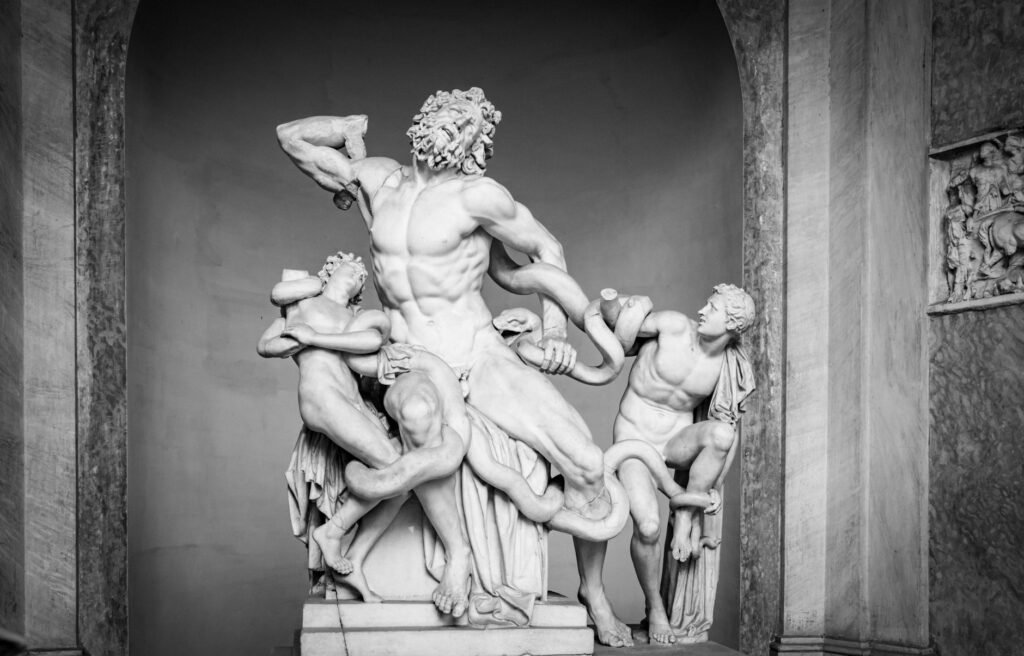
The Chimera is one of the most famous monsters in Greek mythology, a composite beast that combines features of several animals into a single terrifying form. In ancient sources, it is typically described as having a lion’s head, a goat’s body or middle, and a serpent’s tail, while also breathing fire. This hybrid nature made the Chimera a powerful symbol of monstrosity, disorder, and the unnatural blending of forms.
The Chimera is important not only as a mythological creature but also as a cultural idea. Its image has influenced literature, art, heraldry, medicine, psychology, and modern popular culture. The word chimera has also come to mean any impossible or fantastical combination, or an unrealizable dream. In biology and genetics, it is used for organisms composed of cells from different zygotes, showing how an ancient myth can shape modern scientific language.
Origin and Meaning
The English word chimera comes from Latin Chimaera, which in turn comes from Greek Χίμαιρα (Khímaira). The original Greek term is generally associated with a she-goat or young goat, and ancient writers linked the creature’s name with its mixed animal form. The etymology is not entirely certain, but the goat association is widely accepted.
In ancient Greek usage, the Chimera was not merely a fantasy animal. It was a specific mythic monster with a fixed identity in heroic legend. Over time, the term expanded in meaning. In later European languages, “chimera” could refer to any invented or impossible creature, a delusion, or an unattainable goal.
The mythic Chimera belongs to the broader tradition of Greek hybrid beings, alongside creatures such as the Sphinx, Centaurs, and Harpies. These monsters often embodied boundary-crossing forces: they were neither fully one thing nor another, and this instability made them unsettling and dangerous.
Historical Context
The Chimera belongs to the world of Archaic and Classical Greek mythology, a tradition shaped by oral poetry, local cults, and regional storytelling. The monster appears in some of the earliest surviving Greek literature and was already well established by the time authors such as Homer and Hesiod were composing or compiling their works.
In Greek myth, monsters often served several functions:
- They challenged heroes and tested their courage.
- They marked the edge of the civilized world.
- They represented chaos, danger, and the violation of natural order.
- They linked myth with geography by being placed in real or imagined landscapes.
The Chimera is associated especially with Lycia, a region in southwestern Anatolia, which was known to the Greeks through trade, colonization, and travel. Ancient traditions placed the monster in a mountainous and rugged area, often near Mount Chimaera or the Chimaera fire phenomena in Lycia, where natural gas vents produce flames from the ground. This may have helped shape the myth or given it a local anchor.
The myth also reflects the heroic age of Greek storytelling, in which heroes such as Bellerophon achieved fame by defeating monsters. Such narratives linked personal excellence, divine favor, and social legitimacy.
Main Characteristics
The Chimera is usually described as a hybrid fire-breathing monster. Ancient accounts vary in detail, but the creature commonly combines the following traits:
- Lion: often the front or main body
- Goat: often the middle part or a goat’s head emerging from the back
- Serpent or dragon: usually the tail, sometimes with a snake-like head
- Fire: the monster breathes flames or is associated with fiery destruction
The most enduring image is that of a beast with multiple animal parts fused into one unnatural body. This composite form is central to the Chimera’s symbolism. It represents the fear of mixture, excess, and deformity, especially in contrast to the Greek ideal of order, proportion, and balance.
The Chimera is also notable because it is not just visually strange but actively dangerous. Its fire-breathing nature makes it a force of devastation, a creature that can burn fields, settlements, and living beings. The monster is both physically grotesque and morally or cosmically threatening.
Common descriptive features in ancient tradition
| Feature | Description |
|---|---|
| Head | Usually lion; sometimes multiple heads in later retellings |
| Body | Often lion-like with a goat element embedded in the middle |
| Tail | Serpent or dragon-like |
| Breath | Fire or fiery exhalation |
| Habitat | Lycia or mountainous regions |
| Symbolic role | Chaos, danger, hybrid monstrosity |
Family and Genealogy
The Chimera belongs to a broad mythological family of monstrous beings. Ancient genealogies vary, but a common tradition makes it the offspring of Typhon and Echidna, two of the most infamous monster-beings in Greek mythology. Typhon is a storm and chaos monster, and Echidna is often described as part woman and part serpent.
Through this lineage, the Chimera is linked to a network of monsters that includes:
- Cerberus
- Hydra
- Orthrus
- Nemean Lion
- In some traditions, other dangerous beasts and monstrous offspring
Different ancient sources do not always present the same family tree. Greek myth was not systematized in a single canonical form, so genealogies often vary by author and local tradition. However, the Typhon-Echidna connection is one of the most widely cited.
The Chimera is not usually given a spouse, children, or extensive relational biography of its own. Its mythic importance lies primarily in its role as a monster encountered and defeated by Bellerophon.
Symbols
The Chimera is associated with symbols of hybridization, destruction, and fire. Because it is itself a symbolic creature, it does not have a single sacred emblem in the way a deity might. Instead, its image functions symbolically across several contexts.
Common symbolic associations
- Fire: destructive power, danger, purification, and chaos
- Lion: strength, kingship, ferocity
- Goat: wildness, fertility, and untamed nature
- Serpent: danger, earth-bound power, renewal, and threat
- Hybrid body: disorder, unnatural mixture, instability
In art and literature, the Chimera often symbolizes the impossible or the fantastical. In modern usage, “chimera” can indicate a dream, illusion, or something composed of incompatible parts. This semantic development reflects the creature’s original monstrous hybridity.
Sacred Animals
The Chimera is not part of a deity-centered animal cult, so there are no sacred animals in the strict religious sense. However, the animals that make up its composite form carry strong symbolic meaning in Greek and Mediterranean culture.
The lion
The lion is a symbol of power, dominance, and royal force. In the Chimera, lion imagery makes the monster appear formidable and predator-like.
The goat
The goat is associated with rough terrain, vitality, and sometimes unpredictability. Its place in the Chimera’s composition adds to the creature’s unnatural mixed nature.
The serpent
The serpent often represents earth-born power, danger, and liminality. In mythical creatures, snake imagery frequently signals chthonic or primal energy.
These animals, individually meaningful in ancient symbolism, become more frightening when fused into a single being.
Sacred Plants
There are no plants specifically sacred to the Chimera in the way that certain gods have associated flora. Nevertheless, the myth is linked indirectly to vegetation through the creature’s fiery destruction and through its geographic setting.
In the Bellerophon story, the Chimera is a threat to livestock, landscapes, and human settlement. Fire in myth often evokes the burning of fields, wild hillsides, and agricultural spaces, making the creature an enemy of cultivated life.
Some later literary and artistic traditions may connect monster myths with barren or scorched terrain, but there is no single plant traditionally tied to the Chimera in classical sources.
Sacred Places
The Chimera is associated most strongly with Lycia, an ancient region in Anatolia. Several specific locations are connected with the myth or with later interpretations of it.
Lycia
Lycia is the principal geographic setting for the Chimera story. Ancient authors place the beast there, often in a mountainous and rugged area. The region’s dramatic landscape made it suitable for a monster myth.
Mount Chimaera
Ancient and later traditions identify a mountain or mountainous area in Lycia as the Chimera’s home. The exact location is associated with natural flames that continue to burn in some form even today, known in modern times as Yanartaş in Turkey. These flames, produced by natural gas seepage, may have helped generate or reinforce the legend.
Solymian mountains
Some ancient accounts connect Bellerophon’s adventures with the Solymians, a group associated with the region. The geography in these stories is not always uniform across sources, but the mountainous Lycia setting is consistent.
Corinth and other heroic landscapes
Although not the Chimera’s home, Corinth is important because it is connected to Bellerophon, who is associated with that city in several traditions. The monster’s defeat is part of the wider heroic world centered on Greek cities and their legendary founders.
Powers and Attributes
The Chimera’s primary “powers” are those of a monster rather than a deity.
Main attributes
- Fire-breathing
- Extreme physical strength
- Hybrid, unnatural form
- Lethal aggression
- Territorial threat to humans and livestock
The creature’s most important function in myth is to embody uncontrollable danger. Fire, in particular, distinguishes the Chimera from many other beasts and makes it especially destructive. Ancient storytellers use this fiery quality to heighten the stakes of its confrontation with Bellerophon.
The Chimera does not rule a domain or perform divine duties. Its “role” is symbolic and narrative: it is the obstacle that a hero must overcome. In this sense, the Chimera belongs to the class of mythic adversaries that define heroic identity through combat.
Main Myths
The central myth involving the Chimera is the story of Bellerophon and his victory over the monster.
Bellerophon and the Chimera
Bellerophon, a Greek hero associated with Corinth and later with Lycia, was sent on a seemingly impossible mission by King Iobates. According to the usual story, he was ordered to kill the Chimera.
The hero succeeded with the help of Pegasus, the winged horse. Different ancient versions vary, but the standard account says that Bellerophon attacked from above, gaining the advantage over the monster’s fire and ferocity. He killed the Chimera, often by using arrows or a spear.
This story is important because it combines several recurring mythic themes:
- divine or semi-divine assistance
- the hero’s extraordinary skill
- the defeat of a hybrid monster
- the triumph of order over chaos
Why the myth mattered
The Chimera story is one of the clearest examples of heroic monster-slaying in Greek myth. It reinforced ideals of courage, intelligence, and divine favor. At the same time, the monster’s geographical setting in Lycia gave the tale a local dimension, connecting myth to landscape.
Other references
The Chimera appears in later retellings, artistic representations, and allegorical literature. In some sources, the name is also used more loosely for monstrous beings or dangerous imagined creatures, but the Bellerophon narrative remains the core myth.
Relationship with Other Mythological Figures
The Chimera’s main relationship is with Bellerophon, its slayer. This confrontation is the myth’s defining interaction.
Bellerophon
Bellerophon is the hero most closely linked to the Chimera. Their relationship is adversarial and narratively essential: the monster exists in myth largely as the challenge Bellerophon must overcome.
Pegasus
Pegasus is another key figure in the story. The winged horse enables Bellerophon to fight from the air, a crucial advantage against a fire-breathing creature. Pegasus represents divine or supernatural aid and often appears as the instrument of heroic success.
Iobates
King Iobates is the one who assigns Bellerophon the task of killing the Chimera. In the narrative structure, he acts as the authority figure who sends the hero into danger, often under the pretense that the mission is impossible.
Typhon and Echidna
As putative parents in many traditions, Typhon and Echidna connect the Chimera to a larger mythological genealogy of chaos monsters. This family relationship situates the Chimera within a cosmic struggle between order and disorder.
Worship and Cult
There is no evidence of a formal cult dedicated to the Chimera itself. Unlike gods and some heroes, the Chimera was not the object of worship, temples, sacrifices, or festivals in the usual Greek religious sense.
However, the myth may have been culturally reinforced by local beliefs and by the landscape of Lycia. The natural flames at Yanartaş have sometimes been interpreted as an enduring reminder of the monster’s presence. Whether ancient people linked the area directly to ritual practice is not certain, and the evidence does not support a developed cult of the Chimera.
What does exist is mythic commemoration rather than worship:
- the story of Bellerophon’s victory
- artistic depictions on pottery and sculpture
- place-based memory in Lycia
- literary reuse of the monster’s image
Ancient Sources
The Chimera is mentioned by several classical authors, though accounts differ in detail.
Homer
In the Iliad, Homer refers to the Chimera as a fire-breathing monster and places it in the tradition of heroic combat. Homer’s description helps establish the creature’s early literary status.
Hesiod
Hesiod also mentions the Chimera in the Theogony, where monstrous genealogies are important. His work is especially relevant for understanding the Chimera’s place in the wider family of Typhon and Echidna.
Apollodorus
The Bibliotheca attributed to Apollodorus gives a compact and influential account of Bellerophon’s battle with the Chimera. It is one of the most useful later summaries of the myth.
Pausanias
Pausanias, in his Description of Greece, is valuable for connecting myth to places and local traditions. He helps preserve how Greeks understood the physical landscape in relation to heroic stories.
Ovid
Ovid references the Chimera in Roman literary contexts, especially when discussing mythic transformations, heroic exploits, and the language of the marvelous.
Other sources
Additional information appears in:
- Pindar
- Diodorus Siculus
- Servius
- later mythographic and scholastic traditions
Because ancient sources are not always consistent, modern readers should be cautious about assuming one fixed version of the Chimera myth. Variation is part of the ancient tradition.
Roman Equivalent
The Chimera does not have a precise Roman equivalent in the way some Greek gods were directly identified with Roman deities. Instead, the Romans adopted the Chimera as a mythic figure from Greek tradition.
In Latin literature, the name Chimaera was retained, and Roman authors used the creature much as Greek authors did: as a monstrous hybrid and a literary symbol of the impossible. Roman mythography and art continued to depict it in heroic or decorative contexts.
Thus, the Roman relationship to the Chimera is better understood as adaptation and transmission rather than replacement by another deity or monster.
Influence on Modern Culture
The Chimera has had a remarkably long afterlife in modern culture. Its image and name appear across literature, science, art, and entertainment.
Literature and symbolism
Writers have used “chimera” to mean:
- a fantasy or illusion
- an unrealizable project
- a hybrid or composite being
- a symbol of imagination and fragmentation
In Romantic and post-Romantic literature, the word often suggests something beautiful but impossible. The mythic monster thus became a poetic metaphor.
Science and medicine
In modern biology, a chimera is an organism or tissue composed of cells from different genetic origins. The term was borrowed because such organisms resemble a composite entity made of different parts.
In medicine and genetics, “chimera” and “chimerism” have precise technical meanings. This scientific use shows how mythic language can become part of specialized vocabulary.
Art and architecture
The Chimera appears in:
- classical vase painting
- sculpture
- Renaissance and Neoclassical art
- decorative motifs on buildings, fountains, and public monuments
Artists are drawn to the creature because it offers a dramatic visual challenge: several animals fused into one dynamic form.
Film, television, and games
Modern fantasy frequently features chimera-like monsters. Even when not named directly, many creatures in films, television, and video games are inspired by the ancient idea of a composite beast. The chimera has become a generic model for hybrid monsters in fantasy settings.
Popular language
The word “chimera” is now common in everyday English to mean:
- a delusion
- a false hope
- a difficult but alluring dream
- a strange mixture of elements
This linguistic legacy is one of the strongest signs of the myth’s endurance.
Curiosities
- The Chimera is one of the rare Greek monsters whose defining feature is hybridity rather than simply size or ugliness.
- Ancient and modern interpretations may differ on whether the goat part is the body, the middle, or an additional head.
- The natural flames at Yanartaş in Turkey are often cited as a possible real-world inspiration for the myth.
- The term “chimera” in modern science has nothing to do with mythology in a religious sense, but the mythic image shaped the technical term.
- In some artistic traditions, the Chimera is shown with three heads, though this is not the standard classical description.
- The creature’s myth became so influential that “chimera” is now used more often metaphorically than as a reference to the original monster.
- The Chimera is frequently grouped with other chaos monsters in scholarly discussions of Greek mythic symbolism.
Frequently Asked Questions
What is a Chimera in Greek mythology?
The Chimera is a fire-breathing monster from Greek mythology, usually described as part lion, part goat, and part serpent. It is one of the best-known composite creatures in ancient myth.
Who killed the Chimera?
The hero Bellerophon killed the Chimera, usually with the help of the winged horse Pegasus. Ancient sources vary on the exact method, but the victory is consistently attributed to Bellerophon.
Where did the Chimera live?
The Chimera is associated mainly with Lycia, an ancient region in southwestern Anatolia. Some traditions connect it with a specific mountainous area and natural flames.
Who were the Chimera’s parents?
Many ancient sources say the Chimera was the offspring of Typhon and Echidna, two major monster figures in Greek mythology. Not all sources present the genealogy in the same way, but this is the most common version.
Why is the Chimera important?
The Chimera is important because it represents hybrid monstrosity, fire, and chaos in Greek myth. It also plays a central role in the hero story of Bellerophon and has had a lasting impact on language, science, and art.
What does the word “chimera” mean today?
Today, “chimera” can mean an impossible dream, a fantasy, or something made up of different parts. In biology, it refers to an organism made from cells with different genetic origins.
Is the Chimera a god or a monster?
The Chimera is a monster, not a god. It does not have a cult or divine worship in the usual ancient Greek sense.
Is the Chimera the same as a dragon?
No. Although it has a serpent-like tail and may be grouped with dragon-like monsters in later traditions, the Chimera is a distinct mythological creature with its own description and story.
Conclusion
The Chimera is one of the most enduring monsters of ancient mythology. Born from the Greek imagination and preserved in classical literature, it stands for hybridity, danger, and the fearful power of fire. Its role in the story of Bellerophon made it a key figure in heroic legend, while its unusual body and symbolic richness ensured its survival far beyond antiquity.
As a mythic creature, the Chimera reflects ancient Greek concerns about order, form, and the boundaries between species and states of being. As a word, it has become part of modern language, science, and literature. Few mythological beings have left such a wide and lasting legacy.

Orin Vale has spent the better part of two decades tracing the threads that connect the world’s oldest stories — from the halls of Asgard to the banks of the Nile, from Olympus to the jungles of the Maya. What began as a childhood fascination with flood myths and trickster gods grew into years of independent study across comparative mythology and ancient religion, always chasing the same question: what did these stories mean to the people who first told them? Orin writes for readers who want more than trivia — the ones looking for the beliefs, fears, and truths that myths were built to carry.