Thyrsus
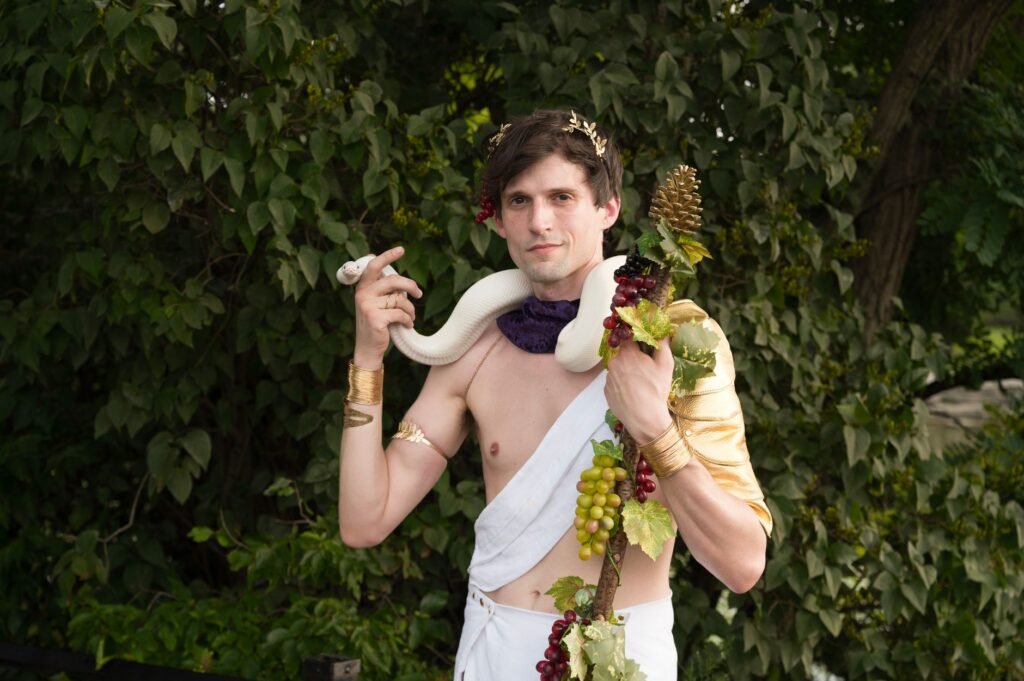
The thyrsus is one of the most recognizable ritual emblems of ancient Greek religion and myth. Usually described as a staff or wand topped with a pine cone and sometimes wrapped in ivy or vine leaves, it is especially associated with Dionysus, the Greek god of wine, fertility, ecstasy, theater, and altered states of consciousness. The thyrsus appears in literature, vase painting, sculpture, and religious imagery as a marker of divine power, ritual enthusiasm, and the boundary between civilization and ecstatic release.
As both a sacred object and a literary symbol, the thyrsus occupies an important place in classical studies. It is linked not only to Dionysian worship, but also to broader ideas about ritual trance, female religious participation, theatrical performance, and the tension between order and abandon in Greek culture.
Origin and Meaning

The word thyrsus comes from the Greek θύρσος (thyrsos). Its exact etymology is not fully certain, and ancient explanations do not resolve the matter decisively. Modern scholars generally treat it as a pre-Greek or non-Indo-European term that entered Greek religious vocabulary.
In Greek usage, the thyrsus refers to a ritual staff carried in Dionysian contexts. Ancient sources describe it as a staff of fennel or another plant, often tipped with a pine cone and decorated with ivy, vine, or wool ribbons. Over time, the word came to denote not merely a physical object but the whole symbolic apparatus of Dionysian cult.
The thyrsus is therefore best understood as:
- a religious implement
- a sign of initiation or cult participation
- a literary symbol of Dionysian power
- a marker of ecstasy, fertility, and transformation
Historical Context
The thyrsus belongs to the religious world of ancient Greece, especially the cult of Dionysus. Dionysian religion differed from more formal civic cults in that it often emphasized emotional intensity, music, dance, and ecstatic experience. The thyrsus fits naturally into this environment as an emblem of ritual movement and divine possession.
Its importance can be seen in several overlapping contexts:
Dionysian Ritual
The thyrsus is most closely associated with the maenads or bacchants, female devotees of Dionysus who appear in literature and art carrying staffs, torches, drums, and ivy wreaths. In mythic and dramatic representations, they are often depicted as moving through mountains and forests in a state of frenzy.
Theater and Performance
Because Dionysus was also the god of theater, the thyrsus became part of the visual language of Greek drama and later Roman art. It could signal a character’s relation to Dionysian ritual, festivity, or madness.
Fertility and Vegetation Symbolism
The thyrsus is strongly connected to plant life, especially vines, ivy, pine, and fennel. These associations reflect Dionysus’s role as a god of growth, seasonal renewal, and the productive force of nature.
Ecstasy and Boundary Crossing
In literature, the thyrsus often marks the crossing of social and psychological boundaries. It can symbolize divine inspiration, but also dangerous excess. This duality is central to Dionysian religion.
Main Characteristics
Although descriptions vary, the thyrsus is usually identifiable by several common features.
Typical Form
A standard thyrsus is described as:
- a long staff or rod
- made from fennel stalk or another straight plant stem
- crowned with a pine cone
- decorated with ivy leaves, vine tendrils, or ribbons
- sometimes wrapped in wool or festive garlands
Symbolic Qualities
The object is not simply ornamental. It represents:
- fertility
- ritual power
- ecstatic inspiration
- the vitality of the vine and the forest
- the civilizing and destabilizing force of Dionysus
Use in Iconography
In vase painting and sculpture, the thyrsus may be held by:
- Dionysus himself
- maenads or bacchants
- satyrs
- occasionally by figures participating in Dionysian ritual or revel
In art, the thyrsus often appears together with:
- ivy crowns
- animal skins
- musical instruments
- drinking vessels
- panthers, goats, and satyrs
Family and Genealogy
As an object rather than a deity, the thyrsus does not have a genealogy in the usual mythological sense. However, it belongs to the wider family of objects associated with Dionysus and his entourage.
Mythic Associations
The thyrsus is linked to:
- Dionysus/Bacchus, who is its primary divine bearer
- the maenads, female followers of the god
- the satyrs, rustic male companions of the Dionysian retinue
- Silenus, a companion and tutor figure in some traditions
- Ariadne, in artistic and literary settings tied to Dionysian union and celebration
Derivative and Related Objects
The thyrsus is sometimes discussed alongside:
- the vine staff
- the staff of initiates
- ritual wands in mystery cults
- festive rods or scepters used in procession
These parallels do not mean the thyrsus is identical to them, but they show its place in a broader Mediterranean symbolic vocabulary of sacred staffs.
Symbols
The thyrsus is one of the most symbolically dense objects in classical religion. Its components carry layered meanings.
| Element | Common Meaning |
|---|---|
| Staff or rod | Authority, guidance, ritual office |
| Pine cone | Fertility, life-force, permanence, possibly generative power |
| Ivy | Dionysian identity, endurance, intoxication, sacred protection |
| Vine | Wine, abundance, seasonal growth |
| Fennel | Ritual vegetation, lightness, sacred utility in mythic explanation |
| Ribbons or wool | Festive adornment, consecration, ritual decoration |
Interpretive Significance
The thyrsus can symbolize:
- the power to bring forth life
- the ability to inspire ecstasy
- the presence of a deity not bound by ordinary civic order
- the transformation of nature into ritual meaning
In some modern interpretations, it is also seen as a symbol of the union of control and release: a staff implies order, but its leafy and vegetative decorations suggest wild growth.
Sacred Animals
The thyrsus is not directly linked to a single sacred animal in the way some deities are, but it belongs to a broader Dionysian animal world.
Common Dionysian Animals
Animals associated with the thyrsus and Dionysian cult include:
- panthers and leopards, often associated with Dionysus’s power and exotic majesty
- goats, linked to fertility and rustic vitality
- bulls, which appear in Dionysian symbolism and sacrifice
- snakes, often associated with chthonic power, rebirth, and ritual energy
- donkeys and satyr-like creatures in comic and rustic traditions
Symbolic Function
These animals reinforce themes of:
- untamed energy
- sexuality and fertility
- danger and divine power
- the crossing of human and animal boundaries
The thyrsus, as a plant staff, visually complements this bestial and vegetal world.
Sacred Plants
The thyrsus is strongly plant-based, and its meaning is inseparable from sacred vegetation.
Fennel
Ancient descriptions often identify the thyrsus as a stalk of fennel. Fennel was used in several Greek cultural and ritual settings, though the precise reasons for its association here are not always certain.
Pine
The pine cone at the tip is among the most distinctive features of the thyrsus. The pine, an evergreen tree, suggests endurance and vitality. Its cone may symbolize seed-bearing fertility and generative force.
Ivy
Ivy is one of the most important Dionysian plants. It is evergreen, tenacious, and closely tied to the god in literature and iconography. Ivy wreaths and garlands often accompany the thyrsus.
Vine
The vine is central to Dionysus as god of wine. While not always physically part of the thyrsus, vine leaves and tendrils frequently decorate it, linking the staff to the cultivation and spiritual significance of wine.
Other Plants
In some depictions and accounts, the thyrsus may be adorned with:
- laurel
- pine branches
- wild herbs
- garlands of flowers
Sacred Places
The thyrsus is connected to sacred and ritual places associated with Dionysus rather than to one single sanctuary.
Mountains and Wild Landscapes
Dionysian worship in myth often takes place on:
- mountain slopes
- wooded hills
- forests
- remote countryside
These settings reflect the wildness associated with the god and with the maenads who bear the thyrsus.
Thebes
Thebes is a major city in Dionysian myth. It appears prominently in stories such as those in Euripides’ Bacchae, where the conflict over Dionysian worship unfolds in a Theban setting. The city becomes a place where resistance to Dionysus leads to catastrophe.
Nysa
The mythical mountain or land of Nysa is one of the legendary places associated with Dionysus’s upbringing and cultic origin. Its exact location varies across ancient sources and traditions.
Sanctuaries and Theaters
The thyrsus also belongs to the sacred environments of:
- Dionysian sanctuaries
- theaters dedicated to Dionysus
- processional routes in urban festivals
- mystery-cult spaces where Dionysian rites were performed
Powers and Attributes
The thyrsus does not possess powers in the same way a deity does. Rather, it is a ritual instrument that signifies and channels divine powers associated with Dionysus.
Main Domains
The thyrsus is associated with:
- wine and intoxication
- ecstasy and trance
- fertility and vegetation
- ritual transformation
- theatrical inspiration
- liminality and altered identity
Attributes in Symbolic Terms
The object implies:
- the capacity to sanctify celebration
- the ability to mark Dionysian presence
- participation in mystical or ecstatic experience
- the link between nature and religion
In some texts, merely carrying a thyrsus indicates that a person is under Dionysian influence or belongs to the god’s following.
Main Myths
The thyrsus appears in many Dionysian myths, though it is not always the central object. Its significance often emerges through narrative detail.
Dionysus and the Maenads
One of the most common mythic images is Dionysus accompanied by maenads carrying thyrsoi. In these scenes, the staff becomes an emblem of ecstatic devotion and ritual frenzy.
The Bacchae
In Euripides’ Bacchae, the followers of Dionysus carry thyrsoi as they leave the city for the mountains. The play dramatizes the tension between civic order and Dionysian power. Pentheus, who rejects the god, is destroyed, while the thyrsus remains a visible sign of the god’s authority.
The Punishment of Resistance
Myths involving resistance to Dionysus often feature the thyrsus indirectly as part of the god’s ritual apparatus. Those who deny Dionysian worship are sometimes punished by madness, dismemberment, or social ruin. The staff thus becomes a symbol of the force against which human resistance is futile.
Dionysian Processions
In mythic and festival imagery, the thyrsus is borne in processions by the god’s companions. Such scenes may include satyrs, dancing women, music, and animals, creating a vivid ritual landscape.
Later Literary Uses
In Hellenistic and Roman literature, the thyrsus continues to appear as a sign of Dionysian identity. It can be used positively, to evoke revelry and inspiration, or negatively, to suggest excessive intoxication and disorder.
Relationship with Other Mythological Figures
The thyrsus is most strongly associated with Dionysus, but its significance extends through his divine and mortal circle.
Dionysus
Dionysus is the primary bearer of the thyrsus. In many traditions, it functions as one of his defining attributes, much as lightning belongs to Zeus or a trident to Poseidon.
Maenads and Bacchants
Female devotees often carry the thyrsus in art and myth. It identifies them as participants in Dionysian worship and as agents of ecstatic movement.
Satyrs
Satyrs, the rustic, lustful companions of Dionysus, are often shown with thyrsoi or in proximity to them. Their presence reinforces the object’s association with wildness and revelry.
Pentheus
In the Bacchae, Pentheus becomes the emblematic opponent of Dionysian power. The thyrsus is part of the religious world he rejects, making it indirectly relevant to his downfall.
Ariadne
In later myth and art, Ariadne’s relationship with Dionysus places her within the Dionysian sphere. While not specifically a bearer of the thyrsus in the same way as maenads, she belongs to the symbolic world in which it operates.
Worship and Cult
The thyrsus was part of ancient religious practice, though surviving evidence mixes ritual reality with literary and artistic representation.
Ritual Use
Ancient worship of Dionysus could include:
- processions
- dances
- singing
- ecstatic movement
- carrying staffs or ritual objects
- offerings of wine and vegetation
The thyrsus may have been used in such contexts as a processional or ceremonial implement.
Festival Contexts
The object appears in connection with Dionysian festivals, including urban celebrations and dramatic competitions. While the precise role of the thyrsus would vary by locality and period, it formed part of the god’s visible cult language.
Mystery and Initiatory Traditions
Dionysus was also connected to mystery traditions in which ritual knowledge, symbolic death and rebirth, or transformative experience were emphasized. The thyrsus may have served as an emblem of initiation or belonging in such settings.
Interpretation by Ancient Observers
Ancient authors sometimes treated Dionysian ritual with fascination, criticism, or moral concern. The thyrsus therefore carried both religious and cultural meanings, depending on the observer’s point of view.
Ancient Sources
The thyrsus appears across a wide range of classical literature and art. No single source explains it exhaustively, but several are especially important.
Key Classical Authors
- Euripides, especially in Bacchae, where thyrsoi are central to the depiction of Dionysian worship
- Homeric Hymns, particularly hymnic material associated with Dionysus
- Pindar, who occasionally references Dionysian imagery
- Apollodorus, whose mythological summaries preserve related traditions
- Pausanias, valuable for descriptions of cult and local religious customs
- Ovid, who gives Roman literary treatments of Dionysian themes in the Metamorphoses and related works
- Nonnus, whose Dionysiaca is a later and expansive literary source for Dionysian imagery
Art Historical Evidence
The thyrsus is also documented through:
- Attic vase painting
- relief sculpture
- mosaics
- Roman wall painting
- theatrical imagery and decorative arts
These sources are essential because they show how the object was visually understood in different periods.
Roman Equivalent
The Roman counterpart to Dionysus is Bacchus, and the thyrsus is therefore commonly described in Roman contexts as a Bacchic staff or staff of Bacchus.
Roman Adaptation
In Roman literature and art, the thyrsus remains closely associated with:
- Bacchic revelry
- theatrical and festive imagery
- wine and intoxication
- mystery and ritual ecstasy
The Roman tradition generally preserves the Greek symbolism, though it may be framed through Roman literary taste and moral commentary. Latin poets such as Ovid and Virgil make use of Bacchic imagery in ways that keep the thyrsus recognizable to educated audiences.
Influence on Modern Culture
The thyrsus continues to appear in modern cultural, artistic, and scholarly contexts.
Literature and Poetry
Modern writers have used the thyrsus as a symbol of:
- creative frenzy
- artistic inspiration
- sensual excess
- pagan vitality
- the conflict between restraint and liberation
Visual Arts
Painters, sculptors, and illustrators inspired by classical antiquity often depict Dionysus, bacchantes, and satyrs with thyrsoi. The object serves as a shorthand for classical ecstasy and mythic festivity.
Theater and Opera
Because of its connection to Dionysus and Greek drama, the thyrsus has appeared in stage design, opera, and performance art as a classical emblem of theatrical origin.
Popular Culture
In modern fantasy, games, and historical fiction, the thyrsus may be adapted as:
- a magical staff
- a ritual symbol
- a sign of pagan or arcane power
- an attribute of Dionysian-inspired characters
Its visual recognizability makes it useful in any setting drawing on Greco-Roman myth.
Curiosities
- The thyrsus is sometimes mistaken for a general “magic wand,” but in ancient contexts it is specifically Dionysian.
- Its plant-based construction reflects a broader Greek religious habit of expressing divine power through living nature.
- The pine cone at the top is one of the most distinctive visual elements and helps distinguish the thyrsus from other staffs.
- In artistic tradition, the thyrsus often appears in the hands of women more frequently than men, due to its link with maenadic worship.
- The object can symbolize both joyful celebration and dangerous madness, depending on the source.
- Some ancient explanations of Dionysian ritual treated the thyrsus as a harmless festival prop, while literary works emphasized its uncanny and terrifying power.
- Because Dionysus is a god of theater, the thyrsus is also indirectly tied to the origins of dramatic performance in Greece.
Frequently Asked Questions
What is a thyrsus?
A thyrsus is a ritual staff associated with Dionysus in Greek and Roman mythology, usually decorated with ivy or vine leaves and topped with a pine cone.
What does the thyrsus symbolize?
It symbolizes Dionysian power, fertility, ecstasy, intoxication, theatrical inspiration, and the vitality of nature.
Who carries a thyrsus?
Dionysus, his maenads, bacchants, and sometimes satyrs are commonly shown carrying thyrsoi in ancient art and literature.
Is the thyrsus a real historical object?
Yes. Ancient sources and artworks show that it was a recognized ritual symbol in Dionysian contexts, though exact forms likely varied by region and period.
What plants are associated with the thyrsus?
Fennel, pine, ivy, and vine are the most common plants associated with it.
What is the Roman name for the thyrsus?
In Roman culture, it is associated with Bacchus and is often called a Bacchic staff or simply the thyrsus in Latin literature.
Why is the thyrsus important in mythology?
It is an emblem of Dionysian worship and one of the most visible symbols of the god’s power, especially in myths about ecstasy, ritual, and resistance to divine authority.
Where does the thyrsus appear in ancient literature?
It appears in works by Euripides, Pausanias, Ovid, Nonnus, and other classical authors, often in Dionysian scenes.
Conclusion
The thyrsus is far more than a decorative staff. In ancient Greek and Roman culture, it served as a potent symbol of Dionysian religion, embodying fertility, ecstatic experience, and the transformative force of the god Dionysus/Bacchus. Through literature, ritual practice, and visual art, the thyrsus became one of antiquity’s most enduring images of sacred enthusiasm and the powers of nature.
Its long history reveals why it remains significant today: the thyrsus stands at the intersection of myth, religion, theater, and symbolism. As a ritual emblem, it expresses the ancient world’s fascination with the boundary between order and ecstasy, civilization and wilderness, human control and divine inspiration.

Orin Vale has spent the better part of two decades tracing the threads that connect the world’s oldest stories — from the halls of Asgard to the banks of the Nile, from Olympus to the jungles of the Maya. What began as a childhood fascination with flood myths and trickster gods grew into years of independent study across comparative mythology and ancient religion, always chasing the same question: what did these stories mean to the people who first told them? Orin writes for readers who want more than trivia — the ones looking for the beliefs, fears, and truths that myths were built to carry.