Anyone asking what is the power of Hades discovers a deity whose authority extends across several significant dimensions within Greek mythology, spanning absolute control over the underworld, the ability to become invisible, and a notable connection to hidden wealth beneath the earth. As ruler of the dead following the division of the cosmos with his brothers Zeus and Poseidon, Hades’s power represented far more than simple governance over death, encompassing genuine cosmic authority and specific, distinctive abilities unique among the Olympian gods. Understanding what is the power of Hades requires examining each of these dimensions individually, revealing a genuinely comprehensive portrait of the abilities that established his significant, largely uncontested position within Greek mythology.
Absolute Authority Over the Underworld
Hades’s most fundamental power involves essentially absolute, largely uncontested authority within his own specific domain, the underworld, representing the clearest and most significant answer to what is the power of Hades throughout Greek mythological tradition and established cosmological structure.
This authority extended so completely that even Zeus generally refrained from direct interference in underworld affairs, reinforcing that what is the power of Hades included genuine, independent governance rather than authority subject to regular oversight or intervention from his fellow ruling Olympian brothers.
Within this domain, Hades functioned as the ultimate authority determining the fate and treatment of souls residing there, whether in Tartarus, Elysium, or the Fields of Asphodel, establishing significant judicial and administrative power directly relevant to what is the power of Hades regarding his comprehensive control over this significant cosmic realm.
This combination of independence and comprehensive domain-specific authority remains central to what is the power of Hades, establishing him as a genuinely powerful ruler whose control over the underworld matched, within his own sphere, the authority Zeus held over the broader Olympian order.
The Helm of Darkness — Invisibility
The Helm of Darkness, also known as the Helm of Invisibility, granted Hades the remarkable ability to become unseen, representing a genuinely unique power among the major Olympian gods directly relevant to what is the power of Hades and distinguishing him significantly from his brothers’ more elemental abilities.
This helm was reportedly given to Hades by the Cyclopes during the Titanomachy, paralleling the gifts given to his brothers, Zeus’s thunderbolt and Poseidon’s trident, reinforcing that what is the power of Hades included this specific, significant gift received during the same pivotal conflict that established Olympian rule.
The ability to become invisible provided Hades with a genuinely distinctive strategic advantage, allowing him to move unseen when necessary, an ability directly relevant to what is the power of Hades that no other major Olympian deity possessed in quite the same documented, established form.
This unique invisibility power reinforces the distinctive nature of what is the power of Hades, confirming that his abilities extended beyond simple domain-based authority into genuinely unique, strategically significant capability unmatched among his fellow ruling Olympian brothers.
The Bident and Command Over the Dead
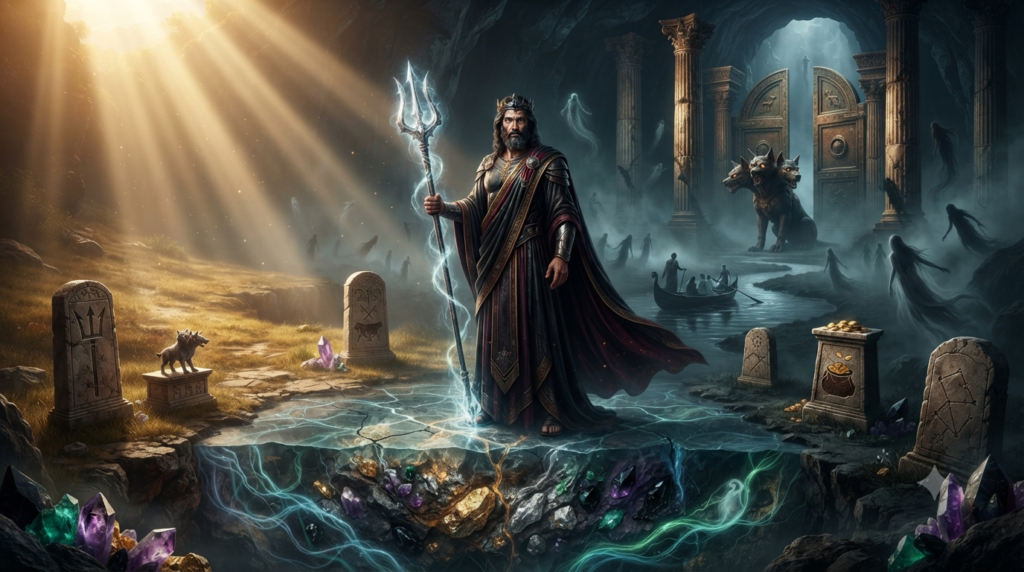
Hades’s bident functioned as both weapon and symbol of his authority, paralleling his brothers’ iconic weapons while maintaining its own distinct visual and symbolic identity directly relevant to what is the power of Hades and his specific command over the underworld realm.
Beyond its symbolic function, Hades’s power extended into genuine command over the dead themselves, reflected in myths involving figures like Sisyphus and Orpheus, where his authority to grant or deny return from the underworld demonstrated significant, direct control relevant to what is the power of Hades regarding the fate of souls within his domain.
This command over the dead represented a genuinely significant dimension of what is the power of Hades, extending beyond passive rule into active, demonstrated authority capable of shaping individual outcomes for those who found themselves within his considerable underworld domain.
Understanding this combination of symbolic weaponry and genuine command over the dead provides essential context for what is the power of Hades, confirming that his authority included both symbolic representation and genuinely demonstrated, narratively significant control throughout various myths.
Plouton — Command Over Hidden Wealth
Hades held the significant epithet Plouton, connecting him directly to underground mineral wealth and resources, adding an important additional dimension to what is the power of Hades that extends his significance beyond death alone into broader command over valuable resources hidden beneath the earth.
This connection to hidden wealth reflects a genuinely distinctive aspect relevant to what is the power of Hades, positioning him as a deity whose authority encompassed not only the dead, but also the physical, material riches contained within the same underground domain he ruled over throughout Greek mythological tradition.
This dual association, governing both death and buried wealth, reinforces the genuinely multifaceted nature of what is the power of Hades, demonstrating that his authority extended into practical, materially significant territory beyond the more commonly emphasized governance over souls specifically.
Recognizing this connection to hidden wealth significantly enriches what is the power of Hades, confirming that his domain encompassed considerably more than death alone, extending into genuine command over valuable underground resources throughout the broader scope of Greek mythological tradition.
Immortality and Physical Power
As an immortal Olympian-generation god, Hades remained permanently free from death, sharing this foundational characteristic with his fellow ruling siblings and establishing an essential component of what is the power of Hades relevant to his overall capability and enduring authority.
Hades also demonstrated genuine physical and combat capability during the Titanomachy, fighting alongside his siblings to secure victory over Cronus and the Titans, confirming that what is the power of Hades included substantial combat contribution during this pivotal, cosmos-defining conflict.
This combat participation reinforces that what is the power of Hades extended beyond his later, more commonly emphasized underworld governance into genuine, demonstrated military capability during the specific conflict that ultimately established the broader Olympian cosmic order he would subsequently help maintain.
This combination of permanent immortality and demonstrated combat capability provides essential grounding for what is the power of Hades, confirming that his abilities encompassed genuine physical strength alongside his more commonly emphasized domain-specific and symbolic powers.
How Hades’s Power Compares to His Brothers
Hades’s power, while extensive within his own domain, existed alongside comparable authority held by Zeus and Poseidon within their own respective spheres, reflecting the structured division of cosmic authority established following their shared Titanomachy victory relevant to what is the power of Hades comparatively.
Despite lacking Zeus’s broader, overarching kingship, Hades maintained essentially absolute authority within his own significant domain, reinforcing that what is the power of Hades represented genuine, substantial strength comparable to his brothers’ own considerable respective powers throughout the Greek cosmological structure.
This comparative context reinforces that what is the power of Hades should be understood as domain-specific supremacy rather than diminished authority relative to his brothers, confirming his genuine significance despite receiving comparatively less frequent narrative attention throughout broader Greek mythological storytelling.
Recognizing this comparative structure provides essential final context for what is the power of Hades, confirming that his authority, while distinct in character from Zeus’s broader kingship, represented genuinely substantial and largely uncontested power throughout his own significant underworld domain.
FAQ — Quick Answers About Hades’s Powers
What is the power of Hades?
Hades’s powers include absolute authority over the underworld, invisibility through the Helm of Darkness, command over the dead, and connection to hidden underground wealth.
What is the Helm of Darkness?
The Helm of Darkness is a mythological object granting Hades the power of invisibility, given to him by the Cyclopes during the Titanomachy.
Does Hades have a signature weapon?
Yes, Hades’s bident serves as both weapon and symbol of his authority, paralleling his brothers’ iconic weapons.
Why is Hades connected to wealth?
Hades holds the epithet Plouton, connecting him to underground mineral wealth and resources found beneath the earth.
Is Hades’s power comparable to Zeus’s?
Within his own domain, yes; Hades holds essentially absolute authority, though Zeus maintains broader overarching kingship among the gods.
Conclusion
Anyone who sets out to answer what is the power of Hades discovers a genuinely comprehensive range of abilities, spanning absolute authority over the underworld, invisibility through the Helm of Darkness, command over the dead, and significant connection to hidden underground wealth throughout Greek mythological tradition.
Beyond these distinctive powers, Hades’s immortality and demonstrated combat capability during the Titanomachy reinforce that his abilities extended well beyond his more commonly emphasized underworld governance into genuine, foundational strength shared among his ruling Olympian siblings.
Ultimately, what is the power of Hades reveals a deity whose authority, while domain-specific, remained genuinely substantial and largely uncontested, confirming his significant position among the ruling Olympian gods despite his comparatively restrained presence within broader Greek mythological narrative.

Orin Vale has spent the better part of two decades tracing the threads that connect the world’s oldest stories — from the halls of Asgard to the banks of the Nile, from Olympus to the jungles of the Maya. What began as a childhood fascination with flood myths and trickster gods grew into years of independent study across comparative mythology and ancient religion, always chasing the same question: what did these stories mean to the people who first told them? Orin writes for readers who want more than trivia — the ones looking for the beliefs, fears, and truths that myths were built to carry.