Introduction: The Silent Guardians of the Ancient World
In the grand tapestry of Greek mythology, the Olympian gods—Zeus, Athena, Apollo—often dominate the narrative, their grandiose dramas playing out on the cosmic stage of Mount Olympus. Yet, beneath this divine pantheon lay a world teeming with humbler, yet equally vital, spiritual beings. These were the nymphs, the female personifications of the natural world. However, when we pose the fundamental question, “Who are the earth nymphs in Greek mythology?”, we are entering a specific and fascinating domain distinct from their water-dwelling or celestial counterparts. These are the spirits of the forests, the trees, and the mountains—the silent, potent guardians of the terrestrial realm. Far from being mere decorative figures in myth, they were the animating forces of the landscape itself, embodying the ancient Greek belief that the world was alive, sentient, and imbued with divine presence. To understand them is to understand how the Greeks perceived their environment: not as a resource to be exploited, but as a sacred, breathing entity deserving of reverence and fear.
The Dryads: Spirits of the Trees and Forest Guardians
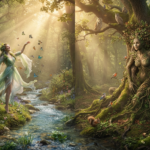
When exploring the question of who are the earth nymphs in Greek mythology, one must first turn to the Dryads, the most prominent and recognizable class of these terrestrial spirits. The term “drys” in ancient Greek signifies “oak,” revealing that these nature spirits were originally conceived as the specific spirits of oak trees before their designation expanded to encompass tree nymphs in general. Unlike their aquatic counterparts, the Naiads and Nereids, these forest guardians were intrinsically bound to the terrestrial landscape, embodying the life force that pulsed through every grove, woodland, and thicket across the ancient Greek world. The Dryads were not merely inhabitants of the forest; they were the forest itself, animate and sentient, their existence interwoven with the very bark and leaves of the trees they protected. This profound connection established them as vital intermediaries between the realm of mortals and the more distant Olympian deities, making them objects of veneration and fear among the rural populations who depended on the forest’s bounty for their survival. Their presence in mythology underscores the animistic worldview of the ancient Greeks, who perceived divine agency in every rustling leaf and creaking branch, recognizing that the natural world was alive with spiritual significance that demanded respect and reverence.
The Hamadryads: An Inseparable Bond of Life and Peril
Within the broader classification of Dryads exists a more specific and poignant subset known as the Hamadryads, whose fate was irrevocably linked to a singular, individual tree. This crucial distinction between general Dryads and Hamadryads illuminates the ancient Greek understanding of nature’s fragility and the ethical implications of environmental destruction. While the broader category of tree nymphs could potentially outlive individual trees or migrate between them, the Hamadryad was born at the very moment her specific tree sprouted from the earth and would perish alongside it when it fell or withered away. This intimate bond between the forest guardian and her arboreal home meant that to cut down a tree was not merely an act of resource extraction but constituted a form of divine homicide, inviting the wrath of both the dying nymph and her immortal kin. The tragic fate of the Hamadryads served as a powerful moral allegory, reinforcing the sacredness of the forest and warning against the reckless exploitation of natural resources that the Greeks understood could have dire spiritual consequences. Ancient texts recount tales of severe punishments befalling those who felled trees without proper propitiation, with the spirits of the forest visiting plagues, famines, or madness upon entire communities that disrespected their domain. The psychological weight of this belief system shaped Greek agricultural practices and forestry customs, embedding environmental consciousness within the very fabric of their religious and cultural traditions.
The Meliae: Nymphs Born from Primordial Blood and Cosmic Origins
Perhaps the most dramatic and cosmologically significant among the earth nymphs are the Meliae, the nymphs of the ash tree, whose origins emerge from one of Greek mythology’s most violent and transformative episodes. According to Hesiod’s Theogony, these ash-tree nymphs were born from the drops of blood that fell upon Gaia, the primordial Earth goddess, when the Titan Cronus castrated his father Uranus in a brutal act of cosmic rebellion. This genesis places the Meliae in a unique position among nature spirits, as they are not merely local deities but direct descendants of primordial forces, their very existence born from the fertile mingling of divine blood with the earth itself. The ash tree held particular significance in ancient Greek culture, its wood being used to craft spear shafts and tools, while its nymphs were associated with both warfare and the foundational Bronze Age of humanity. Beyond their violent origins, the Meliae are remembered for their nurturing role in the infancy of Zeus himself, when they sheltered the young god in a cave on Mount Dicte in Crete, protecting him from his father Cronus’s devouring hunger. This dual nature—born from violence yet serving as protectors of the divine child—reflects the complex and contradictory qualities that the Greeks attributed to the natural world, which could be simultaneously destructive and life-giving, savage and nurturing. The Meliae thus represent the archetypal earth spirits whose existence embodies the fundamental paradoxes of nature itself, reminding mortal observers that the forces sustaining life are inextricably linked to forces of chaos and transformation.
The Oreads: Mountain Guardians and Solitary Watchtowers
While the forests claimed the Dryads, the rugged highlands and rocky peaks of Greece were under the dominion of the Oreads, also known as Oreiades, the nymphs of mountains and grottoes. Deriving their name from the Greek word “oros” meaning mountain, these earth spirits inhabited the most inaccessible and untamed regions of the Greek landscape, embodying the wild, solitary, and often intimidating character of the mountainous terrain. Unlike the forest-dwelling Dryads who could be encountered in relatively accessible woodlands, the Oreads were creatures of the heights, watching from their rocky perches as the world of mortals unfolded far below in the valleys and coastal plains. Their isolation contributed to their characterization as more independent and less frequently depicted in mythological narratives, yet they played essential roles in various local cults and religious practices that honored the spirits of specific mountains such as Helicon, Cithaeron, and Taygetus. These mountain guardians were believed to inspire poets and prophets who wandered into their domains, granting gifts of prophecy and artistic inspiration to those they favored, while punishing those who trespassed with disrespect. The Oreads were also closely associated with the god Pan, the rustic deity of the wild, and often participated in the ecstatic dance of the Maenads, the female followers of Dionysus, linking them to the more frenzied and untamed aspects of Greek religious experience. Their presence on the mountain slopes reminded travelers that every peak, pass, and cave harbored its own divine intelligence, transforming the entire Greek landscape into a sacred geography where the boundary between human civilization and the wild divine was perpetually negotiated through ritual and reverence.
A Tapestry of Specialized Spirits in the Terrestrial Realm
The earth nymphs of Greek mythology extended far beyond these primary categories, forming an intricate tapestry of specialized spirits that personified every conceivable aspect of the terrestrial environment. The Alseides watched over groves, the Auloniades inhabited glens and pastoral valleys, while the Napaeae dwelled in secluded dells and forest clearings, each category representing the Greek impulse to find divine presence in every ecological niche. The Epimelides, also known as the Meliades, served as protectors of apple orchards and fruit trees as well as flocks of sheep, bridging the gap between the wild forest and the cultivated agricultural landscape that sustained Greek civilization. The Daphnaie, nymphs of the laurel tree, gained particular prominence through their association with Apollo, following the tragic transformation of Daphne into the laurel to escape the god’s pursuit, a story that established the laurel as a sacred plant in his cult. This proliferation of specialized earth spirits reflects the profound importance that the ancient Greeks placed on understanding their environment as a living, responsive entity rather than a passive resource to be exploited. Their mythology reveals a sophisticated ecological consciousness that recognized the interdependence of all living things and the spiritual consequences of disrupting the natural order, a worldview that stands in stark contrast to modern environmental attitudes. By naming and venerating the specific spirits of every tree, mountain, and meadow, the Greeks created a religious framework that encouraged careful stewardship of the land and maintained a deep sense of connection to the particular places that shaped their regional identities.
The Dual Nature and Enduring Legacy of the Earth’s Spirits
Understanding who are the earth nymphs in Greek mythology requires appreciating their complex dual nature as both benevolent nurturers and potentially dangerous forces capable of punishing human transgressions with swift and terrible justice. These forest guardians and mountain spirits were believed to possess powers of prophecy, conferring divine inspiration upon those they favored while leading the disrespectful to madness or ruin, a characteristic that made them objects of both devotion and caution in Greek religious practice. Their patronage of fertility and growth was essential for agricultural success, yet their wrath could manifest in crop failures, mysterious illnesses, or wild animals destroying livestock, compelling rural communities to maintain elaborate propitiatory rituals to ensure their continued goodwill. The stories of the earth nymphs have resonated through Western culture, influencing subsequent artistic, literary, and philosophical traditions that have found in these nature spirits a compelling symbol of humanity’s relationship with the wild. From the Roman adaptation of these Greek spirits in their own religiosity to the Romantic poets’ evocation of sylvan deities, the legacy of the Dryads, Hamadryads, Meliae, and Oreads continues to shape how we conceptualize the spiritual dimension of the natural world.
Conclusion: The Enduring Whisper of the Ancient Groves
In conclusion, when we ask, “Who are the earth nymphs in Greek mythology?”, we uncover a complex and sophisticated spiritual system that permeated every corner of the ancient Greek world. These nature spirits were not quaint fairy-tale figures but the embodied souls of the landscape itself—the Dryads in the forests, the Oreads on the mountain peaks, and the Meliae born from the very blood of the cosmos. They represented a profound and animistic worldview where the boundary between the human and the divine was fluid, and where every tree, mountain, and grove was a living entity with its own consciousness and agency. Their myths served as moral and ecological lessons, warning against the hubris of environmental destruction and reminding mortals of their dependence on the natural world. In an age of ecological crisis, these ancient goddesses of the land offer more than just fascinating mythological stories; they provide a philosophical framework for rethinking our relationship with nature—not as a resource to be dominated, but as a sacred, sentient realm to be respected. The ancient groves may have fallen silent to the modern ear, but their spiritual guardians continue to whisper through the myths, inviting us to listen and learn from a wisdom that is as old as the earth itself.

Orin Vale has spent the better part of two decades tracing the threads that connect the world’s oldest stories — from the halls of Asgard to the banks of the Nile, from Olympus to the jungles of the Maya. What began as a childhood fascination with flood myths and trickster gods grew into years of independent study across comparative mythology and ancient religion, always chasing the same question: what did these stories mean to the people who first told them? Orin writes for readers who want more than trivia — the ones looking for the beliefs, fears, and truths that myths were built to carry.