Who Are the Valkyries in Norse Mythology?
In the dramatic world of Norse myth, few figures are as striking as the Valkyries. These mysterious female beings appear on battlefields, ride through the skies, serve the god Odin, and guide chosen warriors to the afterlife. But who are the Valkyries in Norse mythology, and what role did they truly play?
The Valkyries are often imagined as fierce warrior women in shining armor, but their meaning in Norse tradition is deeper and more complex. They are connected to fate, death, honor, and the destiny of warriors.
The Meaning of the Word “Valkyrie”
The word Valkyrie comes from Old Norse valkyrja, meaning “chooser of the slain.” This name gives a clear clue to their main role in mythology.
On the battlefield, Valkyries were believed to decide which warriors would die and which would live. Those selected for death were not simply lost; many were chosen for a greater purpose. The Valkyries carried the bravest fallen warriors to Odin’s hall, Valhalla, where they would prepare for the final battle of Ragnarök.
This made the Valkyries both fearsome and honorable figures. To be chosen by them could mean death, but it also meant a place among the greatest warriors.
Servants of Odin
The Valkyries are most closely associated with Odin, the All-Father and one of the most powerful gods in Norse mythology. Odin was a god of wisdom, war, magic, poetry, and death. He constantly sought knowledge and gathered warriors for the coming end of the world.
The warriors chosen by the Valkyries were known as the Einherjar. They spent their days fighting and training in Valhalla, only to be healed and feast each night. Their purpose was to stand beside Odin during Ragnarök, the prophesied final battle between gods, giants, monsters, and the forces of chaos.
In this way, the Valkyries helped Odin prepare for the fate of the gods.
Valkyries on the Battlefield
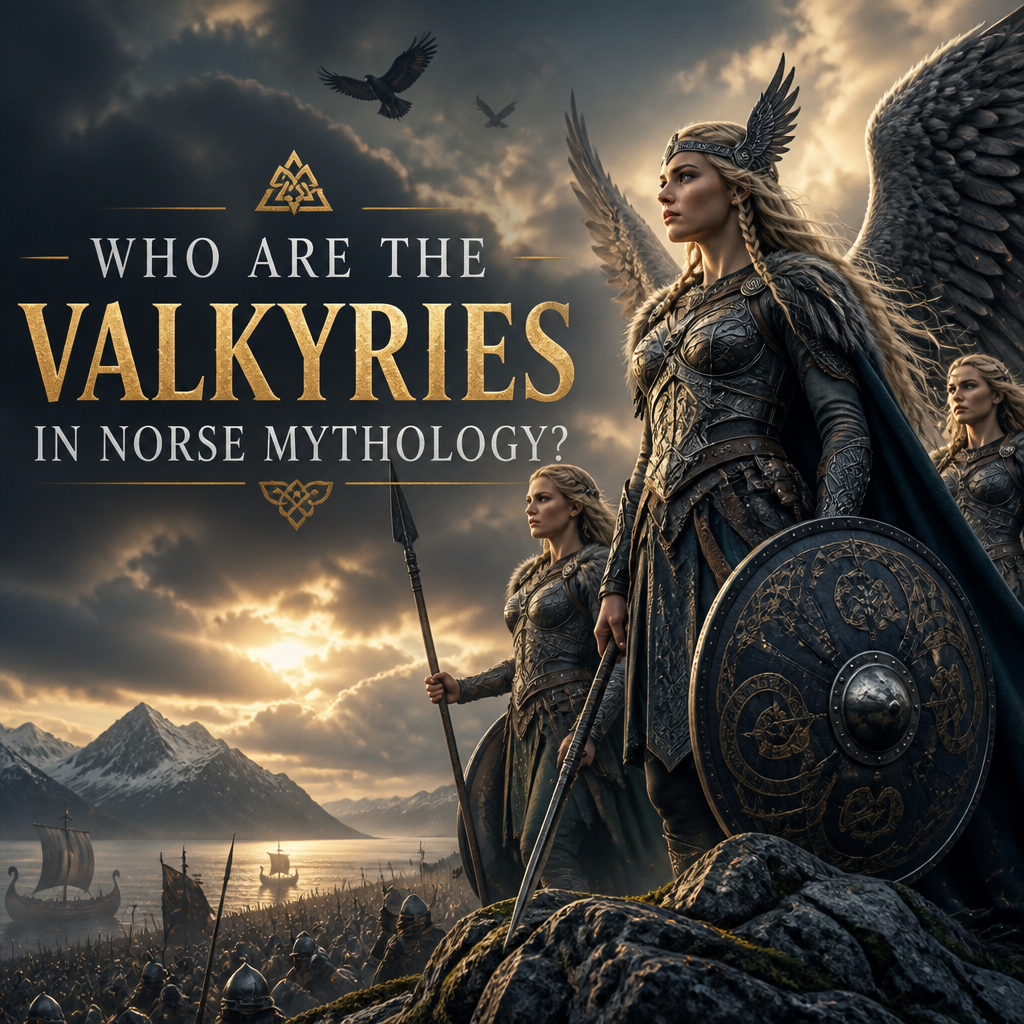
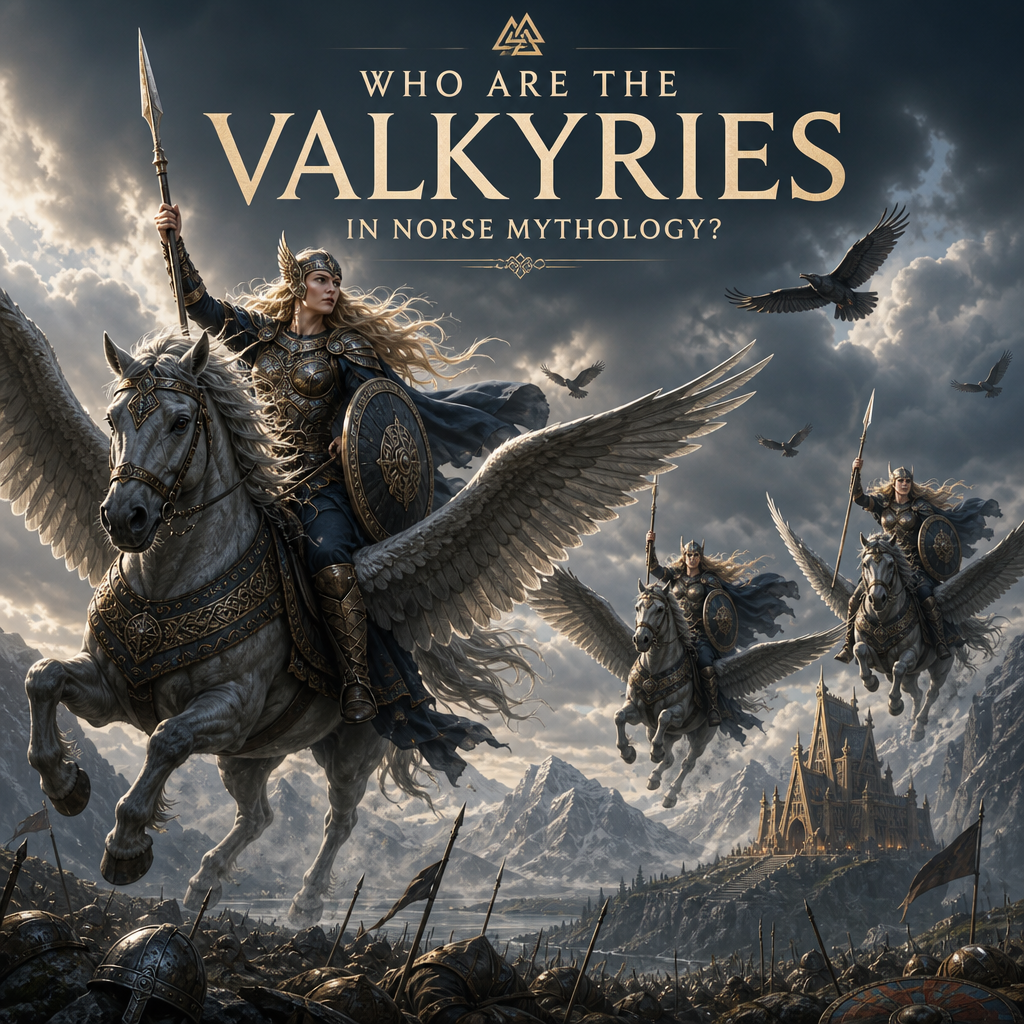
In many Norse poems and sagas, Valkyries appear in scenes of war. They ride over battlefields, sometimes on horses and sometimes through the air, wearing helmets and carrying spears. Their presence signals that the battle is not only a human struggle but also part of a larger supernatural design.
The Valkyries were not passive observers. They were linked to the outcome of battle and the weaving of fate. In some sources, they appear almost like spirits of death, terrifying and powerful. In others, they are noble maidens who honor heroic warriors.
Their image reflects the Norse view of battle: violent, dangerous, and tragic, but also tied to glory and destiny.
Life in Valhalla
Once the Valkyries brought fallen warriors to Valhalla, their role did not end. In some stories, they also served mead to the Einherjar in Odin’s great hall.
Valhalla is described as a magnificent place with a roof made of shields and rafters made of spears. There, warriors fought by day and feasted by night. The Valkyries moved among them, serving drink and maintaining the honor of the hall.
This side of the Valkyries is very different from their battlefield role. They are not only death-bringers but also figures of hospitality, ceremony, and divine service.
Famous Valkyries in Norse Mythology
Several Valkyries are named in Old Norse literature. Some are listed in poems, while others appear as major characters in heroic legends.
Brynhildr
One of the most famous Valkyries is Brynhildr, known from the Völsunga saga and related Germanic legends. She is a powerful and tragic figure associated with love, betrayal, and fate.
In some versions of her story, Brynhildr disobeys Odin and is punished by being placed in a magical sleep, surrounded by a ring of fire. She later becomes connected to the hero Sigurd, and their story ends in sorrow and death.
Sigrún
Sigrún appears in heroic poetry as a Valkyrie who falls in love with the warrior Helgi. Like many stories involving Valkyries, her tale blends battle, romance, loyalty, and tragedy.
Other Named Valkyries
Many Valkyries have names that reflect war and power. These include:
- Hildr, meaning “battle”
- Göndul, possibly connected to magic or wand-bearing
- Skögul, often associated with battle
- Gunnr, meaning “war”
- Róta, linked to confusion or storm
Their names emphasize their close relationship with combat, fate, and death.
Are Valkyries Goddesses?
Valkyries are sometimes described as divine or semi-divine beings, but they are not usually counted among the main gods and goddesses like Odin, Thor, Freyja, or Frigg. Their exact nature can vary depending on the source.
In some stories, they seem like supernatural spirits. In others, they appear almost human, capable of love, suffering, and personal choice. Some Valkyries are daughters of kings or heroes, while others belong clearly to Odin’s otherworldly realm.
This flexibility is part of what makes them so fascinating. They exist between worlds: human and divine, life and death, battlefield and afterlife.
Valkyries and Fate
Fate is one of the central themes in Norse mythology. Even the gods cannot fully escape it. The Valkyries are deeply tied to this idea because they help determine who falls in battle.
They are sometimes connected with the Norns, the female beings who shape destiny. While the Norns weave the fate of all beings, Valkyries carry out fate in the violent setting of war.
Their choices may seem cruel, but in the Norse worldview, death in battle could lead to honor and lasting fame. The Valkyries represent this difficult balance between doom and glory.
The Modern Image of the Valkyrie
Today, Valkyries often appear in books, films, games, operas, and artwork. Modern culture usually portrays them as armored warrior women with wings or winged helmets. While this image is powerful, it is not always historically accurate.
In the original Norse sources, Valkyries are more often described as riding horses, wearing helmets, and carrying weapons. The winged helmet is largely a later artistic invention.
Still, the modern image captures something essential: Valkyries are strong, awe-inspiring figures who stand at the edge of life and death.
Why the Valkyries Still Matter
So, who are the Valkyries in Norse mythology? They are the choosers of the slain, servants of Odin, guides to Valhalla, and symbols of fate in battle. They are both terrifying and honorable, both supernatural and deeply tied to human courage.
Their lasting appeal comes from their mystery. The Valkyries remind us that Norse mythology did not see death as simple defeat. For the bravest warriors, death could be a doorway to glory, chosen by powerful figures who rode between the worlds of gods and men.

Orin Vale has spent the better part of two decades tracing the threads that connect the world’s oldest stories — from the halls of Asgard to the banks of the Nile, from Olympus to the jungles of the Maya. What began as a childhood fascination with flood myths and trickster gods grew into years of independent study across comparative mythology and ancient religion, always chasing the same question: what did these stories mean to the people who first told them? Orin writes for readers who want more than trivia — the ones looking for the beliefs, fears, and truths that myths were built to carry.