Who Is Eros in Greek Mythology?
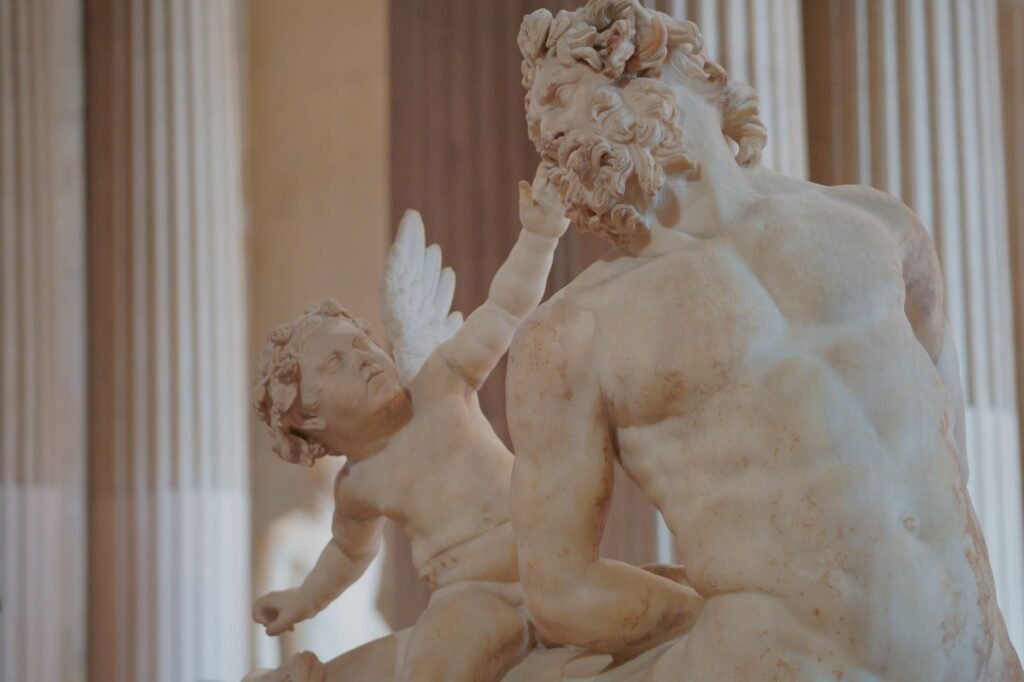
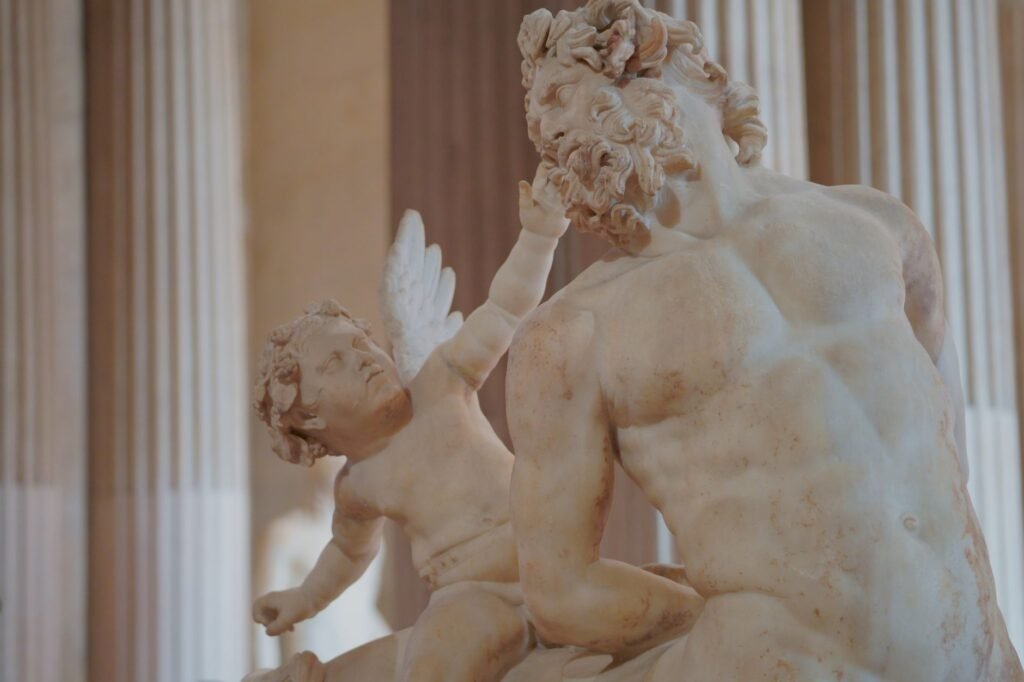
Eros is one of the most fascinating figures in Greek mythology, known as the god of love, desire, and attraction. While many people recognize him as the playful winged child who shoots arrows to make people fall in love, his role in ancient myth is much older and more complex than that popular image suggests.
In Greek thought, Eros represents the powerful force that draws beings together. He can inspire romance, passion, creativity, and even chaos. Depending on the myth, Eros appears either as a primordial cosmic power or as the youthful son of Aphrodite, the goddess of love and beauty.
The Origins of Eros
The answer to “who is Eros in Greek mythology?” depends partly on which ancient source you read. Greek mythology developed over many centuries, and different poets described Eros in different ways.
Eros as a Primordial God
In some of the oldest myths, Eros is not a mischievous child but one of the first beings to exist. The poet Hesiod, in Theogony, describes Eros as a primordial deity who emerged near the beginning of creation, alongside Chaos and Gaia.
In this version, Eros is not simply romantic love. He is a cosmic force of attraction that allows life and creation to begin. Without Eros, gods and mortals would not come together, and the universe would remain barren and still.
This early Eros is powerful, mysterious, and essential to existence.
Eros as the Son of Aphrodite
In later myths, Eros is more commonly known as the son of Aphrodite. His father is sometimes said to be Ares, the god of war, though other traditions name different fathers, including Hermes or Hephaestus.
As Aphrodite’s son, Eros becomes closely connected with romantic and physical desire. He often serves as his mother’s companion and assistant, using his arrows to stir love in gods and humans alike.
This version of Eros is the one most familiar today: youthful, winged, beautiful, and armed with a bow.
What Are Eros’s Symbols?
Eros is often shown with symbols that reflect his power over love and desire. These symbols helped ancient artists and storytellers make his identity clear.
Common symbols of Eros include:
- Bow and arrows: His most famous tools, used to inspire love or desire.
- Wings: A sign of the sudden, unpredictable nature of love.
- Torch: A symbol of burning passion.
- Youthful appearance: Often representing the impulsive and playful qualities of desire.
In some myths, Eros has two types of arrows. Golden arrows make people fall deeply in love, while leaden arrows create rejection or aversion. This idea appears famously in the myth of Apollo and Daphne.
Eros and Psyche
One of the most famous stories involving Eros is the myth of Eros and Psyche. This tale is a beautiful and dramatic story about love, trust, betrayal, and redemption.
Psyche was a mortal princess so beautiful that people began worshiping her instead of Aphrodite. Angered by this, Aphrodite ordered Eros to make Psyche fall in love with a terrible creature. But when Eros saw Psyche, he accidentally wounded himself with one of his own arrows and fell in love with her.
Eros secretly brought Psyche to a magnificent palace, where he visited her only at night. He told her she must never look at his face. Psyche’s jealous sisters convinced her that her mysterious husband might be a monster, so she lit a lamp while he slept. Instead of a monster, she saw the beautiful god Eros.
A drop of hot oil fell from the lamp and woke him. Feeling betrayed, Eros left her.
Psyche then endured a series of difficult trials set by Aphrodite in order to win him back. With divine help, she completed the tasks. Eventually, Zeus granted Psyche immortality, and she and Eros were reunited.
Their story became a lasting symbol of the soul’s journey through suffering toward divine love. In fact, Psyche’s name means “soul” in Greek.
Eros and Cupid
Eros is often compared to Cupid, the Roman god of love. In many ways, they are the same figure adapted into different cultures. Cupid is the Roman version of Eros, and later Roman art helped shape the image of the chubby, winged child associated with Valentine’s Day.
However, the Greek Eros originally had a broader and sometimes more serious meaning. He was not only a symbol of romance but also a force of creation, attraction, and transformation.
Over time, both Eros and Cupid became linked with playful love, courtship, and romantic longing.
Eros in Art and Literature
Eros was a popular subject in ancient Greek art. He appears on pottery, sculptures, and jewelry, often shown flying with his bow or standing beside Aphrodite. Early images sometimes present him as a handsome youth, while later art increasingly shows him as a child.
Greek poets and philosophers also explored the meaning of Eros. For some writers, Eros was dangerous because desire could overpower reason. For others, Eros was inspiring because love could lift the soul toward beauty and truth.
In Plato’s Symposium, Eros is discussed not merely as physical attraction but as a longing for beauty, wisdom, and immortality. This philosophical view helped shape later ideas about love as something that can be both earthly and spiritual.
Why Eros Matters in Greek Mythology
Eros matters because he represents one of the strongest forces in human life. Love and desire can bring joy, connection, and creation, but they can also cause conflict, jealousy, and suffering. Greek myths often show love as powerful and unpredictable, and Eros embodies that truth.
He is not just a minor god with a bow. He is a symbol of attraction in all its forms, from the beginning of the cosmos to the private emotions of the human heart.
Conclusion
So, who is Eros in Greek mythology? He is the Greek god of love, desire, and attraction, known both as a primordial force of creation and as the winged son of Aphrodite. His myths reveal the beauty and danger of love, showing how desire can shape the lives of gods and mortals alike.
Whether appearing as a cosmic power, a youthful archer, or the devoted lover of Psyche, Eros remains one of mythology’s most enduring figures. His stories continue to remind us that love is mysterious, transformative, and impossible to fully control.

Orin Vale has spent the better part of two decades tracing the threads that connect the world’s oldest stories — from the halls of Asgard to the banks of the Nile, from Olympus to the jungles of the Maya. What began as a childhood fascination with flood myths and trickster gods grew into years of independent study across comparative mythology and ancient religion, always chasing the same question: what did these stories mean to the people who first told them? Orin writes for readers who want more than trivia — the ones looking for the beliefs, fears, and truths that myths were built to carry.