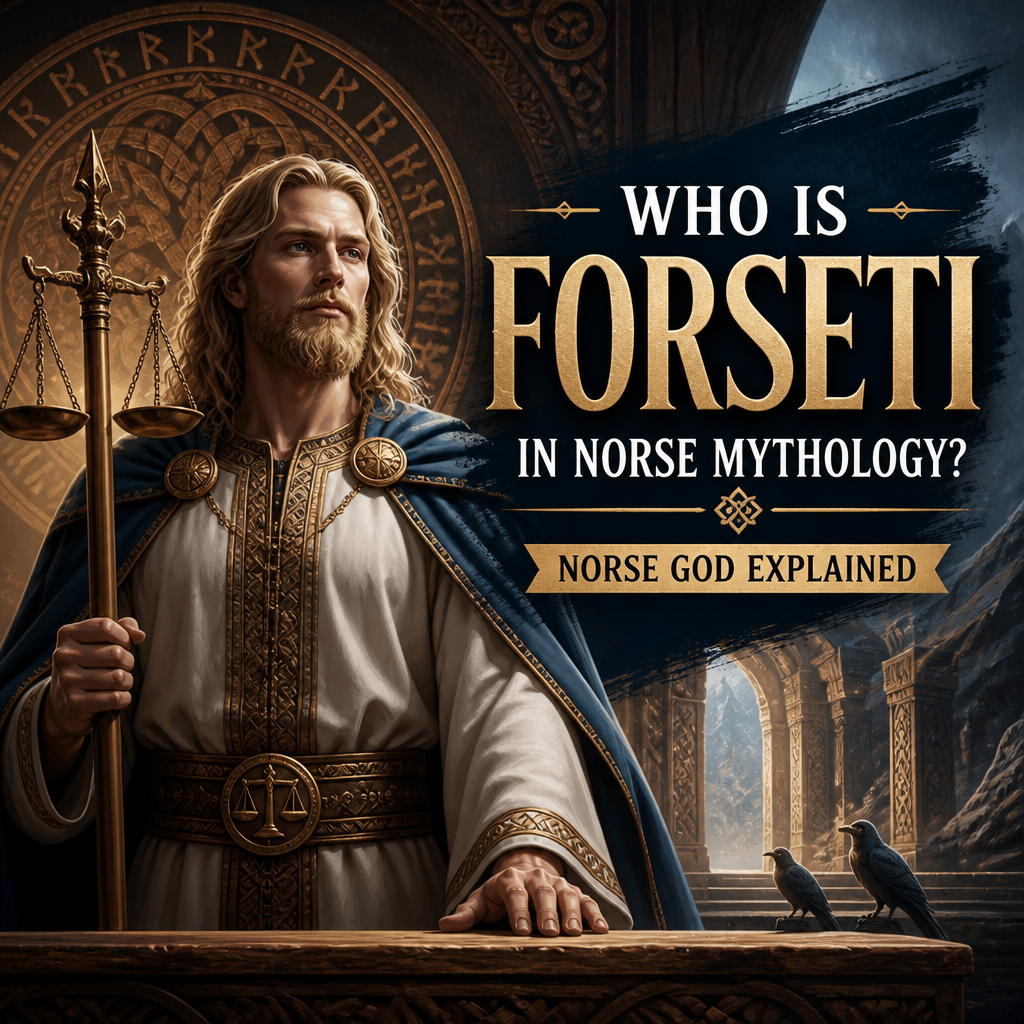
Who Is Forseti in Norse Mythology?
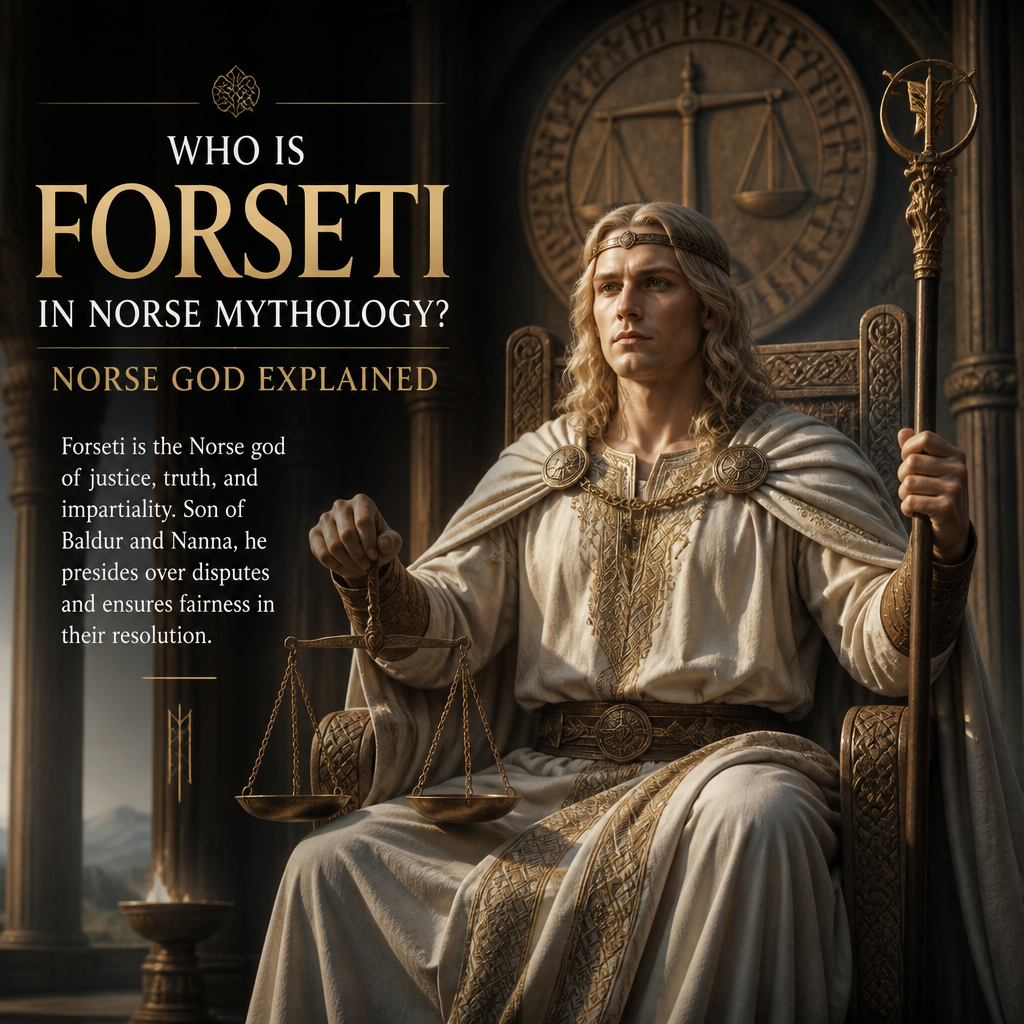
Among the many gods of the Norse pantheon, some are famous for thunder, war, magic, or mischief. Others are quieter but no less important. Forseti is one of these lesser-known figures. If you have ever wondered who is Forseti in Norse mythology, the short answer is that he is a god associated with justice, mediation, and peaceful settlement.
Unlike Odin, Thor, or Loki, Forseti does not appear in many dramatic myths. He is not known for slaying giants or reshaping the world through trickery. Instead, his role is tied to law, fairness, and the resolution of disputes. In a culture where honor, oaths, and legal assemblies mattered deeply, Forseti’s place among the gods carried real significance.
Forseti’s Family and Place Among the Gods
Forseti is described as the son of Baldr and Nanna. Baldr, known for his beauty, purity, and tragic death, is one of the most beloved gods in Norse mythology. Nanna, Baldr’s wife, dies of grief after his death and joins him on his funeral pyre.
This lineage gives Forseti a noble and radiant background. As the child of Baldr, he is connected to themes of goodness, light, and moral clarity. While the surviving sources say little about his personality, his association with justice seems fitting for the son of such a revered god.
Forseti belongs to the Aesir, the major tribe of Norse gods that includes Odin, Frigg, Thor, Tyr, and many others. The Aesir are often linked with rulership, war, order, and cosmic authority, and Forseti represents the legal and peaceful side of that divine order.
The Meaning of Forseti’s Name
The name “Forseti” is usually interpreted as meaning “presiding one” or “chairman.” This meaning fits closely with his role as a judge or mediator. In ancient Germanic society, legal disputes were often settled at assemblies where leaders and law-speakers presided over arguments, judgments, and agreements.
Rather than suggesting a warrior god, Forseti’s name evokes someone seated in authority, listening to both sides and guiding people toward a resolution. His power lies not in force, but in wisdom, balance, and the ability to bring conflict to an end.
Glitnir: Forseti’s Golden Hall
One of the most important details about Forseti comes from the Prose Edda, written by the Icelandic scholar Snorri Sturluson in the 13th century. Forseti is said to dwell in a magnificent hall called Glitnir.
Glitnir is described as having pillars of gold and a roof of silver. Its name means “shining” or “gleaming,” which suggests a place of clarity and purity. This shining hall is not a battlefield or a feasting hall, but a court of justice.
People and gods who come to Glitnir with disputes leave reconciled. This is the heart of Forseti’s identity: he is the divine peacemaker. His hall is a place where quarrels are settled fairly, and where conflict is transformed into agreement.
What Glitnir Represents
Glitnir can be understood symbolically as:
- A place of truth and fairness
- A divine court where disputes are resolved
- A symbol of peaceful law rather than violent revenge
- A reflection of Forseti’s calm and balanced nature
In Norse culture, where feuds could last for generations, the idea of a god who could end disputes peacefully would have been powerful.
Forseti as a God of Justice
Forseti is often called a god of justice, though his kind of justice seems different from punishment or vengeance. He is not portrayed as a stern executioner. Instead, he is a mediator who helps opposing sides find peace.
This makes him distinct from Tyr, another Norse god associated with law and honor. Tyr is more closely connected with sacrifice, oath-keeping, and heroic courage, especially in the famous myth of the binding of Fenrir. Forseti, by contrast, represents calm judgment and reconciliation.
His justice is not about winning a conflict. It is about ending one.
Sources About Forseti
Forseti appears only briefly in surviving Norse texts. The main references come from:
- The Prose Edda, especially in descriptions of the gods and their halls
- The Poetic Edda, where he is mentioned in lists of divine figures
- Later scholarly interpretations and comparisons with Germanic traditions
Because the sources are limited, much about Forseti remains uncertain. There are no long surviving stories in which he plays a major active role. Still, the details we do have are consistent: Forseti is linked to judgment, peace, and the settlement of disputes.
Was Forseti Worshipped?
There is some evidence that Forseti may have had importance beyond the myths preserved in Iceland. Some scholars have connected him with a Frisian deity known as Fosite or Foseti, who may have been worshipped on the island of Heligoland in the North Sea.
According to later accounts, this sacred island was associated with laws, oaths, and holy springs. While it is difficult to know exactly how closely the Frisian Fosite and the Norse Forseti are related, the similarities are striking.
If the connection is accurate, Forseti may have been part of a wider Germanic tradition of divine law and sacred judgment.
Why Forseti Matters
Forseti may not be one of the most famous Norse gods, but his role is meaningful. Norse mythology is often remembered for its battles, monsters, and doomed struggle at Ragnarok. Yet it also contains strong concerns with law, order, honor, and social peace.
Forseti embodies the hope that conflict can be resolved without bloodshed. He represents the wisdom needed to listen, judge fairly, and bring enemies to agreement.
In that sense, Forseti offers a different kind of divine strength. His power is not the hammer of Thor or the spear of Odin. It is the ability to create harmony where there was conflict.
Final Thoughts
So, who is Forseti in Norse mythology? He is the Aesir god of justice, mediation, and reconciliation, the son of Baldr and Nanna, and the ruler of the shining hall Glitnir. Though he appears only briefly in surviving myths, his symbolism is clear and important.
Forseti reminds us that Norse mythology was not only about war and fate. It was also about law, fairness, and the difficult work of making peace.

Orin Vale has spent the better part of two decades tracing the threads that connect the world’s oldest stories — from the halls of Asgard to the banks of the Nile, from Olympus to the jungles of the Maya. What began as a childhood fascination with flood myths and trickster gods grew into years of independent study across comparative mythology and ancient religion, always chasing the same question: what did these stories mean to the people who first told them? Orin writes for readers who want more than trivia — the ones looking for the beliefs, fears, and truths that myths were built to carry.