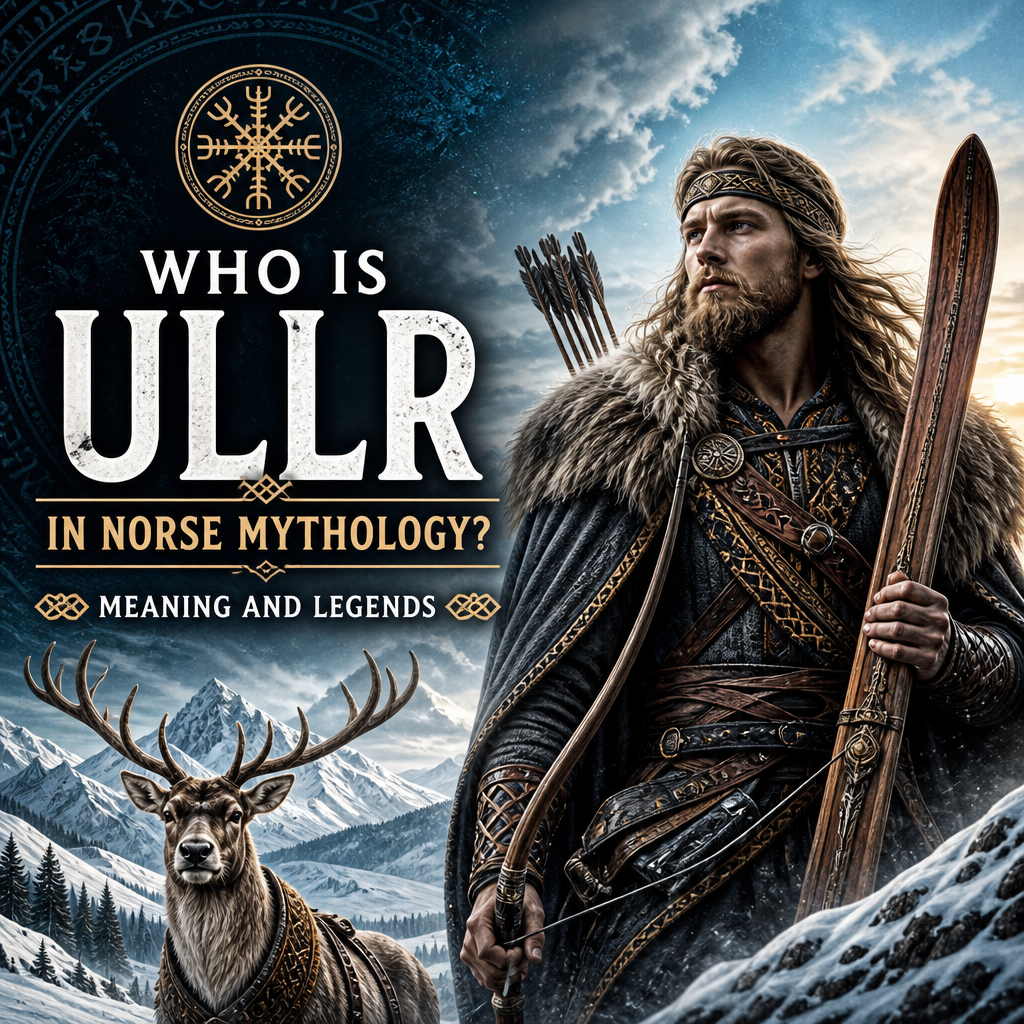
Who Is Ullr in Norse Mythology?
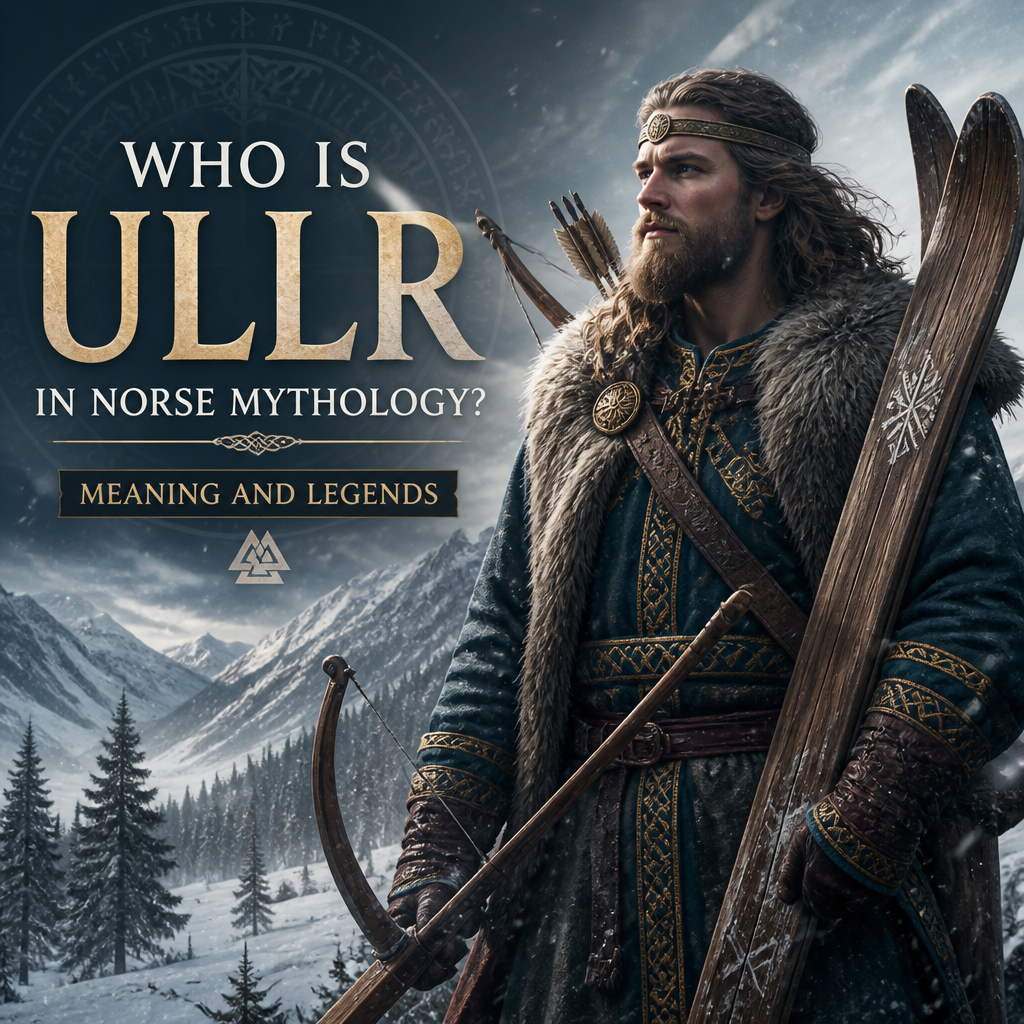
Ullr is one of the more mysterious gods in Norse mythology. While he is not as famous as Odin, Thor, or Loki, he held an important place in the religious imagination of the Norse world. Associated with archery, skiing, hunting, winter, and oaths, Ullr appears only briefly in surviving myths, yet the evidence suggests he may once have been widely honored.
So, who is Ullr in Norse mythology? He is a god linked to skill, speed, survival, and sacred promises. Though the myths about him are few, his name appears in poetry, place names, and later traditions that hint at a deeper and older significance.
Ullr’s Place Among the Norse Gods
Ullr belongs to the group of gods known as the Æsir, the same divine family that includes Odin, Thor, Frigg, and Tyr. In the Prose Edda, written by the Icelandic scholar Snorri Sturluson in the 13th century, Ullr is described as the son of Sif and the stepson of Thor.
This family connection is interesting because Sif is best known as Thor’s golden-haired wife. Ullr’s biological father is not clearly identified in surviving sources, which adds to the mystery surrounding him.
Snorri presents Ullr as a handsome, strong, and highly skilled god. He is especially praised for his ability with a bow and his skill on skis. These traits connect him closely with the northern landscape, where hunting, travel over snow, and physical endurance were essential parts of life.
God of Archery, Skiing, and Hunting
Ullr is often described as a god of archery and skiing. In the harsh Scandinavian environment, both skills had practical and symbolic importance. A skilled archer could hunt for food and defend a community, while skiing allowed people to move efficiently through snow-covered forests and mountains.
Because of this, Ullr is sometimes viewed as a patron of hunters, warriors, and winter travelers. His abilities suggest precision, independence, and mastery over difficult terrain.
Ullr’s Key Associations
Ullr is commonly connected with:
- Archery and expert marksmanship
- Skiing and winter travel
- Hunting in snowy landscapes
- Oaths and solemn vows
- Combat skill and personal honor
- Winter and survival in harsh conditions
These associations make Ullr a distinctive figure among the Norse gods. While Thor represents thunder and brute strength, and Odin represents wisdom, war, and magic, Ullr represents controlled skill, mobility, and discipline.
Ullr and Sacred Oaths
One of Ullr’s most intriguing roles is his connection to oaths. In ancient Norse culture, oaths were serious matters. A sworn promise could bind people politically, legally, and spiritually. Breaking an oath was not simply dishonest; it could be seen as a violation of sacred order.
Some Old Norse sources refer to “Ullr’s ring,” which may have been used in oath-taking ceremonies. Rings were important symbols in Germanic and Norse societies, often associated with loyalty, gift-giving, and legal promises.
Although the details are unclear, this connection suggests that Ullr may have had a formal religious role beyond hunting and winter sports. He may have been invoked as a witness to promises, especially those made in public or ritual settings.
Why Is Ullr So Mysterious?
Despite his apparent importance, Ullr appears in very few surviving myths. No major story centered on him has come down to us. This absence has led scholars and readers to wonder whether many stories about Ullr were simply lost over time.
Norse mythology was passed down orally for generations before being written in medieval Iceland. By the time writers like Snorri recorded these traditions, some gods may have faded in popularity or been remembered only in fragments.
Ullr may be one of those gods. His presence in place names across Scandinavia suggests that he was once more widely worshiped than the surviving texts show. Names connected to Ullr have been found especially in Sweden and Norway, pointing to a strong cult or tradition associated with him.
Ullr in Place Names and Worship
Place names are an important clue in understanding Ullr’s significance. In parts of Scandinavia, locations appear to preserve his name, suggesting that communities may once have dedicated sacred sites, farms, or natural places to him.
This matters because place names often reflect older religious practices. If a god’s name appears repeatedly in the landscape, it may indicate that people worshiped or honored that deity in daily life.
Ullr’s name appearing in various Scandinavian place names supports the idea that he was not a minor figure in the Viking Age or earlier periods. Instead, he may have been a major god whose myths were not preserved in the written record.
Ullr and Winter Symbolism
Modern readers often associate Ullr strongly with winter. This connection comes naturally from his links to skiing, hunting, and snowy terrain. In a Norse context, winter was not only a season but also a test of preparation, endurance, and skill.
Ullr’s winter symbolism is different from simple cold or darkness. He represents the ability to move through winter successfully. He is not helpless before the snow; he glides across it. He is not merely surviving the wild; he is hunting within it.
This makes Ullr a powerful figure of confidence and competence. He embodies the knowledge needed to thrive in difficult conditions.
Ullr in Modern Culture
Today, Ullr is especially popular among skiers and winter sports enthusiasts. In some mountain communities, particularly in places influenced by Scandinavian heritage, Ullr is celebrated as a kind of patron of snow and skiing.
Festivals and events named after Ullr often involve skiing, winter celebrations, and hopes for good snowfall. While these modern traditions are not always direct continuations of ancient worship, they reflect the lasting appeal of Ullr’s image.
He has also appeared in books, games, and modern retellings of Norse mythology, usually as a skilled archer, hunter, or winter god.
The Meaning of Ullr’s Name
The exact meaning of Ullr’s name is debated, but it is often connected with ideas of glory, splendor, or honor. This fits well with his possible role in oaths and his reputation as a noble, skilled god.
If Ullr’s name does carry meanings related to glory or brightness, it adds another layer to his character. He may not simply be a practical god of skiing and archery, but also a deity connected to prestige, sacred authority, and honorable action.
Why Ullr Still Matters
Ullr may not have many surviving myths, but he remains one of the most fascinating figures in Norse mythology. His mystery is part of his appeal. He stands at the edge of the known stories, visible through brief references, poetic hints, and ancient place names.
To ask “who is Ullr in Norse mythology” is to explore a god of skill, winter, vows, and forgotten worship. He reminds us that Norse mythology is not limited to the most famous tales. Some gods survive only in fragments, yet those fragments can reveal a rich and meaningful tradition.
Ullr is the silent archer on skis, the guardian of oaths, and the master of snowy wilderness. Though much about him has been lost, what remains suggests a god once honored for courage, precision, and the ability to move gracefully through a harsh world.

Orin Vale has spent the better part of two decades tracing the threads that connect the world’s oldest stories — from the halls of Asgard to the banks of the Nile, from Olympus to the jungles of the Maya. What began as a childhood fascination with flood myths and trickster gods grew into years of independent study across comparative mythology and ancient religion, always chasing the same question: what did these stories mean to the people who first told them? Orin writes for readers who want more than trivia — the ones looking for the beliefs, fears, and truths that myths were built to carry.