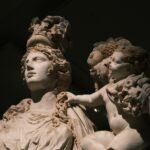
Staff of Asclepius
Introduction

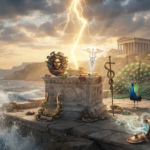
The Staff of Asclepius is one of the most enduring symbols from the ancient Greek world. Traditionally represented as a single serpent coiled around a wooden staff, it is associated with Asclepius, the Greek god of medicine, healing, and medical expertise. In antiquity, the staff signified the sacred and practical power of healing, while in modern times it has become a widely recognized emblem of medicine and healthcare.
Its importance lies in both mythology and history. In Greek religion, the staff belonged to a healing deity whose cult centered on temples, rituals, and dream incubation. In later centuries, the image was adopted in medical contexts, although it is often confused with the caduceus of Hermes, a different symbol with a different mythological meaning. Understanding the Staff of Asclepius therefore requires attention to classical myth, religious practice, and the evolution of medical symbolism.
Origin and Meaning
The name Asclepius appears in ancient Greek as Asklēpios (Ἀσκληπιός). The exact etymology of the name is uncertain and has been the subject of scholarly debate. No single derivation is universally accepted.
The word staff refers to a simple walking stick or rod. In symbolic terms, a staff often represents authority, guidance, age, or journeying. In the case of Asclepius, the staff may also suggest the practical tools of a wandering healer or physician.
The serpent coiled around the staff is the defining visual feature. In Greek culture, snakes could symbolize renewal, healing, and the cycle of life because they shed their skin. They were also connected to the earth and to chthonic powers, which made them suitable companions for a god who mediated between illness and recovery, life and death.
Historical Context
The worship of Asclepius developed in the Greek world during the archaic and classical periods and became especially prominent from the 5th century BCE onward. Although later myth presents Asclepius as a divine healer, his cult was also deeply practical. Sanctuaries dedicated to him functioned as healing centers where the sick sought cure through ritual, sleep, divine revelation, and what might be described as sacred medicine.
This religious context reflected broader Greek attitudes toward illness. Disease could be understood in several ways: as a natural condition, as the result of divine displeasure, or as something requiring ritual purification. Healing therefore belonged both to medicine and to religion. Asclepius occupied the space between these domains.
His cult spread widely across the Greek world and later into Roman territory. Major sanctuaries at Epidaurus, Cos, Pergamon, and other sites became centers of pilgrimage. People traveled to them seeking relief from chronic illness, injuries, and infertility, or to receive guidance in dreams. The staff of Asclepius came to symbolize this sacred medical tradition.
Main Characteristics
The Staff of Asclepius is usually identified by the following features:
- A single serpent wrapped around a staff
- A plain wooden rod, rather than an ornate scepter
- An association with healing and medicine
- A connection to Asclepius’s cult and sanctuaries
The image is simple, but its symbolism is layered. The staff suggests support, stability, and the role of the healer as guide. The serpent adds meanings of regeneration, vigilance, hidden wisdom, and the power to renew life.
Unlike royal emblems, the Staff of Asclepius is not primarily a sign of political authority. It is a sacred and professional emblem associated with healing knowledge. In later medical institutions, the symbol came to represent physicians, hospitals, and the healing arts more broadly.
Family and Genealogy
Asclepius belongs to the complex divine family of Greek mythology. Ancient sources generally agree that he was the son of Apollo, but accounts of his mother vary.
Parentage
Different traditions name his mother as:
- Coronis, a mortal woman
- Arsinoe, in some local traditions
- Other regional variants, depending on source and cult
The best-known version is that Asclepius was born to Apollo and Coronis. In this story, Coronis was punished after being unfaithful or after Apollo became aware of her relationship with another man. Apollo or his divine agents caused her death, but the child was saved.
Spouse and Children
Asclepius is commonly said to have married Epione, whose name is associated with soothing or easing pain. Their children appear in different lists, depending on the source. The most frequently mentioned are:
| Name | Association |
|---|---|
| Hygieia | Health and cleanliness |
| Iaso | Recovery or cure |
| Aceso | Healing process |
| Aegle | Brightness or splendor, sometimes linked with health |
| Panacea | Universal remedy |
| Machaon | Healer and warrior in Homeric tradition |
| Podalirius | Healer and warrior in Homeric tradition |
Some traditions also regard Telesphorus as connected with Asclepius, though his exact status varies by region and author.
Genealogical Significance
The family of Asclepius reflects a broader medical theology. His children personify different aspects of health, cure, and recovery, while his sons Machaon and Podalirius appear in heroic epic as skilled physicians in the Trojan War. This family network reinforced Asclepius’s identity as the divine source of healing expertise.
Symbols
The Staff of Asclepius is the central symbol associated with the god, but several related symbols and objects appear in his cult and iconography.
Key symbols
| Symbol | Meaning |
|---|---|
| Single serpent | Renewal, healing, rebirth, vigilance |
| Wooden staff | Support, authority, guidance, healing journey |
| Laurel | Connection to Apollo |
| Incubation bed | Sacred sleep and dream healing |
| Temple inscriptions or votive offerings | Gratitude for cures |
Meaning of the serpent
The serpent is especially important. In many ancient cultures, snakes carried ambivalent symbolism. They could be dangerous, but also wise and regenerative. In Asclepian contexts, the snake is generally interpreted as a symbol of healing power and the renewal of life.
The precise reasons for the serpent’s association with Asclepius are not fully recoverable. Ancient religious practice and myth do not provide a single explanation, and later interpretations may simplify a more complex symbolic history.
Sacred Animals
The serpent is the principal sacred animal of Asclepius. In sanctuaries, snakes were sometimes allowed to move freely, and their presence reinforced the god’s role as a healer.
Snake symbolism
The snake was significant for several reasons:
- It sheds its skin, suggesting renewal and rebirth
- It lives close to the earth, linking it to chthonic and sacred forces
- It appears in healing contexts in Greek religion and folklore
- It can serve as a guardian of sacred spaces
Other animals are less central but still relevant in some traditions.
Dogs
Dogs are associated with Asclepius in some cult settings, particularly because they were thought to have healing or cleansing qualities. Ancient sanctuaries sometimes kept dogs that could lick wounds, although modern readers should be cautious about assuming uniform practice across all sites and periods.
Roosters
Roosters also appear in relation to Asclepius. In Plato’s Phaedo, Socrates’s final words include a request to sacrifice a rooster to Asclepius, a statement that has generated extensive interpretation. The rooster may symbolize recovery, vigilance, or a debt owed to the healing god.
Sacred Plants
Several plants are associated with Asclepius or with healing traditions linked to him, though the evidence varies by source and locale.
Laurel
Because Asclepius was the son of Apollo, the laurel is sometimes associated with him through his father. Laurel had broad ritual significance in Greek religion and was linked to purification and prophecy.
Medicinal herbs
The cult of Asclepius was closely connected with the practical use of herbs and remedies. Ancient healing sanctuaries did not separate ritual from treatment in the modern sense. As a result, a wide range of medicinal plants may have been used in Asclepian contexts, though no single plant can be identified as universally sacred.
Sacred groves
Some sanctuaries were set in groves or natural environments. Trees and plants in such settings contributed to the sacred atmosphere of healing places.
Sacred Places
The most famous sanctuary of Asclepius was at Epidaurus in the northeastern Peloponnese. This site became one of the major healing centers of the ancient Greek world.
Major sites connected with Asclepius
| Location | Significance |
|---|---|
| Epidaurus | Most famous Panhellenic sanctuary of Asclepius |
| Cos | Important healing center and later associated with Hippocratic medicine |
| Pergamon | Major Hellenistic and Roman Asclepian sanctuary |
| Athens | Sanctuary of Asclepius established on the south slope of the Acropolis |
| Trikka/Tricca | Often claimed as an early center of his worship |
| Rome | Later adopted Asclepian worship, especially during plague and crisis |
Epidaurus
Epidaurus was especially important because of its inscriptions, healing traditions, and monumental remains. Pilgrims came there to undergo incubation, a sacred sleep intended to produce dreams in which the god revealed a cure or prescribed treatment.
Cos
The island of Cos became famous as a center of medicine and is traditionally linked with the Asclepiadae, the healing lineage associated with Asclepius. Its reputation later connected the god’s cult with more systematic medical learning.
Pergamon
At Pergamon, the cult of Asclepius reached impressive scale. Roman sources and archaeological remains show the sanctuary functioning as a healing complex in the Hellenistic and imperial periods.
Powers and Attributes
Asclepius is the Greek god of healing, but his powers are broader than simple cure.
Main domains
- Medicine and healing
- Recovery from illness
- Treatment of wounds
- Purification and ritual restoration
- Dream healing and divine diagnosis
- Protection of health
- Knowledge of drugs and remedies
In myth, Asclepius was so skilled that he could restore the dead to life. This power, however, exceeded divine and cosmic boundaries and led to conflict with Zeus. As a result, Asclepius’s abilities are sometimes presented as dangerously powerful: healing can approach the limit between mortality and immortality.
His attributes also include compassion, expertise, and authority in medical matters. In art, he is often depicted as a mature, bearded man, carrying the staff and accompanied by the serpent.
Main Myths
The myths of Asclepius focus on birth, training, miraculous healing, and punishment for transgressing the boundaries of death.
Birth and rescue
In the best-known version, Asclepius was born from Apollo and Coronis. After Coronis’s death, Apollo rescued the child, and Asclepius was entrusted to the centaur Chiron, who taught him the art of healing. Some traditions emphasize the role of Chiron as a wise tutor of heroes and medical knowledge.
Healing and resurrection
Asclepius became so adept at healing that he could bring the dead back to life. Ancient authors disagree on the details, but several figures are said to have been restored by him in some version of the story. This act angered Zeus, who feared that the natural order between mortals and gods was being overturned.
Punishment by Zeus
Zeus killed Asclepius with a thunderbolt. Apollo, enraged by the death of his son, responded against the Cyclopes who forged Zeus’s thunderbolts in some traditions. The story underscores the tension between healing power and divine limits.
Apotheosis
After his death, Asclepius was honored as a god. Some traditions describe his placement among the stars or his continued divine status in the underworld or among the immortals. The myth thus moves from mortal healer to fully divine physician.
Relationship with Other Mythological Figures
Asclepius’s relations with other figures are central to his mythological identity.
Apollo
Apollo is both father and divine model. As a god of prophecy, purification, and healing, Apollo provides a framework for Asclepius’s sacred status. Yet Asclepius also represents a specialization of healing beyond Apollo’s broader powers.
Chiron
Chiron is the archetypal mentor. As a wise centaur associated with education and medicine, he teaches Asclepius healing skills. This relationship places Asclepius within the heroic and pedagogical traditions of Greek myth.
Hygeia and the healing family
The goddesses and divine figures connected to Asclepius form a healing household. Hygieia especially became important in later cult and iconography as the personification of health.
Zeus
Zeus is the enforcer of cosmic order. His destruction of Asclepius after the healing god’s resurrection of the dead shows that divine power is not unlimited, even when directed toward benevolent ends.
Hermes
Hermes is not directly related to the Staff of Asclepius, but confusion between their symbols is common in modern times. Hermes bears the caduceus, a staff with two serpents and wings, which is distinct from the single-snake staff of Asclepius.
Worship and Cult
The cult of Asclepius was among the most widespread and influential healing cults of the ancient Mediterranean.
Ritual practices
Typical cult practices included:
- Purification
- Offerings and sacrifices
- Incubation or sacred sleep
- Consultation of priests
- Votive dedications after healing
- Observation of ritual diet or abstinence in some cases
At sanctuaries like Epidaurus, the sick would sleep in a special sacred area. During sleep, they might dream of Asclepius or his sacred animals, and priests would interpret the dream or prescribe treatment.
Votive offerings
Those who believed they had been cured often dedicated offerings in gratitude. These could include:
- Inscriptions describing the cure
- Small models of healed body parts
- Statues or plaques
- Animal sacrifices
Such dedications provide valuable evidence for the practical, lived religion of Asclepius’s cult.
Professional associations
Physicians in the ancient world sometimes traced their lineage to Asclepius through the Asclepiadae, a group or family tradition associated with medical knowledge. The degree to which this was a literal family line or a broader professional identity varied.
Ancient Sources
The Staff of Asclepius and the god’s mythology appear in many ancient texts.
Important classical sources
| Author | Work | Relevance |
|---|---|---|
| Homer | Iliad | Machaon and Podalirius as physicians |
| Pindar | Fragments and odes | Early references to Asclepius and healing |
| Hesiod | Fragmentary traditions | Genealogical background |
| Apollodorus | Bibliotheca | Mythic summary of Asclepius’s birth and death |
| Pausanias | Description of Greece | Descriptions of sanctuaries and cult practices |
| Plato | Phaedo | Famous reference to a rooster offered to Asclepius |
| Ovid | Metamorphoses | Later literary reflections on healing divinity |
| Hippocratic writings | Various texts | Medical context relevant to Asclepian healing culture |
Value of the sources
No single ancient source gives a complete account. Mythological details differ by region, author, and period. Archaeological evidence, especially from sanctuaries and inscriptions, is essential for understanding the cult beyond literary myth.
Roman Equivalent
There is no exact Roman equivalent to the Staff of Asclepius, because the symbol refers specifically to Greek Asclepian tradition. However, the Roman adaptation of the god was Aesculapius.
The Romans adopted the cult, especially in times of plague or crisis. A sanctuary on the Tiber Island in Rome became associated with his worship. The staff with a single serpent continued to represent healing and later entered broader European medical iconography.
It is important to distinguish the Staff of Asclepius from the caduceus of Mercury/Hermes, which is not the classical symbol of medicine despite modern confusion, particularly in some commercial or institutional uses.
Influence on Modern Culture
The Staff of Asclepius remains highly influential in modern visual culture and professional identity.
Medicine and healthcare
Today it appears on:
- Medical organization emblems
- Hospital seals
- Public health symbols
- Medical school insignia
- Emergency and paramedical logos
It is especially favored as a symbol of medicine because of its ancient association with healing and because it uses a single serpent rather than the two serpents of Hermes.
Literature and the arts
The figure of Asclepius and his staff appear in:
- Historical fiction
- Classical retellings
- Medical humanities
- Academic discussions of symbols and myth
In art, the staff often appears as shorthand for the medical profession or for ancient healing wisdom. Its minimalist design makes it adaptable to modern branding, though its meaning is richest when understood in its classical context.
Popular misunderstanding
One of the most common modern issues is confusion with the caduceus. The two symbols are visually similar at a glance but historically distinct. The Staff of Asclepius is the medically appropriate symbol in classical tradition, while the caduceus belongs to Hermes and is associated with trade, negotiation, and travel.
Curiosities
- The Staff of Asclepius is often confused with the caduceus, even in medical settings.
- Asclepius’s cult combined religion with something close to institutional healthcare.
- Ancient healing sanctuaries sometimes preserved records of cures as public testimony.
- The rooster offered to Asclepius in Plato’s Phaedo remains one of the most discussed lines in Greek philosophy.
- Some traditions place Asclepius among the stars, reflecting his elevated divine status after death.
- The children of Asclepius personify different stages and aspects of healing, showing how broad the ancient Greek concept of medicine could be.
- The serpent’s role in the symbol likely reflects multiple layers of meaning rather than a single origin story.
Frequently Asked Questions
What is the Staff of Asclepius?
The Staff of Asclepius is a symbol of medicine and healing, showing a single serpent coiled around a staff. It is associated with the Greek god Asclepius.
Why is there a snake on the Staff of Asclepius?
The serpent symbolizes renewal, healing, vigilance, and the power of life restoration. Ancient Greek culture often linked snakes with regeneration because they shed their skin.
Is the Staff of Asclepius the same as the caduceus?
No. The Staff of Asclepius has one serpent and no wings. The caduceus belongs to Hermes and usually has two serpents and wings.
Who was Asclepius in Greek mythology?
Asclepius was the Greek god of medicine and healing, said to be the son of Apollo. He was revered in cult centers where people sought cures and divine guidance.
Where was Asclepius worshipped?
He was worshipped in many places across the Greek and Roman worlds, especially at Epidaurus, Cos, Pergamon, Athens, and later in Rome.
What role did the staff play in ancient healing?
The staff represented the authority and function of the healer. In Asclepian symbolism, it became the mark of sacred medicine and restorative power.
Why did Zeus kill Asclepius?
According to myth, Zeus killed Asclepius with a thunderbolt because Asclepius brought the dead back to life, which threatened the boundary between mortals and gods.
Is the Staff of Asclepius still used today?
Yes. It remains a common symbol of medicine, especially in healthcare institutions, professional organizations, and medical education.
Conclusion
The Staff of Asclepius is more than a decorative emblem. It is a compact expression of ancient Greek beliefs about healing, divine power, and the fragile boundary between illness and recovery. Rooted in the cult of Asclepius, the symbol reflects a world in which medicine was both practical and sacred, and in which healing required knowledge, ritual, and trust.
Its survival into the modern era shows the lasting influence of Greek mythology on medical symbolism. Even today, the single serpent on a staff continues to represent care, restoration, and the enduring human hope of healing.

Orin Vale has spent the better part of two decades tracing the threads that connect the world’s oldest stories — from the halls of Asgard to the banks of the Nile, from Olympus to the jungles of the Maya. What began as a childhood fascination with flood myths and trickster gods grew into years of independent study across comparative mythology and ancient religion, always chasing the same question: what did these stories mean to the people who first told them? Orin writes for readers who want more than trivia — the ones looking for the beliefs, fears, and truths that myths were built to carry.