Cornucopia
Introduction
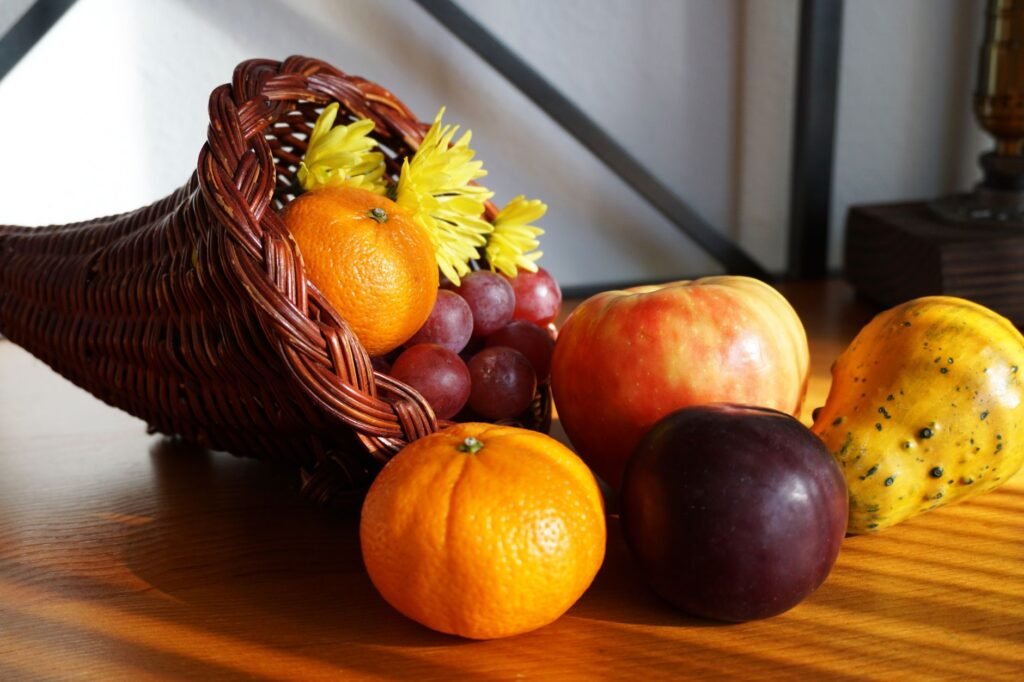
The cornucopia, often called the horn of plenty, is one of the most enduring symbols of abundance, nourishment, and prosperity in Western culture. In mythology and art, it usually appears as a curved horn overflowing with fruit, flowers, grain, and other gifts of the earth. Although its image is widely recognized today in harvest festivals, decorative arts, and civic emblems, its origins lie in ancient myth and ritual.
The cornucopia is especially associated with Greek and Roman traditions, where it represented divine generosity and the blessings of fertility. Over time, it became a general emblem of wealth, bounty, and seasonal abundance, especially linked to autumn, agriculture, and thanksgiving traditions. Its meaning has remained remarkably stable across centuries: a promise that nature, the gods, or fortune can provide more than enough.
Origin and Meaning
The word cornucopia comes from Latin, from cornu meaning “horn” and copia meaning “plenty” or “abundance.” The phrase literally means “horn of plenty.” In ancient Roman usage, it referred both to the object and to the idea of overflowing wealth.
The symbol itself predates the Latin term and appears in Greek mythological traditions. In later classical and post-classical art, it became a visual shorthand for prosperity. The horn shape may have been inspired by real animal horns used as drinking vessels or containers, but the mythic horn of plenty acquired a meaning far beyond any practical function.
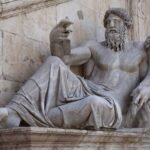
Different ancient traditions explain the cornucopia’s origin in slightly different ways. Some connect it with the goat Amalthea, others with the river god Achelous, and still others with broader fertility symbolism. What remains consistent is its association with inexhaustible abundance.
Historical Context
The cornucopia belongs to the symbolic world of the ancient Mediterranean, where agriculture, seasonal cycles, and divine favor were central to social life. In societies dependent on farming, grain harvests, livestock, rainfall, and fertility were not abstract ideas but matters of survival. Symbols of plenty therefore carried deep religious and cultural significance.
In Greek religion, abundance was often linked to deities such as Demeter, goddess of grain and agriculture, and Ploutos, personification of wealth. In Roman religion, the image became even more widespread, appearing in sculpture, coinage, wall painting, and public iconography. Roman emperors and city authorities used the cornucopia to convey prosperity under their rule.
The symbol also suited festivals marking the harvest and the transition from scarcity to plenty. Over time, it became detached from any single deity and functioned more broadly as an emblem of abundance, fertility, hospitality, and good fortune.
Main Characteristics
The cornucopia is usually depicted as a hollow horn-shaped container overflowing with produce. Its most common features include:
- A curved or spiral horn form
- Fruits such as grapes, apples, pomegranates, and pears
- Grain, wheat, and sheaves of barley
- Flowers, vines, leaves, and sometimes nuts
- Occasionally coins, fish, or other symbols of wealth
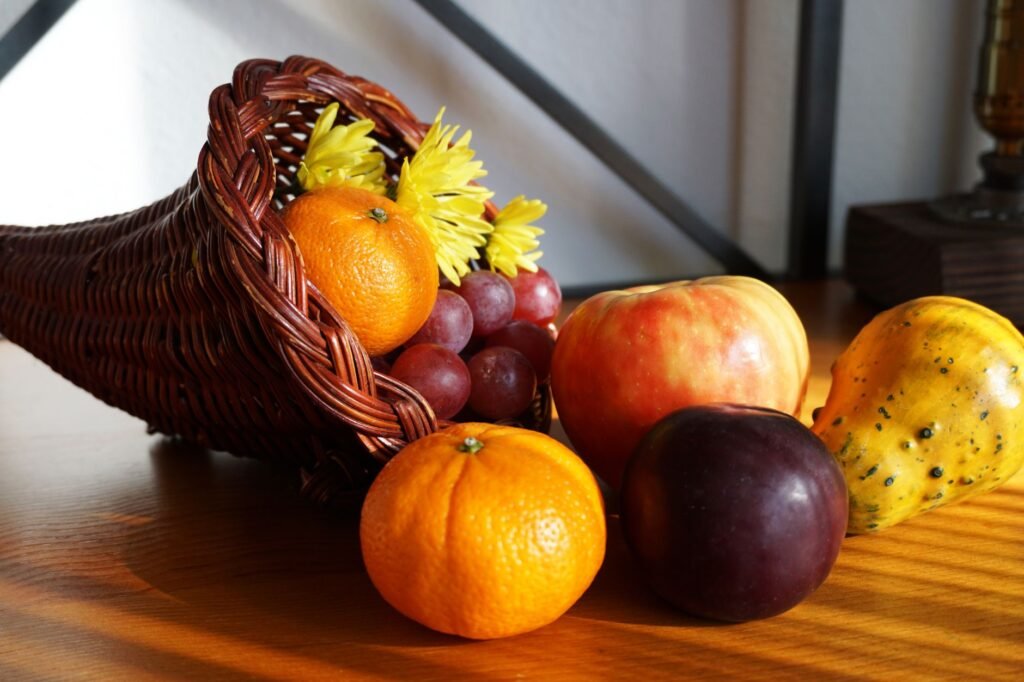
In art, the horn is often held by a deity, personification, or allegorical figure, or it may rest beside them. It can be rendered in a realistic animal-horn style or as a stylized decorative vessel.
The cornucopia has a dual identity: it is both a container and a symbol of overflow. This makes it visually powerful, since the object seems too small to hold all it contains. That paradox reinforces the idea of superabundance, a gift that exceeds ordinary limits.
Common visual forms
| Form | Typical meaning | Common context |
|---|---|---|
| Animal horn | Natural fertility, primal abundance | Mythological art |
| Basket-like horn | Decorative abundance, harvest | Festival imagery |
| Horn held by a deity | Divine generosity | Classical sculpture and reliefs |
| Emblem with produce | Prosperity and civic wealth | Coinage, heraldry, seals |
Family and Genealogy
Unlike a personal deity, the cornucopia is not itself a divine being with a standard genealogy. However, ancient myths connect it to several figures whose relationships help explain its symbolic meaning.
Amalthea tradition
One famous tradition links the cornucopia to Amalthea, the goat or nymph who nursed the infant Zeus. In some versions, one of Amalthea’s horns becomes the horn of plenty. Because accounts differ, ancient authors and later interpreters do not always agree on whether the horn belonged to a goat, a river deity, or another being entirely.
Achelous tradition
Another major tradition associates the cornucopia with Achelous, the river god. In this version, Hercules wrestles Achelous for the hand of Deianeira. During the struggle, Achelous is transformed; one of his horns is broken or removed, and the horn is later endowed with the power of abundance.
Related divine figures
The cornucopia also appears in connection with:
- Demeter, as goddess of grain and agricultural abundance
- Tyche, goddess of fortune and city prosperity
- Fortuna, the Roman goddess of luck and plenty
- Ploutos, the personification of wealth
- Abundantia, a Roman personification of plenty
In these cases, the cornucopia is less a genealogical object than an attribute signifying the divine source of prosperity.
Symbols
The cornucopia is itself a symbol, but it often appears alongside other signs that reinforce its meaning.
Main symbolic associations
- Fruits and grain: harvest, fertility, seasonal abundance
- Flowers and vines: renewal, growth, and nature’s generosity
- Coins or treasures: wealth and material prosperity
- Ribbons or garlands: celebration and ritual festivity
- Horn shape: ancient power, animal vitality, and sacred fullness
Colors
Ancient texts do not assign a fixed color to the cornucopia. In modern representations, however, it is often shown in:
- Gold or bronze, suggesting wealth and sacred value
- Natural brown, reflecting the animal horn
- Red, green, orange, and yellow, evoking harvest produce
The cornucopia is not tied to one universally sacred color, but to a visual language of richness and seasonal fullness.
Sacred Animals
The cornucopia is not associated with a single sacred animal in the way that some deities are linked to lions, owls, or eagles. However, animal symbolism is important to its mythology.
Goat
The goat is central in the Amalthea tradition. Goats were valued in the ancient world for milk, meat, and leather, and their association with nourishment made them fitting symbols of fertility and care.
Bull or river creature
In some depictions of Achelous, the river god has a bull-like form or horned appearance. This emphasizes the wild, generative force of nature and the power of rivers to nourish the land.
General animal symbolism
Because the cornucopia is a horn, it suggests the vitality of horned animals more broadly, including cattle, goats, and other pastoral creatures. In this sense, it reflects the ancient connection between livestock and prosperity.
Sacred Plants
The cornucopia is strongly associated with plants of the cultivated and fertile landscape.
Common plant symbols
- Wheat and barley: staple grains and agricultural survival
- Grapes and vines: wine, celebration, and fruitful land
- Olives: peace, sustenance, and Mediterranean wealth
- Pomegranates: fertility, life, and seasonal abundance
- Flowers and laurel: beauty, celebration, and honor
Plants placed in the cornucopia generally reflect the harvest cycle. They do not belong to one sacred botanical canon, but to a shared symbolic language of plenty. In modern decorative usage, autumn leaves, pumpkins, and gourds are often added, especially in North American and European seasonal displays.
Sacred Places
The cornucopia is not tied to one exclusive sanctuary or holy site. Instead, it appears in many contexts connected with fertility cults, civic power, and harvest celebration.
Ancient Greek and Roman contexts
It is especially associated with:
- Agricultural sanctuaries dedicated to Demeter and related deities
- City cults honoring Fortuna or Tyche
- Public spaces such as markets, temples, and civic monuments
- Domestic altars and household decorations in later Roman usage
Important mythic settings
The mythic origins of the cornucopia are set in:
- The childhood of Zeus on Crete in the Amalthea tradition
- The riverine landscape of Achelous in western Greece in the combat tradition
Because the cornucopia is a symbol rather than a localized deity, its “sacred places” are often wherever abundance, harvest, and prosperity are ritually celebrated.
Powers and Attributes
The cornucopia is not a being with active powers in the usual sense, but it symbolizes several divine or cosmic attributes.
Core attributes
- Abundance
- Prosperity
- Fertility
- Agricultural plenty
- Material wealth
- Hospitality
- Generosity of nature
- Good fortune
In mythological and artistic language, the cornucopia indicates that the forces of life are multiplying and overflowing. It is a visual guarantee of more-than-enough. In political imagery, it may also imply stable rule, public welfare, and peace leading to prosperity.
Main Myths
Several myths explain or enrich the meaning of the cornucopia.
Amalthea and the horn of plenty
One of the best-known stories says that the infant Zeus was cared for by Amalthea, who is described in different sources as either a nurturing nymph or a goat. According to some traditions, Zeus later broke off one of her horns and endowed it with the power to produce whatever its holder desired. This version emphasizes divine gratitude and miraculous abundance.
Hercules and Achelous
Another widely known myth involves Hercules and Achelous. During a contest for Deianeira, Hercules wrestles the river god. In some accounts, Achelous is transformed into a bull and loses a horn in the struggle. That horn becomes a symbol of abundance, sometimes linked with the cornucopia.
The different versions reflect the flexibility of ancient myth. Some authors preserve the Amalthea story; others favor Achelous; still others combine or reinterpret the two. The exact origin of the horn of plenty therefore varies by source.
Later allegorical development
In Hellenistic, Roman, and later European traditions, the cornucopia increasingly became an allegorical object rather than a mythic relic. It could represent:
- The prosperity of a city
- The gifts of a ruler
- The bounty of a season
- The blessings of divine providence
This development helped the cornucopia survive long after the original myths were no longer widely known.
Relationship with Other Mythological Figures
The cornucopia is closely linked to several figures of fertility and prosperity.
Demeter
As goddess of grain, Demeter is naturally connected to the cornucopia. She embodies the agricultural cycle that makes abundance possible.
Tyche and Fortuna
Tyche in Greek tradition and Fortuna in Roman tradition are among the most common holders of the cornucopia. When shown with a rudder and cornucopia, they signify the power of luck to steer human affairs while also supplying prosperity.
Ploutos and Abundantia
Ploutos, personification of wealth in Greek tradition, and Abundantia in Roman tradition are especially associated with the horn of plenty. Their presence turns the cornucopia into a personified emblem of riches distributed by divine or civic order.
Dionysus and related fertility figures
Although not the primary owner of the cornucopia, Dionysus belongs to the broader symbolic world of fecundity, wine, and seasonal abundance. In art, the horn of plenty may appear in scenes of festivity and luxuriant nature that overlap with Dionysian imagery.
Worship and Cult
The cornucopia was not typically worshipped as a deity. Instead, it functioned as a ritual object, emblem, and decorative sign within cultic and public life.
Ritual and decorative use
In ancient festivals and temple settings, symbols of abundance could accompany offerings of:
- Grain
- Wine
- Fruits
- Honey
- Flowers
The cornucopia may have appeared in processions, votive offerings, and sacred decoration. In Roman life, it was especially suited to festivals celebrating the harvest, peace, and civic welfare.
Civic and imperial use
Roman rulers and cities used the cornucopia in official imagery to declare:
- Economic stability
- Agricultural success
- Peaceful governance
- The emperor’s beneficence
On coins and reliefs, the cornucopia often appears beside female personifications such as Abundantia, Annona, Pax, or Fortuna. Its message was both religious and political: prosperity was understood as a sign of right order.
Ancient Sources
The cornucopia appears across a range of classical sources, though not always in the same form or with the same explanation.
Key ancient writers and traditions
- Hesiod: not a major source for the cornucopia itself, but important for the broader mythic world of divine succession and abundance
- Homer: provides the epic background of gods and heroes, though not a direct cornucopia narrative
- Apollodorus: preserves mythological traditions involving Zeus, Amalthea, Hercules, and Achelous
- Ovid: especially valuable for Roman-era mythic retellings and transformations, including the Achelous episode in the Metamorphoses
- Pausanias: useful for descriptions of cults, local traditions, and votive imagery
- Diodorus Siculus and Strabo: contribute to mythic and geographic traditions relevant to river gods and regional cults
Because the cornucopia’s stories vary, no single author gives the only authoritative version. Classical sources should be read comparatively, since different traditions preserve different origins and meanings.
Roman Equivalent
The cornucopia was fully adopted into Roman culture and became one of the most familiar Roman symbols of plenty. Its Roman counterpart is not a separate deity but a set of personifications and state icons.
Roman associations
- Fortuna: luck and fortune, often with a cornucopia
- Abundantia: personification of abundance
- Annona: grain supply and food distribution
- Pax: peace, often linked with prosperity
- Ceres: Roman goddess of agriculture, comparable to Demeter
In Roman art, the cornucopia appears frequently on:
- Coins
- Statues
- Altars
- Relief sculptures
- Decorative mosaics
The Romans made particularly effective use of the symbol in imperial propaganda, presenting abundance as a feature of Roman rule and the emperor’s care for the state.
Influence on Modern Culture
The cornucopia remains a powerful cultural symbol, especially in the modern West. It is widely used in visual arts, seasonal decoration, branding, and civic iconography.
Common modern uses
- Thanksgiving and harvest imagery
- Autumn decorations with fruits, gourds, and leaves
- Municipal emblems and seals
- Agricultural fairs and festivals
- Book, magazine, and advertisement design
- Decorative sculpture and holiday centerpieces
The cornucopia has also appeared in literature, cinema, and television as a shorthand for abundance, often without requiring any mythological explanation. In popular culture, it may be associated with harvest festivals, fantasy worlds, or symbolic “overflow” of resources.
In games and fiction
Fantasy and role-playing games sometimes use the cornucopia as:
- A magical item that produces food or treasures
- A landmark of prosperity
- A visual emblem of a fertile region or blessed kingdom
Because the symbol is immediately recognizable, it works well in world-building. Its meaning is usually intuitive even for audiences unfamiliar with Greek and Roman mythology.
Curiosities
- The cornucopia is one of the rare ancient symbols whose meaning remained highly consistent for more than two millennia.
- It is often confused with a simple basket, but the horn shape is essential to its identity.
- Some ancient and modern depictions blur the line between a literal horn and a decorative container.
- The cornucopia can symbolize not only food but also intellectual or civic abundance, depending on context.
- In allegorical art, it may be paired with a rudder to show the tension between fortune and prosperity.
- The symbol is common in heraldry, where it can indicate generosity, harvest, or commercial success.
- Different myths claim different origins, and ancient authors did not standardize a single explanation.
Frequently Asked Questions
What is a cornucopia?
A cornucopia is a horn-shaped symbol of abundance, usually shown overflowing with fruits, grain, flowers, and other signs of plenty.
Why is it called the horn of plenty?
The term comes from Latin cornu copia, meaning “horn of plenty.” It refers to the horn’s association with inexhaustible abundance.
Where does the cornucopia come from in mythology?
Ancient traditions connect it to either Amalthea, the goat or nymph who nurtured Zeus, or to Achelous, the river god who lost a horn in a struggle with Hercules. Sources differ on the exact origin.
What does the cornucopia symbolize today?
Today it commonly symbolizes harvest, prosperity, nourishment, and general abundance. It is especially associated with autumn and Thanksgiving imagery.
Which gods or goddesses are associated with the cornucopia?
It is commonly associated with Demeter, Tyche, Fortuna, Abundantia, and Ploutos. These figures represent fertility, fortune, wealth, and abundance.
Was the cornucopia worshipped as a god?
No. The cornucopia was not itself a deity. It was a symbolic object linked to deities and personifications of abundance.
Is the cornucopia Greek or Roman?
It has Greek mythological roots but became especially prominent in Roman art and symbolism. Both cultures contributed to its development.
Why is the cornucopia still important?
It remains a widely understood symbol of abundance and prosperity, used in art, festivals, civic emblems, and seasonal decoration around the world.
Conclusion
The cornucopia is one of the most recognizable symbols inherited from the ancient world. Rooted in Greek myth and developed further in Roman art and civic imagery, it expresses a universal human hope: that the land, the gods, or fortune may provide enough, and even more than enough. Its enduring popularity comes from the simplicity and power of its visual language. A horn overflowing with fruit and grain communicates prosperity instantly, across cultures and centuries.
Whether interpreted as a mythic gift from divine beings, a sign of harvest wealth, or a modern seasonal emblem, the cornucopia continues to represent abundance in its fullest sense.

Orin Vale has spent the better part of two decades tracing the threads that connect the world’s oldest stories — from the halls of Asgard to the banks of the Nile, from Olympus to the jungles of the Maya. What began as a childhood fascination with flood myths and trickster gods grew into years of independent study across comparative mythology and ancient religion, always chasing the same question: what did these stories mean to the people who first told them? Orin writes for readers who want more than trivia — the ones looking for the beliefs, fears, and truths that myths were built to carry.