Zeus’s Thunderbolt
Zeus’s thunderbolt is one of the most recognizable symbols in Greek mythology and one of the clearest emblems of divine authority in the ancient Mediterranean world. As the primary weapon and signature attribute of Zeus, king of the Olympian gods, the thunderbolt represents not only destructive power but also cosmic order, justice, kingship, and the irresistible force of the sky. In ancient literature and art, it appears as both a literal divine weapon and a symbolic sign of supremacy over gods, mortals, weather, and fate.
The thunderbolt has remained influential far beyond antiquity. It appears in classical art, Roman religion, later European iconography, modern literature, and popular culture, where it continues to symbolize sudden power, energy, and authority. Its long cultural life makes it a central subject in the study of Greek religion, mythology, and the ancient imagination of divine power.
Origin and Meaning
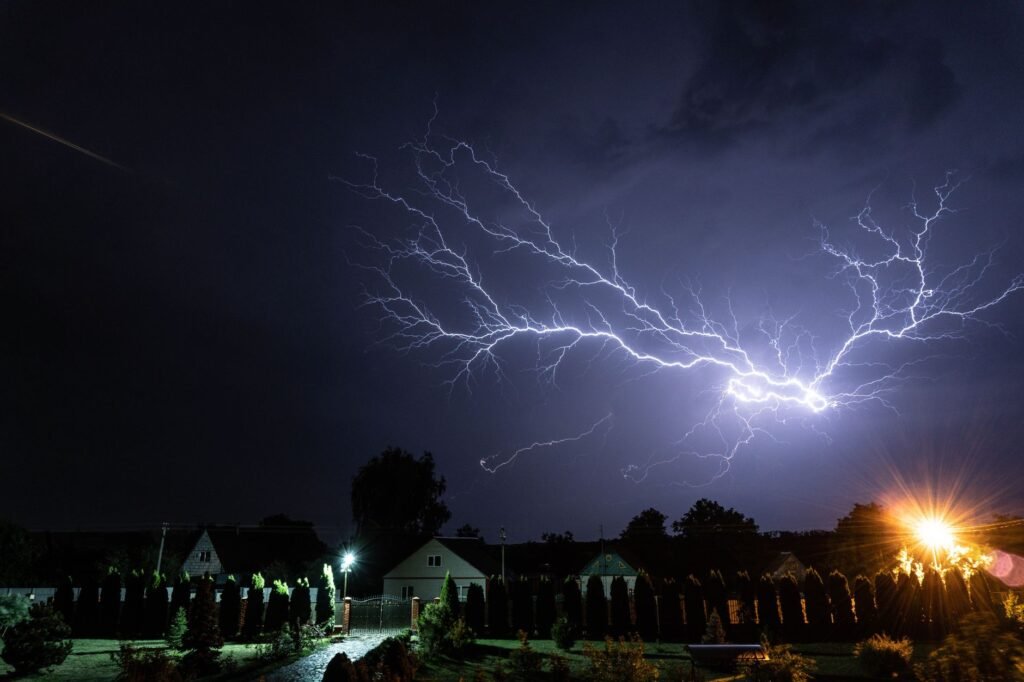
The English word thunderbolt refers generally to a lightning strike or a bolt of lightning. In the context of Greek mythology, Zeus’s thunderbolt is usually translated from terms associated with lightning, fire from the sky, or the divine bolt. The Greek word most often associated with this weapon is keraunos (κεραυνός), meaning “thunderbolt” or “lightning bolt.”
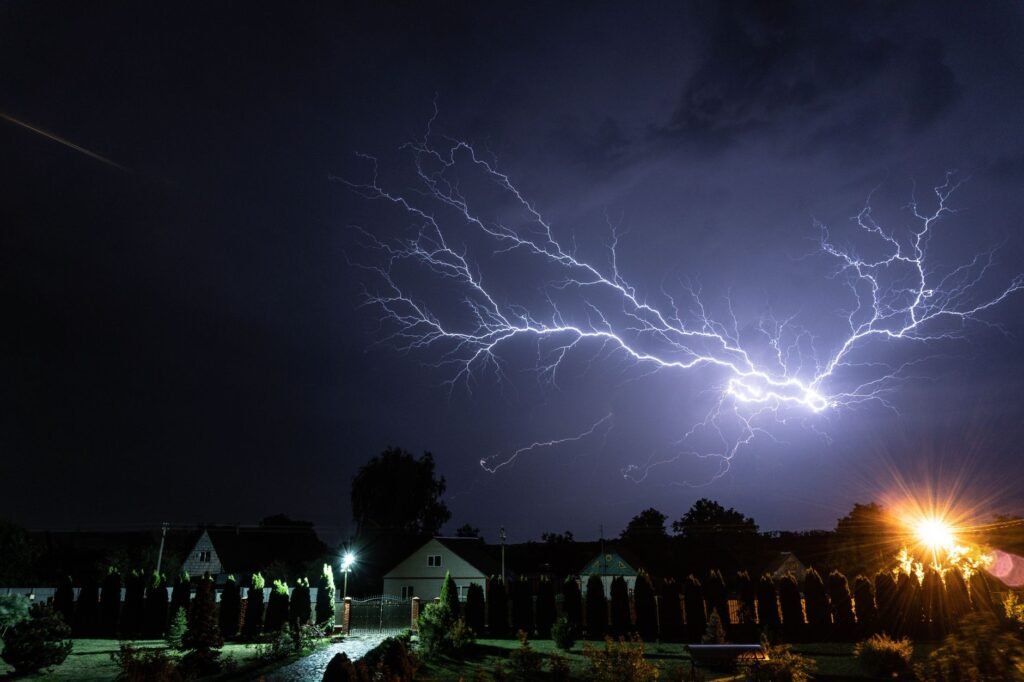
In ancient Greek thought, the thunderbolt was not merely weather. It was a divine sign, a force sent by Zeus himself. The weapon is therefore both natural and supernatural: a physical phenomenon and a symbol of the god who controls it.
A concise way to understand its meaning is:
- Natural meaning: lightning or thunderbolt in the sky.
- Religious meaning: a manifestation of Zeus’s will.
- Political meaning: royal authority and legitimate rule.
- Moral meaning: punishment, warning, or justice.
The thunderbolt’s symbolic range helped make Zeus the supreme Olympian deity. It visually distinguished him from other gods and reinforced his role as ruler of heaven and enforcer of cosmic order.
Historical Context
The figure of Zeus emerged in the religious system of the ancient Greeks, whose worship developed over many centuries and varied by region. Zeus was already important in early Greek language and religion, appearing in Mycenaean records in forms related to his name. By the time of Homer and Hesiod, he had become the chief god of the Olympian pantheon.
The thunderbolt reflects a broader Indo-European pattern in which sky gods are linked with storms, lightning, and sovereignty. Similar associations appear in other ancient traditions, though the Greek development is distinctive in the richness of its mythology and iconography.
In the Greek world, storms were natural events with religious significance. Lightning strikes could be read as omens, warnings, or affirmations of divine power. Sacred precincts struck by lightning were sometimes treated with special reverence. The thunderbolt thus occupied a place at the intersection of religion, meteorology, and political authority.
In civic life, Zeus could be invoked in many forms, including:
- Zeus Olympios, associated with the Olympic sanctuary and pan-Hellenic worship.
- Zeus Keraunios, Zeus “of the thunderbolt.”
- Zeus Xenios, protector of hospitality.
- Zeus Horkios, guardian of oaths.
The thunderbolt supported all these aspects by serving as a sign that Zeus governed not only the sky but also moral and social order.
Main Characteristics
Zeus’s thunderbolt is typically described as a weapon of immense force, capable of striking down gods, giants, monsters, and mortals alike. Ancient authors do not always give the same physical description, and artistic depictions vary, but several traits recur.
Common features
- A weapon of lightning and fire
- A symbol of sudden, overwhelming power
- Frequently associated with smoke, flame, and noise
- Able to punish wrongdoing and overthrow rebellion
- A divine object created or bestowed by supernatural craftsmen
In literature, the thunderbolt is often imagined as terrifying and irresistible. It may be hurled from the heavens, blazing with fire and accompanied by thunder. In art, it is commonly shown as a narrow, jagged object, often held in Zeus’s right hand.
The thunderbolt also functions as an extension of Zeus’s authority. To see the bolt is, in many myths, to witness the presence of the god’s power in the world. Unlike ordinary weapons, it is not merely a tool of battle. It is a sign that the order of the cosmos itself can be enforced by divine force.
Family and Genealogy
Strictly speaking, the thunderbolt is not a deity and therefore does not have genealogy in the same way that mythological beings do. However, ancient sources sometimes present its origin through divine craftsmanship or inheritance.
Its makers and sources
Different traditions describe Zeus’s thunderbolt as having been made by the Cyclopes, the one-eyed giant smiths. In Hesiod’s Theogony, the Cyclopes forge Zeus’s thunder, lightning, and thunderbolt as gifts of gratitude after Zeus frees them from captivity. This is one of the most important accounts of its origin.
The usual genealogy of the thunderbolt is therefore mythic rather than biological:
- Creator in some traditions: the Cyclopes
- Possessor and wielder: Zeus
- Function: emblem and instrument of sovereign power
Related divine family context
Since the thunderbolt belongs to Zeus, it is linked to the wider Olympian family:
- Cronus, Zeus’s father and a defeated rival
- Rhea, Zeus’s mother
- Hera, Zeus’s wife
- Poseidon and Hades, his brothers
- Athena, Apollo, Artemis, Hermes, and others, members of the Olympian order under Zeus’s kingship
The thunderbolt is especially tied to the defeat of the Titans and later rebellious beings, making it a family symbol of dynastic succession and cosmic legitimacy.
Symbols
The thunderbolt is one of the principal symbols of Zeus. In ancient art and coinage, it often appears alongside other royal or sky-related emblems.
Major symbolic associations
| Symbol | Meaning |
|---|---|
| Thunderbolt | Divine power, punishment, sovereignty |
| Eagle | Royal authority, sky, vigilance |
| Oak tree | Strength, sacredness, Zeus’s cult at Dodona |
| Scepter | Kingship and lawful rule |
| Aegis | Protected divine authority and fearsome power |
The thunderbolt itself represents several layered ideas:
- Heavenly authority
- Military victory
- Judgment and punishment
- Energy and transformation
- Legitimacy of rule
In later symbolic traditions, lightning and bolts also came to signify rapid action, brilliance, and authority in political or heraldic contexts. This long afterlife is one reason Zeus’s thunderbolt remains so recognizable.
Sacred Animals
The thunderbolt is not an animal, but it is closely connected with animals sacred to Zeus, especially the eagle.
The eagle
The eagle is Zeus’s best-known sacred animal. It is associated with the sky, strength, dominance, and high flight. As a bird of prey that soars above the earth, the eagle matches Zeus’s celestial role and imperial dignity. It is frequently depicted carrying or accompanying thunderbolt imagery in classical art.
Other animals associated with Zeus indirectly include:
- Bull: linked to Zeus in several myths, especially abduction narratives and fertility symbolism
- Lion: a general emblem of power, though not uniquely Zeus’s
- Snake in some local or older cultic contexts, though this association is less central than that with the eagle
The thunderbolt and eagle together create a visual language of sky, speed, and sovereign force.
Sacred Plants
The most famous sacred plant associated with Zeus is the oak. This is particularly important at Dodona, one of the oldest and most revered oracular sanctuaries of Zeus.
The oak
The oak was sacred because it was associated with endurance, strength, and divine presence. At Dodona, priests and priestesses interpreted the will of Zeus partly through the rustling of oak leaves and the sounds of the sanctuary. The connection between the oak and the thunderbolt is natural as well as symbolic: lightning often strikes tall trees, and ancient people could easily see a link between the tree and the god of the sky.
Other plants are not as strongly or consistently associated with the thunderbolt itself, though local cults of Zeus may have had their own ritual vegetation. The oak remains the dominant plant symbol.
Sacred Places
Zeus’s thunderbolt is connected to many sacred landscapes in the Greek world, especially places linked to sky worship, oracles, and divine kingship.
Dodona
Dodona in Epirus was one of the oldest oracle centers of Zeus. The sacred oak and the interpretation of divine signs made it a major cult site. Although the thunderbolt itself is not the oracle’s sole focus, the sanctuary strongly reflects Zeus’s power as a sky god.
Mount Olympus
Mount Olympus is the mythic home of the Olympian gods. It is not a temple in the strict sense, but it is the most famous divine location associated with Zeus. The thunderbolt belongs to the atmosphere of Olympus as the seat of heavenly sovereignty.
Crete
Crete is important in traditions about Zeus’s childhood and survival. Different myths about the young Zeus emphasize concealment from Cronus, but the later rise of Zeus as thunder-bearing ruler gives this island an important place in the broader narrative.
Olympia
The sanctuary of Olympia was a major pan-Hellenic center dedicated to Zeus. It hosted the Olympic Games and reinforced his role as a unifying divine authority. While the thunderbolt is not the only symbol there, it is central to Zeus’s identity as the god honored at the sanctuary.
Other significant sites
- Nemea, with Zeus’s cult and games
- Acragas and other Sicilian or southern Italian sites, where Zeus was honored in local and Hellenic traditions
- Athens and many city-states, where Zeus had local forms and altars
Powers and Attributes
Zeus’s thunderbolt embodies the powers attributed to Zeus himself. It is a weapon, a sign, and an expression of divine control over the world.
Main powers
- Control of weather, especially storm and lightning
- Punishment of oath-breakers and wrongdoers
- Defense of divine and cosmic order
- Destruction of giants, monsters, and rebels
- Legitimation of kingship and law
The thunderbolt is particularly associated with immediate divine intervention. In myth, it can kill instantly, destroy structures, and terrify entire armies. Its force is often presented as unanswerable.
Attribute of justice
In Greek religion, Zeus was not only a storm god. He was also a guardian of justice, hospitality, and oaths. The thunderbolt serves this moral dimension by acting as a visible instrument of retribution. It is a reminder that the gods may punish hubris, impiety, and disorder.
Attribute of kingship
The thunderbolt is also a royal insignia. Zeus holds it the way a human king might hold a scepter, but with much greater power. It indicates not just dominance but lawful supremacy.
Main Myths
The thunderbolt appears in many major Greek myths. Some of the most important accounts concern its origin, its use in battles against cosmic enemies, and its role in punishing transgression.
The forging of the thunderbolt
In Hesiod’s account, the Cyclopes forge Zeus’s thunderbolt and related weapons. This episode is central because it connects Zeus’s power to the defeat of the Titans. The bolt becomes a gift of divine craftsmanship and a token of loyalty.
The Titanomachy
During the war between the Olympian gods and the Titans, the thunderbolt is Zeus’s decisive weapon. It helps him establish supremacy after a cosmic struggle. This myth explains why Zeus is king of the gods: he wins not by birth alone, but by force, strategy, and divine favor.
The defeat of Typhon
One of the most famous myths connected to the thunderbolt is Zeus’s battle with Typhon, a monstrous figure of immense power. In some versions, Zeus defeats Typhon with repeated thunderbolts; in others, the struggle is prolonged and dramatic. The story emphasizes the thunderbolt as a cosmic weapon against chaos.
Punishment of Prometheus
Prometheus is not always struck by the thunderbolt directly in every source, but his punishment belongs to Zeus’s broader pattern of retribution. The myth shows Zeus enforcing divine authority after the theft of fire and the deception at sacrifice.
Punishment of impious mortals
The thunderbolt often appears as a punishment for human arrogance or sacrilege. Figures such as Asclepius may be struck down in some traditions because they crossed limits set by Zeus. These stories underline the boundary between mortal and divine power.
Semele and the danger of divine presence
In the myth of Semele, the mortal woman who bears Dionysus, Zeus’s divine radiance proves fatal when she demands to see him in his full splendor. Although the thunderbolt is not always the literal cause, the myth belongs to the same symbolic field: the overwhelming force of Zeus’s heavenly power is dangerous to mortals.
Relationship with Other Mythological Figures
Zeus’s thunderbolt is deeply involved in relationships with other gods, heroes, and monsters.
With the Titans
The thunderbolt is the weapon that helps Zeus establish his rule over the defeated Titans. Their overthrow marks a new cosmic order.
With the Giants and monsters
In battles against giants and monstrous beings, the thunderbolt is one of Zeus’s primary instruments. It expresses the victory of ordered sky power over chaotic force.
With Hera
Hera is Zeus’s wife and queen of the gods, but myths often portray their relationship as tense. The thunderbolt remains a sign of Zeus’s superior authority within the Olympian hierarchy, even when Hera resists or negotiates.
With Athena and Apollo
Athena and Apollo are two gods closely tied to divine intelligence, order, and prophecy. Apollo in particular can be associated with light and distance, but the thunderbolt remains uniquely Zeus’s. Athena supports Zeus’s rule in many myths, reinforcing his authority.
With Prometheus and mortal heroes
Prometheus stands as a major example of a figure who challenges Zeus’s authority and is punished in the aftermath. Other mortals may receive signs, warnings, or destruction from thunderbolts depending on their impiety.
Worship and Cult
Zeus was one of the most widely worshiped deities in the Greek world, and the thunderbolt was embedded in his cult even when not singled out separately.
Forms of worship
Common forms of worship included:
- Animal sacrifice, especially at public festivals
- Offerings and prayers for justice, rain, or protection
- Vows and oaths sworn in Zeus’s name
- Oracular consultation at sanctuaries such as Dodona
Festivals
The best-known festival connected to Zeus is the Olympic Games, held at Olympia in his honor. While the games were not specifically a thunderbolt ritual, they celebrated Zeus’s supremacy and his role in legitimizing competitive excellence.
Ritual significance of lightning
Lightning strikes were treated with special seriousness. In some places, strike zones could become sacred or restricted. Ancient observers often considered lightning a direct divine sign. The thunderbolt was therefore not only a mythic object but a ritual reality in the way the Greeks interpreted the world.
Ancient Sources
Several ancient authors are central to the study of Zeus’s thunderbolt.
Key sources
| Author | Work | Relevance |
|---|---|---|
| Homer | Iliad, Odyssey | Zeus as sky ruler and wielder of divine signs |
| Hesiod | Theogony | Cyclopes forge Zeus’s thunderbolt; Titanomachy |
| Apollodorus | Library | Mythological summaries of Zeus’s battles |
| Pindar | Odes | Zeus’s power and cultic authority |
| Pausanias | Description of Greece | Sanctuaries, cult practices, local traditions |
| Ovid | Metamorphoses | Roman literary treatment of divine punishment and transformation |
Important note on sources
Ancient accounts do not always agree on details. Some emphasize the thunderbolt’s origin with the Cyclopes; others focus on its role in battle, omen, or punishment. Later writers also reinterpret earlier traditions through poetic or philosophical lenses. A careful reading requires attention to genre and context.
Roman Equivalent
The Roman equivalent of Zeus is Jupiter. Jupiter inherits Zeus’s role as sky god, ruler of gods and men, and wielder of the thunderbolt.
In Roman religion and art, Jupiter’s thunderbolt serves similar functions:
- Symbol of sovereignty
- Sign of divine punishment
- Emblem on coins, statues, and military standards
- Marker of state power and public religion
Although Roman Jupiter is deeply shaped by the Greek Zeus tradition, he also belongs to Roman civic and political life in his own right. The thunderbolt became one of the strongest symbols of Roman divine authority.
Influence on Modern Culture
Zeus’s thunderbolt has had a long afterlife in modern culture. Its image is instantly recognizable and continues to appear in many media.
Literature and art
Classical painters, sculptors, and later academic artists frequently depicted Zeus with a thunderbolt in hand. The figure became a standard visual shorthand for supreme power. In literature, the thunderbolt can symbolize sudden judgment, inspiration, or overwhelming force.
Film and television
Modern adaptations of Greek myth often use the thunderbolt as a visual marker of Zeus’s authority. It appears in animated retellings, fantasy films, and television series inspired by classical mythology.
Comics and games
In comics and video games, lightning bolts are often used to evoke Zeus directly or indirectly. The image also influences superhero design, magical weapons, and character abilities modeled on divine lightning.
Branding and popular symbolism
Outside mythology, the thunderbolt is widely used in logos and emblems to suggest:
- Speed
- Energy
- Power
- Precision
- Authority
This broad symbolic use is one of the clearest signs of the thunderbolt’s enduring cultural relevance.
Curiosities
- In ancient Greek thought, a thunderbolt could be treated as a real divine sign, not just a metaphor.
- The thunderbolt is one of the few mythological weapons that also corresponds closely to a natural phenomenon.
- Zeus is often depicted with the thunderbolt even when the story does not explicitly describe him throwing it.
- Some ancient cult sites associated with Zeus showed special reverence for places struck by lightning.
- The eagle and thunderbolt together became one of the most durable visual combinations in Western iconography.
- The word “keraunos” could refer to both thunder and lightning-related divine force, reflecting the Greeks’ integrated view of storm phenomena.
Frequently Asked Questions
1. What is Zeus’s thunderbolt?
Zeus’s thunderbolt is the divine weapon and symbol of Zeus, the chief god in Greek mythology. It represents lightning, divine authority, punishment, and kingship.
2. Who made Zeus’s thunderbolt?
In Hesiod’s Theogony, the Cyclopes forge Zeus’s thunderbolt, along with thunder and lightning, as a gift after Zeus frees them. Other sources emphasize its use more than its creation.
3. What does the thunderbolt symbolize?
It symbolizes power, justice, the sky, royal authority, and Zeus’s ability to punish disorder or impiety.
4. Is Zeus’s thunderbolt the same as lightning?
In mythology, it is closely identified with lightning, but it is also more than a natural phenomenon. It is the divine expression of Zeus’s will.
5. What myths feature Zeus’s thunderbolt most prominently?
It is especially important in the Titanomachy and in Zeus’s battle against Typhon. It also appears in stories of punishment and divine judgment.
6. What is the Roman equivalent of Zeus’s thunderbolt?
The Roman equivalent belongs to Jupiter, the Roman counterpart of Zeus. Jupiter is also associated with the thunderbolt as a sign of supreme authority.
7. Why is the thunderbolt important in Greek mythology?
It is important because it expresses Zeus’s role as ruler of gods and enforcer of cosmic order. It is one of the most powerful symbols of divine legitimacy in ancient religion.
Conclusion
Zeus’s thunderbolt is more than a mythic weapon. It is a central symbol of ancient Greek religion, capturing the relationship between sky, storm, kingship, justice, and divine force. In myth, it helps Zeus defeat cosmic enemies and establish the Olympian order. In cult and literature, it expresses the presence of a god who rules both nature and moral law.
Its influence extends far beyond the ancient world. Through Greek and Roman tradition, visual art, literature, and modern popular culture, the thunderbolt has remained a powerful emblem of authority and sudden power. As a result, Zeus’s thunderbolt stands as one of the most enduring symbols in world mythology.

Orin Vale has spent the better part of two decades tracing the threads that connect the world’s oldest stories — from the halls of Asgard to the banks of the Nile, from Olympus to the jungles of the Maya. What began as a childhood fascination with flood myths and trickster gods grew into years of independent study across comparative mythology and ancient religion, always chasing the same question: what did these stories mean to the people who first told them? Orin writes for readers who want more than trivia — the ones looking for the beliefs, fears, and truths that myths were built to carry.