Who Is Freyr in Norse Mythology?
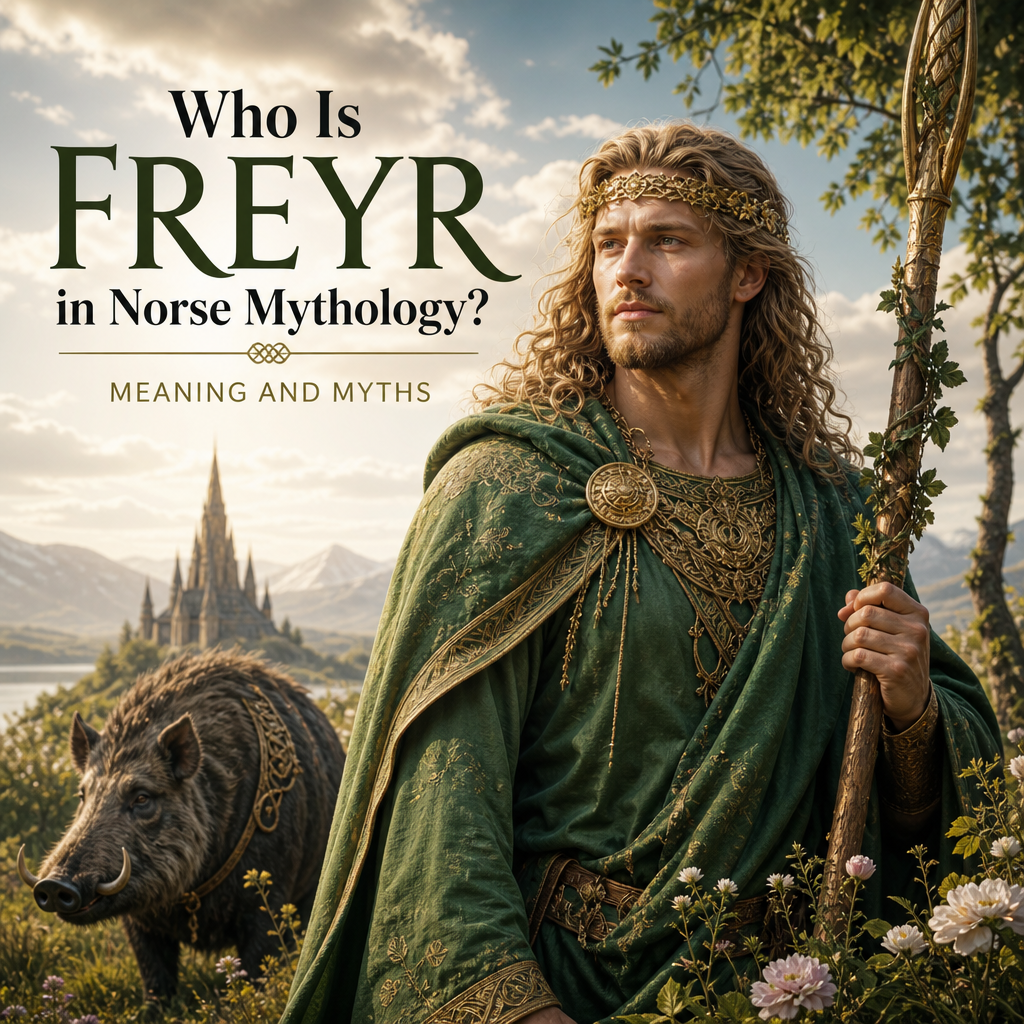
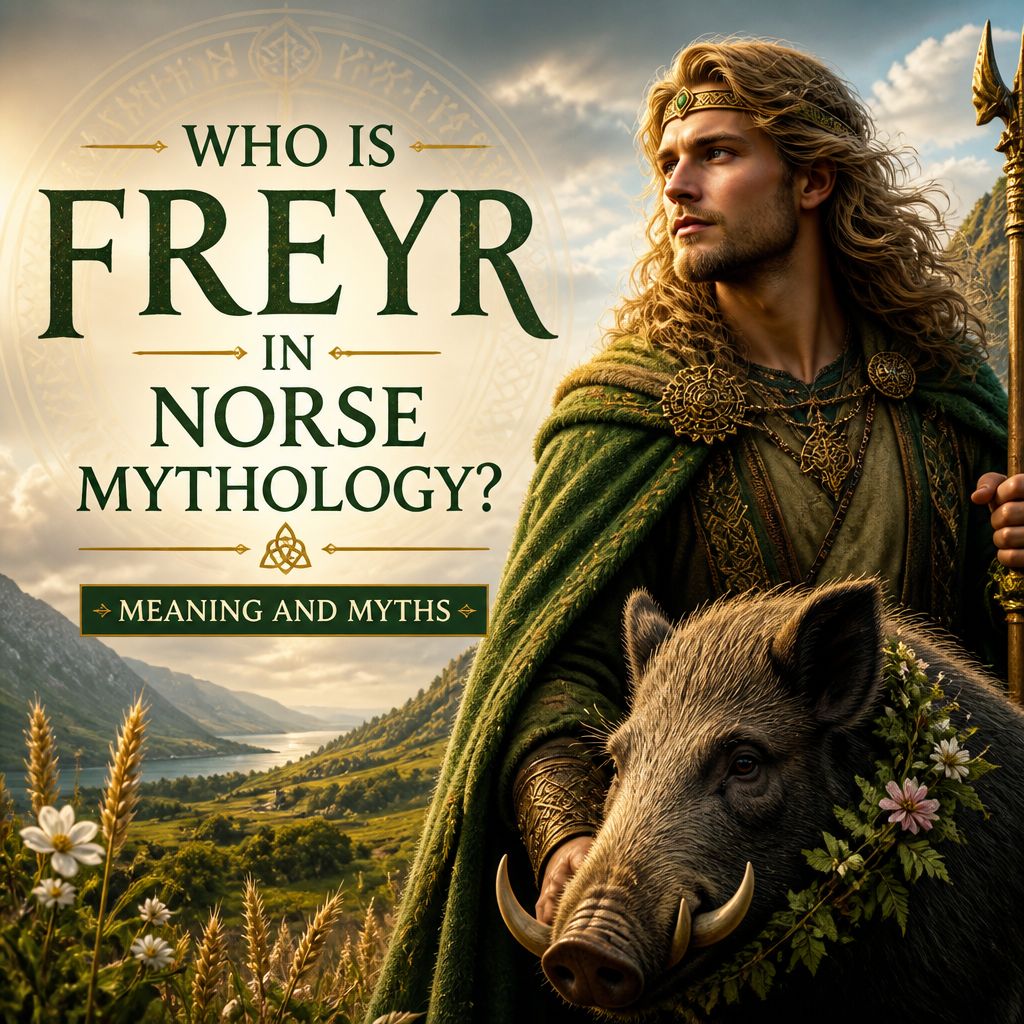
Freyr is one of the most important gods in Norse mythology, known as a deity of fertility, prosperity, peace, sunlight, and abundance. He belongs to the Vanir, a group of gods associated with nature, magic, and wealth, rather than the Aesir, the more warlike family of gods that includes Odin and Thor.
When people ask, “who is Freyr in Norse mythology?” the simplest answer is that he is a generous and life-giving god connected to growth, harvests, kingship, and human well-being. Yet his myths also reveal a more complex figure: a powerful god who sacrifices a great weapon for love and later faces a tragic fate at Ragnarok.
Freyr and the Vanir Gods
Freyr is the son of Njord, the sea god associated with seafaring, wealth, and coastal prosperity. His sister is Freyja, the famous goddess of love, beauty, fertility, and magic. Together, Freyr and Freyja are among the most prominent Vanir deities.
In Norse myth, the Vanir once fought a war against the Aesir. After the conflict ended, both sides exchanged hostages to secure peace. Freyr, Freyja, and Njord went to live among the Aesir in Asgard, where they became honored members of the divine community.
This background helps explain Freyr’s role. Unlike gods who are primarily linked with battle or wisdom, Freyr represents the forces that make life flourish:
- Fertile fields
- Good harvests
- Peaceful rule
- Wealth and abundance
- Sunshine and fair weather
- Human and animal fertility
For farming communities in the Norse world, these blessings were essential.
Freyr as a God of Fertility and Prosperity
Freyr’s name is often translated as “Lord,” suggesting his high status. He was especially associated with fertility in both the land and living beings. Farmers likely honored him to encourage successful crops, healthy livestock, and stable communities.
He was also linked to peace. While many Norse myths focus on heroic conflict, Freyr’s power is more closely tied to harmony and prosperity. A ruler favored by Freyr might be expected to bring good seasons and plenty to the people.
In some traditions, Freyr was connected with sacred kingship. This means he may have been seen as a divine source of royal authority, especially when that authority depended on maintaining prosperity and balance.
Freyr’s Magical Possessions
Like many Norse gods, Freyr owns remarkable treasures. These objects reveal his power and symbolic importance.
Skidbladnir, the Perfect Ship
Freyr owns the magical ship Skidbladnir. It was crafted by dwarves and is described as large enough to carry all the gods, yet it can be folded up and placed in a pouch when not in use.
Skidbladnir always has a favorable wind, making it a symbol of divine craftsmanship, travel, and command over natural forces.
Gullinbursti, the Golden Boar
Another of Freyr’s treasures is Gullinbursti, a golden-bristled boar. This shining animal can run across land, sea, and air, and its bristles glow brightly enough to light the darkness.
The boar was an important symbol in Germanic and Norse culture, often connected to fertility, protection, and strength. Freyr’s association with Gullinbursti reinforces his connection to abundance and sacred power.
Freyr’s Sword
Freyr also possesses a magical sword that can fight on its own if wielded by someone wise. This weapon becomes central to one of his most important myths because he gives it away for the sake of love.
Freyr and the Giantess Gerd
One of the best-known stories about Freyr involves his love for Gerd, a beautiful giantess. According to the myth, Freyr sits on Odin’s high seat, Hlidskjalf, from which all worlds can be seen. Looking out across the realms, he sees Gerd and immediately falls deeply in love with her.
His longing becomes so intense that he grows silent, sick, and withdrawn. Eventually, his servant Skirnir discovers the cause of his sorrow. Freyr asks Skirnir to travel to Jotunheim, the land of the giants, and woo Gerd on his behalf.
To complete this dangerous mission, Skirnir demands Freyr’s magical sword. Freyr agrees, giving up the weapon in exchange for a chance to marry Gerd.
Skirnir’s courtship of Gerd is not gentle by modern standards. He uses threats, curses, and persuasion until she finally agrees to meet Freyr. Their union is often interpreted as a mythic symbol of fertility: the joining of a sky or sunlight god with the earth, resulting in growth and renewal.
Freyr’s Role at Ragnarok
Freyr’s decision to give away his sword has serious consequences. At Ragnarok, the final battle of the gods, Freyr faces the fire giant Surtr. Without his magical weapon, Freyr is at a fatal disadvantage.
Surtr is one of the most terrifying figures in Norse mythology. He brings fire and destruction, and his flames help consume the world. Freyr fights bravely, but he is killed because he lacks the sword he once gave to Skirnir.
This part of the myth adds tragedy to Freyr’s character. He is a god of life and prosperity, but he is not exempt from fate. His love for Gerd brings beauty and union, yet it also leaves him vulnerable in the world-ending battle.
How Was Freyr Worshiped?
Freyr appears to have been widely worshiped in Scandinavia, especially in Sweden. Historical sources suggest he was honored at the great temple in Uppsala, where he may have been associated with fertility rites, peace, and royal power.
Offerings to Freyr likely focused on gaining abundance and protection. People may have prayed to him for:
- Good harvests
- Fertile animals
- Successful marriages
- Peaceful communities
- Wealth and good fortune
- Favorable weather
Some accounts describe images of Freyr emphasizing his fertility symbolism. While Christian writers recorded many of these details after the old religion had begun to fade, the evidence still points to Freyr as a major god in everyday religious life.
Why Freyr Matters in Norse Mythology
Freyr matters because he represents a side of Norse mythology that is not only about war, doom, and heroic struggle. He embodies the blessings that make civilization possible: food, peace, love, wealth, and continuity.
At the same time, his myths show that prosperity often comes with sacrifice. Freyr gives up his sword for love, gaining Gerd but losing a vital defense against his fate. This makes him one of the more emotionally compelling Norse gods.
So, who is Freyr in Norse mythology? He is the Vanir lord of fertility, abundance, peace, and sacred prosperity. He is a bringer of life and a symbol of growth, yet also a tragic figure destined to fall at Ragnarok. Through Freyr, Norse mythology captures both the beauty of flourishing life and the unavoidable shadow of fate.

Orin Vale has spent the better part of two decades tracing the threads that connect the world’s oldest stories — from the halls of Asgard to the banks of the Nile, from Olympus to the jungles of the Maya. What began as a childhood fascination with flood myths and trickster gods grew into years of independent study across comparative mythology and ancient religion, always chasing the same question: what did these stories mean to the people who first told them? Orin writes for readers who want more than trivia — the ones looking for the beliefs, fears, and truths that myths were built to carry.