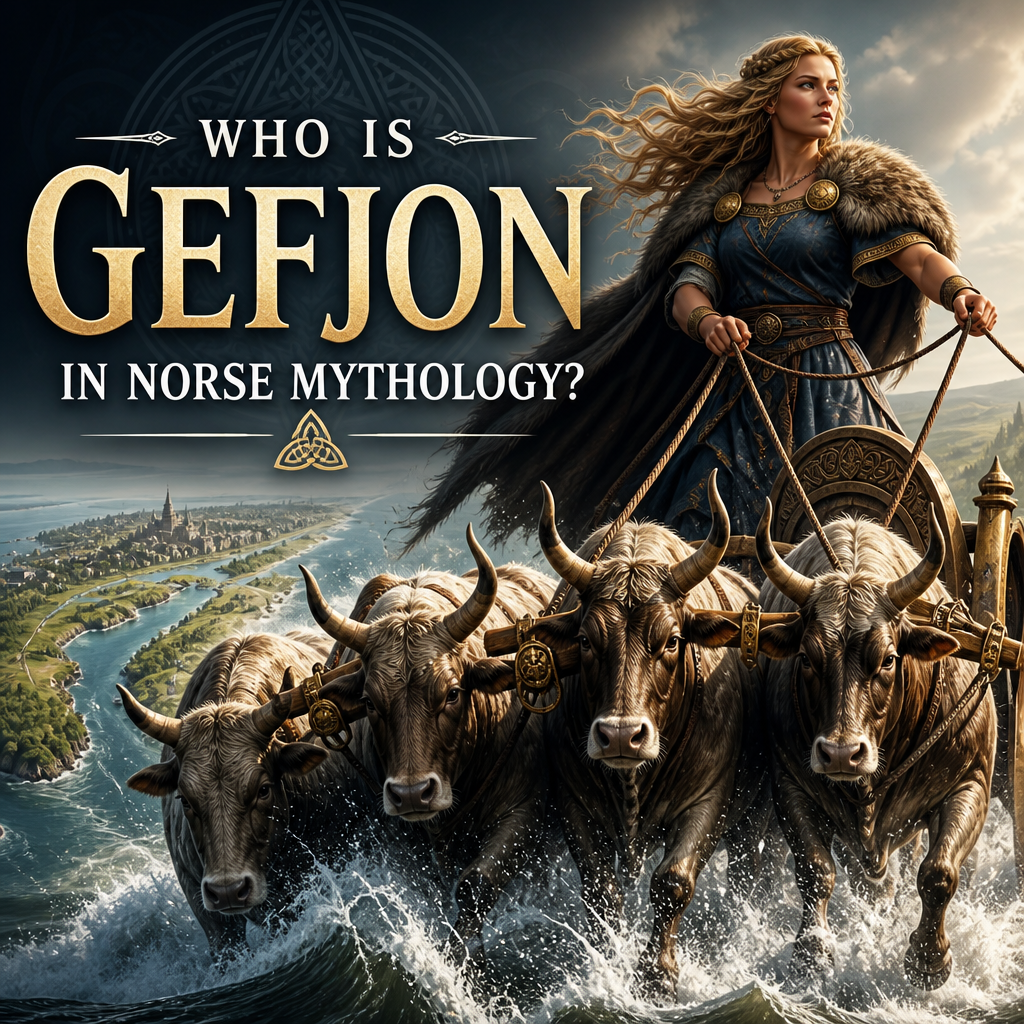
Who Is Gefjon in Norse Mythology?
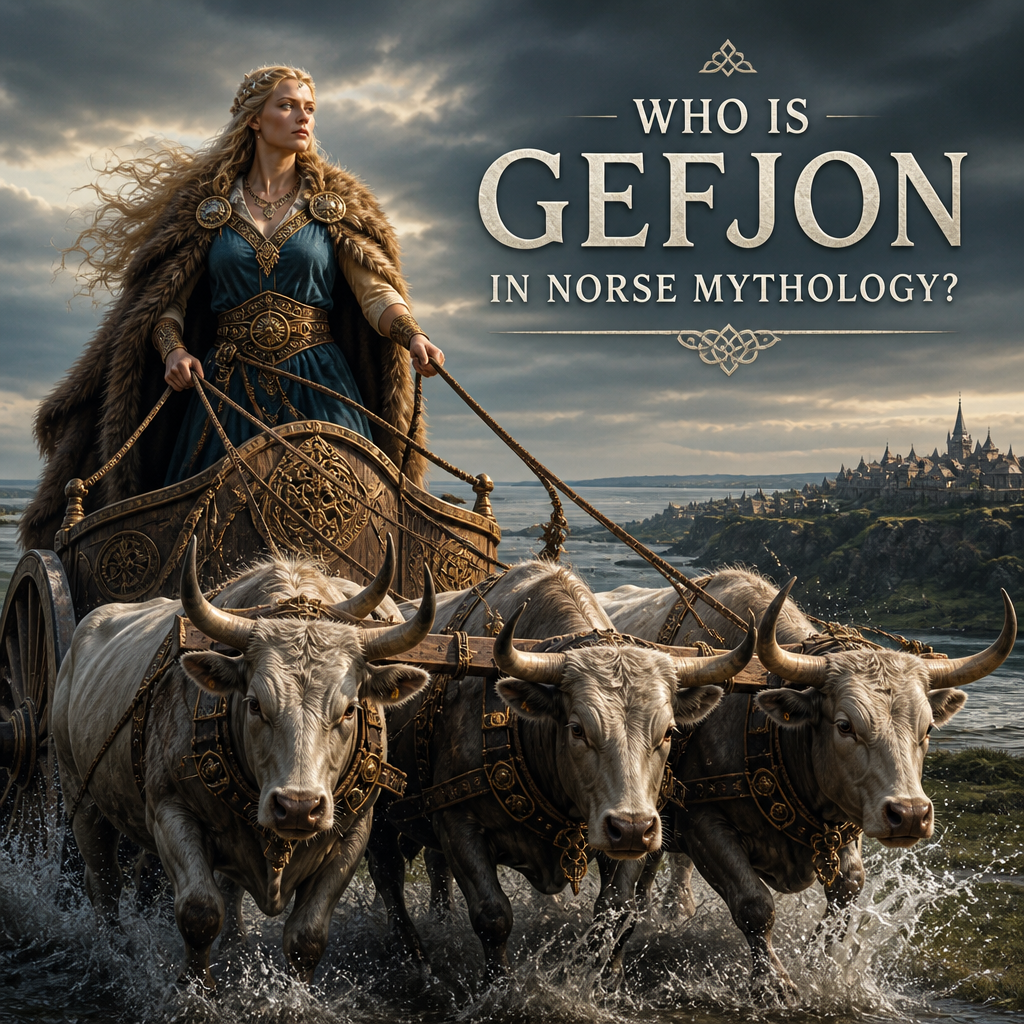
Gefjon is one of the more intriguing goddesses in Norse mythology, associated with fertility, abundance, prophecy, and the shaping of land. While she is not as widely known today as figures like Odin, Thor, or Freyja, Gefjon plays an important role in several Old Norse sources. Her stories connect her to both divine power and the legendary origins of Denmark’s island of Zealand.
The question “who is Gefjon in Norse mythology” opens the door to a fascinating figure whose identity blends myth, agriculture, sovereignty, and sacred womanhood.
Gefjon as a Norse Goddess
Gefjon, sometimes spelled Gefjun, is usually counted among the goddesses of the Æsir, the tribe of gods that includes Odin, Frigg, and Thor. Her name is often interpreted as meaning “the giving one” or “the generous one,” which fits her associations with fertility and plenty.
In the surviving Norse texts, Gefjon is described as a powerful divine woman. She appears in both the Poetic Edda and the Prose Edda, two of the most important sources for Norse mythology. Although the details about her are limited, the references that remain suggest she was once a significant goddess.
Gefjon is especially connected with:
- Fertility and growth
- Virginity and unmarried women
- Prophecy or foreknowledge
- Land and agriculture
- The founding myth of Zealand
These different roles may seem unusual at first, but in Norse mythology, goddesses often had overlapping powers connected to life, destiny, and the land.
Gefjon and the Creation of Zealand
The most famous myth about Gefjon explains how the Danish island of Zealand was created. This story appears in Snorri Sturluson’s Prose Edda and in the Heimskringla.
According to the myth, Gefjon went to King Gylfi of Sweden and asked him for land. Gylfi promised her as much land as she could plow in one day and one night. Gefjon then traveled to Jötunheim, the land of the giants, where she had four sons by a giant. She transformed these sons into powerful oxen.
Using the four oxen, Gefjon plowed so deeply and forcefully that she tore a large piece of land away from Sweden. She dragged it into the sea, where it became Zealand, the island on which Copenhagen is now partly located. The hole left behind became Lake Mälaren in Sweden.
This myth presents Gefjon as a goddess of enormous strength and magical ability. She does not merely cultivate land—she reshapes geography itself.
The Meaning Behind the Zealand Myth
Gefjon’s plowing of Zealand is more than a simple origin story. In ancient societies, land was closely tied to power, identity, and divine blessing. A goddess who could create fertile land would have been deeply important.
The story also reflects the sacred nature of plowing. In many Indo-European traditions, plowing was not only an agricultural act but also a symbolic one. It represented the claiming, ordering, and blessing of land. By plowing Zealand from Sweden, Gefjon becomes a divine founder figure.
Her four oxen are also significant. Oxen were symbols of agricultural strength and wealth. Since the oxen are her sons by a giant, the myth combines divine, giant, and animal power into one dramatic image.
Gefjon and Virginity
One of the more surprising aspects of Gefjon’s mythology is her connection to virginity. In the Prose Edda, Snorri writes that all women who die unmarried go to Gefjon after death.
This detail has led many scholars and readers to view Gefjon as a protector or receiver of maidens. However, this can seem contradictory because the Zealand myth says she has four sons. Norse mythology often contains such contradictions, especially because the surviving sources were written down after the Christianization of Scandinavia and may preserve different traditions side by side.
Gefjon’s association with virginity may not mean strict sexual inexperience in a modern sense. It may instead reflect an older sacred role connected with unmarried women, independence, or a particular class of female devotees.
Is Gefjon the Same as Freyja or Frigg?
Some scholars have suggested that Gefjon may overlap with other Norse goddesses, especially Freyja or Frigg. This is because Norse mythology contains several goddesses linked with fertility, fate, sexuality, and abundance.
Gefjon’s name, meaning “giver,” resembles themes associated with Freyja, who is also a goddess of fertility and prosperity. Her possible prophetic qualities may connect her with Frigg, who is known for wisdom and foreknowledge.
However, the surviving texts treat Gefjon as her own distinct goddess. While she may share traits with other divine women, her Zealand myth gives her a unique place in Norse tradition.
Gefjon in the Lokasenna
Gefjon also appears in the Lokasenna, a poem from the Poetic Edda. In this poem, Loki insults many of the gods and goddesses during a feast. When Gefjon speaks, Loki accuses her of immoral behavior, as he does with many of the divine women in the poem.
Odin responds by warning Loki that Gefjon knows the destinies of all people just as well as he does. This is a remarkable statement. Odin is the god most strongly associated with wisdom, fate, and hidden knowledge, so comparing Gefjon’s knowledge to his suggests she may have had powerful prophetic abilities.
This brief reference hints that Gefjon was more than a fertility goddess. She may also have been connected to fate and deep spiritual insight.
Gefjon’s Role in Norse Belief
Because the surviving sources are fragmentary, it is difficult to know exactly how Gefjon was worshipped. However, her myths suggest she may have been important in rituals involving land, fertility, and women’s life stages.
Her character brings together several themes central to Norse religion:
Land and Sovereignty
Gefjon creates land and helps explain the origins of a major region. This links her to rulership and territorial identity.
Fertility and Abundance
Her name and plowing myth connect her with growth, wealth, and agricultural prosperity.
Female Power
Gefjon acts independently, bargains with a king, bears giant-born sons, and uses magic to transform them into oxen. She is a striking example of divine female agency.
Fate and Knowledge
The Lokasenna suggests she possesses profound knowledge of destiny.
Gefjon’s Legacy
Today, Gefjon is remembered most strongly in Denmark and Scandinavia. One famous tribute is the Gefion Fountain in Copenhagen, which depicts the goddess driving her four oxen as they plow Zealand from Sweden. The fountain captures the dramatic energy of her most famous myth and remains one of the city’s notable landmarks.
Modern readers often find Gefjon compelling because she does not fit neatly into a single category. She is a fertility goddess, a land-shaper, a receiver of unmarried women, and possibly a prophetess. Her mythology is brief but rich with meaning.
Conclusion
So, who is Gefjon in Norse mythology? Gefjon is a powerful Norse goddess associated with fertility, land, abundance, unmarried women, and possibly prophecy. Her most famous myth tells how she created the island of Zealand by plowing it from Sweden with four oxen, who were actually her giant-born sons.
Although only a few stories about her survive, Gefjon stands out as a figure of strength, generosity, and sacred connection to the earth. She represents the power to create, claim, and transform land, making her one of the most fascinating lesser-known goddesses of the Norse world.

Orin Vale has spent the better part of two decades tracing the threads that connect the world’s oldest stories — from the halls of Asgard to the banks of the Nile, from Olympus to the jungles of the Maya. What began as a childhood fascination with flood myths and trickster gods grew into years of independent study across comparative mythology and ancient religion, always chasing the same question: what did these stories mean to the people who first told them? Orin writes for readers who want more than trivia — the ones looking for the beliefs, fears, and truths that myths were built to carry.